Tag: structural-transformation

Focuses on shifts in production, employment, and economic structure over the development process.

  • Mexico 1876–1911 Order and Growth Without Inclusion: Revolution

    Mexico 1876–1911 Order and Growth Without Inclusion: Revolution

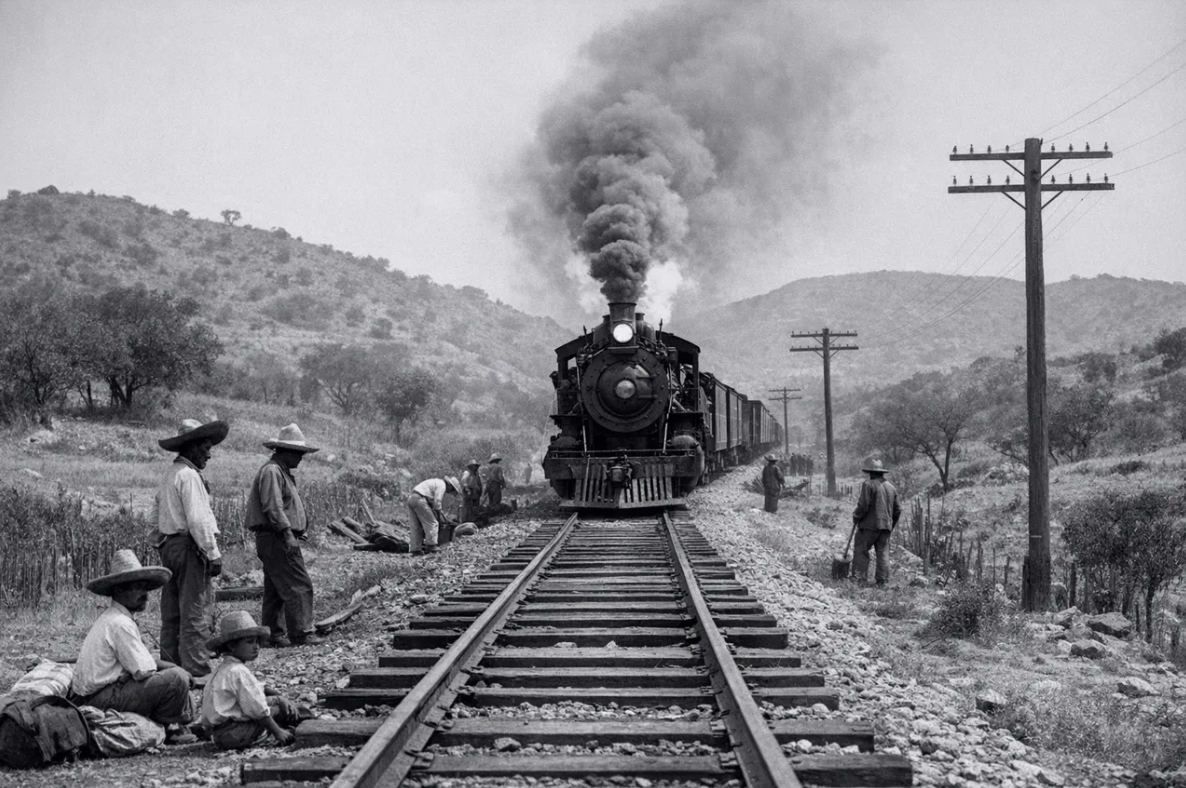
    Mexico grew faster between 1876 and 1911 than at any other moment in the nineteenth century. Railways spread across the country, cities modernized, and exports expanded rapidly with foreign investment, replicating patterns seen in many industrializing economies. Under Porfirio Díaz, Mexico achieved order, economic growth, and integration into international trade.

    However, this growth rested on weak foundations. Export expansion depended on specific regions. Land ownership and economic benefits were concentrated among a small elite, and millions of rural and Indigenous people lost access to land. At the same time, deeper integration into global markets increased exposure to external shocks and volatility. The central lesson is that economic growth without inclusion can lead to instability, rapid reversals, and, in extreme cases, revolution. Prosperity derived through exclusion, repression, and dependence on forces beyond state control is rarely sustainable. In hindsight, the Mexican Revolution was a predictable outcome of modernization that failed to lay the social, political, and cultural foundations needed to manage rapid change. 

    This blog examines the changes that occurred, analyzes the drivers of these changes, and explores the state’s role in shaping their outcomes. 

    Order, growth, and progress, but fragile and without social license

    Between 1876 and 1911, Mexico shifted rapidly from localized land-use and mining systems to intensive export agriculture, large-scale mining, and oil extraction. Mining output tripled, and Mexico became the world’s leading silver producer. Commercial agriculture expanded around agave fiber, sugar, and coffee, driven by large haciendas. Oil production rose from negligible levels in the 1890s to approximately 12 million barrels annually by 1911.

    This transformation eroded Indigenous stewardship, weakened the legitimacy of communal land systems, and intensified ecological pressures. Railways, ports, and cities expanded around export-oriented production, much of it owned by foreign or external interests and unevenly distributed across regions. Railway mileage increased from roughly 650 kilometers in 1876 to more than 19,000 kilometers by 1910. Mexico City, Veracruz, and Monterrey grew rapidly, introducing electric lighting, tram systems, and modern water infrastructure. National culture increasingly emphasized order, progress, technocratic authority, and elite dominance, a pattern reinforced by changes in education and law. As elsewhere in the region, land reforms delegitimized Indigenous communal identities.

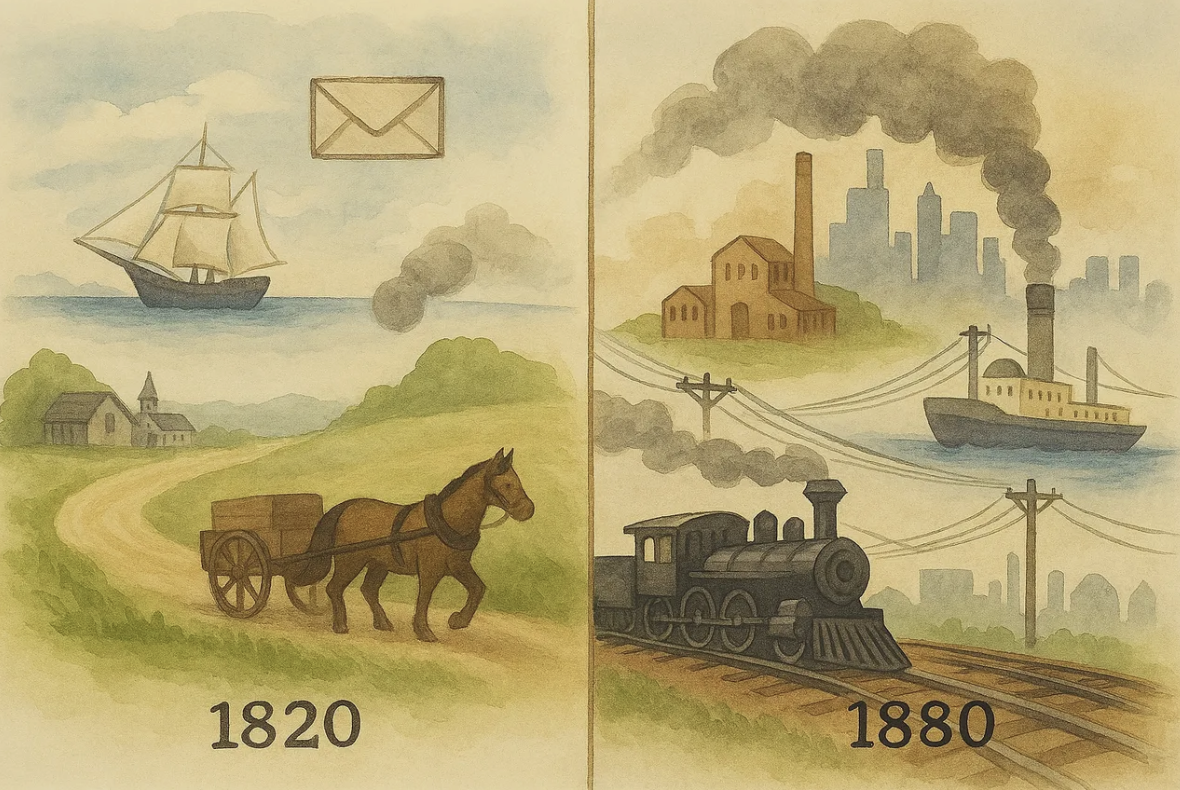
    Migration shifted populations from rural to urban areas, with Mexico City doubling in size to approximately 720,000 inhabitants by 1910. Immigration remained limited and elite-focused, particularly when compared with Argentina during the same period. Labor was retained on haciendas through debt peonage, a system reinforced by land laws that converted many rural residents into landless workers. Land use increasingly prioritized mining, oil, and export agriculture for external markets, binding Mexico to global commodity chains. Railways and ports facilitated the movement of raw materials to the United States and Europe. Energy systems shifted from animal and wood power toward coal and oil, often under foreign control.

    Foreign direct investment, foreign credit, imported machinery, and imported managerial expertise dominated economic expansion, while domestic financial intermediation remained weak. By 1911, U.S., British, and French investment in railways, mining, oil, and utilities exceeded an estimated US$3 billion. National research and development capacity remained minimal, with most technical knowledge flowing inward rather than being generated domestically.

    Institutions consolidated around centralized governance, export haciendas, foreign commerce, and local elites. The judiciary, police, and military primarily enforced elite property rights. A very small elite—fewer than one percent of landowners—controlled most titled rural land, while millions of villagers were left landless. Labor protections, land rights, and inclusive education lagged economic change, contributing to strikes that were violently suppressed. Education systems favored elites rather than building broad-based human capital.

    Mexico’s economic and social cycles became synchronized with global commodity and financial cycles, amplifying volatility. Fiscal revenue relied heavily on natural resource rents, leaving public finances vulnerable to external downturns. Following the global financial crisis of 1907, layoffs and unrest intensified. Land concentration and ethnic hierarchies were reinforced through political exclusion, deepening instability beneath the façade of order and progress. Communities that had previously depended on communal land systems bore the direct costs of these changes, while political voice remained concentrated among elites. 

    Change came from outside

    Most economic and technological change during this period originated outside Mexico. Rail, mining, agricultural, and oil technologies were imported after proving effective elsewhere. These technologies functioned as externally introduced systems that rapidly displaced existing production practices where conditions allowed. Foreign-owned firms expanded quickly, crowding out smallholder and communal systems and achieving economies of scale. In contrast, regions not integrated into export corridors often remained under smallholder and Indigenous management, creating sharp spatial divides.

    Market outcomes favored activities backed by foreign capital, export connectivity, and political relationships. These enterprises were not designed to maximize employment quality, resilience, or local social legitimacy. State policy rewarded actors aligned with export growth while providing little support to communal landholding or informal economies. Although this focus generated fiscal revenues and geopolitical ties, it came at the expense of inclusivity, resilience, and long‑term sustainability. Export estates, foreign infrastructure, and commerce thrived, protected from unrest by coercive political arrangements. Agricultural productivity per worker generally remained low, thereby contributing to faster-than-wages food price inflation.

    Imported technologies and organizational practices diffused rapidly, supported by policy and legal frameworks. Railways linked productive haciendas, mines, oil fields, ports, and foreign markets. Infrastructure investment and legal protections prioritized elite production systems. Concession frameworks and land titles ensured fiscal revenues while channeling resource rents to elites. Education systems reinforced the export-led model, while illiteracy rates remained between 70 and 80 percent by 1910. Success reinforced specialization, increasing Mexico’s dependence on a narrow set of export products and heightening vulnerability to global shocks and domestic social backlash. 

    The role of the Porfirian state

    General Porfirio Díaz dominated Mexican politics for more than three decades, ruling from 1877 to 1911. Under his authoritarian government, the state articulated a national mission centered on order, stability, and modernization through export-led growth. This approach provided investors and foreign partners with predictability but relied on centralized, technocratic, and coercive governance rather than inclusive institutions. The long-term objective was to catch up with global industrialization and urbanization, rather than to develop endogenous capabilities. Success was measured through exports and fiscal stability rather than broad welfare gains. Electoral control enabled Díaz’s repeated reelection, ultimately leaving revolution as the primary mechanism for reform.

    The state enacted land‑use, mining, and investment laws that redefined property rights in favor of private and foreign ownership, effectively dismantling communal tenure systems. Surveying companies were authorized to claim large areas for mining, agriculture, and oil. Regulatory frameworks minimized capital transaction costs while raising barriers to entry for local labor, smallholders, and Indigenous communities. Markets prioritized external trade integration over domestic development. Labor repression, including strike bans, reduced production costs while intensifying social tensions. The Cananea copper miners’ strike in 1906 and the Río Blanco textile workers’ strike in 1907 were both met with lethal force.

    Public investment and guarantees focused on railways, ports, telegraphs, and urban services to support export flows and fiscal revenues. Broad-based education and rural development were largely neglected. Public finance depended on concessions and resource rents, with little attention to redistribution or counter-cyclical policy. Spending prioritized debt service and fiscal balance. Support for domestic innovation remained limited, as technology and organizational practices were largely imported. These conditions directly contributed to the Mexican Revolution of 1910 and demands for free elections, limits on reelection, and structural reforms, including land redistribution.

    Conclusion

    The Porfiriato left Mexico with modern railways, expanding cities, productive agriculture, and large-scale mining—but without the social legitimacy required to sustain them. While the economy became deeply integrated into global markets, political voice, land access, education, and economic benefits remained highly concentrated. When global conditions shifted after 1907, the system collapsed, and revolution emerged as a response to exclusion and repression.

    For today’s policymakers, the lessons remain clear. Economic growth that concentrates benefits among elites, relies heavily on external market cycles, and excludes large segments of society is inherently unstable. Infrastructure, investment, and exports are essential for development, but they must be accompanied by institutions that expand opportunity, protect rights, and allow for feedback and gradual adjustment. Development is not only about how fast an economy grows, but about who participates, who benefits, and who has a voice.

  • Reducing Risk, Enabling Scale: Argentina’s Export Boom 1880-1914

    Reducing Risk, Enabling Scale: Argentina’s Export Boom 1880-1914

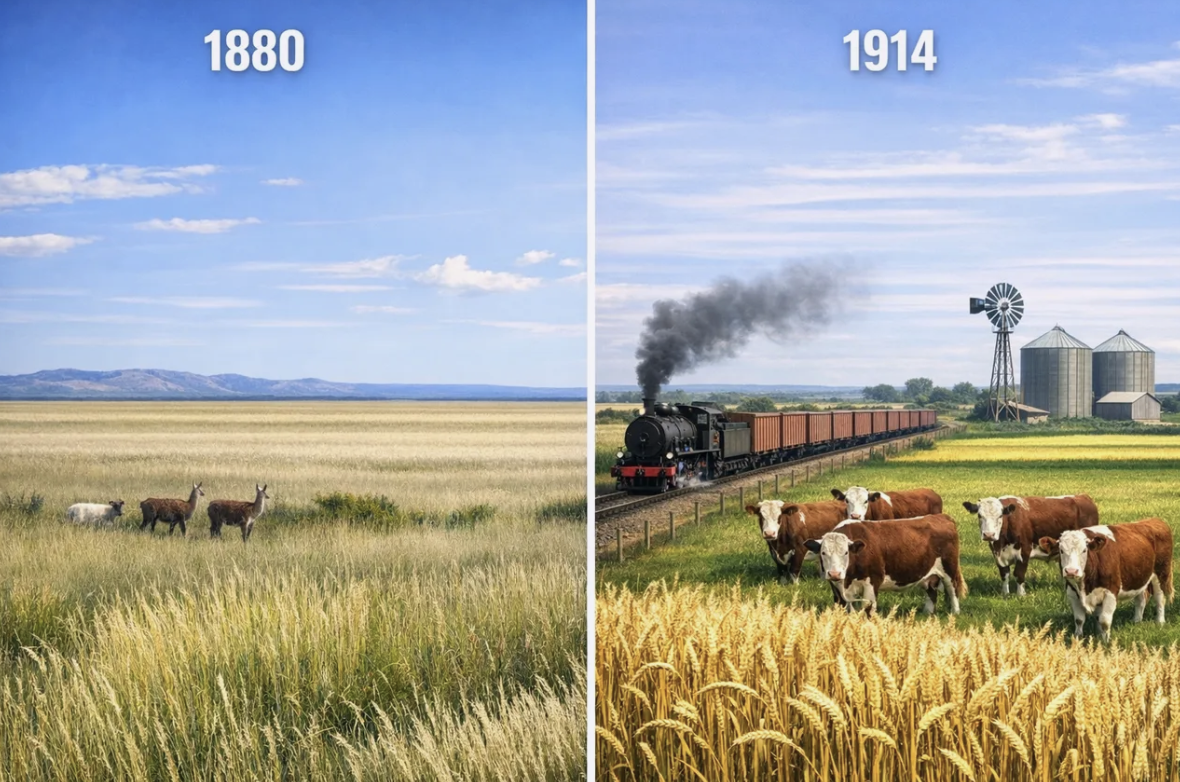
    Across Latin America, governments face a familiar challenge: how to accelerate growth under intense global competition, technological change, and constrained public resources. Argentina’s export boom between 1880 and 1914 offers a concrete case of how rapid growth can occur when markets, institutions, and the state align in support of export-led, integrated development.

    At the end of the nineteenth century, Argentina transformed from a sparsely populated frontier economy into one of the world’s leading food exporters. This transformation is sometimes attributed to good fortune: fertile land, rising European demand, and mass immigration. These conditions mattered, but they do not fully explain the mechanism. Fertile land does not, by itself, build railways, mobilize foreign capital at scale, or coordinate millions of individual production decisions about capital, infrastructure, markets, and rules into a globally competitive system. Growth at that speed required deliberate choices and sustained coordination.

    Argentina’s experience shows that rapid growth emerged from the interaction of three forces that remain highly relevant today. First, the country undertook a large-scale economic transformation, reshaping land use, logistics, and technology to meet external demand. Second, it allowed competitive selection to operate—favoring production models, regions, and firms that could scale, standardize, and integrate into global markets. Third, the state played an active but focused role, reducing risk, guaranteeing infrastructure, protecting property rights, and maintaining policy continuity rather than attempting to direct production decisions.

    This blog does not present Argentina’s historical model as something to be copied wholesale. Its social costs were real, and its long-term vulnerabilities became more visible after 1914. In the long term, Argentina became dependent on primary exports and foreign investment, thereby limiting its industrial development. Land was concentrated in the hands of a few, indigenous populations were marginalized, and social conditions were precarious for many immigrants. However, for countries across Latin America seeking faster growth today, the export boom remains a useful case for understanding how incentives, infrastructure, and institutions can combine to accelerate growth by enhancing coordination.

    Building an agricultural export system 

    Between 1880 and 1914, the Argentine Pampas were converted from grassland into a global export system for wheat, maize, beef, and wool. This shift coincided with the rapid urbanization and industrialization of developed countries, supported by steel, railways, electricity, and food-processing technologies. By 1913, Argentina accounted for 12% of the world’s wheat trade and was among the world’s leading exporters of chilled beef, with exports comparable to those of Canada and Australia. Exports values expanded sixfold from 1881–85 to 1910–14. Railways expanded from 2,200 km in 1880 to over 35,000 km by 1914. The railways integrated production with ports and global markets.

    Much of the financing came from Britain, which funded railways, ports, utilities, and banks. Foreign investments accounted for about half of Argentina’s capital stock; 60% of this investment came from Britain. British investors controlled about 80% of the railway system. After 1900, foreign investment grew by over 11% annually. Argentina attracted 3 million immigrants—mainly from Italy and Spain—who arrived between 1880 and 1914, doubling the country’s population. As steam shipping and refrigeration technologies became widespread, Argentine agricultural production was linked directly to increasingly urbanized European consumers.

    These changes also reshaped society and politics. A landowning oligarchy consolidated economic and political power, while urban working and middle classes expanded in Buenos Aires and Rosario. Buenos Aires grew into a global port city, reaching nearly 1.5 million inhabitants by 1914, up from about 180,000 in 1869. The region became increasingly Europeanized in language, norms, and institutions through migration and commercial ownership. Europeans owned about 70% of commercial houses in Buenos Aires. Land under cultivation expanded from 100,000 hectares in 1862 to 25 million hectares in 1914. At the same time, Indigenous knowledge and traditional land claims were marginalized through frontier expansion.

    Why the Pampas scaled first

    Argentina imported livestock breeds and grain varieties from Europe and adapted them to the specific conditions of the Pampas. Over time, producers kept the techniques, breeds, crop varieties, and labor arrangements that delivered the highest profits under local constraints and global demand. Provinces that were better connected and had stronger institutions gained easier access to capital, allowing them to expand more rapidly. In 1879, Argentina began exporting more wheat than it imported, and by 1914, it was among the world’s top wheat exporters.

    The Pampas region proved to be the most productive and cost-effective base for export agriculture in Argentina. Fertility mattered, but so did connectivity: railways, ports, and refrigeration reduced transport costs, reduced price dispersion, and increased price transparency. The port of Buenos Aires linked producers to global demand and world market prices. Consequently, global demand and pricing rewarded large-scale, standardized, and focused production over small-scale, diversified agriculture oriented toward local markets. Producers in the Pampas were typically more profitable, gained easier access to global markets, and became more attractive to investors. Foreign trade accounted for nearly half of Argentina’s GDP between 1870 and 1913, with wheat accounting for about 25% of exports.

    Technologies such as railway logistics and cold storage, new institutions including export houses and banks, and large-scale production approaches reduced unit costs and improved reliability. Frozen and chilled meats accounted for approximately 12% of exports between 1900 and 1913. Producers learned through imitation and experimentation, hired targeted foreign expertise, and benefited from the inflow of skilled workers from Europe. Over time, these complementary inputs—raw materials, capital, skills, infrastructure, and institutions—reinforced economies of scale and export specialization.

    The state played a crucial role in driving change

    The oligarchic Argentine state between 1880 and 1914 concentrated political power among landowners, commercial elites, lawyers, bureaucrats, and financiers. This coalition defined a national focus on export-led growth and global integration. Policy priorities included land titling and the expansion of agricultural frontiers, which would yield clearer titles, enforceable claims, and a lower risk of disputes for investors. Trade and immigration policies also favored openness, supporting export competitiveness and labor inflows. As a result, agricultural and meat exports grew at an average rate of 4% between 1875 and 1913.

    The state also established legal frameworks to protect private property, contracts, and foreign investments, thereby lowering perceived risk. Political institutions preserved elite control, thereby creating policy continuity aligned with export interests, even as this entailed exclusion, inequality, and repression. Regulation and public administration focused on expanding the agricultural export economy rather than promoting industrial diversification, thereby shifting expected returns toward specialized export agriculture.

    Finally, the state provided guarantees and concessions to railway companies, reducing investment risk and crowding in foreign capital: public spending prioritized ports, railways, customs, and urban infrastructure over education or industrial policy. The state ensured policy consistency and absorbed coordination risks, thereby enabling the agricultural export-driven development path to persist.

    Conclusion

    Argentina’s export boom shows that rapid growth is rarely the result of a single reform, sector, or single favorable condition. It is the outcome of coordinated change across production systems, institutions, and public policy. The Pampas did not become globally competitive simply because they were fertile. They became competitive because infrastructure connected them to markets, finance supported large-scale investment, technology reduced distance, and the state consistently reinforced this direction over time. Natural resource endowments are necessary conditions, but state leadership and coordination are required to use them productively at scale. 

    For today’s Latin American policymakers, the most important lesson is not about agriculture or exports per se. It is about focus and selection. Argentina’s state did not attempt to develop every sector simultaneously. Instead, it concentrated public resources on a narrow set of priorities—transport, ports, trade openness, and legal certainty—and allowed firms and regions to compete within that framework. Those that could scale and adopt relevant technologies advanced; those that could not fell behind. Thus, global integration and competition did the work of discovery and delivery. Growth was rapid precisely because choices were made and trade-offs were managed.

    At the same time, Argentina’s experience also highlights a structural warning. Once established, development paths become self-reinforcing. Infrastructure, land ownership patterns, political coalitions, and fiscal systems adapt to the dominant model. Infrastructure networks, fiscal reliance on specific revenues, and political coalitions can lock in economies for the future. This makes early success powerful, but it can also make subsequent adjustments difficult. Countries that accelerate growth, therefore, need to consider not only how to grow quickly, but also what kind of economy they are locking in.

    The broader takeaway for Latin America today is clear. Accelerating growth does not require choosing between markets and the state. It requires a state that shapes incentives, absorbs risk where private actors cannot, and commits credibly to a long-term direction, while allowing competition and global integration reveal what can scale and penalize what cannot. Argentina’s early success shows what is possible when this alignment is achieved—and why getting the initial policy direction and investment priorities right matters for the decades that follow.

  • The Great Shift: 2020–2070 in Latin America and the Caribbean

    The Great Shift: 2020–2070 in Latin America and the Caribbean

    Chile exports US$50 billion in copper annually. At the same time, Chile imports the software that runs its mines, manages its power grid, and processes its financial transactions. By 2050, which side of this export–import equation will matter more?

    Energy systems are shifting quickly. Jobs are changing. Innovative technologies are emerging and spreading. These changes are already visible across Latin America and the Caribbean, where the energy is already clean. Exports of technology, information technology services, and business services have grown at double-digit rates in recent years. The future cannot be predicted with precision, but the broad direction is clear and widely recognized among futurists.

    Artificial intelligence is advancing at an extraordinary speed. Energy and mobility systems are being restructured. Work is being reorganized. Democracies are under pressure as online worlds reshape how people communicate and mobilize. Climate impacts are increasingly visible.

    The region enters this transition with a mix of vulnerabilities and advantages. Growth has been volatile. Many economies depend heavily on natural resource rents; in Chile and Peru, these rents account for 10–15 percent of GDP. Inequality remains high, and political power is often concentrated. At the same time, LAC holds abundant renewable‑energy resources, critical minerals, young populations, rich biodiversity, and a rapidly expanding digital ecosystem. Chile and Peru produce about 40 percent of the world’s copper, and Chile, Argentina, and Brazil together produce one-third of global lithium.

    Countries that build the capacity to adapt, learn, and steer change will be best positioned to ensure that these transformations improve people’s lives. This blog outlines how the human ecosystem is likely to evolve, the forces driving those changes, and how states can guide transitions already underway. The future that emerges is likely to feature lower energy costs, cleaner transportation, more accessible public services, and broader opportunities.

    Where is the capital shifting?

    Energy remains the foundation of every economy. The coming decades will be shaped by clean, affordable energy, widespread electrification, and intelligent infrastructure. Financial capital is already shifting away from fossil-fuel assets toward large-scale investment in renewable energy, modern grids, energy storage, and electrified transport. As clean technologies scale, costs fall, which accelerates further deployment. Countries that move early will gain productivity, reduce energy costs, and build competitive industrial ecosystems. Those who delay risk being locked into high-cost fossil‑fuel systems, facing stranded assets, and losing competitiveness.

    The energy transition is also reshaping global demand for critical minerals such as lithium, cobalt, copper, and rare‑earth elements. This shift creates a major opportunity for LAC, which holds some of the world’s most important reserves and production capacity.

    Natural capital will become increasingly valuable as high-income economies move toward circular material flows. LAC can generate new revenue streams by recognizing and monetizing the value of its ecosystems. The region contains some of the world’s most productive agricultural land and freshwater reserves. Regenerative agriculture and climate-smart farming could position LAC as a global anchor for food security.

    Knowledge will continue to expand rapidly, but so will misinformation and fragmentation. The ability to filter, absorb, and apply information will matter more than access to information itself. A small number of global actors will dominate energy and knowledge technologies, and LAC risks remaining a consumer rather than a producer unless it invests in capabilities and innovation.

    How will institutions and societies change?

    Social institutions will be reshaped by the online world and artificial intelligence. Economies will become more service-oriented and more dependent on knowledge-intensive work. AI will automate coordination, logistics, and decision-making across sectors. This will require novel approaches to governance, transparency, and workforce development, including changes in academic training.

    Institutions that fail to modernize will face legitimacy challenges. Those that adapt will become more networked, multi-stakeholder, and technocratic, using digital tools to guide decisions. Trade will shift toward services, data, and intellectual property, as well as regionalization, friend-shoring, and customized products. LAC can benefit from these shifts if it manages governance, energy, and logistics costs effectively. Mexico is already one of the United States’ top trading partners, reflecting these trends.

    Social systems will need to adapt to rising temperatures, droughts, and extreme events—especially in smaller states and coastal cities. As automation expands globally, the region’s traditional advantage in low‑ and mid-skilled labor will erode, pushing economies toward commodities and natural‑resource rents unless they diversify.

    How will social order evolve?

    Transitions in energy, mobility, logistics, and labor will disrupt existing hierarchies and political coalitions. Conflicts over land, minerals, and labor mobility are likely to intensify. Social media will amplify polarization and shorten political cycles. Fragmentation and institutional erosion could weaken states’ ability to plan and execute long-term strategies.

    The global order will continue shifting toward a more multipolar system built around regional blocs and shared markets. LAC’s regional institutions—such as the Americas Partnership for Economic Prosperity, CARICOM, and MERCOSUR—are likely to play larger roles. Societies that embrace inclusive governance will be more stable; those that do not may face greater fragmentation and confrontation.

    What drives which technologies and practices win?

    A new wave of technologies—AI, digital platforms, advanced materials, synthetic biology, robotics—will reshape production and services. AI will reduce experimentation costs, enabling rapid innovation in design, business models, and industrial processes. Countries such as Chile, Colombia, Brazil, and Mexico are already expanding electric‑vehicle adoption and electrifying bus fleets.

    Market selection will favor technologies that reduce costs. AI and clean energy will lower marginal costs, increase reliability, and enable faster scaling across energy generation, storage, electrification, and logistics. Economies of scale, network effects, and cost curves will reinforce these trends. Subsidies, standards, regulations, and procurement will shape which technologies succeed. Social movements and public opinion will also influence adoption.

    Digital networks will accelerate the spread of ideas and practices, but they will also create fragmentation and echo chambers. Technology diffusion will depend on state capacity, infrastructure readiness, and social acceptance. Countries with strong grids, digital connectivity, mass transit, and the ability to mobilize capital will see faster diffusion. Those with weaker institutions or limited social license will lag. Corporate supply chains will accelerate cross-border diffusion, and policy emulation will spread successful models.

    What can states do?

    States will remain central to setting direction, defining mandates, and coordinating across sectors. The focus will increasingly be on improving livelihoods, creating quality jobs, and reducing the cost of living, rather than just meeting international targets. Strategic coordination is essential to build pathways to lower energy costs, electrification, digital infrastructure, and AI deployment. Clear direction reduces the risk of technological lock-in and market fragmentation.

    States must also shape market rules that align profitability with social outcomes. These include results-based contracts, revenue‑stabilization mechanisms, infrastructure reforms, new financial instruments, data standards, and AI governance. States will continue to absorb risks that enable private investment in modern technologies and infrastructure.

    Multilateral systems will remain important but will progress slowly. Smaller groups of aligned states, technological partners, and regional blocs will drive faster implementation.

    Public investment in infrastructure, public goods, and industrial ecosystems will remain essential. States will lay the foundations for clean energy and the AI economy. Public finance will be critical for blending with private capital to scale investment. Chile and Uruguay are leading in innovative financing instruments such as green and sustainability-linked sovereign bonds, while Ecuador, Belize, and Barbados have recently completed debt conversions. Industrial innovation policies, skills development, and institutional learning systems will be key enabling conditions. Infrastructure and computational capacity will become strategic assets.

    Some states will move quickly with coordinated governance; others will remain reactive and fragmented.

    Conclusion

    Between 2020 and 2070, the global human ecosystem will be reshaped once again. Each country’s trajectory will depend on how effectively the state directs, coordinates, and manages technological change, volatility, protest, and inequality. The future will unfold regardless, but it can be shaped by choices that lower the cost of living, improve public services, and expand opportunities.

    Countries that harness existing and emerging technologies will reduce costs and improve the efficiency of energy, transport, sanitation, water, logistics, communications, and health services. The alternative is to remain trapped in oligopolistic markets and elite-driven decision-making that deepen inequality, slow growth, and leave societies exposed to external shocks. The world is changing; standing still is not an option. 

  • 300 Years of Technological Revolutions Reshaping Nations

    300 Years of Technological Revolutions Reshaping Nations

    Technological revolutions do not just introduce modern technology and business innovations. They reorganize the entire economic ecosystem. They accelerate flows of energy, materials, capital, and knowledge. Over the last three centuries, successive technological revolutions have increased global energy use by more than an order of magnitude. They hit fast, scale hard, and reorganize entire economies before institutions can catch their breath. Electricity, cars, and the internet all transformed daily life faster than governments could adapt. Technological revolutions destabilize the social order in ways that can lift nations—or break them. Understanding these dynamics is essential for any country navigating the next wave.

    Latin America and the Caribbean have lived through this pattern before—from the steam age to electrification to the digital wave—and each time the region has faced the same question: adapt early or absorb the shock later. 

    Today’s transition is larger and faster than any previous one. AI, clean energy, electrification, and digital‑physical integration are reshaping global markets, supply chains, and geopolitical power. Some estimate that AI adoption doubles every 6-12 months, that international clean energy investment will surpass 2 trillion in 2025, and that global EV production will continue to grow at 25-30% year-on-year. Countries that can manage these shifts will unlock new sources of productivity, industrial competitiveness, investment, and resilience; those that cannot face widening gaps, rising volatility, and growing social pressure.

    The challenge is simple to state but difficult to execute. Technological revolutions transform flows, institutions, and social orders far more quickly than societies can absorb them. The only actors with the mandate, scale, and legitimacy to guide these transitions are states. And the region’s future depends on whether governments can build the capabilities, coalitions, and long-term strategies needed to steer this wave rather than be swept aside by it.

    This blog distills the core lessons from past technological revolutions—what changes they drove, what drove them, and what states must do to turn disruption into development.

    Human ecosystems change faster than societies can absorb.

    Capital stocks and flows transform at breakneck speeds. Every technological revolution begins with a surge in flows—energy, materials, finance, and information. Between 1800 and 1910, global freight capacity increased by orders of magnitude as steamships and railways reshaped trade routes and volumes. These flows expand by orders of magnitude and shift their geographic centers. They create new capital stocks: railways, grids, ports, data networks, and industrial clusters that lock in development paths for decades. The speed of expansion often outpaces society’s ability to adapt, triggering bubbles, busts, fiscal pressure, infrastructure bottlenecks, and geopolitical competition as states and firms race to control the new flow architecture.

    Institutions struggle to keep up with the pace of change. Institutions designed for smaller, slower economies suddenly face volumes and velocities they were never built to manage. Institutional responses to major technological shifts often lag by a decade or more. Governments must reinvent planning, legal systems, financial architectures, education systems, procurement, and regulatory regimes to address new risks and coordinate larger markets. When adaptation lags, inequality spikes, political polarization intensifies, and governance systems enter crisis. Only four LAC countries: Chile, Brazil, Mexico, and Costa Rica, appear towards the top of the Global Innovation Index, reflecting persistent institutional gaps in science, technology, research, and development. 

    Social order becomes more volatile and turbulent. Mechanized industry in Europe triggered dozens of major riots and uprisings between 1811 and 1848. Technological revolutions reorder power. They disrupt labor markets, unsettle political coalitions, and challenge established elites. The result is turbulence: protest waves, backlash movements, and, at times, open conflict. Policy sequencing and transition management are critical to success. Wars, revolutions, and authoritarian turns often emerge when old orders resist change or when new groups demand inclusion. These cycles determine whether societies harness technological change or fall into militarization and rivalry.

    Variation, selection, and diffusion drive technological revolutions.

    Variation increases when knowledge flows, and innovative ideas flourish. For example, the number of scientific publications has doubled every decade since 1950. Breakthroughs emerge when communication technologies, scientific institutions, and cultural norms increase the generation and exchange of ideas. Variation spikes when experimentation becomes cheaper, literacy rises, and dense urban clusters intensify knowledge flows. These bursts of novelty create the raw material for new industries, infrastructures, and social models.

    Selection rewards technologies that reduce distance effects and complexity. Across all waves, winning technologies are those that reduce the cost of moving energy, people, goods, and information. Steam engines, railways, electricity, automobiles, microchips, and digital networks all share this trait. Steam engines cut transport costs by 90%; railways cut travel times by 95%; containerization reduced shipping costs by 50%. These changes enable the emergence of larger markets and more complex organizations. Industrial policy choices select successful firms, reinforced by capital flows, standards, and political decisions that privilege scalable, interoperable systems.

    Diffusion rates depend on institutions and social capacities. Technologies spread fastest where states and firms can mobilize capital, build complementary infrastructure, and train skilled labor. Diffusion is slow where hierarchies and elites resist change, institutions lack capacity, or social norms discourage experimentation. Countries with stronger institutions tend to adopt innovative technologies more rapidly than those with weak regulatory and financial systems. The speed and breadth of diffusion determine whether revolutions generate inclusive growth or deepen global divergence.

    States must guide technological revolutions.

    States need to build core infrastructures. Every successful technological revolution sits on foundational systems—transport, energy, communications, finance, and standards. In the United States, the federal government provided substantial support for early railway expansion and covered most of the cost of the interstate highway system. China’s state-led development model channeled several trillion dollars into energy and transport infrastructure between 2000 and 2020. These infrastructures reduce uncertainty, lower transaction costs, and enable large-scale investment. Private actors cannot build them alone. Public-private coordination and state support for long-term financing are crucial. Without state leadership, innovative technologies remain local curiosities rather than national or global systems.

    States need to manage social disruption and its causes and stabilize expectations. Technological revolutions create winners and losers. States must cushion shocks through education, social insurance, labor protections, and redistribution. Countries that invest in social protection during technological transitions tend to experience fewer episodes of political instability. Managing social disruption is particularly important in LAC, where up to half of the workers may be informal, making them highly vulnerable to technological displacement. Effective states prevent disruption from spiraling into unrest or authoritarianism by ensuring transitions are socially and politically sustainable. When states fail, societies fracture.

    States need to steer direction through long-term strategy and low volatility standards. In LAC, a small group of countries: Barbados, Chile, Colombia, Costa Rica, Uruguay, Brazil, Guyana, and Mexico have adopted national or sectoral strategies with multi-decadal horizons. States shape technological trajectories by setting standards, funding research, coordinating industrial policy, and negotiating international rules. As flows globalize, multilateral and regional institutions become essential for governing cross-border capital, data, energy, and materials. Strategic states use these tools to align revolutions with national priorities. Intra-LAC trade accounts for only 15% of total trade, compared with approximately 60% in the EU. External forces shape weak states, not the other way around. 

    Conclusion

    Technological revolutions are not just periods of technological and business innovation. They are system-level reorganizations of how societies produce, govern, and live. They determine who grows, who falls behind, and who gets left out entirely. For LAC, the next wave is already underway. AI is reshaping production systems, and some suggest it could add up to US$15 trillion to the global economy by 2030. Still, without a deliberate strategy, LAC would capture only a small share of this value. Clean energy is redrawing the international map of competitiveness. Electrification is reshaping cities, transport, and industry. Deep electrification in the LAC region could reduce oil imports by tens of billions of dollars annually. Industrial competitiveness and fiscal stability are bound to this technological revolution. 

    The region has a choice. It can treat these shifts as external shocks and respond to them, thereby perpetuating the cycle of late adoption and limited gains. Or it can approach this moment as a strategic opportunity: to modernize institutions, mobilize investment, build productive capacity, and design transitions that are fair, stable, and aligned with national priorities. States will need to plan and coordinate across sectors to deliver the required investments. 

    History is clear. Countries that lead technological revolutions do so because their governments act early, decisively, and with a long view. They build the infrastructure on which markets depend. They manage disruption before it becomes a crisis. They set standards that shape industries. They negotiate internationally from a position of purpose rather than vulnerability.

    The next technological wave will reward ambition and punish hesitation. LAC can shape this transition—if its states choose to be at the forefront.

  • The Costs of Technological Change

    The Costs of Technological Change

    Latin America and the Caribbean have experienced multiple technological waves, beginning with steam and railways. The region has been more of a spectator to these waves than a participant, arriving late to the party of innovative technologies. The first railway line in Britain appeared in 1825; LAC built its first lines between 1850 and 1860. We have already entered a new technological wave, and the region is beginning to see the effects – commodity pressures and global market shifts. LAC can play a significant role in this technological wave, if only because of its mineral wealth and renewable energy potential. 

    If the region is to become a more active participant in this technological wave, it is helpful to understand the consequences of past technological waves to better manage the process. 

    Technological revolutions tend to deplete natural capital, widen inequality, destabilize institutions, and fracture social order. LAC can be left behind by failing to lead change and by failing to manage the inevitable consequences of change. While technological revolutions offer many positive socioeconomic changes, they also have documented negative consequences, including stranded industries, volatile markets, weakened governance, and communities left behind. The purpose of this blog is to present the more negative aspects of technological revolutions. By understanding the pressures on capital, social institutions, and social order, LAC could design a more resilient transition. 

    Technological revolutions reshape prosperity

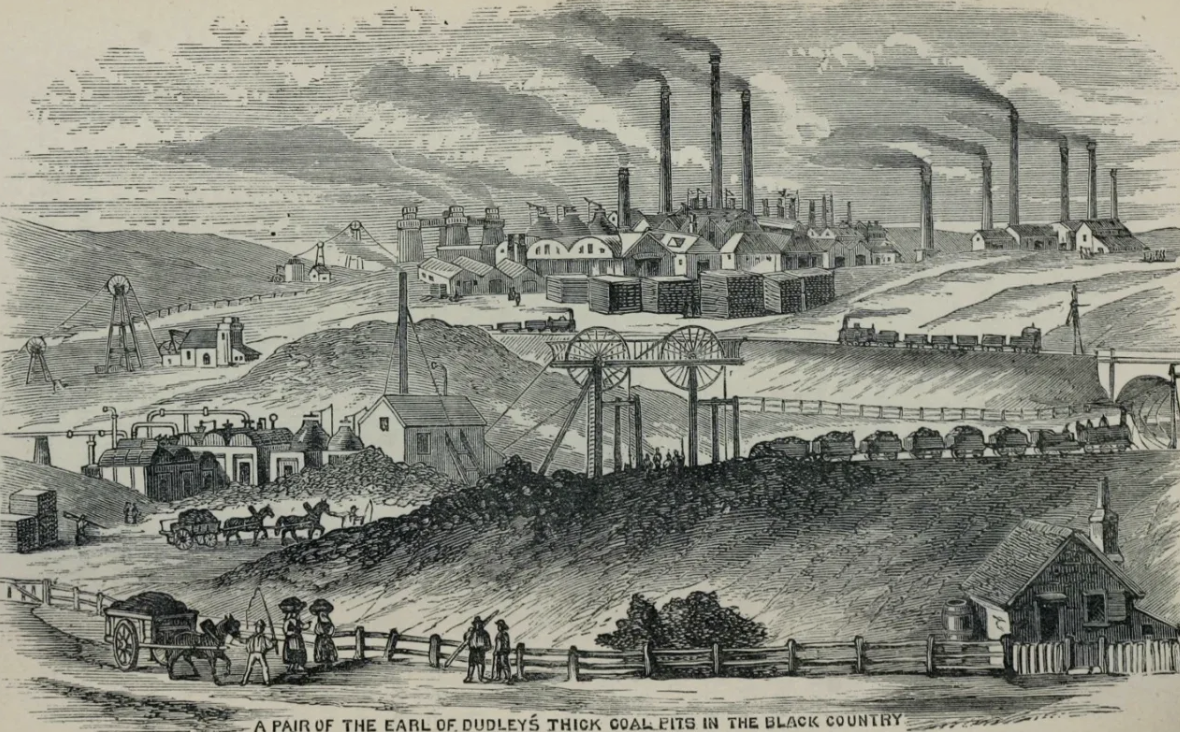
    Past technological revolutions have rapidly increased the extraction of natural capital. Innovative technologies accelerate the conversion of forests, soils, minerals, and water systems into inputs for rapid industrial expansion. The growth of coal extraction in Britain between 1770 and 1830, which multiplied severalfold, devastated landscapes in northern England and Wales. Environmental challenges concentrate in areas that are either the origins of natural resources or the destinations – cities – where industrial production takes place. Both types of areas are subject to pollution and environmental degradation. Manchester in the 1850s was a pollution hotspot, while the London Smog of 1952, which killed up to 12,000 people, illustrates the effect of urbanization and industrialization with minimal regulation. Demand for resources and inputs can also lead states to justify militarized control over other nations’ resources to secure the inputs needed for continued growth. The competition for African minerals between 1880 and 1914 to feed European industry led to the use of military force to control 90% of the landmass. 

    Inequality increases within countries and between countries. High-skill workers and emerging industrial and urban elites disproportionately capture the gains of change, while low-skill workers may face displacement and wage stagnation. The Luddite rebellions of textile workers in Britain between 1811 and 1816 illustrate these conflicts, as factories and mechanized looms displaced traditional textile workers. Older industries from past technological revolutions and their workers may face obsolescence, with assets and jobs becoming stranded. The decline of coal mining in Britain from the 1970s to the 1990s left entire communities stranded. Employment in mining declined from 300,000 to 10,000 over 40 years, fueling significant conflict among the government, mine owners, and miners. Financial systems often become more volatile, as speculative finance and credit booms can drive bubbles in which many firms attempt to capture market share in innovative technologies. Everyone wanted to build railways in the 1840s, but not everyone could make them economically viable, which led to railway share prices collapsing by half. The dot-com bubble between 1995 and 2000 saw many companies fail, leading to a 75% decline in the NASDAQ index between 2000 and 2002. In the past, these imbalances could push societies toward hegemonic economic strategies – domination over emerging technologies or the supply chains to compensate for volatility at home. 

    Cultural capital is profoundly affected by technological revolutions and takes the longest to recover. Traditional knowledge systems lose legitimacy as the focus grows on areas of rapid economic growth, and social trust erodes. Many key agricultural products, such as maize, derive from indigenous traditional knowledge, but agrarian modernization between 1900 and 1950 focused exclusively on industrial agriculture. Migration and urbanization, driven by technological revolutions and new wealth hierarchies, can weaken community bonds and even disrupt intergenerational continuity. LAC’s urbanization rate rose from 40% in 1950 to more than 80% today, fundamentally changing the region. Artistic expression is often commercialized or homogenized to align with global norms, displacing localized identities. Simpler nationalist narratives may begin to replace more complex cultural narratives to bind communities and ensure unity and purpose in rapidly changing states.

    Social institutions fall behind

    Governance, regulatory systems, and institutions often struggle to keep pace with technological change. The earliest factory acts were enacted in 1833, decades after factories were established in Britain. Regulations were not yet ready, and it takes time for lawmakers to address new industries. For example, U.S. antitrust laws were enacted in 1890 and applied to Standard Oil in 1911, well after the company had dominated the oil industry, controlling up to 90% of refining capacity. Oversight systems become outdated or unable to manage rapid expansion, as in the U.S. railroads between 1850 and 1880. Some sectors or regions move rapidly, while others remain unchanged, making coordination challenging. Newly created governance and policy gaps create openings that individuals and corporations can exploit through elite capture, corruption, or the abuse of incentives. Under these circumstances, some governments turn to stronger centralized authority or coercion to reassert control, for example, Soviet industrialization in the 1930s.

    Public services such as health, education, housing, and social protection are often overwhelmed as people migrate to cities. The massive expansion and fivefold population growth in Manchester and London between 1800 and 1850 completely overloaded nascent urban services. New risks may emerge as pollution drives new health system needs. Education systems may not produce the skilled workforce required for innovative technologies. Housing shortages may increase in rapidly growing cities – or cities may shift to elevated levels of disorganization and informality. Informality is characteristic of the peripheral areas of many Latin American cities, resulting in favelas and barrios where more than a third of residents live. Social protection models often cannot keep pace with new areas of insecurity. Gig workers between 2010 and 2020 struggled to secure protections because they were outside traditional labor-management systems.

    Fiscal, financial, and infrastructure institutions are also acutely stressed during rapid economic growth. Tax systems may not be well equipped to capture value from emerging sectors. Digital platforms established between 2000 and 2020 often operated beyond traditional tax frameworks. Subsidies and industrial policy may be outdated and targeted toward supporting now-defunct industrial sectors. Coal subsidies in Europe between 1950 and 2000 persisted long after coal had become economically unviable and uncompetitive. Existing infrastructure systems may become congested or expand unevenly, creating bottlenecks that slow growth or, in some cases, creating investment bubbles or stranded assets as new forms of infrastructure take over. 

    Social order and cycles become turbulent

    Social order destabilizes as new power hierarchies fragment identities. New economic elites often emerge, sharpening the rural-urban divide and creating geographical inequalities. Silicon Valley created new technological elites and corporations between 1980 and 2020. Generational tensions can increase around innovative technologies and the values they may embody. The generational divide is particularly vivid as communications technologies have shifted from radio in the 1920s, to TV in the 1950s, and to the internet and social media in the 1990s. Societies may reformulate informal norms to meet new ordering needs. Changing identities creates opportunities to forge new political alliances around the new winners. 

    The “normal” individual, institutional, and environmental cycles are often substantively changed by technological change. Shift work in factories and mining in the 1800s, with 60-70-hour workweeks, significantly altered traditional daily work and family cycles. As a result, people who need to accommodate the massive social, economic, and cultural changes, including changes in work and urban environments, experience rising anxiety and burnout with health consequences. Political cycles can often shorten when governments respond reactively to public frustration, rather than working through structured long-term plans that recognize and manage change.

    Technological revolutions strain environmental, demographic, and market cycles. They can increase commodity pressures by demanding inputs, such as rubber, copper, and oil, between 1880 and 1970. They can create environmental crises through resource extraction or pollution, and they can shift migration pressures as countries seek new skills and people seek new opportunities. An excellent example of an ecological crisis caused by technological change is the Dust Bowl of the 1930s, which displaced hundreds, if not thousands, of people due to a shift to mechanized farming. Market cycles are integral to technological revolutions, with the initial stages dominated by speculative capital, which can often lead to investment bubbles and crashes. 

    Conclusion

    Technological revolutions reshape societies. The present technological wave will reshape countries across LAC. The region can either absorb the shocks of this ongoing revolution and capitalize on opportunities, or countries can shape their own pathways. 

    The likely consequences of technological waves are predictable and historically documented, even if it is challenging to predict the specific technological changes. It is possible to design transitions by focusing on stronger institutional capabilities, protecting people, and preserving cultural identity while still embracing, even leading, technological change. 

    The challenge for LAC countries is to anticipate changes before they arrive, lead the necessary institutional shifts, and ensure that the technological wave serves as a foundation for shared prosperity across the region rather than another missed opportunity. Today, states should consider the necessary skills, systems, planning processes, governance shifts, and industrial policy sequencing to maximize regional benefits. 

  • From Microchips to Megatrends: The Global Shifts of 1970–2020

    From Microchips to Megatrends: The Global Shifts of 1970–2020

    Between 1970 and 2020, the world changed faster than at any other time in human history. Microprocessors, digital sensors, personal computers, the internet, smartphones, and cloud computing all emerged over the course of five decades. The 1971 Intel 4004 chip contained just 2,300 transistors; by 2020, Apple’s M1 chip held 16 billion. These technologies now underpin everyday systems—mobile banking, telemedicine, online education—shaping how billions of people live, work, learn, and connect.

    These innovations rewired the global economy. Capital now moves at the speed of light. Cross-border capital flows expanded from tens of billions to more than US$1.2 trillion. Merchandise trade grew from hundreds of billions to US$18–19 trillion. Internet use rose from millions in 1990 to 4.5 billion users in 2020. East Asian economies emerged as global manufacturing hubs, while the United States consolidated its dominance in finance, digital platforms, and knowledge networks. In Latin America and the Caribbean, new opportunities for growth, innovation, trade, and integration appeared—but exposed longstanding challenges in productivity, inequality, and institutional capacity.

    Speed, scale, and knowledge exemplify today’s world. Countries that invested early in education, research, infrastructure, and capabilities became innovation leaders, lifted millions out of poverty, and intensified global competition. Participation in value chains now extends beyond natural resources and manufacturing to include data, technology acquisition, and the capabilities needed to adapt and learn.

    Understanding the last fifty years is essential for shaping the next fifty. Latin America and the Caribbean have talent, natural capital, and creativity. The region could lead to the emergence of green, digital, and knowledge-based economies. Doing so will require learning from the past and adopting deliberate strategies that build on regional strengths to turn global change into regional opportunity.

    This blog examines the transformations that occurred, the forces that drove them, and the role of states in shaping their trajectories.

    Systemic Changes in Capital Flows at Speed and Scale

    The most striking feature of this period was the speed and scale of change. Foreign direct investment stock rose from roughly US$100 billion in 1980 to nearly US$40 trillion in 2020. Finance could move instantaneously across borders. Global trade expanded from about US$2 trillion to US$18–19 trillion as supply chains stretched across continents. Trade in financial, technological, informational, and digital services reached US$6 trillion. Knowledge now moves in milliseconds, and people increasingly migrate to fill labor shortages or build skills. Trade shifted from simple goods to complex, fragmented value chains and to services and data rooted in intellectual property and knowledge.

    A Reconfigured Global Economy

    The global economy was fundamentally reshaped. East Asia—first Japan, then Korea, Taiwan, Singapore, Hong Kong, and later China and Vietnam—became the world’s manufacturing hub. Many of these economies moved from low‑ or middle-income status in 1970 to high-income status by 2020. South Korea’s per capita GDP rose from under US$300 in 1970 to more than US$30,000 in 2020. China became a central node for trade, manufacturing, and technology, while the United States shifted toward dominance in finance, platforms, and knowledge networks.

    Advanced economies such as the United States, Germany, the Netherlands, and the Nordic countries retained their leadership in technology and finance, with large corporations becoming increasingly influential. The internet, smartphones, and digital platforms reshaped the movement of knowledge, capital, and trade. Resource-rich and well-governed exporters—including Norway, Saudi Arabia, the UAE, Qatar, and Kuwait—leveraged oil and gas rents to accelerate development, supported by large inflows of migrant labor. New middle powers such as South Korea, India, and Brazil strengthened their positions as they integrated into global supply chains.

    Countries facing conflict or severe mismanagement fell further behind the global frontier, struggling to integrate into trade and knowledge flows and becoming increasingly dependent on aid, remittances, or single commodities. In Latin America, countries such as Chile, Uruguay, and Costa Rica advanced, but the region did not overcome persistent challenges in productivity and inequality.

    Technologies, Liberalization, and Knowledge as Drivers of Change

    The technologies of this ICT revolution reflected two powerful empirical patterns. Moore’s Law observed that the number of transistors on an integrated circuit doubles roughly every two years. Wright’s Law showed that for every cumulative doubling of production, the cost of a technology falls by a constant percentage. Together, they drove a dramatic decline in the price of computing and digital infrastructure.

    The internet, mobile computing, cloud services, and fiber‑optic networks created a new technological paradigm. Borders became porous to capital, knowledge, and information. The logistics revolution—especially containerization—reduced shipping costs by 75–90% and cut shipping times in half, making global value chains more feasible and increasing the need for international standards. Financial innovations, including deregulation, derivatives, global capital markets, electronic trading, and mobile money, transformed how cash flows and laid the groundwork for digital assets such as cryptocurrencies. Daily foreign exchange trading rose from the low hundreds of billions in 1980 to US$6.6 trillion in 2019.

    Cost competition drove offshoring, nearshoring, and friendshoring as global supply chains expanded. Energy shocks spurred efficiency, diversification, and a focus on energy independence. Geopolitics shifted with the end of the Cold War and the rise of China, as the global economy moved from industrialization and production toward technology and knowledge. Trade and capital liberalization, supported by international agreements, encouraged private‑sector engagement and privatization.

    Capabilities as the New Currency of Nations

    Capabilities became increasingly decisive. Education, research and development, and digital infrastructure were essential for securing national comparative advantages. Early movers such as the United States and the United Kingdom became financial hubs. In contrast, early, low-cost industrializers such as China and South Korea scaled up manufacturing and became hubs of production. The global economy became more integrated and moved toward digitization, knowledge, and networked production. Knowledge flowed directly through digital networks and indirectly through migration, with the Gulf states alone hosting more than 30 million migrant workers.

    States and Multilateralism

    States played a significant role in shaping long-term development pathways. Korea, Taiwan, and China actively pursued industrial advancement, calibrating the pace of liberalization in trade, capital, and migration. Other countries positioned themselves as financial or corporate centers or moved rapidly into clean energy to reduce dependence and volatility. Financial deregulation in the United States and the United Kingdom accelerated global capital flows by relaxing capital controls, reducing trade barriers, and promoting privatization and public-private partnerships. Many countries invested in migration, education, and R&D policies to cultivate the talent and capabilities needed to leverage innovative technologies.

    Multilateral organizations—including NAFTA, ASEAN, and the EU—helped stabilize change and set standards for a global marketplace. NAFTA tripled North American trade from US$290 billion in 1993 to US$1.1 trillion in 2016. The WTO codified global trade rules and accelerated supply chain integration, while the G7 and G20 provided coordination in an increasingly complex global economy. In Latin America and the Caribbean, MERCOSUR, CARICOM, and the Pacific Alliance supported regional integration.

    In some cases, state interests and multilateral systems evolved together, producing what some analysts call “hyper‑globalization.” Yet global change also created winners and losers within advanced economies. Some regions lost manufacturing jobs to trade and automation, while urban areas captured gains from finance, technology, and knowledge flows. In the United States, manufacturing employment fell from 19 million in 1979 to 12 million in 2020. These internal disparities fueled populism and domestic backlash, challenging multilateralism.

    Conclusion

    The last 50 years clearly show that countries can take an active role—and adopt long-term strategies—to accelerate economic growth. The Asian Tigers sustained growth rates of 6–8% for decades. The United States continued to lead in finance and innovation. The Gulf states transformed oil and gas wealth into US$3.5 trillion in sovereign wealth funds, accelerating broader development.

    Latin America and the Caribbean now face a similar moment of choice. The next wave of global transformation—energy, biotechnology, advanced manufacturing, data management, and artificial intelligence—is already underway. Countries that invest in institutional and individual capabilities and open channels for knowledge and trade based on their comparative advantages will scale their economies. Those who hesitate risk missing the opportunities ahead.

    The region has abundant energy resources, the world’s largest lithium reserves, exceptional solar potential, vast natural and cultural capital, and a growing digital economy. The question is whether LAC countries will work together to shape the next technological wave—or be shaped by it.

  • Engines of Change 1920-1970 Cars, Planes, Fridges, Assembly Lines

    Engines of Change 1920-1970 Cars, Planes, Fridges, Assembly Lines

    The human ecosystem changed fundamentally across many countries between 1920 and 1970. Much of what we recognize in modern life emerged during this period: cars, planes, refrigerators, televisions, and container ships. These innovations reshaped cities, reconfigured trade routes, and reordered the global hierarchy. The United States led these transformations, followed by West Germany, France, Italy, Belgium, Greece, and Sweden. South Korea, Taiwan, Hong Kong, Singapore, and the Soviet Union also underwent rapid structural change.

    Two major growth booms defined the era. The first, in the United States during the 1920s, established the country as a technological leader. The second came after 1945, when U.S.-backed reconstruction accelerated industrial recovery across Europe and Asia. Together, these waves produced decades of sustained growth driven by urbanization, industrialization, and mass production—supported by government-backed development finance that took risks private banks would not.

    Countries that mastered innovative technologies and organizational practices grew rapidly and became global leaders. Those that struggled with weak coordination, underinvestment in infrastructure, adversarial labor relations, or elite-dominated politics fell behind. 

    The lesson for Latin America and the Caribbean is clear: modernizing infrastructure, mobilizing patient capital, upgrading skills, and enforcing standards that reward quality and sustainability are essential to riding today’s technological wave. Doing so will create jobs, raise health standards, boost productivity, and strengthen urban resilience.

    This blog examines the transformations of 1920–1970, the drivers behind them, and the state’s role in shaping outcomes. 

    A rapidly changing human ecosystem

    The environmental and resource landscape shifted dramatically. Energy systems moved from coal to oil and electricity, powering growth in transport, petrochemicals, and manufacturing. These transitions varied by country: Sweden expanded hydropower, the United States built oil‑ and electricity-powered suburbs, Mexico and Venezuela leveraged petroleum, and Brazil invested heavily in hydroelectricity.

    Urbanization surged, accompanied by large-scale land conversion for infrastructure, energy, and materials. In Japan, the share of urban residents rose from 60 percent in 1950 to 70 percent in 1970. Environmental stresses also became more visible. London’s Great Smog of 1952, which caused an estimated 10,000–12,000 deaths, led to the Clean Air Act of 1956. Similar concerns in the United States contributed to the Clean Air Act Amendments and the creation of the Environmental Protection Agency in 1970.

    Mass production and mass consumption took hold as households acquired cars and, later, refrigerators and televisions. U.S. vehicle ownership rose from 60 cars per 1,000 people in 1920 to 516 per 1,000 by 1968. Argentina was an early adopter too, with 35 cars per 1,000 people in 1930. Ford’s assembly lines created millions of middle-class jobs, while mass production made consumer goods affordable for working families. As an anecdote about the speed of technological change, New York went from horse-drawn to motorized between 1900 and 1913.

    The United States, West Germany, and Japan converted wartime industrial capacity into high-quality civilian production—cars, appliances, and electronics for export. Japan imported U.S. and German technologies, improved them, and built globally competitive firms in steel, shipbuilding, automobiles, and electronics. Between 1950 and 1970, life expectancy and per capita GDP rose sharply across the USA, Japan, West Germany, France, Italy, Belgium, Sweden, South Korea, and Greece. Britain, by contrast, experienced slower diffusion of consumer goods and weaker industrial modernization. Mexico and Brazil also industrialized, with output rising sharply between 1950 and 1980, and urbanization increasing severalfold. But LAC’s import‑substitution strategies, focused on protected domestic markets, limited economies of scale, and enabled rent‑seeking by powerful elites.

    Media and mobility reshaped culture. Radio and television became dominant channels. Commercial jet travel—introduced in 1952—dramatically reduced travel times. Together, mobility and mass media helped forge national narratives and shared identities.

    Global trade expanded rapidly, supported by new logistics and financial flows. Container shipping, introduced in 1956, revolutionized cargo transport by standardizing metal containers that moved seamlessly across ships, trains, and trucks. Handling costs fell from US$5.86 per ton to US$0.16 per ton. Ports such as Rotterdam, Hong Kong, and Singapore expanded dramatically. Export-led industrial models emerged in West Germany, Japan, Korea, and Taiwan, which built manufacturing clusters tied to global markets. The Marshall Plan accelerated reconstruction and market integration across Western Europe, creating new consumer markets. Many countries strengthened public institutions, expanding welfare systems, development banks, and national accounts to support fiscal management.  

    Drivers of change: technology, institutions, and war

    Innovative technologies and practices emerged in the 1920s, including mass-production techniques such as Ford’s assembly line. Model T production rose from 170,000 vehicles in 1913 to more than 941,000 in 1920. Cars and planes evolved rapidly, culminating in jet aircraft like the Boeing 707 in 1958. Many early advances were spin-offs from World War II industrial machinery.

    Containerization later standardized logistics, slashing costs and enabling modern globalization. Innovation also included new corporate structures, professionalized management, and novel approaches to quality control and workflow.

    World War II mobilization accelerated research and development in aviation, petrochemicals, and electronics, and forced industrial-scale production that later shifted to civilian use. Post-war support—including the Marshall Plan and U.S. aid to Japan and Korea—helped countries adopt advanced development models. Market competition rewarded firms with access to technology and long-term finance, enabling them to outcompete protected or fragmented economies.

    Strong state narratives anchored policy approaches: the U.S. “New Deal,” Japan’s “Income Doubling Plan,” West Germany and Austria’s “Wirtschaftswunder,” and France’s “Trente Glorieuses.” The United States New Deal focused on stabilizing the financial system, expanding infrastructure, and recovering from the Depression. Europe and Japan emphasized reconstruction and the expansion of welfare states. The post-war Golden Age of Capitalism delivered massive investments in highways, ports, grids, and telecommunications. Education and vocational training systems codified modern technologies and routines, spreading innovation across firms and regions. 

    The role of the state: rapid change, uneven results

    Successful countries built strong planning agencies that set targets and coordinated across finance and industry—Japan’s Ministry of International Trade and Industry and South Korea’s Economic Planning Board are emblematic. These countries focused on industrial capability and global integration. The Soviet Union’s planned industrialization made it the world’s second-largest economy by the 1960s, but it came with serious design flaws.

    Others faltered. Britain, burdened by post-war debt, weak industrial strategy, and political conflict, failed to modernize quickly. Fragmentation, strikes, and adversarial labor relations slowed progress. The former industrial leader lost momentum, competitive advantage, and investment.

    Successful countries also regulated effectively and set standards. Land reform and quality standards boosted productivity. Trade agreements and the European Economic Community opened markets. Expanding welfare states provided pensions, healthcare, education, and unemployment insurance. The Soviet Union, however, set production targets without market signals or consumer‑quality standards, leading to chronic shortages. Greece’s clientelist politics limited productivity gains and left regions disconnected from export-led growth.

    Public finance capacity was equally important. Development banks such as West Germany’s KfW, Japan’s JDB, and Italy’s IRI de-risked significant industrial and infrastructure investments and supported small and medium-sized enterprises. Large infrastructure projects paid off: Japan’s Shinkansen, launched in 1964, symbolized integrated investments in mobility and growth.

    The Marshall Plan injected over US$13 billion (about US$200 billion today) into reconstruction, institutional reform, and the European Payments Union. This support accelerated structural change, helped prevent a repeat of the political fallout from World War I, and built consumer markets for U.S. products. Public investment also expanded human capital and welfare systems, creating skilled workforces and social stability. The most successful states cultivated innovation ecosystems by funding basic and applied research. Japan, Korea, Taiwan, and Singapore targeted specific export sectors, incentivized cluster development, and compressed industrialization timelines. 

    Conclusion

    The period from 1920 to 1970 was one of extraordinary turmoil and transformation. Old powers declined, and new manufacturing giants emerged. This rapid change was possible because governments worked with businesses to set direction, create market space, and build the skills needed for innovation and diffusion. Development banks played a significant role in financing infrastructure that reduced costs and enabled the formation of new industrial clusters.

    If Latin America and the Caribbean choose coordination over fragmentation, patient investment over short-termism, and strong standards over shortcuts, they can write their own economic miracle. 

    For the region, this means prioritizing infrastructure, long-term financing, skills development, standards and quality control, and export promotion—anchored in industrial clusters that leverage comparative advantages in renewables and critical minerals. 

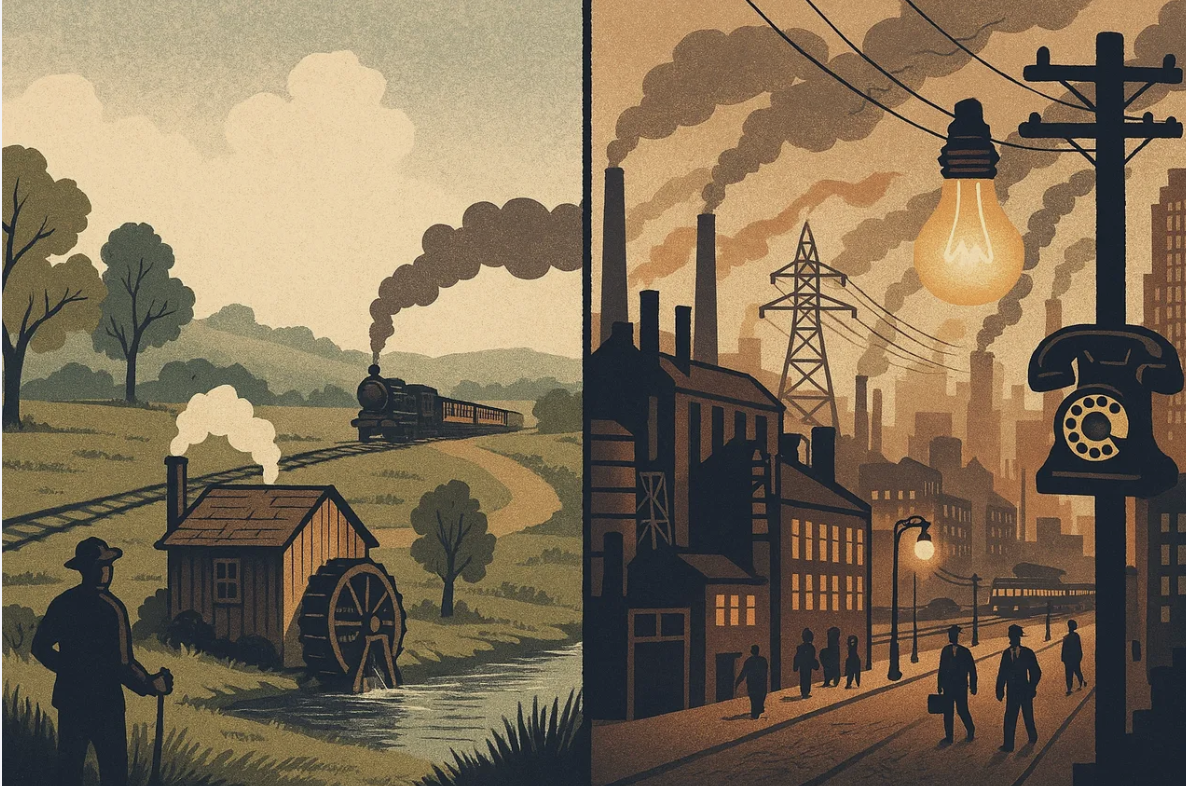
  • Third Technology Wave, 1870-1920: Steel, Electricity, & Telephone

    Third Technology Wave, 1870-1920: Steel, Electricity, & Telephone

    One hundred and fifty years ago, countries faced challenges like those confronting Latin America and the Caribbean today. Beginning in 1870, a group of nations chose to enter the next phase of the Industrial Revolution and underwent rapid, far-reaching transformation. 

    By 1920, these countries were replete with steel mills, rail systems, electricity generation and transmission, electric lighting, telephones, canneries, and large industrial cities. Their economies reorganized around new infrastructure, industries, and social arrangements.

    The governments of eight countries — the USA, Britain, Germany, France, Italy, Belgium, the Netherlands, and Japan — played decisive roles in steering these changes in partnership with the private sector. Governments set national missions, built infrastructure, shaped markets, expanded education, and helped manage inherent disruption and conflict.

    For Latin America and the Caribbean, this history matters. The world is entering a new era of disruptive technological change built around green and digital technologies. This new wave presents a significant opportunity for the region. Government choices will determine national trajectories over the next 50 years. This blog shows that rapid transformation is possible, even for latecomers, when states, societies, and markets align around a shared mission.

    This blog examines how these countries navigated the third great technology wave by exploring what changed, what drove those changes, and the role governments played. 

    The global human ecosystem was transformed.

    From 1870 to 1920, natural and socio-economic systems changed dramatically across these countries. The Bessemer and Siemens‑Martin steelmaking processes became the backbone of development in Germany and the USA. US steel production rose from 68,000 tons in 1870 to 42 million tons in 1920 — a 600-fold increase. Electrification after 1890 reorganized production and urbanization, with the USA and Germany building large grids, followed by Britain, France, and Belgium. These countries went from producing no electricity in 1870 to generating tens of terawatt‑hours by 1920.

    Coal extraction intensified environmental change in the Ruhr, Appalachia, Wallonia, and northern France, while Japan and Italy relied on imported minerals, demonstrating that resource scarcity was not a limitation. Rail networks unified national markets and helped accelerate urbanization. Electric lighting extended working hours, and telephones and telegraphs enabled broader and more effective coordination — supporting US corporations, Britain’s global trade, and Germany’s universal banks. Canning, led by the USA and Britain, reshaped diets and urban supply chains. Public health systems — water, sanitation, and pasteurization — improved urban living conditions and supported population growth.

    Social systems and institutions also evolved. State capacities expanded to universal schooling, welfare, and stronger regulation. Land‑grant colleges in the USA, technical education in Germany, and republican schools in France built human capital. Germany pioneered social insurance; Britain introduced national insurance; Belgium and France expanded labor protections. Antitrust laws emerged in the USA; labor laws strengthened in Britain and France; and administrative modernization advanced in Japan and the Netherlands.

    Nationalist narratives linked modernization and industrial strength in Germany, Japan, Britain, and the USA. Mass media — newspapers, cinema, and early radio — diffused national cultures. Scientific and technical capacities expanded, with universities in Germany, France, and Britain leading globally. Class structures hardened, with strong labor movements in Britain, Belgium, and Germany, and labor conflicts in the USA and France. Women’s suffrage expanded toward the end of the period, though patriarchal norms persisted. 

    Britain was the world’s premier creditor until World War I, holding foreign assets worth twice its GDP in 1914. The USA shifted from a capital importer in 1870 to a major creditor by 1920, with New York rivaling London. Germany, France, Belgium, and the Netherlands also exported capital, while Italy and Japan imported capital and technology.

    Transatlantic migration reshaped labor markets: Italians, Germans, and Belgians migrated in the millions, many to the USA. Britain, France, Belgium, and the Netherlands extracted resources and labor from their empires. Rural‑to‑urban migration accelerated, fueling industrialization and transforming social institutions.

    Steel, electricity, and telecommunications diffused rapidly through global trade networks. Germany and the USA dominated machinery and chemical exports. Japan and Italy imported technologies to industrialize. By 1920, these eight countries — home to about 20% of the world’s population — produced half of global economic output and 70% of global industrial production. 

    Drivers of change between 1870 and 1920.

    Countries with strong coal and iron resources — the USA, Germany, Britain, Belgium, and France — built heavy industry. Japan, Italy, and the Netherlands relied on trade and efficiency. Technologies such as steel, electricity, and machinery reorganized production and logistics. Canning, refrigeration, sanitation, and public health supported dense urbanization.

    The USA and Germany built large integrated corporations and universal banks; Britain and Belgium relied on merchant‑finance networks. US Steel, founded in 1901, became the world’s first billion-dollar corporation; economies of scale are critical in global competitiveness. Germany and France built strong bureaucratic and fiscal states; Britain and the Netherlands refined liberal‑parliamentary systems. Built infrastructure — railways, ports, and electrical grids — shaped national trajectories.

    Cultural traditions — German Bildung, French republicanism, British imperialism, American settler republicanism, and Japanese nationalism — shaped modernization. Belgium and the Netherlands developed pillarized societies: separate social groups with their own institutions. Strong unions emerged in Britain and Germany; class politics intensified in Italy and France.

    Countries that produce steel, machinery, electricity, and chemicals dominate the global industry. Japan and Italy entered global markets through textiles and light industry. Military competition reinforced demand for steel and machinery, unfortunately, culminating in World War I.

    Large integrated firms outcompeted smaller producers. Industrial clusters — the Ruhr, Northeast USA, northern Italy, Wallonia, and the Randstad — became growth poles. Electrified and connected cities outperformed historical coal‑and steam regions. Labor movements reshaped institutions: countries that reformed adaptively maintained stronger trajectories. National narratives tied modernization to national destiny. 

    Successful countries institutionalized new routines. They enacted laws, built infrastructure, and expanded education systems. Germany, France, the USA, Japan, and the Netherlands moved toward universal schooling. High-cost infrastructure — railways, ports, power grids, telecommunications — are locked in development paths. Path dependence means that early choices matter. State set 

    Welfare and labor institutions expanded. Technologies diffused through trade, foreign investment, and imitation. Corporate and financial models spread. The media shaped ideas about modern lifestyles. Once heavy industry bases were established, research, skills, and capital created cascades of innovation. Japan and Italy selected technologies suited to their conditions, shaping future constraints.

    Multiple institutional models emerged — corporate capitalism (USA), liberal‑parliamentary capitalism (Britain), state-organized capitalism (Germany), pillarized systems (Netherlands and Belgium), and French republican statism. 

    What was the role of the state?

    The state sets direction, mandates, coordinates, and partners with the private sector. Governments articulated modernization narratives — the USA’s continental expansion, Britain’s imperial mission, Germany’s industrial‑scientific state, Japan’s “rich country, strong army.” Statutory reforms in education, civil service, and the military created durable foundations. State-mandated delivery units — railway ministries, telecommunications authorities, public works agencies — coordinated large-scale projects.

    States identified bottlenecks and developed solutions — Germany’s technical education, Japan’s administrative modernization. They expanded suffrage, enacted parliamentary reforms, and introduced welfare and labor protections. Multi-level governance coordinated diverse regions. Crises — wars, depressions, financial shocks — were managed to accelerate reforms.

    States shaped markets through rules and standards. Spatial planning and eminent domain enabled infrastructure. Standardized gauges, safety codes, and engineering norms reduced costs. Technical standards for electricity, telephones, and railways enabled diffusion. Urban zoning and public health systems supported density.

    Corporate law reforms enabled capital pooling. Labor laws stabilized industrial relations. Financial regulation enabled long-term industrial finance. Tariffs shaped specialization: subsidies and procurement created early markets for steel, telephones, and electrification.

    States mobilized capital through development banks, sovereign bonds, insurance, and guarantees. They invested in railways, ports, electricity, telegraph and telephone networks, and water systems. Education and public health improved productivity. R&D ecosystems — German chemical institutes, US agricultural experiment stations, Japanese technical schools — built absorptive capacity. Industrial clusters were supported through targeted policy. Adaptive management, statistics, and monitoring improved governance.

    States also managed social conflict resulting from change and disruption. Early welfare systems, arbitration, inspectors, and social insurance reduced the risks of unrest. Migration policies shaped labor supply. The USA received more than 30 million immigrants between 1870 and 1920.  

    Conclusion – 

    The transformations of 1870–1920 were fundamental. They were not only about steel mills, power grids, and telephones — they were about nation-building. Countries that aligned technology, institutions, and finance advanced rapidly. Crises became opportunities for reform.

    For Latin America and the Caribbean, the lesson is clear: rapid change is possible when the state provides direction, legitimacy, and market-shaping tools to mobilize capital toward new objectives. The region is at a turning point. Green technologies and digitalization are reshaping global competition.

    Countries that industrialized between 1870 and 1920 did three things: they aligned behind a national mission; they built institutions and infrastructure; and they managed disruption by protecting people. These principles remain essential today. 

  • Railways, Rail Engines, Steam Ships, and Telegraph

    Railways, Rail Engines, Steam Ships, and Telegraph

    Between 1820 and 1880, leading industrial economies transitioned from waiting weeks for messages and materials to arrive to waiting minutes for messages and hours for materials. 

    Within a single lifetime, cities exploded in size, countries built vast railway networks, and steamships increasingly replaced sailing ships on major cargo routes. Some nations seized the moment and surged ahead, while others—despite their size and resources—chose different paths or delayed action.

    Understanding these historical processes of change helps us grasp the choices facing Latin America and the Caribbean today. This blog examines the changes that occurred, why they happened so quickly, and the role of central governments in these transformations. 

    The World Changed Radically Between 1820 and 1880

    If the first industrial revolution reflected rapid change in Britain, the second industrial revolution saw tectonic shifts globally. Railways, coal extraction, and steam-powered transport expanded dramatically between 1820 and 1880. These changes swept across Britain, Germany, France, Belgium, and later Russia and Japan, with the United States emerging as the fastest-growing industrial power. Railway lines grew from near zero in 1810 to well over 150,000 miles globally by 1880, transforming landscapes and creating industrial corridors. The Manchester-Liverpool Railway of 1830 cut travel time from 12 hours by canal to just 1.5 hours by rail. Coal production grew exponentially, with Britain increasing from 20 million tons in 1820 to 150 million tons by 1880. This marked a shift from an agrarian economy to one driven by fossil-fuel energy. Steam engines and steamships multiplied, enabling major nations to expand trade routes, strengthen national industries, and project economic influence worldwide. By 1880, Britain controlled around 60% of the world’s steamship tonnage. 

    Industrial machinery and national financial systems expanded rapidly alongside urbanization. Railway engine production surged from dozens to thousands by the 1880s, with the USA and Britain leading and Germany catching up. Urban populations in leading industrial countries grew from 10 million in 1820 to over 50 million by 1870, creating labor markets, new social classes, and purchasing power. Britain was over 70% urbanized by 1880. Telegraph networks did not exist in 1820, yet by 1870, there were 200,000 miles of lines helping to coordinate markets and governments. Financial capital deepened as London became the first financial hub, closely followed by New York, while Germany and France built modern banking systems for industrial investment at scale. The London Stock Exchange’s capitalization grew by an order of magnitude between 1825 and 1880.  

    Countries changed culturally, as literacy, communication, civic norms, and national identities emerged and grew. Literacy rates rose, reaching over 80% in some countries by 1870. Improvements in schooling, newspapers, and scientific societies helped diffuse new knowledge. Print culture and the telegraph accelerated the spread of ideas, connecting cities and regions within countries and nations, and facilitating trade. The Atlantic Telegraph Company laid the first transatlantic cable in 1858, which became operational by 1866, cutting communication time from 10 days to minutes. Working-class cultures generated reform movements that influenced labor laws and public health, as rapid urbanization and industrialization accelerated. Cultural systems evolved from locally focused communities to nationally connected societies, allowing people to coordinate economic activity and share ideas at unprecedented speed. 

    Why and How Did These Changes Happen?

    Railways, steam engines, steamships, and coal together created a powerful positive feedback loop. More coal enabled more engines, which enabled more transport, which enabled more coal extraction, leading to more machines and railway lines. As production grew exponentially under what we now call Wright’s Law, costs fell rapidly. Telegraph communications were much faster than courier and postal systems, reducing communication from weeks to minutes and enabling modern finance, journalism, coordination, and global trade. Improved information flows meant firms, cities, and countries could experiment at scale and rapidly select the best solutions, diffusing them quickly across the international landscape. This technological surge reshaped national economies far faster than the first industrial revolution, opening new opportunities for workers, businesses, and entire regions that evolved with innovative technologies. Britain, the USA, Belgium, and then Germany built early rail networks and developed financial markets, engineering capabilities, and regulatory systems, enabling rapid expansion. Countries scaled telegraph systems, urbanized, implemented banking reforms, and connected across regions with resources—coal mines, ports, and industrial centers. These early choices created momentum; once the right systems were in place, progress accelerated and set each country on a long-term path. 

    Cultural and institutional changes further accelerated the differences between the “early industrializers” and other countries. High literacy, scientific societies, and civic cultures were critical in Britain, Germany, France, and the USA, accelerating the absorption of innovative technologies. Countries like Russia and Japan, before the Meiji period, with rigid hierarchies and limited educational access, experienced much slower diffusion until institutional reforms took place. Early changes in infrastructure and institutions created long-term advantages for the early movers. Urbanization deepened these changes by concentrating skilled labor, capital, and knowledge in dense cities, fostering rapid innovation and imitation. Notably, Qing China, the Ottoman Empire, the Mughal States, Persia, and Southeast Asian Kingdoms saw little industrialization at this time—highlighting how rare the USA and European takeoff truly was. 

    What Was the Role of the State?

    As in the first industrial revolution, the centralized state played a decisive role in accelerating economic transformation. Governments set clear rules, enabled private investment, and built essential infrastructure to support business growth. Britain’s Railway Acts, the US Federal Land Grants, and Germany’s post-unification industrial strategy all stabilized predictable contexts to align private investment with national priorities. States also shaped markets with property rules, standards, and permitting systems that determined where to build railways, extract coal, or connect telegraph networks. Public investments in transport, education, and statistics lowered costs and expanded the skilled workforce. Development banks, public guarantees, and capital markets further reduced risk and helped crowd in private capital, enabling large long-term infrastructure projects.

    Countries that moved early did so because their states built the institutional and financial architectures needed to increase returns and lock in innovative technologies. Britain’s parliamentary reforms, legal protections, and financial institutions, which were necessary for canal building, enabled it to finance railways and mining well before everyone else. The USA accelerated after 1850 as federal and state governments combined to pursue land policy, public finance, and regulation to build a vast railway network. Germany caught up after 1871 due to strong centralized coordination, technical education, and social insurance systems, which stabilized labor markets. By setting stable rules and investing in core infrastructure, governments created the conditions for private enterprise to innovate, compete, and expand at extraordinary speed. 

    Countries that progressed more slowly did so because their governments lacked the capacity, political cohesion, and financial systems to mobilize and coordinate massive transformations. In Russia, autocracy and serfdom, weak fiscal institutions, limited labor mobility, limited capital formation, and reduced technological diffusion meant they did not move until well after 1860, despite abundant natural resources. Japan was constrained under the Tokugawa shogunate, with feudal governance and limited external engagement, until the Meiji Restoration established the modern state. France was slowed by repeated political upheavals—revolutions, regime changes, and wars—that disrupted long-term plans and weakened investor confidence. Stable governance, coherent rules, and institutions capable of learning and adaptation are crucial, along with resources, to convert innovative technologies into rapid economic transformation.

    Conclusion

    While history may not repeat, it is full of lessons. The forces that shaped the period between 1820 and 1880—technologies, institutions, and leadership—are at play again. The second industrial revolution teaches us that countries that invest early, coordinate effectively, and build strong institutions are most likely to shape the future. History shows that countries that delay investment or lack a clear national strategy often miss the moment—and the opportunity goes to others. As the world enters a new technological wave, the choices countries make today will determine whether Latin America and the Caribbean are part of the leadership group, follow slowly, or remain on the sidelines.  

  • First Industrial Revolution: Mines, Canals, Steam, and Textiles

    First Industrial Revolution: Mines, Canals, Steam, and Textiles

    From 1760 to 1830, Britain did not just industrialize; it rewired its economy, society, and infrastructure. In about 50 years, the country moved from cottage industries and water wheels to steam-powered factories, canal transport networks, and global trade dominance. 

    Britain’s share of world industrial output rose from modest to dominant over this period. Britain’s economy grew because of rapid changes across an integrated system of capital, natural resources, and institutions. 

    What can we learn from examining Britain’s and the world’s first experience in changing capital and capital flows through shifting social institutions and active state support? This blog explores Britain’s unique capital, the changes in capital flows, the context and institutions that drove them, and why Britain moved first and fastest to lead the world’s first industrial revolution. 

    Capital and capital flows shifted rapidly. 

    The changes in Britain were not just technological; they were systemic. Coal replaced timber as the energy source, and output more than tripled from 1770 to 1820 to 15-20 million tons. Iron and copper became strategic as part of supply chains, as the basis for steam engines, factories, transport, and industrial infrastructure. Cotton imports from the Americas became the core input for the newly mechanized textile production system. 

    Mechanization transformed textile production. Innovations like the spinning jenny, water frame, mule, and power loom became standard. As a result, labor productivity soared, and the number of factories grew from 120 in 1760 to 5,500 in 1830. Where a hand spinner worked a single spindle, early spinning jennies let one worker operate 8–24 spindles; later models operated over 100; and spinning mules in large mills eventually carried over a thousand spindles on a single machine. These machines reorganized production around centralized power sources and standardized processes, enabling levels of scale and speed impossible in the cottage industry. 

    Steam power expanded 30-fold between 1770 and 1820, enabling rapid scaling and greater reliability. Geographical flexibility came from canal systems expanding from 55 miles in 1760 to 2,600 miles in 1830, reducing transport costs and helping the concentration of factories and connections to export and import ports. Cotton output rose from 105 million pounds to 950 million pounds, a 9-fold increase. Coal prices at the mine versus delivered prices changed with improved canal transportation. Mechanized British textiles, powered by coal-fired steam engines and fed by imported raw cotton, became dramatically cheaper than hand-spun and hand-woven cloth produced in traditional centers such as India. The number of steam engines grew exponentially, with energy production increasing by a factor of 30.

    Financial investments for large projects, including canals and factories, expanded through national banks, canal share markets, and credit circles, which acted as intermediaries. The enlightenment reframed knowledge as a productive asset, and scientific societies, technical publications, and patent law created a culture of innovation and diffusion. As a result, the urban population doubled, with cities like Manchester and Liverpool seeing tenfold growth and creating both labor markets and expanding national product demand. Britain’s exports grew from £14.7 million in 1760 to £43.2 million in 1800. 

    The context and the system accelerated change. 

    High wages and cheap coal exerted intense pressure for labor-saving, energy-intensive technologies, including steam-powered textile machines. Steam power massively increased factory productivity, driving textile growth and urbanization. Britain had abundant coal and iron, which became more accessible through the canal network, and these resources were geographically close to rapidly growing ports, notably Liverpool, which handled over 80% of the cotton, and Newcastle, which became a coal-export powerhouse. Britain imported raw cotton from the rapidly expanding agriculture of the Americas to feed its increasingly mechanized textile mills. 

    The “industrial enlightenment” reframed knowledge as a productive good, enabling systems for experimentation, improvement, and knowledge sharing. Britain’s culture of experimentation drew on institutions like the Royal Society—founded in 1660—which had already spent a century nurturing scientific exchange and practical inquiry by the time industrial innovators began transforming machines, materials, and production. Networks of artisans, engineers, and entrepreneurs, and scientific studies and burgeoning scientific publications, accelerated innovation and diffusion across the country. Apprenticeships were also important, allowing the rapid scaling of skilled labor. People were connected through workshops, foundries, patent records, scientific societies, and informal knowledge circuits, accelerating the development and diffusion of innovative technologies. Continuous incremental improvements in spinning, weaving, carding, and steam power reduced costs, increased reliability, and made factory production decisively cheaper than traditional methods.

    The state played an essential role in ensuring predictable rules, property rights, and contract enforcement, enabling private investment. Parliament shaped infrastructure through the Canal Acts, which helped create structures to raise funds, addressed eminent-domain issues, and set predictable transportation fees. Financial institutions mobilized capital at scale – pooling savings and commercial profits to fund factories, mines, canals, and machinery – thereby reducing financial risk and enabling capital pooling. For example, the Bridgewater Canal Company—authorized by Parliament in 1759—raised capital through shares that merchants, manufacturers, and even small savers could purchase. Its success in halving coal prices in Manchester sparked a wave of canal companies financed through similar joint‑stock structures.

    Canal and mining infrastructure were major catalysts, enabling industrial-scale expansion by connecting coal and iron mines to manufacturing and ports, thereby reducing transport costs. Parliament also approved the Enclosure Acts, which changed agriculture by consolidating farms, eliminating common rights, and enabling more intensive agriculture, but disrupted traditional rural livelihoods and indirectly displaced rural populations. The state approved patent law that enhanced innovation and supportive commercial regulations. The “system” was path-dependent and replete with positive feedback loops. Canals provided cheaper coal and cheaper energy for textile production with machines, leading to higher exports and generating more capital for canals and mining. Infrastructure enhanced production through mines and canals, opening the space for steam engines to expand. Steam power was already available and used in mines before textile factories. The textile expansion drove cotton imports, port growth, and urbanization, creating and reinforcing national demand and productive labor. Britain also worked to expand Atlantic and imperial trade networks, so that capital, infrastructure, technology, production, and trade all reinforced one another. 

    Britain moved extremely fast; other countries did not.

    Britain had the natural, economic, and social capital, the social systems, and an appropriate social order to enable rapid change. They had a unified market, stable governance, high labor costs, and weak guilds, which lowered barriers to mechanization. They had the bases for dense clusters for focused growth in Manchester, Birmingham, and the Midlands. They also had substantial export markets that rewarded scale, standardization, and cost-reducing innovations. British real wages were also higher than those in France and Germany, while coal was cheaper.

    France, on the other hand, had lower wages, higher energy costs, fragmented markets, and prolonged political upheaval, which reduced incentives for mechanization. France underwent a revolution for 12 years from 1787, then revolutionary wars with other European states for 10 more years, followed by the Napoleonic wars for 12 more years. The German states had strong guilds, fragmented governance reflected in wars among the states and then war with Napoleon, and an underdeveloped infrastructure for their coal. Britain’s stable governance and unified market directly enabled rapid industrialization, while France’s political turmoil and Germany’s fragmentation hindered them. The United States was at an earlier stage of development, with abundant land, scarce labor, and only nascent infrastructure, which pushed it toward a different early path, e.g., water-powered mills and frontier expansion, before large-scale coal-based industrialization.

    Britain was also at war, but never in Britain – the wars created massive state demand for iron, ships, textiles, and weapons – and the wars also allowed Britain to have global naval dominance to secure trade routes and cotton supplies.

    Belgium was the second European country to industrialize after 1807. They had ready access to coal and iron, merchant capital, and benefited from Napoleonic legal reforms and direct imports of British machinery and expertise. Belgium’s success was remarkable, but it could not occur until other states had stopped fighting over their territories.  

    Conclusion. 

    Britain’s industrial revolution offers essential lessons about the conditions that engender technological revolutions. The lessons include the critical importance of infrastructure – canals and mining – that built the backbone for economic change. The second lesson is the importance of aligning and integrating financial capital, institutions, and innovation for growth. Britain’s unified approach enabled it to achieve economies of scale. Third, Britain was able to move because it was ready to move – it had the natural capital, social and economic capital, and already the bases of strong institutions. One condition was critical: labor costs were high enough to ensure the profitability of a shift to textile machines and steam engines. The British state played a strong leadership role – they fully supported the direction of growth, set the rules, invested in infrastructure, helped manage risk, created innovation ecosystems, and reinforced trade systems. The positive feedback loops and economies of scale continued to reduce costs and sustain the system’s growth. 

    What lessons from Britain’s industrial revolution can guide today’s technological transformations?