Tag: Technological Change

Examines how new technologies reshape economic structures, institutions, and social‑ecological relations.

  • The Great Shift: 2020–2070 in Latin America and the Caribbean

    The Great Shift: 2020–2070 in Latin America and the Caribbean

    Chile exports US$50 billion in copper annually. At the same time, Chile imports the software that runs its mines, manages its power grid, and processes its financial transactions. By 2050, which side of this export–import equation will matter more?

    Energy systems are shifting quickly. Jobs are changing. Innovative technologies are emerging and spreading. These changes are already visible across Latin America and the Caribbean, where the energy is already clean. Exports of technology, information technology services, and business services have grown at double-digit rates in recent years. The future cannot be predicted with precision, but the broad direction is clear and widely recognized among futurists.

    Artificial intelligence is advancing at an extraordinary speed. Energy and mobility systems are being restructured. Work is being reorganized. Democracies are under pressure as online worlds reshape how people communicate and mobilize. Climate impacts are increasingly visible.

    The region enters this transition with a mix of vulnerabilities and advantages. Growth has been volatile. Many economies depend heavily on natural resource rents; in Chile and Peru, these rents account for 10–15 percent of GDP. Inequality remains high, and political power is often concentrated. At the same time, LAC holds abundant renewable‑energy resources, critical minerals, young populations, rich biodiversity, and a rapidly expanding digital ecosystem. Chile and Peru produce about 40 percent of the world’s copper, and Chile, Argentina, and Brazil together produce one-third of global lithium.

    Countries that build the capacity to adapt, learn, and steer change will be best positioned to ensure that these transformations improve people’s lives. This blog outlines how the human ecosystem is likely to evolve, the forces driving those changes, and how states can guide transitions already underway. The future that emerges is likely to feature lower energy costs, cleaner transportation, more accessible public services, and broader opportunities.

    Where is the capital shifting?

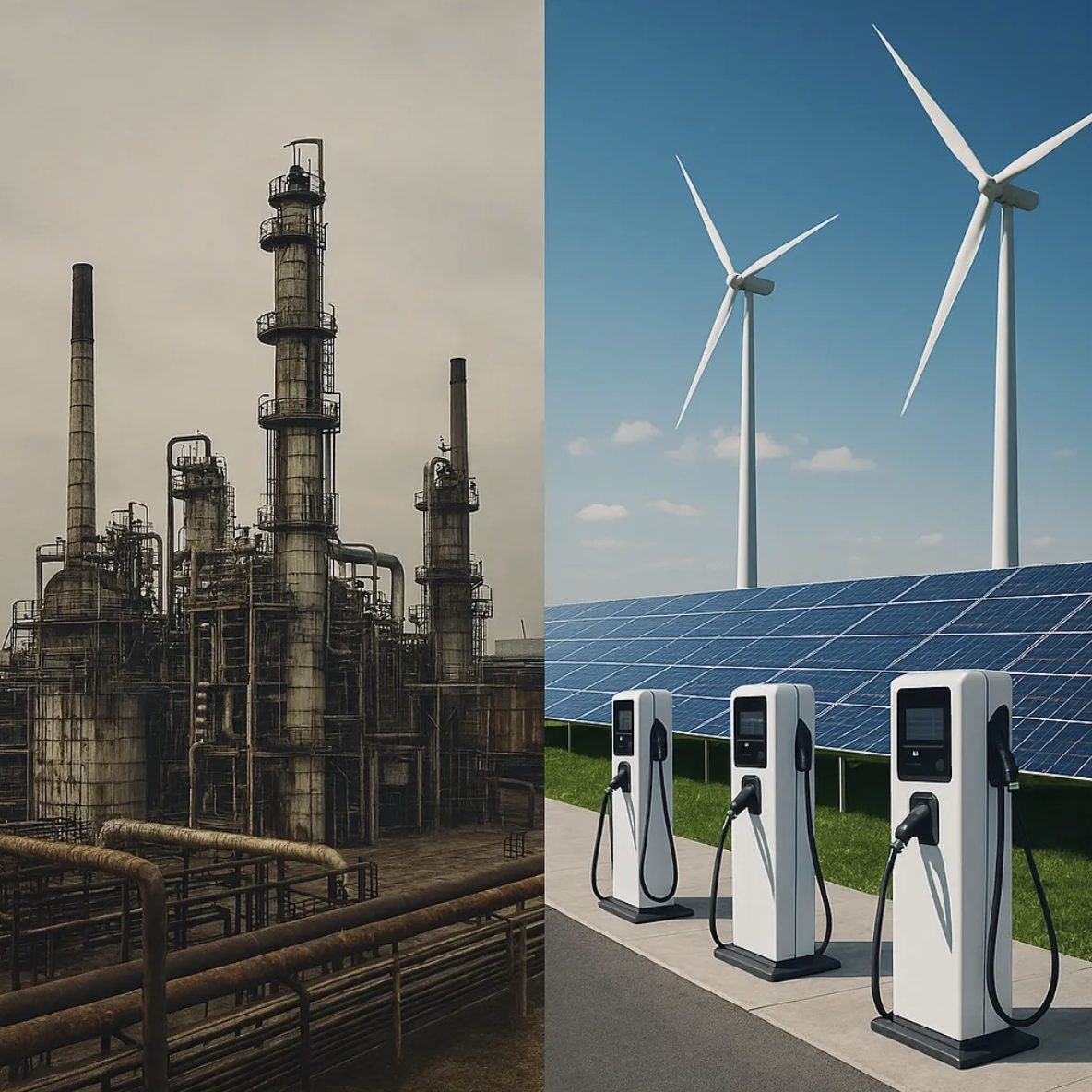
    Energy remains the foundation of every economy. The coming decades will be shaped by clean, affordable energy, widespread electrification, and intelligent infrastructure. Financial capital is already shifting away from fossil-fuel assets toward large-scale investment in renewable energy, modern grids, energy storage, and electrified transport. As clean technologies scale, costs fall, which accelerates further deployment. Countries that move early will gain productivity, reduce energy costs, and build competitive industrial ecosystems. Those who delay risk being locked into high-cost fossil‑fuel systems, facing stranded assets, and losing competitiveness.

    The energy transition is also reshaping global demand for critical minerals such as lithium, cobalt, copper, and rare‑earth elements. This shift creates a major opportunity for LAC, which holds some of the world’s most important reserves and production capacity.

    Natural capital will become increasingly valuable as high-income economies move toward circular material flows. LAC can generate new revenue streams by recognizing and monetizing the value of its ecosystems. The region contains some of the world’s most productive agricultural land and freshwater reserves. Regenerative agriculture and climate-smart farming could position LAC as a global anchor for food security.

    Knowledge will continue to expand rapidly, but so will misinformation and fragmentation. The ability to filter, absorb, and apply information will matter more than access to information itself. A small number of global actors will dominate energy and knowledge technologies, and LAC risks remaining a consumer rather than a producer unless it invests in capabilities and innovation.

    How will institutions and societies change?

    Social institutions will be reshaped by the online world and artificial intelligence. Economies will become more service-oriented and more dependent on knowledge-intensive work. AI will automate coordination, logistics, and decision-making across sectors. This will require novel approaches to governance, transparency, and workforce development, including changes in academic training.

    Institutions that fail to modernize will face legitimacy challenges. Those that adapt will become more networked, multi-stakeholder, and technocratic, using digital tools to guide decisions. Trade will shift toward services, data, and intellectual property, as well as regionalization, friend-shoring, and customized products. LAC can benefit from these shifts if it manages governance, energy, and logistics costs effectively. Mexico is already one of the United States’ top trading partners, reflecting these trends.

    Social systems will need to adapt to rising temperatures, droughts, and extreme events—especially in smaller states and coastal cities. As automation expands globally, the region’s traditional advantage in low‑ and mid-skilled labor will erode, pushing economies toward commodities and natural‑resource rents unless they diversify.

    How will social order evolve?

    Transitions in energy, mobility, logistics, and labor will disrupt existing hierarchies and political coalitions. Conflicts over land, minerals, and labor mobility are likely to intensify. Social media will amplify polarization and shorten political cycles. Fragmentation and institutional erosion could weaken states’ ability to plan and execute long-term strategies.

    The global order will continue shifting toward a more multipolar system built around regional blocs and shared markets. LAC’s regional institutions—such as the Americas Partnership for Economic Prosperity, CARICOM, and MERCOSUR—are likely to play larger roles. Societies that embrace inclusive governance will be more stable; those that do not may face greater fragmentation and confrontation.

    What drives which technologies and practices win?

    A new wave of technologies—AI, digital platforms, advanced materials, synthetic biology, robotics—will reshape production and services. AI will reduce experimentation costs, enabling rapid innovation in design, business models, and industrial processes. Countries such as Chile, Colombia, Brazil, and Mexico are already expanding electric‑vehicle adoption and electrifying bus fleets.

    Market selection will favor technologies that reduce costs. AI and clean energy will lower marginal costs, increase reliability, and enable faster scaling across energy generation, storage, electrification, and logistics. Economies of scale, network effects, and cost curves will reinforce these trends. Subsidies, standards, regulations, and procurement will shape which technologies succeed. Social movements and public opinion will also influence adoption.

    Digital networks will accelerate the spread of ideas and practices, but they will also create fragmentation and echo chambers. Technology diffusion will depend on state capacity, infrastructure readiness, and social acceptance. Countries with strong grids, digital connectivity, mass transit, and the ability to mobilize capital will see faster diffusion. Those with weaker institutions or limited social license will lag. Corporate supply chains will accelerate cross-border diffusion, and policy emulation will spread successful models.

    What can states do?

    States will remain central to setting direction, defining mandates, and coordinating across sectors. The focus will increasingly be on improving livelihoods, creating quality jobs, and reducing the cost of living, rather than just meeting international targets. Strategic coordination is essential to build pathways to lower energy costs, electrification, digital infrastructure, and AI deployment. Clear direction reduces the risk of technological lock-in and market fragmentation.

    States must also shape market rules that align profitability with social outcomes. These include results-based contracts, revenue‑stabilization mechanisms, infrastructure reforms, new financial instruments, data standards, and AI governance. States will continue to absorb risks that enable private investment in modern technologies and infrastructure.

    Multilateral systems will remain important but will progress slowly. Smaller groups of aligned states, technological partners, and regional blocs will drive faster implementation.

    Public investment in infrastructure, public goods, and industrial ecosystems will remain essential. States will lay the foundations for clean energy and the AI economy. Public finance will be critical for blending with private capital to scale investment. Chile and Uruguay are leading in innovative financing instruments such as green and sustainability-linked sovereign bonds, while Ecuador, Belize, and Barbados have recently completed debt conversions. Industrial innovation policies, skills development, and institutional learning systems will be key enabling conditions. Infrastructure and computational capacity will become strategic assets.

    Some states will move quickly with coordinated governance; others will remain reactive and fragmented.

    Conclusion

    Between 2020 and 2070, the global human ecosystem will be reshaped once again. Each country’s trajectory will depend on how effectively the state directs, coordinates, and manages technological change, volatility, protest, and inequality. The future will unfold regardless, but it can be shaped by choices that lower the cost of living, improve public services, and expand opportunities.

    Countries that harness existing and emerging technologies will reduce costs and improve the efficiency of energy, transport, sanitation, water, logistics, communications, and health services. The alternative is to remain trapped in oligopolistic markets and elite-driven decision-making that deepen inequality, slow growth, and leave societies exposed to external shocks. The world is changing; standing still is not an option. 
  • From Microchips to Megatrends: The Global Shifts of 1970–2020

    From Microchips to Megatrends: The Global Shifts of 1970–2020

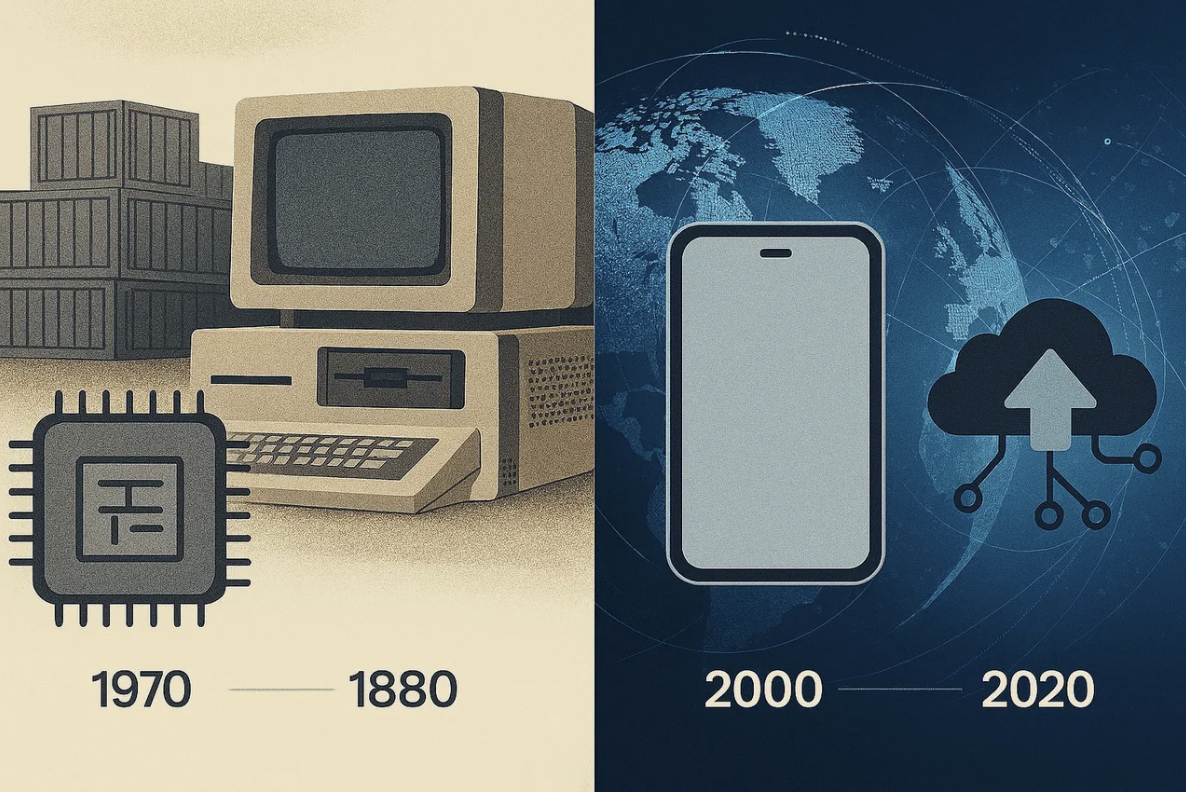
    Between 1970 and 2020, the world changed faster than at any other time in human history. Microprocessors, digital sensors, personal computers, the internet, smartphones, and cloud computing all emerged over the course of five decades. The 1971 Intel 4004 chip contained just 2,300 transistors; by 2020, Apple’s M1 chip held 16 billion. These technologies now underpin everyday systems—mobile banking, telemedicine, online education—shaping how billions of people live, work, learn, and connect.

    These innovations rewired the global economy. Capital now moves at the speed of light. Cross-border capital flows expanded from tens of billions to more than US$1.2 trillion. Merchandise trade grew from hundreds of billions to US$18–19 trillion. Internet use rose from millions in 1990 to 4.5 billion users in 2020. East Asian economies emerged as global manufacturing hubs, while the United States consolidated its dominance in finance, digital platforms, and knowledge networks. In Latin America and the Caribbean, new opportunities for growth, innovation, trade, and integration appeared—but exposed longstanding challenges in productivity, inequality, and institutional capacity.

    Speed, scale, and knowledge exemplify today’s world. Countries that invested early in education, research, infrastructure, and capabilities became innovation leaders, lifted millions out of poverty, and intensified global competition. Participation in value chains now extends beyond natural resources and manufacturing to include data, technology acquisition, and the capabilities needed to adapt and learn.

    Understanding the last fifty years is essential for shaping the next fifty. Latin America and the Caribbean have talent, natural capital, and creativity. The region could lead to the emergence of green, digital, and knowledge-based economies. Doing so will require learning from the past and adopting deliberate strategies that build on regional strengths to turn global change into regional opportunity.

    This blog examines the transformations that occurred, the forces that drove them, and the role of states in shaping their trajectories.

    Systemic Changes in Capital Flows at Speed and Scale

    The most striking feature of this period was the speed and scale of change. Foreign direct investment stock rose from roughly US$100 billion in 1980 to nearly US$40 trillion in 2020. Finance could move instantaneously across borders. Global trade expanded from about US$2 trillion to US$18–19 trillion as supply chains stretched across continents. Trade in financial, technological, informational, and digital services reached US$6 trillion. Knowledge now moves in milliseconds, and people increasingly migrate to fill labor shortages or build skills. Trade shifted from simple goods to complex, fragmented value chains and to services and data rooted in intellectual property and knowledge.

    A Reconfigured Global Economy

    The global economy was fundamentally reshaped. East Asia—first Japan, then Korea, Taiwan, Singapore, Hong Kong, and later China and Vietnam—became the world’s manufacturing hub. Many of these economies moved from low‑ or middle-income status in 1970 to high-income status by 2020. South Korea’s per capita GDP rose from under US$300 in 1970 to more than US$30,000 in 2020. China became a central node for trade, manufacturing, and technology, while the United States shifted toward dominance in finance, platforms, and knowledge networks.

    Advanced economies such as the United States, Germany, the Netherlands, and the Nordic countries retained their leadership in technology and finance, with large corporations becoming increasingly influential. The internet, smartphones, and digital platforms reshaped the movement of knowledge, capital, and trade. Resource-rich and well-governed exporters—including Norway, Saudi Arabia, the UAE, Qatar, and Kuwait—leveraged oil and gas rents to accelerate development, supported by large inflows of migrant labor. New middle powers such as South Korea, India, and Brazil strengthened their positions as they integrated into global supply chains.

    Countries facing conflict or severe mismanagement fell further behind the global frontier, struggling to integrate into trade and knowledge flows and becoming increasingly dependent on aid, remittances, or single commodities. In Latin America, countries such as Chile, Uruguay, and Costa Rica advanced, but the region did not overcome persistent challenges in productivity and inequality.

    Technologies, Liberalization, and Knowledge as Drivers of Change

    The technologies of this ICT revolution reflected two powerful empirical patterns. Moore’s Law observed that the number of transistors on an integrated circuit doubles roughly every two years. Wright’s Law showed that for every cumulative doubling of production, the cost of a technology falls by a constant percentage. Together, they drove a dramatic decline in the price of computing and digital infrastructure.

    The internet, mobile computing, cloud services, and fiber‑optic networks created a new technological paradigm. Borders became porous to capital, knowledge, and information. The logistics revolution—especially containerization—reduced shipping costs by 75–90% and cut shipping times in half, making global value chains more feasible and increasing the need for international standards. Financial innovations, including deregulation, derivatives, global capital markets, electronic trading, and mobile money, transformed how cash flows and laid the groundwork for digital assets such as cryptocurrencies. Daily foreign exchange trading rose from the low hundreds of billions in 1980 to US$6.6 trillion in 2019.

    Cost competition drove offshoring, nearshoring, and friendshoring as global supply chains expanded. Energy shocks spurred efficiency, diversification, and a focus on energy independence. Geopolitics shifted with the end of the Cold War and the rise of China, as the global economy moved from industrialization and production toward technology and knowledge. Trade and capital liberalization, supported by international agreements, encouraged private‑sector engagement and privatization.

    Capabilities as the New Currency of Nations

    Capabilities became increasingly decisive. Education, research and development, and digital infrastructure were essential for securing national comparative advantages. Early movers such as the United States and the United Kingdom became financial hubs. In contrast, early, low-cost industrializers such as China and South Korea scaled up manufacturing and became hubs of production. The global economy became more integrated and moved toward digitization, knowledge, and networked production. Knowledge flowed directly through digital networks and indirectly through migration, with the Gulf states alone hosting more than 30 million migrant workers.

    States and Multilateralism

    States played a significant role in shaping long-term development pathways. Korea, Taiwan, and China actively pursued industrial advancement, calibrating the pace of liberalization in trade, capital, and migration. Other countries positioned themselves as financial or corporate centers or moved rapidly into clean energy to reduce dependence and volatility. Financial deregulation in the United States and the United Kingdom accelerated global capital flows by relaxing capital controls, reducing trade barriers, and promoting privatization and public-private partnerships. Many countries invested in migration, education, and R&D policies to cultivate the talent and capabilities needed to leverage innovative technologies.

    Multilateral organizations—including NAFTA, ASEAN, and the EU—helped stabilize change and set standards for a global marketplace. NAFTA tripled North American trade from US$290 billion in 1993 to US$1.1 trillion in 2016. The WTO codified global trade rules and accelerated supply chain integration, while the G7 and G20 provided coordination in an increasingly complex global economy. In Latin America and the Caribbean, MERCOSUR, CARICOM, and the Pacific Alliance supported regional integration.

    In some cases, state interests and multilateral systems evolved together, producing what some analysts call “hyper‑globalization.” Yet global change also created winners and losers within advanced economies. Some regions lost manufacturing jobs to trade and automation, while urban areas captured gains from finance, technology, and knowledge flows. In the United States, manufacturing employment fell from 19 million in 1979 to 12 million in 2020. These internal disparities fueled populism and domestic backlash, challenging multilateralism.

    Conclusion

    The last 50 years clearly show that countries can take an active role—and adopt long-term strategies—to accelerate economic growth. The Asian Tigers sustained growth rates of 6–8% for decades. The United States continued to lead in finance and innovation. The Gulf states transformed oil and gas wealth into US$3.5 trillion in sovereign wealth funds, accelerating broader development.

    Latin America and the Caribbean now face a similar moment of choice. The next wave of global transformation—energy, biotechnology, advanced manufacturing, data management, and artificial intelligence—is already underway. Countries that invest in institutional and individual capabilities and open channels for knowledge and trade based on their comparative advantages will scale their economies. Those who hesitate risk missing the opportunities ahead.

    The region has abundant energy resources, the world’s largest lithium reserves, exceptional solar potential, vast natural and cultural capital, and a growing digital economy. The question is whether LAC countries will work together to shape the next technological wave—or be shaped by it.

  • Economic Evolution and Revolution: Resources

    Economic Evolution and Revolution: Resources

    All economies change over time. Most of the time, that change is slow and incremental. But under certain conditions, an economy can shift rapidly — almost explosively — into a new mode of creating value. These moments are economic revolutions: system-wide reorganizations of production, technology, and social coordination. During these periods, annual growth rates can jump from 1–3% to 5–25%, reducing doubling times from 24–72 years to 3–14 years. 

    Revolutions compress centuries of change into 50 years.

    The world is in the middle of a technological wave. The question for Latin America and the Caribbean (LAC) is whether countries will ride this wave or watch it pass by. To seize the moment, countries will need to transform, despite uneven capabilities, fragmented institutions, and rising external shocks. 

    Bringing together evolutionary economics and the study of technological revolutions can help identify where action is most urgent — and most possible. 

    Natural resources and economic change

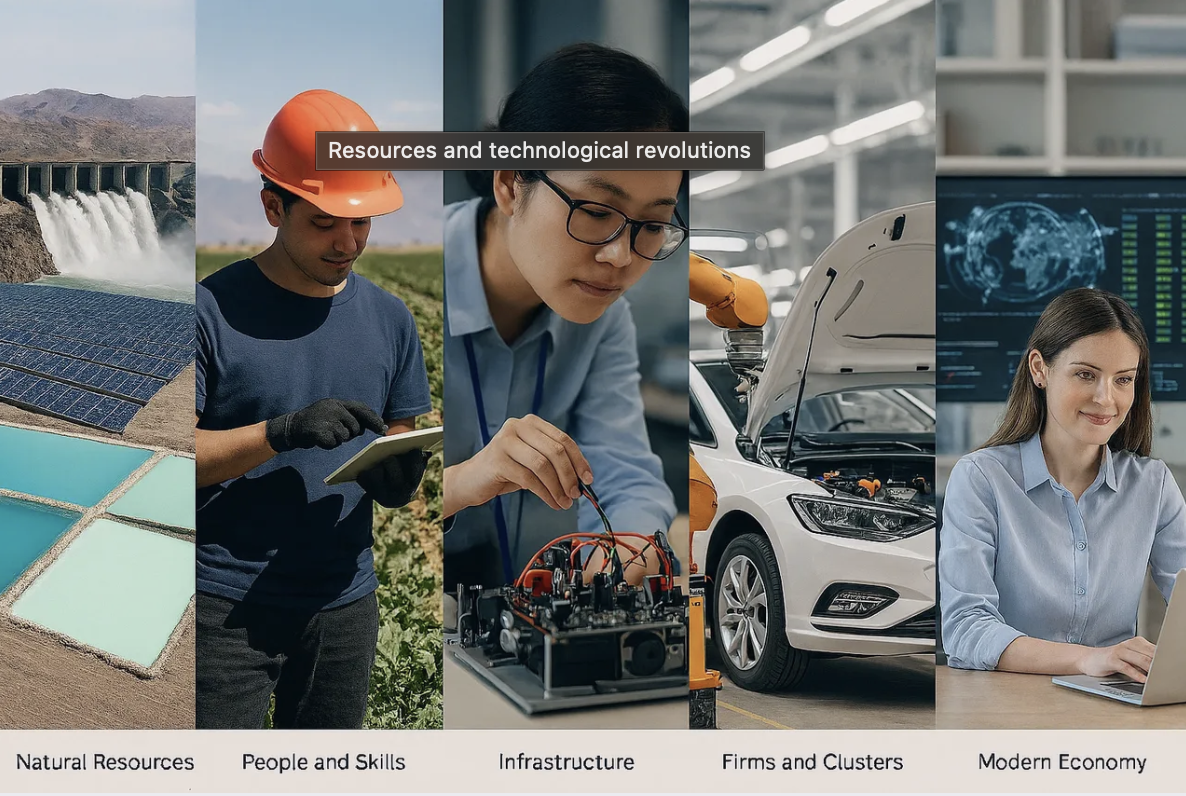
    Economic health depends on the stocks and flows of natural, socio-economic, and cultural capital. Natural resources — minerals, land, water, forests, and energy — often form the backbone of development. Countries with strong natural endowments can position themselves strategically in global supply chains. Chile’s Atacama Desert, with its high levels of solar radiation and lithium reserves, gives it leverage in the battery and electric vehicle sectors. Brazil’s landmass and hydropower underpin its agricultural and bioenergy strength. Suriname and Guyana are navigating the opportunities and risks of new offshore oil discoveries, balancing fiscal expectations with the need to diversify before the next commodity cycle turns.

    Natural‑resource rents from copper, soy, oil, and hydropower can expand fiscal space for investments in infrastructure, digital connectivity, innovation, and institutional capabilities. Chile and Brazil have used this space to extend transmission lines and integrate renewable energy into their grids. In contrast, Haiti’s long history of resource extraction and deforestation has eroded soils, reduced agricultural productivity, and trapped the country in a low‑productivity equilibrium.

    Countries with resource constraints face different pressures. Droughts affecting water for drinking and agriculture have pushed Central American governments to reform water governance and invest in drought-resistant crops. Chile’s lack of domestic oil and gas has accelerated its push toward solar, wind, and storage. Fossil‑fuel import dependence in the Caribbean and Central America exposes economies to price shocks and balance‑of‑payments stress, creating strong incentives to adopt renewables, efficiency measures, and regional energy integration. When traditional energy pathways are expensive or politically constrained, countries may leapfrog directly to renewables and distributed systems — as Uruguay and Costa Rica have demonstrated.

    Resource shocks can also trigger paradigm shifts. Commodity booms and busts — such as the post‑2014 decline in oil and mineral prices — have forced Brazil and Colombia to rethink their dependence on extractives and explore diversification and green competitiveness. Climate-related shocks, including hurricanes, droughts, and floods, can cause losses of 10–30% of GDP in Caribbean and Central American countries. In extreme cases, such as Dominica, Grenada, and Antigua & Barbuda, when hit by Maria, Ivan, and Irma, estimated damages have exceeded annual GDP. These events reshape business models, accelerate resilience investments, and open political space for reforms that would otherwise be impossible. 

    Resource flows are the basis of economies

    People are a foundational economic resource. Worker mobility, migration, and diasporas spread knowledge across firms and borders. In Costa Rica, engineers trained at Intel have seeded capabilities across the local tech ecosystem. Regional hubs — Campinas (ICT/biotech), Guadalajara (electronics), Montevideo (gov-tech/fintech) — accelerate innovation and diffusion. The Colombian diaspora in Miami and Madrid has become a channel for entrepreneurial knowledge, fintech innovation, and cultural industries. Education and training institutions amplify these flows. SENAI in Brazil, INCAE and CATIE in Costa Rica, and Mexico’s automotive training centers build absorptive capacity and help firms adopt innovative technologies and business models.

    Scaling during economic revolutions depends on scaling resource flows. Capital flows matter not only for firms but for the infrastructure that moves people, energy, materials, and knowledge. Grids, transmission lines, ports, roads, railways, fiber‑optic cables, canals, and airports are the physical networks that enable production. Panama’s canal, ports, and free zones illustrate how logistics platforms can become regional hubs for trade, data, and services. Cheap and reliable energy underpins global competitiveness and enables electricity-intensive industries such as data centers.

    Other socio-economic resources — ideas, standards, regulations, and networks — create coherence across firms and sectors. Government standards and procurement can level the playing field and accelerate diffusion. Online platforms and performance-based contracts can push innovation. Cultural capital — trust, legitimacy, professional associations, chambers of commerce, and clusters — reduces perceived risk and helps new practices spread. 

    Financial resources are crucial

    Crises can accelerate change. Debt, inflation, and banking crises in the 1980s forced structural adjustments across the region. Commodity shocks reshape investor expectations and redirect capital. Public finance remains essential for strategic change: aligning budgets, supporting state-owned or parastatal enterprises, and using development banks to steer investment toward future-ready sectors. Brazil’s BNDES has long shaped national priorities through investments in biofuels, agriculture, and renewables.

    Economics is about how systems work, not just about money. But economic revolutions depend heavily on finance. Capital allocation is shaped by profitability (past and present performance) and investment attractiveness (future potential). The hardest part of a technological revolution is identifying future winners and losers as global paradigms shift. Early phases of a technological wave attract speculative finance; later phases see production capital scale proven models. Countries that align their policies, regulations, infrastructure, and capabilities with emerging technologies are best positioned to attract long‑term investment.

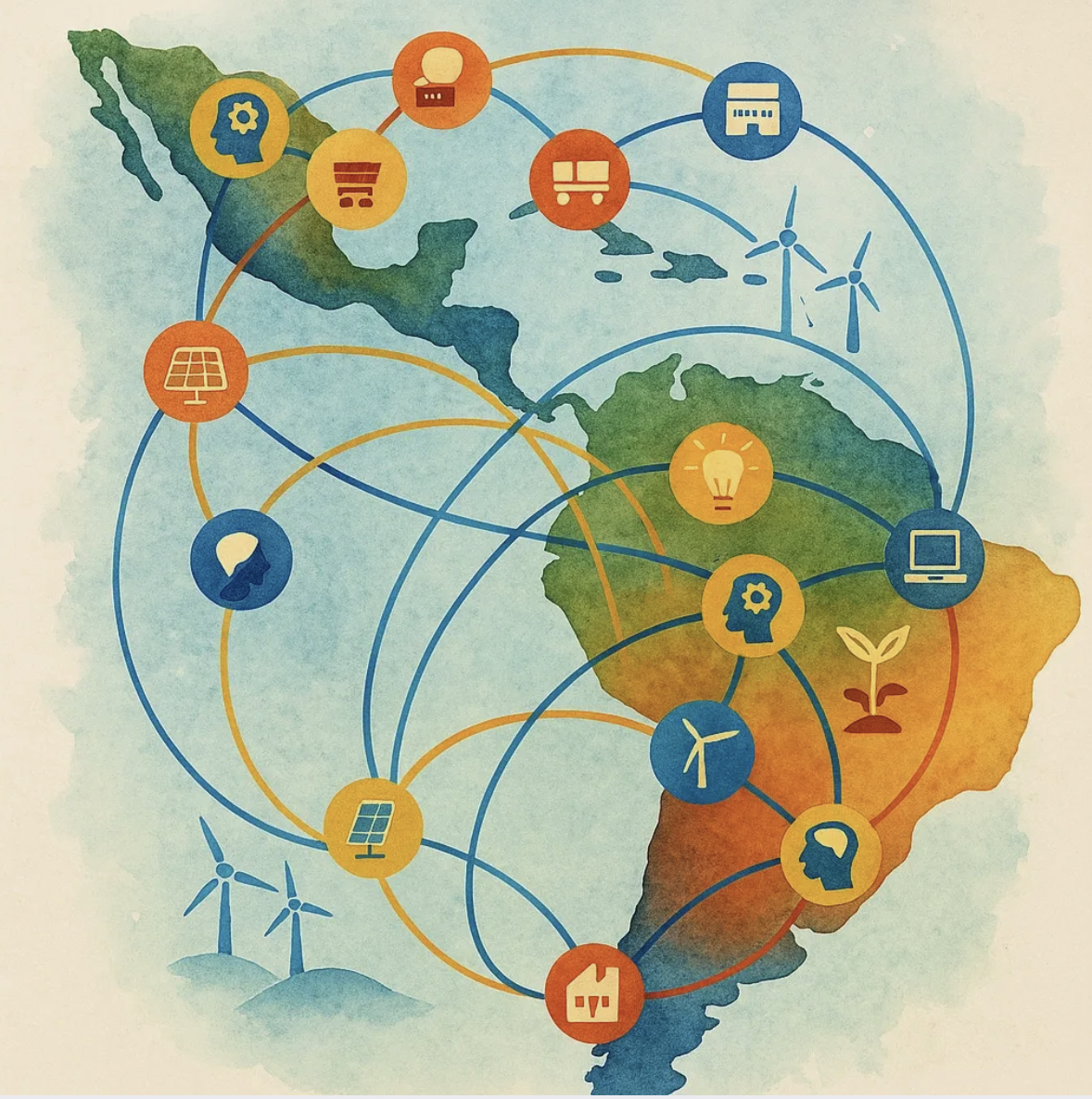
    Two features of technological revolutions matter especially for LAC. First, as production expands, costs fall, and quality improves — a dynamic known as Wright’s Law. Second, innovative technologies emerge in clusters that reinforce one another. LAC is already seeing clusters around artificial intelligence, online platforms, cloud computing, electric vehicles, batteries, renewable energy, digital payments, e-commerce, and logistics. These clusters spill over into digital identity, e-government, and improved tax collection. Countries should target clusters rather than isolated technologies, using policy to connect finance with energy, transport, and skills to enable scalable production. 

    Conclusion

    Economic revolutions occur when resources — natural, human, institutional, cultural, and financial — align and reinforce one another. Finance alone cannot drive transformation; it must be connected to knowledge, raw materials, energy, and human capabilities. Today’s technological wave is a once-in-a-generation opportunity for LAC countries to reposition themselves and expand their productive capacity. The region has the resources to succeed. What it needs now is the commitment, organization, and capability to recombine those resources into new engines of growth.

    As Carlota Perez argues, countries must target clusters of technologies and avoid slipping back into the role of raw‑material suppliers. The challenge — and the opportunity — is to turn natural endowments into competitive advantages and become core actors in the next global technological surge. 

    The advice would be to: 

    · Target clusters of technologies, not isolated technologies. Build ecosystems around EVs, batteries, AI, and digital services.

    · Redirect capital toward future-ready sectors rather than patching old systems.

    · Invest in absorptive capacity. Skills, standards, and institutions determine whether technologies take root.

    · Align public finance with the new paradigm. Development banks, budgets, and regulations should steer investment toward scalable and integrated systems.

    · Build infrastructure that lowers costs. Energy, transport, universities, and digital networks are the backbone of competitiveness.

  • Spreading Successful Ideas Across Economies

    Spreading Successful Ideas Across Economies

    The most significant difference between Latin American and Caribbean economies that move forward and those that fall behind is not necessarily how many innovative ideas they generate, but how quickly innovative ideas spread across people, firms, and sectors. When promising routines and technologies remain trapped in a few places, productivity stalls, inequality widens, and public confidence erodes. When ideas move freely, societies learn, adapt, and grow faster. 

    This blog highlights how LAC countries can strengthen the systems that help innovative ideas travel across individuals, firms, sectors, and borders.

    Good Ideas Spread When People and Firms Can Absorb Them

    Diffusion begins with people. Workers and managers who can learn, adapt, and apply new routines are the first carriers of change. Firms that invest in training and managerial capabilities become engines of transmission, spreading better practices across supply chains and sectors.

    In Brazil, Embraer’s long partnership with the Instituto Tecnológico de Aeronáutica (ITA)—dating back to the 1950s—created a steady flow of engineers who could absorb and adapt to global aerospace technologies. These capabilities spread internally through rotations and project teams, and externally through suppliers and spinoffs, helping Brazil build a competitive aerospace sector.

    Uruguay’s Plan Ceibal, launched in 2007, expanded digital literacy by equipping students and teachers with devices and training. Rather than claiming global leadership, Ceibal helped Uruguay build a solid foundation for digital adoption, enabling firms and public agencies to take up new tools more easily.

    In Mexico, automotive firms in Guanajuato and Nuevo León—including Nissan, GM, and Toyota—co-developed training centers with state institutes during the 2010s. These centers helped local suppliers upgrade quality systems and robotics capabilities, spreading global production routines across the region. Many recognize the Bajío as one of the more competitive manufacturing regions in the Americas; it got there by sharing training and supplier upgrading, which accelerated diffusion.

    Crises also accelerate learning. The early-2000s economic crisis drove Medellín’s shift from a manufacturing city to a knowledge-intensive economy, pushing firms to adopt new digital and managerial practices. Ruta N, created in 2009, helped hundreds of firms reorganize around innovation, spreading agile methods and digital tools across the city.

    Worker mobility, return migration, and diasporas also carry ideas. Engineers trained at Intel Costa Rica, for example, later moved into local firms and startups, spreading global production and management routines across the country.

    Good Ideas Spread Faster When Institutions Scale What Works

    Policies that support experimentation create the raw material for diffusion. Start‑Up Chile, launched in 2010, did more than attract entrepreneurs—it spread routines for rapid prototyping, customer testing, and global networking. These practices diffused into Chilean firms, universities, and public agencies, strengthening the country’s entrepreneurial culture.

    Diffusion depends on variation, selection, and transmission—the three conditions that determine whether innovative ideas survive and spread.

    Costa Rica’s Payments for Ecosystem Services (PES) program, created under Forestry Law 7575 in 1996, also generated variation. By compensating landowners for conservation, PES introduced new routines for monitoring, verification, and contract management. These routines later spread into water utilities, municipalities, and private firms, helping scale sustainable land management.

    Institutions shape which ideas win. Brazil’s transmission auctions (2004–2010) rewarded firms that could deliver reliable, low-cost infrastructure. The auctions sharpened competition, encouraged managerial upgrading, and spread best practices across the electricity sector.

    Public procurement and finance amplify scaling. ChileCompra, launched in 2003, allows agencies to purchase innovative solutions, creating demand for firms that meet higher standards. Development banks across the region increasingly use performance-based financing to reward firms that adopt cleaner, safer, or more efficient technologies.

    Supply chains are powerful transmission channels. In Colombia and Mexico, supplier development programs in automotive, aerospace, and agribusiness help smaller firms adopt quality systems, digital tools, and logistics practices used by global buyers. These upgrades spill over into other sectors—manufacturing practices migrate into services, logistics improvements spread into agriculture, and digital tools move across industries.

    Standards also accelerate transmission. Mexico’s energy‑efficiency standards (NOMs) and Chile’s renewable‑energy auctions created clear expectations that pushed firms to adopt better technologies more quickly.

    Good Ideas Spread Through Networks and Trust

    Dense networks—clusters, associations, and digital platforms—help ideas travel faster. The Campinas Technology Hub in Brazil, anchored by UNICAMP since the 1990s, connects researchers, startups, and established firms, enabling rapid exchange of ICT and biotech capabilities. In Peru, the Colegio de Ingenieros del Perú spreads engineering standards and best practices across regions. In Jamaica, the JMEA helps SMEs adopt modern production and export routines.

    Digital platforms multiply these effects. Brazil’s SENAI expanded online training in robotics and automation in the mid‑2010s, allowing firms across the country to access advanced skills without geographic barriers. Open data systems—such as Chile’s Open Energy Data Platform—enable innovators to build forecasting tools and renewable‑integration solutions.

    Trust and legitimacy make cooperation possible. Brazil’s ANVISA, established in 1999, is widely respected for its technical rigor, encouraging firms to adopt food and pharmaceutical safety standards. Barbados’ Social Partnership Model, in place since 1993, builds trust among government, employers, and unions, helping the country adopt new labor and productivity practices more smoothly.

    Latin America and the Caribbean have no shortage of creativity. The challenge is ensuring that innovative ideas do not remain trapped in a few firms, sectors, or cities, but instead spread widely across individuals, firms, sectors, and countries. When societies strengthen their capabilities, institutions, networks, and trust, they accelerate the movement of ideas that improve productivity, resilience, and opportunity. The faster LAC economies learn and adapt, the quicker people will see better jobs, better services, and better prospects for the future.

  • Why Economies Change – Lessons from Evolutionary Economics

    Why Economies Change – Lessons from Evolutionary Economics

    Over forty years ago, Nelson and Winter argued that economies evolve through a process like biological evolution: firms follow routines, experiment with new ways of doing things, and those that succeed grow while others decline. Technological revolutions accelerate this process by reshaping industries, altering competitive advantages, and shifting geopolitical power.

    Many analysts argue that the world entered a sixth technological revolution around 2020. Countries in Latin America and the Caribbean now face a strategic choice: lead, follow, or fall behind. This wave will determine competitiveness, fiscal stability, and resilience for decades.

    Historically, the region has been commodity-dependent and vulnerable to crises. Yet evolutionary economics teaches that history is not destiny. Countries can change their trajectories by building capabilities, strengthening institutions, and setting clear direction. The region has a rare opportunity to shape its future—if it acts decisively.

    This blog explores how technological innovations drive rapid economic change, how institutions and capabilities determine who benefits, and how shocks and opportunities have historically opened windows for transformation.

    Technological innovations drive rapid economic change.

    Across the last five technological waves, innovative technologies have created entirely new industries, firms, and investment opportunities—first attracting venture capital, then large-scale real‑economy finance. Chile’s solar boom since 2015 and Mexico’s electric‑vehicle investments since 2020 illustrate how quickly new industry blocks can emerge. At the same time, older industries and business models decline in a process of creative destruction.

    Diffusion is uneven and path‑dependent. Countries and regions adopt technologies at separate times depending on geography, capabilities, and institutional readiness. Argentina and Mexico built extensive railway networks from the 1880s onward, while Central America lagged. Hydropower dominated Brazil, Costa Rica, and Paraguay from the 1970s, while Caribbean islands remained oil‑dependent. Guyana’s 2015 oil discovery triggered rapid development just as Venezuela’s mismanagement (2014–2020) collapsed its own sector.

    Path dependence matters: once a country builds enabling infrastructure, complementary technologies diffuse faster. Brazil’s smart grid pilots from 2008 made the later adoption of solar and distributed energy far easier.

    Technologies can be transferred, but absorption requires capabilities. Dominant technologies often emerge in leading economies and spread globally, but receiving countries must have the skills, learning systems, and firms to adapt and improve them. Brazil’s EMBRAPA, founded in 1973, transformed tropical agriculture by adapting foreign technologies to local conditions—an example of evolutionary “retention” and capability building.

    Institutions, capabilities, and visionary incentives determine who benefits.

    Institutions evolve alongside technologies. They can enable adoption or block it. Linear infrastructure, such as railways and transmission lines, requires land‑use reforms. Electricity systems require urban planning and regulatory clarity. In much of the region, governance fragmentation, weak regulation, and fiscal constraints slow institutional adaptation. Evolutionary economics emphasizes that institutional flexibility— “selection environments”—is as important as the technologies themselves. Brazil’s transmission reforms (2004–2010) unlocked long-distance lines for hydropower integration.

    Capabilities and learning systems determine whether firms can seize new opportunities. Dynamic firms grow when they can experiment, learn, and scale. Countries with strong learning systems and entrepreneurial ecosystems move faster during technological waves. Uruguay’s digital‑government investments (2007–2020) and Costa Rica’s engineering reforms after Intel’s arrival in 1997 show how capabilities compound over time. Conversely, Venezuela’s circumstances since 2000 eroded institutional capacity and accelerated sectoral collapses.

    Incentives shape direction. Commodity dependence has created powerful interests invested in maintaining the status quo. Subsidies and tax structures often reinforce older technologies and discourage investment in new ones. Evolutionary economics highlights that incentives influence which routines survive and which fade. Fossil-fuel subsidies across the region slow renewable adoption, while in 2014 Chile nudged utilities away from coal and toward solar and wind.

    Shocks and opportunities create strategic choices that can shape the future.

    Shocks can accelerate change or derail it. Wars, depressions, pandemics, and natural disasters reshape priorities and can disrupt long-term planning. The Latin American Debt Crisis of 1982 forced austerity and delayed modernization for a decade. Hurricane Maria in 2017 caused 225% of GDP losses in Dominica, overwhelming its fiscal capacities, but also triggered a bold goal to become the world’s first climate-resilient nation. Evolutionary economics shows that shocks alter selection pressures: some firms and institutions adapt, others fail.

    Occasionally, shocks open windows for reform—if institutions and capabilities are ready. Chile’s 2010 earthquake accelerated the implementation of seismic‑resilient infrastructure upgrades. 

    Today’s technological wave—AI, ride‑sharing, augmented reality, renewable energy, battery storage, electrification, and digital platforms—is already diffusing globally. The region has real advantages: high renewable energy penetration, hydropower, early adoption of electromobility, and globally significant forests. But success depends on strong institutions, capabilities, and the ability to attract investment. Brazil’s ride-sharing boom (2014–2020) and Costa Rica’s and Uruguay’s rapid EV adoption show what is possible when markets and institutions align.

    Strategic vision and long-term directionality determine whether the region can leapfrog.

    Economies evolve rapidly when leaders choose a direction and sustain it. Evolutionary economics emphasizes “directionality”—the ability to guide variation, selection, and retention toward preferred futures. Long-term planning up to 30 years is essential for attracting private investment, which depends on stable rules, credible institutions, and fiscal reforms.

    The region has examples of long-term strategic vision:

    • Costa Rica’s 2050 Decarbonization Plan
    • Guyana’s Low Carbon Development Strategy 2030
    • Chile’s 2015–2050 Energy Road Map
    • Brazil’s Ecological Transformation Plan

    These strategies create predictable environments where firms can invest, innovate, and scale.

    Conclusion

    Technological waves drive rapid economic evolution, and the sixth wave is already reshaping global competitiveness. Evolutionary economics teaches that countries succeed when they build capabilities, adapt institutions, and create incentives that reward innovation. Latin America and the Caribbean have a once-in-a-generation opportunity to shape their trajectory and leapfrog into a more resilient, competitive, and prosperous future. The choices made today will determine who leads, who follows, and who gets left behind.

  • Why Technologies Rise, Transform the World, and Eventually Fade.

    Why Technologies Rise, Transform the World, and Eventually Fade.

    Every so often, societies experience periods of accelerated change. Innovative technologies emerge that do more than improve daily life — they reshape economies, reorganize communities, and alter how people relate to one another. In these moments, the decisions that individuals, businesses, and institutions make determine whether they adapt, stagnate, or fall behind.

    Today, we are living through one of those periods.

    Across the world, the systems that support modern life — energy, information, production, mobility, and finance — are shifting at a pace that would have been difficult to imagine a generation ago. Solar and wind power have become among the most affordable sources of new electricity. Battery costs have fallen dramatically, enabling the expansion of electric mobility. Artificial intelligence is spreading faster than any previous technology. Digital payments, online commerce, streaming services, and virtual learning have become part of everyday routines. Electric vehicles, once a niche product, now outsell gasoline cars in several major markets.

    These changes are not gradual. They are exponential.

    Some societies and companies are moving quickly, investing in innovative technologies and building the skills and infrastructure needed to support them. Others are moving more slowly. As in every significant period of transformation, the pace of adaptation shapes who benefits and who struggles.

    We Have Seen Transformations Like This Before

    Although today’s technologies feel new, the pattern of rapid change is not. Over the past 400years, human societies have experienced repeated waves of innovation — each reshaping how people use energy, materials, information, and capital.

    Early industrialization(1770–1820) introduced steam engines, canals, textile machinery, and the factory system. Britain’s textile output increased tenfold between 1770 and 1830. Coal powered the machines, and plantation agriculture provided raw materials and capital that supported industrial expansion.

    The transportation revolution (1820–1870) connected regions at unprecedented speed. By 1870, industry had built 100s of thousands of kilometers of railway worldwide, and steam had begun to replace sailing ships. Telegraph lines linked markets and accelerated communication, drawing distant regions into shared economic systems.

    Early electrification (1870–1920) transformed cities and industries through the widespread adoption of lightbulbs powered by expanding electrical networks. Steel production rose from 1 million tons in 1870 to more than 28 million tons by 1900. With the steel came canned products. Electric lighting, telephones, and mass manufacturing reshaped daily life.

    The oil and automobile revolution (1920–1970) changed mobility and consumption. By 1970, more than 200 million cars were on the road, and oil had become a central resource in global trade and industry. Petrochemicals from oil and electronics from refrigerators to color televisions appeared in every house. 

    The digital revolution (1970–2020) rewired the world. Computers, the internet, smartphones, cloud computing, and global supply chains created a new economic architecture. Today, more than 5 billion people use the internet, and digital platforms have become essential infrastructure. At the same time, global trade grew, fed by the shift to container shipping.

    It is tempting to imagine these revolutions as cleanly separated eras, but technological change rarely works that way. Old and new systems often coexist for decades. Infrastructure, institutions, and cultural norms evolve more slowly than the technologies themselves. Revolutions are not single events — they are long, uneven transitions.

    Over the past 250 years, the pace of technological change has accelerated dramatically. During the first wave of industrialization (1770–1820), core technologies like canals and steam engines grew at an average annual rate of 3.7%. By the age of rail and coal (1820–1870), growth had reached 6.84%. Electrification and steel (1870–1920) pushed this to 8.58%, while the oil and automobile era (1920–1970) sustained growth at 7.93%. The digital revolution (1970–2020) surged to 9.34%, and today’s transformation — driven by AI, renewables, and electrification — is accelerating even faster, with early indicators suggesting a growth rate of 11.56% and rising.

    What History Shows: Adapting to Change

    Despite the complexity, history reveals a consistent pattern. Societies and organizations that adapt successfully tend to:

    · Invest early in emerging technologies

    · Build strong institutions and skills

    · Remain open to innovative ideas

    · Take calculated risks

    · Develop infrastructure that supports innovation

    · Maintain a long-term perspective even when the path forward is uncertain

    Those who struggle often:

    · Resist change because the present feels familiar

    · Remain tied to older industries and systems

    · Underestimate new competitors

    · Delay decisions until options narrow

    In past transitions, companies that shaped their eras — from early trading companies to industrial manufacturers to digital platforms — did so by recognizing change early and building systems around it. Individuals who played key roles in these transformations — from engineers and inventors to entrepreneurs and financiers — were not simply creators of new tools. They were builders of new systems.

    At the same time, technologies only succeed with support. Societies influence which technologies grow through policy choices, infrastructure investments, education systems, and cultural acceptance. The steam engine, the railway, the automobile, and the internet all scaled up because governments and communities chose to support them.

    Why Technologies Rise — and Why They Fade

    Technologies tend to succeed when they offer more value for less cost. They fade when something better emerges.

    History offers many examples:

    · Cars replaced horse-drawn carriages between 1900 and 1930.

    · Internal combustion engines replaced steam between 1870 and 1920.

    · Steamships replaced sailing ships between 1800 and 1880.

    · Telephones replaced telegraphs between 1876 and 1920.

    · Digital cameras replaced film between 1990 and 2010.

    · Mobile phones replaced landlines between 1970 and 1990.

    · Streaming replaced broadcast television in less than a decade.

    Today, electric vehicles are replacing gasoline cars because they are faster, cheaper to operate, and easier to maintain — and because infrastructure and policy increasingly support them. Some old technologies survive in niche roles — books, mechanical clocks, candles, sailing ships — but they no longer define the economy. The direction of travel is consistent: societies move toward technologies that deliver greater value.

    But transitions also bring disruption. The first industrial revolution devastated traditional textile industries in India and created harsh working conditions in early factories. The first and second industrial revolutions relied heavily on agricultural products produced through enslaved labor and colonial extraction. The digital revolution has created new inequalities and new vulnerabilities.

    Technological change creates winners and losers within societies, not just between them. The social costs are real and must be managed.

    We Are Living Through the Sixth Great Transition

    Today’s transformation involves artificial intelligence, ride-sharing, virtual and augmented reality, renewable energy, battery storage, electrification, and digital platforms. These technologies are reshaping everything from household budgets to global supply chains. They offer the potential for cleaner air, lower costs, more resilient economies, and new forms of work.

    But the outcomes are not predetermined.

    The benefits depend on choices — by institutions, by businesses, and by individuals. Some communities have more resources and capacity to adapt than others. Not everyone begins from the same starting point.

    Leadership in this moment means more than embracing innovation. It means managing risks, supporting those who may be left behind, and ensuring that the benefits of change are widely shared.

    The future is not something that happens to us. It is something we build.

    And each of us has a role to play in shaping what comes next.