Tag: public-investment

Explores the role of public investment in shaping production systems, infrastructure, and long‑term growth.

  • Guyana’s Oil Boom 2015 to Today: Fast Growth, Hard Choices

    Guyana’s Oil Boom 2015 to Today: Fast Growth, Hard Choices

    Guyana has moved quickly to put in place the core governance for its windfall — the Natural Resource Fund, a local content act, and a rapidly expanding public investment program — as production and revenues scale. The question now is whether these systems are performing well enough to govern a larger spending envelope and deliver results. The window for strengthening them is short because commitments are rising faster than institutions can mature.

    In Guyana, the period from the 2015 offshore discovery to today has produced one of the fastest economic transformations recorded in a small developing state. Recoverable reserves exceeding 11 billion barrels were rapidly converted into production, and nominal GDP rose from roughly USD 4.3 billion in 2015 to about USD 16.8 billion by 2023. After the first oil, real GDP growth surged during the base-effect years, often exceeding 40 percent annually; by 2024, growth remained extraordinary at 43.6 percent, and the IMF projected roughly 14 percent for 2025 as growth normalizes from explosive liftoff to fast expansion. Offshore output has also accelerated faster than earlier projections: after reaching about 616,000 barrels per day in 2024, production climbed to roughly 900,000 barrels per day by November 2025 following the start-up of Yellowtail (the fourth FPSO) in August 2025. Poverty and welfare outcomes, however, remain the defining political-economy test. Recent poverty measurement is publicly contested — with the government arguing poverty is below 20 percent and the IDB estimating 58 percent living below USD 6.85 per day — but all credible sources converge on the same core point: the distributional gap remains large, and converting macro growth into broad-based welfare improvements is the central challenge of the current mandate.

    The central policy question is whether Guyana’s institutions can keep up with its revenues. This analysis examines three dimensions of that question: what the Natural Resource Fund, local content rules, and capital-budget expansion have achieved — and where execution gaps remain; how the upstream contractual framework shaped the pace and structure of the boom; and what it will take for the state to translate growing revenues into durable services, diversification, and shared prosperity.

    Building institutions at pace

    Guyana is managing a historic-speed production ramp-up while building and stress-testing the institutions that must govern it. The risk is not neglect but implementation: spending and operational complexity are rising faster than oversight routines, procurement systems, and delivery capacity can fully keep pace.

    The scale of Guyana’s production ramp-up is without modern parallel for a state of this size. Offshore discoveries in the Stabroek Block — estimated at over 11 billion barrels of recoverable oil equivalent — were quickly converted from reserves into output, led by ExxonMobil as operator, alongside partners Hess Corporation and CNOOC. Production rose from zero in 2015 to about 400,000 barrels per day by 2022, reaching roughly 616,000 barrels per day by 2024. In August 2025, Yellowtail — the fourth FPSO — came online, and national production reached roughly 900,000 barrels per day by November 2025. The next wave is already scheduled: Uaru (fifth project) is expected in 2026, Whiptail in 2027, Hammerhead in 2029, and an additional project is under review. ExxonMobil now projects approximately 1.7 million barrels per day of production capacity by 2030 — a larger scale and arriving faster than earlier “late-2020s” projections implied. Petroleum has become the dominant driver of GDP, exports, and fiscal receipts, reshaping national economic aggregates faster than any domestic system — however capable — can fully adapt.

    The government moved quickly to build the institutional architecture needed to manage the boom. The Natural Resource Fund (NRF), established in 2019 and revised in 2021, created a formal framework for receiving, investing, and withdrawing oil revenues before they became material. The fund has also grown rapidly: it stood at roughly USD 3.1 billion at the end of 2024 and reached approximately USD 3.5 billion by early 2026. Notably, the IMF’s 2025 Article IV consultation explicitly commended Guyana’s rules-based management of the NRF — a useful counterpoint to the common worry that discipline weakens as fiscal space expands. The Local Content Act of 2021 mandated domestic participation across 40 categories of goods and services — an ambitious attempt to convert offshore wealth into domestic employment and business opportunities at speed. These are meaningful achievements. The practical constraint that follows from them is one of sequencing: institutions created while revenues are already flowing have less time for piloting and iterative refinement before they operate at a national scale. Rules and mandates can be solid on paper, while implementation capacity, oversight routines, and market readiness are still catching up.

    The social dimension of the boom has moved more slowly than the macroeconomy. Available evidence indicates persistently high poverty alongside rapid GDP growth, reinforcing perceptions that oil wealth is concentrated offshore and in coastal urban centers. These distributional concerns interact with real political pressures. The 2020 election integrity crisis — in which irregularities in the reporting of results were addressed through CARICOM and legal challenge — demonstrated that resource-era pressures test democratic institutions in specific and serious ways. That crisis was resolved, and Guyana’s institutions held. The lesson it leaves is that distributional expectations must be managed with demonstrable delivery: when citizens do not see the boom in their lives, political risk rises. Revenue debates are therefore becoming a central arena for accountability, and the government’s ability to show concrete results in health, education, and household welfare is directly linked to its political durability.

    The contractual framework and its consequences

    The 2016 Stabroek production-sharing agreement was negotiated when the block’s ultimate scale was unknown and deepwater frontier exploration carried genuine commercial risk. As production has far exceeded early projections, the policy priority has shifted: not renegotiation, but rigorous cost recovery oversight, disciplined fiscal management, and maximizing what the existing contractual framework can yield.

    The initial driver of change was technological and geological. Operators deployed advanced seismic imaging, subsea systems, and floating production technologies, unlocking high-quality, low-sulfur crude oil previously considered marginal. The emergence of FPSO-based development introduced a modular offshore operational model that differed sharply from Guyana’s historical economy of agriculture, mining, and forestry. In effect, deepwater technology created a viable petroleum export platform where none had previously existed.

    The contractual and market environment then rewarded speed and scale. Favorable production-sharing terms, high expected rents, and strong global investor appetite for low-cost, short-cycle projects created powerful incentives for rapid project sanctioning. Multiple FPSOs were approved in quick succession, enabling output to expand even amid global oil-price volatility. By 2022, oil production alone drove real GDP growth of 62.3 percent — the highest recorded globally that year. The contractual logic that produced this result also shapes the boundaries of near-term flexibility: approaches that would extend timelines, such as more stringent local-capability requirements or additional supply-side conditions, carry real execution risk and must be calibrated against delivery capacity.

    The gains from this model have diffused unevenly across the economy. Production capacity and offshore routines have scaled predictably, while the institutions that spread benefits onshore — public investment management, local supplier upgrading, and accountability mechanisms — require more deliberate support. Oil production is structurally enclave-prone: operators optimize for speed and tightly controlled supply chains, limiting automatic spillovers. Onshore gains therefore require deliberate channels: supplier development programs, skills pipelines aligned to industry demand, and local content rules that reward performance — quality, delivery, and learning — rather than participation alone. Cost recovery oversight is an immediate priority: rigorously scrutinizing recoverable costs is the fastest available lever to improve Guyana’s effective fiscal take under the existing agreement.

    Can the state keep up?

    The state has played a decisive and deliberate role in shaping this boom. Through project approvals and the acceptance of production-sharing terms, it created conditions that attracted large-scale investment while shifting exploration and price risk to private operators — a rational strategy given the risk environment of 2016. The result has been extraordinary production growth. The challenge now is that the same pace compresses the time available to test and refine the governance systems that channel revenues into public benefits. With capacity on track to reach roughly 1.7 million barrels per day by 2030, regulatory and fiscal institutions will need to operate at higher volumes, with faster project sequencing, and with rising contractual and operational complexity.

    Oil revenues have expanded fiscal space and enabled a surge in public investment: roads, energy infrastructure, health facilities, and schools. This is a serious coordination effort—public capital to lower costs for private activity and strengthen human-capital foundations. Whether it succeeds depends heavily on the quality of the implementation. Absorptive-capacity constraints — weak project appraisal, procurement bottlenecks, limited contract management capacity, thin monitoring and evaluation — can reduce value for money even when budgets are sound and intentions are clear. The gas-to-energy (gas-to-shore) project makes this risk concrete: first gas was originally expected by the end of 2024, slipped to 2025, and has since moved to mid-2026; reported costs rose from roughly USD 1.7 billion to USD 1.9 billion from a 2018 feasibility estimate of USD 478 million; and one contractor (CH4) left the partnership in July 2025. A second gas-to-shore project is already being advanced, underscoring how quickly the investment pipeline can compound. If these constraints are not addressed, the risk is not merely wasted money but hardened inequality: infrastructure that bypasses poor communities, contracts that flow to connected firms, and a gap between the headline story of prosperity and the lived experience of most Guyanese. The binding constraint may be implementation capacity rather than financing, especially as the investment pipeline continues to grow.

    Whether the state can keep up will depend on institutional learning and adaptive management. Local content rules and training initiatives have increased domestic participation, and local content employment has reached a meaningful scale: around 14,000 Guyanese are now directly employed in the oil and gas sector, with another 7,000 indirectly. The government is also revising the Local Content Act in 2025–2026 to raise targets and extend coverage beyond the oil sector. At the same time, much technical expertise remains foreign-supplied, and direct oil employment is structurally limited by the capital-intensive nature of production. The key transition is therefore from compliance-based local content to capability-based local content: using transparent registries, supplier-upgrading programs, and performance expectations that reward quality and learning. This requires feedback loops — routine measurement of what is working and what is not — so policies can be adjusted before lock-in makes correction costly. The IMF, World Bank, IDB, NRGI, and civil society are notably consistent on this point: the next phase is less about setting direction and more about iterating implementation capacity at speed.

    Five priorities for the next phase

    These five priorities are not equally urgent. Oversight and delivery capacity are the most time-sensitive: oversight shows whether systems are working, and delivery capacity determines whether spending produces results. Both become harder to build once spending has scaled and incentives have hardened. The remaining three priorities build on these foundations.

    Prioritize oversight of construction and transparent contracting while spending scales. The institutions that protect value for money — independent audit and fiscal oversight bodies, beneficial-ownership registries, transparent procurement, and cost recovery scrutiny — need to be fully operational before the investment pipeline doubles again. Oversight is not a governance formality; it is the mechanism through which the government can know whether its own programs are working. Without it, monitoring data is unreliable, course correction is guesswork, and the political cost of failures that could have been caught early falls on the administration that was too busy to look. Guyana has made progress here. The task is to make these systems fully operational in practice — staffed, funded, and empowered to act on what they find.

    Pace spending to what institutions can deliver. The central risk is not spending too little — it is spending faster than institutions can execute well. Roads abandoned halfway, hospitals built but not staffed, power plants commissioned without trained operators: these are the standard failures of oil booms, not hypotheticals. Before expanding the capital budget again, strengthen public investment management by ensuring rigorous project appraisal and prioritization, competitive procurement, construction supervision, and maintenance planning. Then direct spending toward education, health, and basic services — investments that raise productivity for decades regardless of oil prices. Absorptive capacity is not a bureaucratic detail; it is the binding constraint on whether the boom delivers lasting results.

    Make skills the engine of diversification — then remove the other obstacles. Diversification does not happen by hope or decree. It requires addressing specific, well-documented constraints: labor shortages and skill mismatches, unreliable infrastructure and power, and a business environment that discourages new entrants. Start with skills, because they take the longest and pay off most broadly. Fund teacher quality, expand STEM facilities, scale demand-linked training in engineering, construction trades, ICT, and energy systems, and develop the University of Guyana into an applied institution tied to national delivery priorities. Then work systematically through the infrastructure and regulatory constraints so that non-oil firms can grow, survive a price downturn, and eventually export.

    Protect fiscal space across the whole oil cycle. Chile’s copper story offers a relevant model: save more during boom years, avoid locking in recurrent spending commitments that cannot be sustained when prices fall, and maintain clear, predictable withdrawal rules for the Natural Resource Fund. Norway adds a complementary discipline: spend only real returns from the fund, not principal, so that revenues benefit future generations rather than being consumed in a single boom. Trinidad and Tobago’s experience is the most instructive cautionary case — geographically and institutionally closest to Guyana — where oil revenue crowded out the non-oil industry, diversification was deferred decade after decade, and the economy was left exposed when production declined. The key domestic risk is rent substitution: if oil revenues begin to replace rather than supplement tax revenue, the accountability relationship between government and citizens quietly erodes, and the non-oil fiscal base atrophies precisely when it will eventually be needed. Strengthen tax administration and broaden the non-oil base now, while the windfall provides the political space to do so.

    Turn Guyana’s climate position into a durable competitive advantage. Guyana’s Low Carbon Development Strategy — developed well before the oil boom — gives the country credibility in international climate forums that most petrostates cannot access. Combined with the world’s most intact tropical forest per capita, Guyana holds a genuine and rare claim to the carbon credit market. The task now is to make this fully operational rather than rhetorical: clarify the institutional home for LCDS implementation, scale forest-carbon revenue streams, and pair oil revenues with investments in reliable, low-carbon domestic power. Cheap, clean electricity is not only an environmental objective — it is the infrastructure precondition for data-intensive industries, manufacturing competitiveness, and the kinds of firms that can anchor a diversified economy. Oil finances the transition; the transition protects and extends what oil built.

    Guyana enters the next phase of its boom in a stronger institutional position than most oil states managed at this stage. The sovereign wealth fund exists. The local content framework exists. The investment program is underway. The framework is in place, but it needs to perform at the level the coming revenue volumes will demand. The decisions made in the next three years, on oversight, on spending discipline, on skills, and on fiscal structure, will determine whether this boom builds a resilient, diversified economy or leaves the familiar legacy of missed opportunity. Guyana has the tools. The task is execution.

  • Why Reforms Fail: Five Functions for Change in LAC

    Why Reforms Fail: Five Functions for Change in LAC

    In 2013, Mexico’s energy reform looked like a textbook transformation package: a clear legal opening, new regulators, competitive processes to attract investment, and the promise of cheaper, cleaner, more reliable power. Within a few years, the trajectory shifted. Rules were contested, permits and contracts became politicized, and investors faced rising uncertainty. The problem was not just “policy design.” Distributional conflict, institutional veto points, capacity constraints, and credibility gaps made implementation fragile and reversals politically feasible. The lesson for governments across Latin America and the Caribbean (LAC) is straightforward: even reforms that look right on paper can fail to deliver. Institutional change only holds when legitimacy, coalitions, coordination, and learning under uncertainty are managed as an integrated pathway.

    Cases like this show that the core problem is less a lack of ideas than a lack of execution discipline across interdependent steps. Institutional change must be managed as a coordinated sequence in a contested environment. When transformation is treated as a long list of separate reforms, leaders lose clarity on what comes first, what must run in parallel, and what must be sustained long enough to become routine. They also struggle to reduce uncertainty about impacts and costs. Resistance then becomes predictable—distributional conflict, bureaucratic turf wars, capability gaps, and private interests seeking exemptions or delay. The result is familiar: partial progress, missed complementarities, and ad hoc trade-offs. Credibility erodes, and the package underperforms.

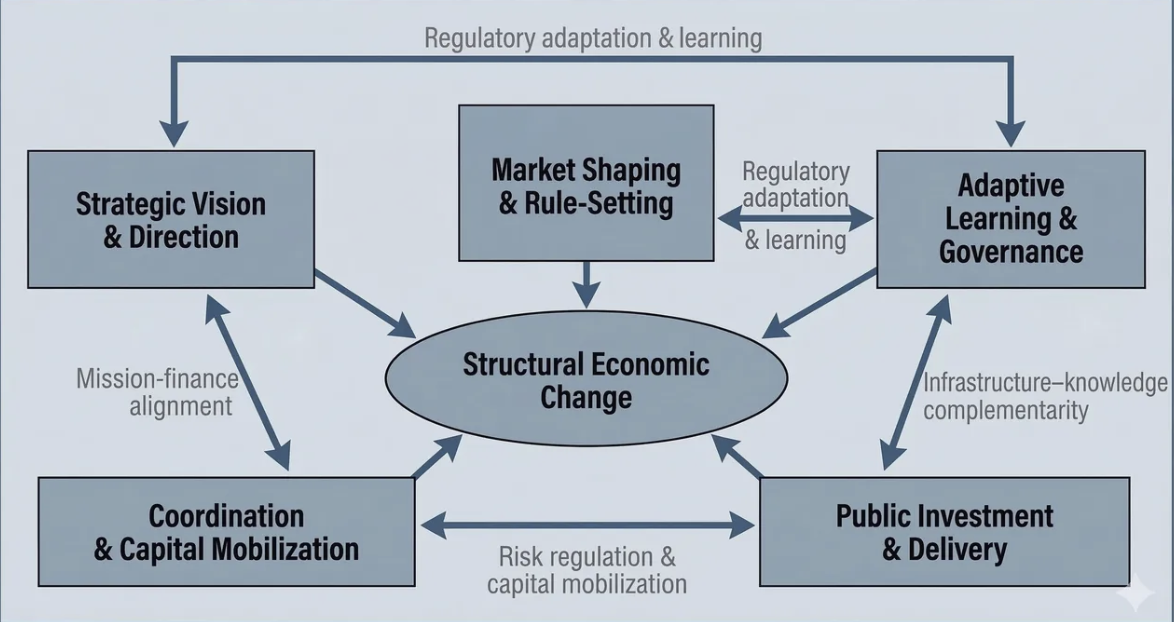
    A coherent approach starts by making the pathway explicit. It turns a complex agenda into manageable blocks that you can share, sequence, and run. I propose five state functions. These five functions don’t overlap, and you can’t skip any of them: strategic vision, market shaping, public investment, coordination and capital mobilization, and adaptive learning. Read as a change pathway, they clarify what governments must put in place. Vision sets direction, market shaping creates the rules and incentives that make it possible, investment turns intent into delivery, coordination keeps everyone aligned, and learning builds in feedback and adaptation. When these functions align, they create reinforcing loops that build capability and credibility. When they do not, predictable failure modes follow—misallocation, reversals, and erosion of trust.

    Why transformation efforts stall: complexity, silos, and partial diagnostics

    Development theories illuminate important state roles. Each tends to focus on a subset of functions rather than offering a complete map for transformation. Developmental state theory emphasizes long-term vision and coordination, but it underplays institutionalized learning and adaptation. Innovation systems theory highlights networks and knowledge flows, yet it treats the state as an implicit actor and offers limited guidance on direction-setting or market creation. New institutional economics foregrounds property rights and the enforcement of rules. It often says less about how states actively shape markets or build productive capabilities. No single framework is jointly exhaustive. Policymakers who apply any of them in isolation will overlook critical functions for sustained change.

    Standard diagnostics often reinforce the problem by treating governance, regulation, finance, and investment as separate silos. They can tell you whether rules are clear, procedures are followed, and projects are well costed. They rarely ask whether the government knows where it is going. They also rarely ask whether institutions are aligned to sustain delivery, or whether the system can learn and adapt when things go wrong. Targeted political economy work can help by identifying who stands to lose (or gain), which agencies can block implementation, and which groups can mobilize against change—such as state-owned enterprises, public-sector unions, or concentrated industry lobbies. But operational evidence still struggles to accumulate into system-level learning without a unifying functional architecture.

    Disconnected reform tracks produce predictable results. They weaken sequencing and suppress learning, which lowers the returns to reform and investment. Resistance and capture risks amplify the damage. Reforms that threaten rents can trigger pushback from incumbent firms, privileged contractors, or protected state-owned enterprises; agencies also protect turf, and weak accountability increases the risk of corruption. Countries may improve governance indicators without achieving a productivity takeoff. Missing functions—especially coordination and capability-building—often explain the gap. Ambitious investment or industrial strategies can also falter. Weak regulation, accountability, or learning then produces misallocation, capture, and backlash. Learning is rarely treated as an explicit state function. Failures persist without correction, and successes are not systematically scaled. The net result is low and volatile returns. Skepticism about state-led transformation grows.

    The five functions that drive institutional change

    Governments need a simple way to describe what must be done and how the pieces fit together over time. The goal is not simplification for its own sake. It is a pathway that is complete enough to guide execution in the real world. Structural change requires five distinct state functions that cannot be collapsed into isolated policies. Progress depends on moving through them as a coherent sequence, not as independent checkboxes. The sequence also helps manage uncertainty and resistance. Credible direction builds legitimacy, enabling rules to reduce discretion and rent-seeking; early delivery builds confidence; coordination brokers compromises; and learning course-corrects when assumptions fail. The model identifies five functions: strategic vision, market shaping and regulation, investment and service delivery, coordination and capital mobilization, and adaptive governance and learning. Each corresponds to a different mode of state action—choosing direction, setting rules, allocating resources, aligning actors, and adjusting in response to feedback. Together, they describe how change is initiated, implemented, and sustained. The absence of any one function can derail transformation even when others are strong.

    Recent LAC experience shows how a missing function can derail change. In Mexico, shifts in strategic direction weakened legitimacy and raised regulatory uncertainty after the 2013 energy opening. Weak enabling rules and oversight can also turn programs into rent opportunities. Brazil’s Petrobras contracting scandal illustrates how discretion and weak controls can corrode performance and trust. Delivery gaps can be just as damaging. In Haiti, repeated difficulties translating reconstruction and service commitments into sustained results eroded confidence. Coordination failures can stall implementation even when the direction is clear. In Colombia, implementation of the peace accord has faced coordination and financing bottlenecks that have slowed delivery in territories. Finally, weak feedback and adaptation can lock in underperforming policies. Argentina’s repeated cycles of price controls and ad hoc subsidies show how reversals can substitute for learning.

    The model is designed so that each function is distinct, yet together they cover the full spectrum of state roles. That is what makes it useful as a practical change sequence. Strategic vision concerns choosing ends. Market shaping governs rules and incentives, while investment focuses on direct provision and asset creation. Coordination and accountability manage cross-government incentives, distributional conflict, and capital mobilization across institutions. Adaptive learning institutionalizes feedback and adjustment over time. The literature maps unevenly onto these functions. Most approaches emphasize some functions but not others, which is why partial diagnostics persist. For policymakers, the implication is practical. Durable change often fails when a single block is missing, even when other reforms are advanced.

    Development outcomes depend on alignment and feedback across functions, not excellence in any single domain. Momentum must also carry early actions into institutionalized routines. Strong public investment without market discipline or accountability raises fiscal risk and lowers returns, as repeated LAC debt cycles show. Strong regulation without investment and coordination can also disappoint. Productive capabilities remain underdeveloped when delivery and alignment are weak. The model treats transformation as a system. Vision focuses effort, shaping the market enables action, investment delivers tangible progress, coordination provides the glue that holds the institution together, and learning embeds adaptation, so gains persist. Uruguay’s renewable energy transition is a useful counterexample. A clear direction, stable market rules (including auction design), credible delivery of new generation, effective coordination among public entities and investors, and ongoing learning sustained rapid change over time. This logic explains why fragmented reform packages underperform despite isolated improvements.

    How the model improves diagnosis, sequencing, and credibility

    A functional lens turns diagnosis into a plan. It shows which block in the change pathway is missing and where the capability is binding. By assessing performance across the five functions, analysts can identify whether stagnation reflects weak vision, poor market shaping, thin delivery capacity, coordination failures, or missing learning mechanisms. That is more actionable than sectoral or institutional checklists. In LAC, many countries strengthened rule-of-law and regulatory indicators, yet failed to diversify or innovate. Gaps in vision and learning often explain why governance improvements did not translate into transformation.

    The model also operationalizes political economy and financial constraints. It supports realistic sequencing from enabling conditions to delivery to durability. Sequencing choices—such as whether to reform regulation before scaling investment, or to pilot before scaling—should be evaluated based on functional readiness, not ideology. Many failures are not technical. They reflect veto points, distributional conflict, and credibility problems—for example, resistance from public-sector unions, pushback from incumbent utilities or other state-owned enterprises, or pressure from export industry lobbies for exemptions and special regimes. Pilots, phased implementation, and transparent risk governance can reduce uncertainty and lower resistance. They clarify who bears costs and how risks are managed. Large-scale capital mobilization without credible oversight can create contingent liabilities and credibility loss. Repeated renegotiations and legal disputes in some LAC transport concessions show how weak risk allocation and accountability can undermine long-term credibility. By linking finance, accountability, and learning, the model helps governments manage trade-offs transparently and sustain momentum beyond the first wave.

    Learning strengthens credibility by turning reform into a self-correcting routine. It also raises long-run impact by improving policy over time. Monitoring, evaluation, and experimentation help governments detect failure, end ineffective programs, and scale what works. Mexico’s PROGRESA illustrates the point. Rigorous evaluation supported evidence-based scaling and political sustainability. The contrast is costly. Prolonged protection of underperforming industries shows what happens when learning is missing. Treating learning as integral helps institutionalize change. Performance improves through feedback rather than waiting for a crisis.

    Making change stick

    LAC’s productivity gaps persist for many reasons, but a common pattern emerges in practice: reforms often move in pieces, and those pieces do not reinforce one another. The result is predictable. Progress stalls, credibility erodes, and governments end up reiterating the same agenda under tighter constraints.

    One practical application is to design a policy-based MDB loan around the five functions, with actions sequenced to build credibility and manage resistance. A first step could set the direction (a published, costed transformation strategy with a delivery mandate) and establish clear rules (time-bound regulatory changes that reduce discretion and clarify incentives). A second tranche could tie disbursement to early delivery (a small number of visible, implementable investments or services) and to coordination (a standing cross-ministry delivery unit with agreed financing, risk governance, and stakeholder engagement). A final tranche could institutionalize learning (monitoring and evaluation, feedback loops, and pre-agreed “course-correction” triggers if targets are missed). Across different groups, indicators would track not only outputs, but credibility signals—policy stability, dispute-resolution performance, procurement integrity, and whether feedback is acted on—so the loan supports lasting change rather than one-off compliance.

    What success looks like is alignment that compounds over time: direction that stays credible, rules that enable action, delivery that builds confidence, coordination that sustains coalitions, and learning that keeps the system adaptive. Uruguay’s renewables build-out shows what this alignment can look like in practice. The payoff is cumulative capability and resilience, not episodic reform cycles.

    Policymakers can use this functional lens to break transformation into manageable blocks and to communicate a credible pathway, internally and with partners. The key is to plan reforms as a reinforcing portfolio, not as disconnected initiatives. That requires managing uncertainty and resistance throughout implementation—distributional conflict, bureaucratic inertia, veto points, and interests seeking delay or exemptions. In practice, governments should ask two discipline questions at each stage: what function is missing, and what would make the next step politically and operationally credible? For MDB-supported programs, this lens also helps shift policy loans from checklist compliance to sequenced capability-building, with disbursements and indicators that reward delivery, coordination, and learning—not just legal changes on paper. Used this way, the model supports coherent, durable transformation.

  • The Playbook of Uruguay’s Energy Transition 2010–2024

    The Playbook of Uruguay’s Energy Transition 2010–2024

    In the early 2000s, Uruguay’s electricity system was exposed on two fronts: drought could collapse hydropower output, and the backstop was imported fossil energy, exactly when regional prices were high and regional supply could be uncertain. In severe years, Uruguay could spend as much as 2% of GDP on energy imports, turning weather into a macroeconomic event.

    Between 2010 and 2024, Uruguay rewired that vulnerability into a new asset base. By 2024, Uruguay generated 99% of its electricity from renewables (hydro: 42%, wind: 28%, biomass: 26%, solar: 3%, fossil: 1%). It exported 2,026 GWh of electricity—enough to treat surplus power as an economic opportunity rather than a reliability risk. 

    Uruguay’s story is best understood as two linked transitions. The First Energy Transition decarbonized the grid and strengthened the system’s ability to manage variable renewables; the Second Energy Transition shifts attention to what electricity alone cannot solve—especially transport, a sector Uruguay identifies as the largest source of energy-sector CO₂ emissions and the main frontier for further decarbonization. 

    For LAC policymakers and citizens, the transferable lesson is not “build wind.” It is how Uruguay reduced risk, redirected capital flows into domestic productive assets, and embedded learning capacity in institutions—while also managing the tradeoffs that come with long-term contracts, grid constraints, and the harder economics of decarbonizing fuels beyond the power sector. 

    This blog examines what changed in Uruguay, what drove those changes, and the role of the state in delivering change. 

    Changes in capital, institutions, and resilience

    Uruguay’s energy transition fundamentally restructured the country’s physical and financial capital stock. More than US $8 billion was invested since 2010—largely by private actors—into wind, biomass, solar, and associated grid infrastructure, replacing recurrent fossil-fuel import expenditures with long-lived domestic assets. Uruguay doubled its generation capacity in about 10 years through the renewable buildout. This shift transformed energy from a source of macroeconomic vulnerability into a stabilizing factor, reducing exposure to oil price volatility and enabling Uruguay to become a net electricity exporter in average hydrological years. In 2024, Uruguay exported 2,026 GWh of energy, worth about US $104 million. 

    Institutionally, the transition was enabled by a distinctive public–social order. Uruguay’s 1992 referendum rejected privatizing state enterprises and preserved UTE as a trusted public utility with control over transmission and distribution. The turnout was 82.8%, and the repeal was approved by 72.6%. This allowed the creation of a hybrid market: private firms invested in generation under competitive contracts, while the grid remained a public good, maintaining social legitimacy and energy sovereignty.

    At the level of social cycles, the transition decoupled economic growth from carbon emissions and hydrological risk. GDP expanded while power-sector emissions fell sharply, and drought years no longer triggered billion‑dollar fossil import shocks. Uruguay’s matrix remained at 92% renewables even during the 2023 drought, the lowest hydro year on record. A diversified renewable portfolio—hydro, wind, solar, and biomass—now acts as a systemic buffer, increasing the resilience of the human ecosystem against climate variability.

    Crisis, competition, and learning-by-doing

    Uruguay’s transition was catalyzed by path dependence and crisis. Lock-in to imported oil and unreliable regional gas made the pre‑2008 energy regime increasingly maladaptive. Required energy imports could cost the country up to 2% of GDP. The 2008 energy crisis functioned as a selection pressure, forcing policymakers to abandon incremental fixes and rapidly scale alternative technologies—particularly wind—that could form a new dominant regime. Uruguay used auctions for biomass, wind, and solar across different years as a deliberate regime shift. 

    Rather than betting on a single technology, Uruguay deliberately fostered technological variety. Competitive auctions and long-term contracts allowed evolutionary selection to favor the most cost-effective and system-compatible options. Over time, wind emerged as the cornerstone because of its strong complementarity with existing large-scale hydro, while biomass and solar filled additional niches. In 2021, Uruguay often ranked second globally, after Denmark, in terms of the share of variable renewables (solar and wind). 

    Crucially, the transition accumulated knowledge and hardware. Collaboration between the National Administration of Power Plants and Electric Transmission (UTE) and the Universidad de la República produced sophisticated system models using decades of climate data. This institutional learning allowed Uruguay to manage intermittency through system design and operations rather than premature investment in expensive storage, embedding intangible capital that increased the system’s adaptive capacity. Smart meter installation enhanced the digital grid and learning across the system, while hydro helped as storage. 

    De-risking markets, building grids, and enabling the transition

    The state played a central coordinating role. Uruguay XXI: Energy Policy 2005-2030 was approved in 2008 and ratified in 2010 through a multi‑party agreement. This plan anchored the energy transition as a State Policy rather than a Government Policy, ensuring continuity across administrations. This political durability lowered investors’ perceived risk and enabled planning horizons consistent with those of long-lived infrastructure assets. Importantly, consensus is critical to lock in future direction – but should not freeze adaptive management in the face of external changes; regulatory updates are part of the Uruguay model. 

    Market architecture was deliberately designed to de-risk private investment while retaining public control. Long-term power purchase agreements guaranteed that UTE would buy renewable electricity at fixed prices, creating a bankable environment for international financing. Importantly, benefits were redistributed by reducing residential tariffs by 30% in real terms. At the same time, regulation evolved continuously—adjusting dispatch rules, tariffs, load shifting and electrification incentives, and standards—to accommodate very high shares of variable renewable energy.

    In the Second Energy Transition, the state has again taken an active role through public investment and innovation platforms. Initiatives such as the Renewable Energy Innovation Fund (REIF) and the H2U Program are shaping new markets for electric mobility, green hydrogen, and e‑fuels. Rather than picking winners, the state is creating options: funding pilots, building enabling infrastructure, and developing regulatory frameworks that allow new sectors to emerge under managed risk. There are emerging global market risks associated with hydrogen investments that will need to be managed adaptively going forward. 

    Three transferable lessons—and the tradeoffs to plan for

    Uruguay’s 2010–2024 experience shows that rapid power-sector decarbonization is not a technology challenge—it is an institutional challenge. Uruguay paired auctions and long-term contracting with an institutional architecture capable of planning, operating, and updating rules for a high-renewables system, resulting in a grid that can remain overwhelmingly renewable even when hydrology is unfavorable. 

    But Uruguay’s success also clarifies the next problem for LAC: electricity is only part of the energy system. Even as the power grid becomes ultra-low carbon, the wider energy mix can remain exposed to imported fuels—Uruguay still has a large oil share in total energy supply in recent years, which is why the country frames the Second Transition around transport electrification, efficiency, and new fuels like green hydrogen and e-fuels. 

    Three practical takeaways travel well across the region. First, build political durability: Uruguay’s multi-year direction reduced the risk premium that kills long-horizon investment. Second, use a credible system orchestrator: a capable utility (public or private) must run procurement, grid upgrades, and dispatch rules as one coherent strategy. Third, invest in “soft infrastructure”—data, modeling, standards, and regulatory learning—because these are what make high shares of renewables stable and what enable the Second Transition to scale without chaos in charging, tariffs, and permitting. 

    Finally, plan for tradeoffs rather than hiding them. Long-term contracts can lock in costs; electrification can shift peak loads; and hydrogen can become a fiscal sink if it is subsidized before demand, certification, and infrastructure are ready. Uruguay’s approach to the Second Transition—pilots, blended finance platforms, and interinstitutional coordination—offers a template for creating options in the face of uncertainty rather than betting national budgets on a single outcome. 

  • Brazil’s Transformation from 1930 to 1980

    Brazil’s Transformation from 1930 to 1980

    Brazil transformed from a coffee exporter to an industrial economy between 1930 and 1980. This is one of the most deliberate and consequential development experiments of the twentieth century. This was not simply a story of Brazil building “more factories.” It was an economy-wide transformation: what Brazil invested in, how capital moved through the system, which institutions gained influence, how cities expanded, how work and living conditions changed, and how the state learned to plan and coordinate long-horizon development. Within a single lifetime, Brazil built industrial platforms, expanded infrastructure, created development finance institutions, and assembled policy tools to mobilize investment over decades. But that transformation did not occur under a single political regime: after the 1964 military coup, industrialization was pursued under authoritarian rule, which increased technocratic insulation and centralized coordination while constraining labor politics and civic feedback—changing both the pace of growth and the distribution of its gains.

    For policymakers across Latin America and the Caribbean (LAC), Brazil’s experience remains relevant because many countries today face a comparable challenge under new conditions. The green transition, rapid technological change, and geopolitical fragmentation are forcing economies to adapt quickly while maintaining social cohesion. The core question is no longer whether economies will change, but whether that change will be shaped deliberately or left to shocks. Brazil illustrates what becomes possible when structural transformation is treated as a national project—and what can go wrong when investment and production expand faster than the institutions needed to manage inflation, external exposure, and distributional conflict. 

    This blog offers a practical reading of Brazil’s transformation through three lenses. First, it clarifies what changed—from physical capital and capital flows to institutions, social order, and the rhythms of boom and vulnerability. Second, it explains what drove those changes—how crises and policy choices generated new economic “experiments,” how some models were selected and scaled, and how capabilities diffused across the economy. Third, it identifies how the state made the transition possible—through direction and coordination, macro rules, infrastructure and public goods, financing and risk management, and the learning systems needed to adapt over time. The goal is not to romanticize the era or offer a blueprint, but to extract usable lessons: what to emulate, what to avoid, and which institutional capacities matter most when a country attempts to industrialize under uncertainty.

    Scale and composition of Brazil’s structural shift

    Brazil shifted from a primarily agricultural export economy to a major industrial economy between 1930 and 1980. Import substitution played a central role, and early heavy-industry platforms were built in steel, with the National Steel Company (CSN) established in 1941 and operating by 1946. Vale (1942) and Petrobras (1953) emerged as additional platform firms supporting minerals/logistics and energy, respectively. By 1980, manufacturing accounted for roughly 30% of GDP. 

    Import-substitution policies reduced reliance on imported manufactures and redirected capital toward domestic production. Brazil founded its National Bank for Economic Development (BNDE) in 1952 (later renamed BNDES) to finance national development, focusing on infrastructure and industry. Alongside development banking, major private banks such as Bradesco (1943) and Itaú (1945) expanded financial intermediation as the urban-industrial economy scaled. Foreign capital inflows became increasingly important—especially in the 1970s, when imports grew faster than exports—supporting investment in capital-intensive sectors such as energy (Petrobras) and heavy-industry supply chains.

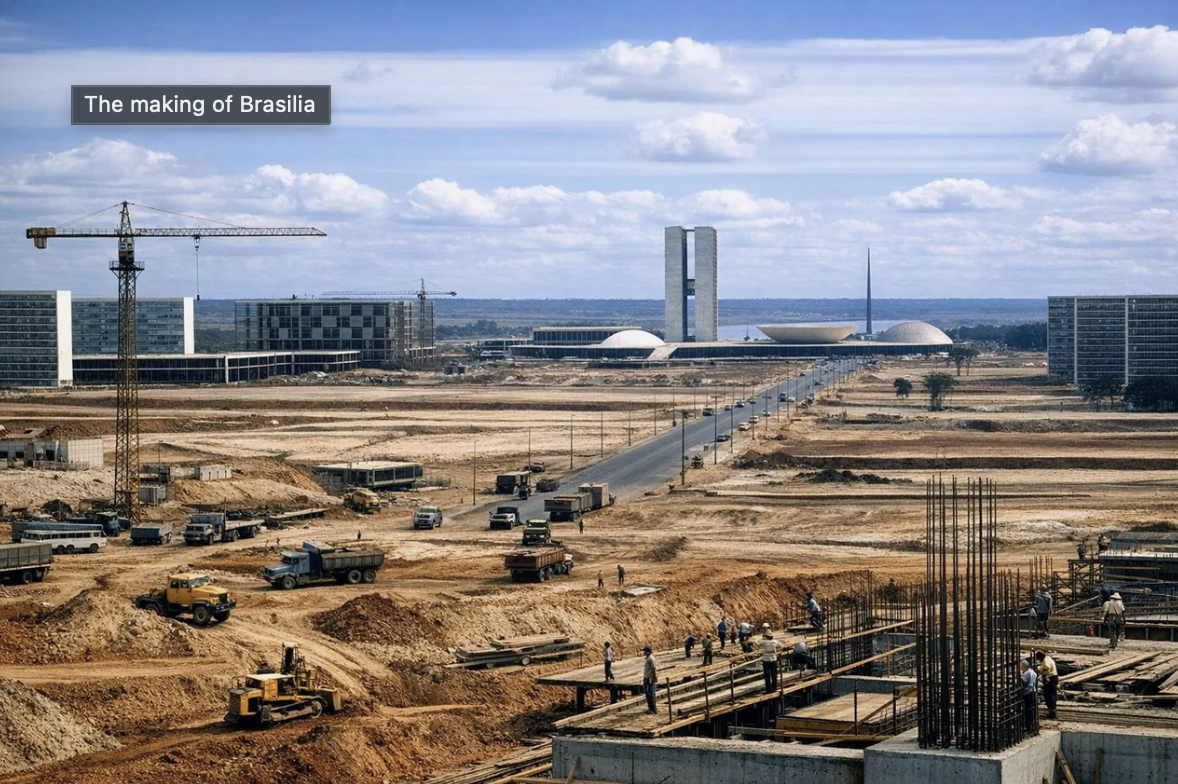
    Economic planning and coordinated industrial policy became the norm. The 1956–1961 Goals Plan (Plano de Metas) reflected this growing planning capacity, prioritizing energy, transport, and industry to reduce bottlenecks and accelerate investment. This period also supported the expansion of national power capabilities through firms such as Eletrobras. BNDES played a long-term role in infrastructure and industrial finance and later expanded its use of capital-market instruments to channel funds toward development priorities. Brasília—constructed as a new federal capital beginning in 1956—became the flagship “planning-as-project” symbol of the era, bundling transport links, housing, utilities, and administrative functions into a single national initiative. The 1964 military coup marked a structural break in how this coordination operated. Planning and macroeconomic management became increasingly centralized and insulated from politics, as the authoritarian regime curtailed labor bargaining and constrained subnational autonomy. After 1964, the Government Economic Action Plan (PAEG) strengthened modern central banking functions and fiscal controls under conditions that enabled wage restraint and tighter political control, helping govern inflation and stabilize investment cycles that affected capital‑intensive champions such as Petrobras and Eletrobras, and later strategic manufacturers such as Embraer, founded in 1969.

    Brazil urbanized rapidly, rising from an estimated 30% urban in 1930 to about 68% by 1980, driven by massive rural-to-urban migration of roughly 20 million people. Large transport megaprojects also reshaped settlement dynamics—most notably the Trans-Amazonian Highway, initiated in 1970 as part of a national integration strategy. Industrial labor markets and labor politics became central features of development. During the military dictatorship, rapid industrial expansion was accompanied by explicit repression of organized labor and limits on collective bargaining. Wage growth was deliberately compressed as part of a broader strategy to stabilize inflation and raise profitability, allowing capital accumulation and industry to advance while postponing distributional adjustment. As a result, the “economic miracle” rested not only on productivity gains and investment surges, but also on authoritarian management of labor relations and income distribution.

    Brazil sustained very high growth for decades, averaging roughly 8% per year from the 1950s through the 1970s. Growth peaked between 1968 and 1974 at roughly 11% annual real GDP growth. This expansion coexisted with chronic inflation: inflation peaked around 100% in 1964, declined to roughly 19% by the late 1960s, and then rose again to around 80% per year in the 1970s. The post‑1964 decline in inflation reflected not only improved macroeconomic instruments but also the regime’s capacity to suppress wage‑price spirals through political control. While this strengthened short‑term investment predictability, it also masked unresolved distributional pressures that re‑emerged later as macroeconomic fragility.

    Shocks, policy choices, and the build-out of capabilities

    External shocks—including the Great Depression and World War II-era disruptions—pushed the state to experiment with new industrial activities, from steel and autos to capital goods. Coffee’s dominance in the export economy heightened this vulnerability: between 1889 and 1933, coffee accounted for roughly 61% of export earnings. When global demand collapsed, coffee prices fell sharply, and the state intervened aggressively, purchasing and destroying roughly 78 million sacks of coffee between 1931 and 1944. In the 1960s and 1970s, policy shifted toward export diversification and large-scale industrial upgrading. 

    The state protected domestic industry through tariffs, trade controls, and market structuring, allowing firms time to learn, invest, and scale. State enterprises focused on strategic sectors underprovided by private capital—especially in heavy industry. Output indicators underline the scale of industrial deepening: steel production rose from about 2.8 million tons in 1964 to about 9.2 million tons in 1976, while passenger car production increased from roughly 184,000 in 1964 to about 986,000 in 1976. BNDE/BNDES financed development priorities and later expanded industrial finance instruments, including a Special Agency for Industrial Financing (FINAME), a key mechanism for financing industrial machinery and equipment. 

    Energy and transport investments lowered system-wide costs and enabled industrial activities to spread beyond initial enclaves, including the São Paulo industrial core that had grown around the earlier coffee economy. Urbanization accelerated the diffusion of labor, skills, and markets, creating larger industrial labor pools and consumer demand. Policy frameworks and investment pipelines—often implemented through large development projects—helped replicate industrial capabilities across sectors, although regional gaps persisted and some areas remained underserved.

    Planning, finance, and public investment as development engines

    The Brazilian state guided development through planning and policy, beginning with import substitution in the 1930s and expanding into broader industrialization from the 1950s through the 1970s. Goal-based planning made priorities explicit and emphasized rapid structural change. After 1964, coordination became highly centralized under authoritarian rule, enabling technocratic agencies to scale investment, deliver major infrastructure projects, and expand export capacity with limited political resistance. This insulation accelerated execution but reduced feedback from labor, regions, and civil society.

    The state also pursued macroeconomic stabilization and institution building during the 1960s, including the PAEG program in 1964 and the creation and strengthening of central banking functions. It established trade and industrial-policy rules—tariffs, incentives, and credit allocation mechanisms—that shaped investment and protected learning-by-doing in manufacturing. These reforms proved more durable under authoritarian conditions that constrained wage demands and political contestation. However, by resolving macroeconomic tensions through repression rather than negotiated adjustment, the model accumulated vulnerabilities that became visible once external conditions tightened and political liberalization began.

    Public investment in infrastructure and public goods provided the base for industrial development. Investment prioritized energy and transport, reducing bottlenecks and enabling scale. In practice, this included major state-led expansion of power generation and distribution from the 1940s onward, especially large-scale hydropower that supported industrial growth. State-owned enterprises built the base for upstream industries such as steel, a critical input for machinery, construction, autos, and infrastructure. Under military rule, large-scale projects also served political and geopolitical objectives—symbolizing regime modernity, reinforcing territorial control, and channeling capital through centralized state institutions. Investment in human capital and social welfare lagged behind physical infrastructure, contributing to uneven progress and compounding the long‑run costs of rapid industrialization. Some 1970s integration projects, including frontier highways, generated environmental and social stresses that were weakly addressed under authoritarian conditions. 

    BNDES played a critical role in mobilizing long-term capital. It financed infrastructure and industrial development and later evolved instruments to support equipment investment and equity participation. Crowding in private and foreign capital was also central to the model, helping fund expansion in capital-intensive sectors. However, reliance on imported inputs, capital goods, and external financing increased exposure to global shocks—vulnerabilities that became more visible after the 1970s.

    Import substitution built foundational capabilities for industrial production and broader industrial ecosystems. However, investment often outpaced adaptive management: the model scaled rapidly but struggled to reconfigure toward sustained export competitiveness. Urbanization and infrastructure clusters helped spread knowledge and capabilities, but the uneven diffusion across regions contributed to distributional tensions that became harder to manage over time.

    Practical lessons on industrial policy, macro-stability, and inclusion

    Brazil’s development arc from 1930 to 1980 shows that structural transformation can be engineered—especially when the state plays a sustained role as strategist, builder, and financier. Over these decades, Brazil expanded industrial capacity and infrastructure, strengthened planning and development finance, and built institutional scaffolding capable of coordinating long-horizon investment. At the same time, the experience of industrialization under military rule highlights that coordination achieved through authoritarian action is limited. Growth acceleration after 1964 relied on suppressing distributional conflict rather than resolving it through durable institutions. As a result, Brazil built industry faster than it built legitimate stabilizers—credible macro rules, social compacts, and adaptive governance mechanisms—leaving the model exposed when external shocks and political liberalization arrived. 

    At the same time, Brazil’s experience shows that growth and industrial scale are not the same as resilience and inclusion. The model’s most important weaknesses were institutional and social, not merely technical—rapid expansion coexisted with persistent inflationary pressure and rising macro fragility. Urbanization outpaced housing and service provision, and the distribution of gains often lagged what was needed to sustain long-term legitimacy. In short, Brazil built factories and infrastructure faster than it built stabilizers—credible rules, risk management, and social compacts—that protect development gains when conditions change. 

    For LAC policymakers today, the most useful lesson is to treat development strategy as a balanced portfolio of state functions rather than a single policy tool. Direction and coordination matter—but so do macro rules that prevent inflation and external exposure from undermining investment. Public investment must build enabling platforms and be matched with financing systems that mobilize private capital while managing risk. Above all, governments need dynamic capabilities: the ability to learn, correct course, and upgrade competitiveness as technologies and markets evolve. Brazil’s story is a reminder that industrialization is not a single leap, but a sequence of choices made over decades. Countries succeed not by avoiding shocks, but by building institutions strong enough to adapt—so that transformation becomes a source of shared prosperity rather than recurring vulnerability. 

  • From Microchips to Megatrends: The Global Shifts of 1970–2020

    From Microchips to Megatrends: The Global Shifts of 1970–2020

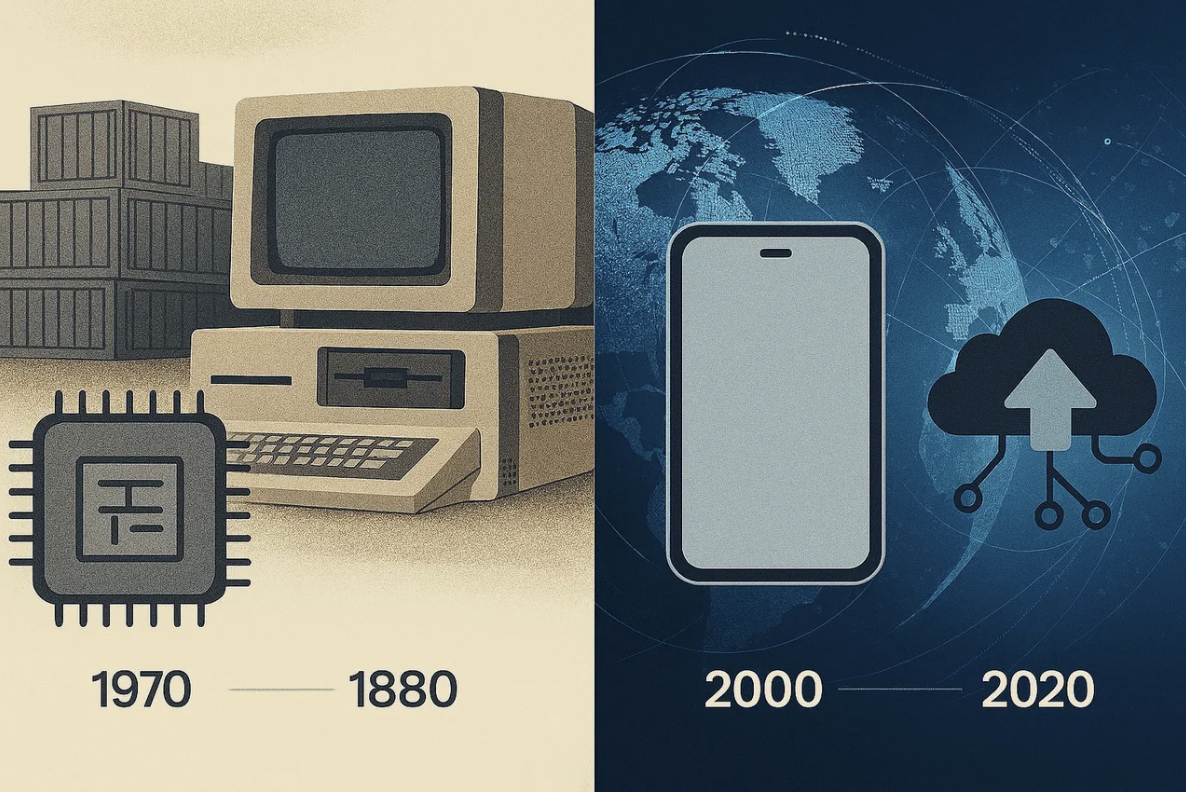
    Between 1970 and 2020, the world changed faster than at any other time in human history. Microprocessors, digital sensors, personal computers, the internet, smartphones, and cloud computing all emerged over the course of five decades. The 1971 Intel 4004 chip contained just 2,300 transistors; by 2020, Apple’s M1 chip held 16 billion. These technologies now underpin everyday systems—mobile banking, telemedicine, online education—shaping how billions of people live, work, learn, and connect.

    These innovations rewired the global economy. Capital now moves at the speed of light. Cross-border capital flows expanded from tens of billions to more than US$1.2 trillion. Merchandise trade grew from hundreds of billions to US$18–19 trillion. Internet use rose from millions in 1990 to 4.5 billion users in 2020. East Asian economies emerged as global manufacturing hubs, while the United States consolidated its dominance in finance, digital platforms, and knowledge networks. In Latin America and the Caribbean, new opportunities for growth, innovation, trade, and integration appeared—but exposed longstanding challenges in productivity, inequality, and institutional capacity.

    Speed, scale, and knowledge exemplify today’s world. Countries that invested early in education, research, infrastructure, and capabilities became innovation leaders, lifted millions out of poverty, and intensified global competition. Participation in value chains now extends beyond natural resources and manufacturing to include data, technology acquisition, and the capabilities needed to adapt and learn.

    Understanding the last fifty years is essential for shaping the next fifty. Latin America and the Caribbean have talent, natural capital, and creativity. The region could lead to the emergence of green, digital, and knowledge-based economies. Doing so will require learning from the past and adopting deliberate strategies that build on regional strengths to turn global change into regional opportunity.

    This blog examines the transformations that occurred, the forces that drove them, and the role of states in shaping their trajectories.

    Systemic Changes in Capital Flows at Speed and Scale

    The most striking feature of this period was the speed and scale of change. Foreign direct investment stock rose from roughly US$100 billion in 1980 to nearly US$40 trillion in 2020. Finance could move instantaneously across borders. Global trade expanded from about US$2 trillion to US$18–19 trillion as supply chains stretched across continents. Trade in financial, technological, informational, and digital services reached US$6 trillion. Knowledge now moves in milliseconds, and people increasingly migrate to fill labor shortages or build skills. Trade shifted from simple goods to complex, fragmented value chains and to services and data rooted in intellectual property and knowledge.

    A Reconfigured Global Economy

    The global economy was fundamentally reshaped. East Asia—first Japan, then Korea, Taiwan, Singapore, Hong Kong, and later China and Vietnam—became the world’s manufacturing hub. Many of these economies moved from low‑ or middle-income status in 1970 to high-income status by 2020. South Korea’s per capita GDP rose from under US$300 in 1970 to more than US$30,000 in 2020. China became a central node for trade, manufacturing, and technology, while the United States shifted toward dominance in finance, platforms, and knowledge networks.

    Advanced economies such as the United States, Germany, the Netherlands, and the Nordic countries retained their leadership in technology and finance, with large corporations becoming increasingly influential. The internet, smartphones, and digital platforms reshaped the movement of knowledge, capital, and trade. Resource-rich and well-governed exporters—including Norway, Saudi Arabia, the UAE, Qatar, and Kuwait—leveraged oil and gas rents to accelerate development, supported by large inflows of migrant labor. New middle powers such as South Korea, India, and Brazil strengthened their positions as they integrated into global supply chains.

    Countries facing conflict or severe mismanagement fell further behind the global frontier, struggling to integrate into trade and knowledge flows and becoming increasingly dependent on aid, remittances, or single commodities. In Latin America, countries such as Chile, Uruguay, and Costa Rica advanced, but the region did not overcome persistent challenges in productivity and inequality.

    Technologies, Liberalization, and Knowledge as Drivers of Change

    The technologies of this ICT revolution reflected two powerful empirical patterns. Moore’s Law observed that the number of transistors on an integrated circuit doubles roughly every two years. Wright’s Law showed that for every cumulative doubling of production, the cost of a technology falls by a constant percentage. Together, they drove a dramatic decline in the price of computing and digital infrastructure.

    The internet, mobile computing, cloud services, and fiber‑optic networks created a new technological paradigm. Borders became porous to capital, knowledge, and information. The logistics revolution—especially containerization—reduced shipping costs by 75–90% and cut shipping times in half, making global value chains more feasible and increasing the need for international standards. Financial innovations, including deregulation, derivatives, global capital markets, electronic trading, and mobile money, transformed how cash flows and laid the groundwork for digital assets such as cryptocurrencies. Daily foreign exchange trading rose from the low hundreds of billions in 1980 to US$6.6 trillion in 2019.

    Cost competition drove offshoring, nearshoring, and friendshoring as global supply chains expanded. Energy shocks spurred efficiency, diversification, and a focus on energy independence. Geopolitics shifted with the end of the Cold War and the rise of China, as the global economy moved from industrialization and production toward technology and knowledge. Trade and capital liberalization, supported by international agreements, encouraged private‑sector engagement and privatization.

    Capabilities as the New Currency of Nations

    Capabilities became increasingly decisive. Education, research and development, and digital infrastructure were essential for securing national comparative advantages. Early movers such as the United States and the United Kingdom became financial hubs. In contrast, early, low-cost industrializers such as China and South Korea scaled up manufacturing and became hubs of production. The global economy became more integrated and moved toward digitization, knowledge, and networked production. Knowledge flowed directly through digital networks and indirectly through migration, with the Gulf states alone hosting more than 30 million migrant workers.

    States and Multilateralism

    States played a significant role in shaping long-term development pathways. Korea, Taiwan, and China actively pursued industrial advancement, calibrating the pace of liberalization in trade, capital, and migration. Other countries positioned themselves as financial or corporate centers or moved rapidly into clean energy to reduce dependence and volatility. Financial deregulation in the United States and the United Kingdom accelerated global capital flows by relaxing capital controls, reducing trade barriers, and promoting privatization and public-private partnerships. Many countries invested in migration, education, and R&D policies to cultivate the talent and capabilities needed to leverage innovative technologies.

    Multilateral organizations—including NAFTA, ASEAN, and the EU—helped stabilize change and set standards for a global marketplace. NAFTA tripled North American trade from US$290 billion in 1993 to US$1.1 trillion in 2016. The WTO codified global trade rules and accelerated supply chain integration, while the G7 and G20 provided coordination in an increasingly complex global economy. In Latin America and the Caribbean, MERCOSUR, CARICOM, and the Pacific Alliance supported regional integration.

    In some cases, state interests and multilateral systems evolved together, producing what some analysts call “hyper‑globalization.” Yet global change also created winners and losers within advanced economies. Some regions lost manufacturing jobs to trade and automation, while urban areas captured gains from finance, technology, and knowledge flows. In the United States, manufacturing employment fell from 19 million in 1979 to 12 million in 2020. These internal disparities fueled populism and domestic backlash, challenging multilateralism.

    Conclusion

    The last 50 years clearly show that countries can take an active role—and adopt long-term strategies—to accelerate economic growth. The Asian Tigers sustained growth rates of 6–8% for decades. The United States continued to lead in finance and innovation. The Gulf states transformed oil and gas wealth into US$3.5 trillion in sovereign wealth funds, accelerating broader development.

    Latin America and the Caribbean now face a similar moment of choice. The next wave of global transformation—energy, biotechnology, advanced manufacturing, data management, and artificial intelligence—is already underway. Countries that invest in institutional and individual capabilities and open channels for knowledge and trade based on their comparative advantages will scale their economies. Those who hesitate risk missing the opportunities ahead.

    The region has abundant energy resources, the world’s largest lithium reserves, exceptional solar potential, vast natural and cultural capital, and a growing digital economy. The question is whether LAC countries will work together to shape the next technological wave—or be shaped by it.

  • Engines of Change 1920-1970 Cars, Planes, Fridges, Assembly Lines

    Engines of Change 1920-1970 Cars, Planes, Fridges, Assembly Lines

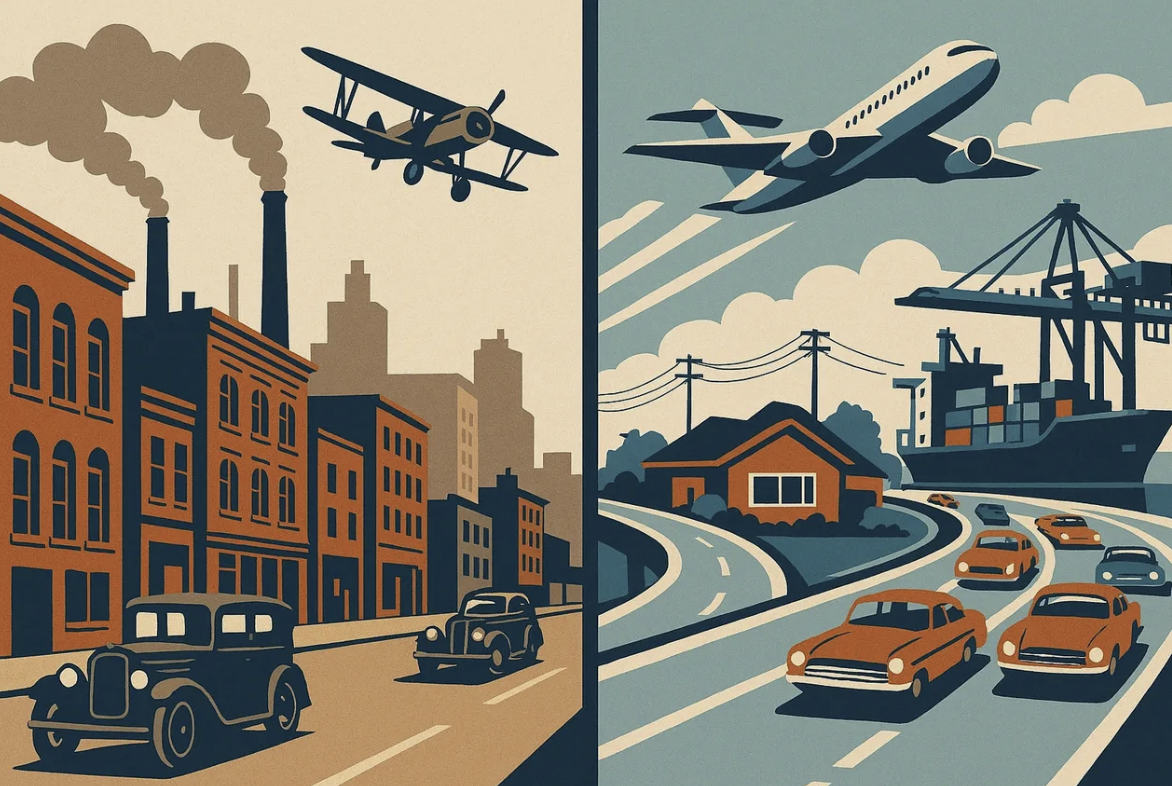
    The human ecosystem changed fundamentally across many countries between 1920 and 1970. Much of what we recognize in modern life emerged during this period: cars, planes, refrigerators, televisions, and container ships. These innovations reshaped cities, reconfigured trade routes, and reordered the global hierarchy. The United States led these transformations, followed by West Germany, France, Italy, Belgium, Greece, and Sweden. South Korea, Taiwan, Hong Kong, Singapore, and the Soviet Union also underwent rapid structural change.

    Two major growth booms defined the era. The first, in the United States during the 1920s, established the country as a technological leader. The second came after 1945, when U.S.-backed reconstruction accelerated industrial recovery across Europe and Asia. Together, these waves produced decades of sustained growth driven by urbanization, industrialization, and mass production—supported by government-backed development finance that took risks private banks would not.

    Countries that mastered innovative technologies and organizational practices grew rapidly and became global leaders. Those that struggled with weak coordination, underinvestment in infrastructure, adversarial labor relations, or elite-dominated politics fell behind. 

    The lesson for Latin America and the Caribbean is clear: modernizing infrastructure, mobilizing patient capital, upgrading skills, and enforcing standards that reward quality and sustainability are essential to riding today’s technological wave. Doing so will create jobs, raise health standards, boost productivity, and strengthen urban resilience.

    This blog examines the transformations of 1920–1970, the drivers behind them, and the state’s role in shaping outcomes. 

    A rapidly changing human ecosystem

    The environmental and resource landscape shifted dramatically. Energy systems moved from coal to oil and electricity, powering growth in transport, petrochemicals, and manufacturing. These transitions varied by country: Sweden expanded hydropower, the United States built oil‑ and electricity-powered suburbs, Mexico and Venezuela leveraged petroleum, and Brazil invested heavily in hydroelectricity.

    Urbanization surged, accompanied by large-scale land conversion for infrastructure, energy, and materials. In Japan, the share of urban residents rose from 60 percent in 1950 to 70 percent in 1970. Environmental stresses also became more visible. London’s Great Smog of 1952, which caused an estimated 10,000–12,000 deaths, led to the Clean Air Act of 1956. Similar concerns in the United States contributed to the Clean Air Act Amendments and the creation of the Environmental Protection Agency in 1970.

    Mass production and mass consumption took hold as households acquired cars and, later, refrigerators and televisions. U.S. vehicle ownership rose from 60 cars per 1,000 people in 1920 to 516 per 1,000 by 1968. Argentina was an early adopter too, with 35 cars per 1,000 people in 1930. Ford’s assembly lines created millions of middle-class jobs, while mass production made consumer goods affordable for working families. As an anecdote about the speed of technological change, New York went from horse-drawn to motorized between 1900 and 1913.

    The United States, West Germany, and Japan converted wartime industrial capacity into high-quality civilian production—cars, appliances, and electronics for export. Japan imported U.S. and German technologies, improved them, and built globally competitive firms in steel, shipbuilding, automobiles, and electronics. Between 1950 and 1970, life expectancy and per capita GDP rose sharply across the USA, Japan, West Germany, France, Italy, Belgium, Sweden, South Korea, and Greece. Britain, by contrast, experienced slower diffusion of consumer goods and weaker industrial modernization. Mexico and Brazil also industrialized, with output rising sharply between 1950 and 1980, and urbanization increasing severalfold. But LAC’s import‑substitution strategies, focused on protected domestic markets, limited economies of scale, and enabled rent‑seeking by powerful elites.

    Media and mobility reshaped culture. Radio and television became dominant channels. Commercial jet travel—introduced in 1952—dramatically reduced travel times. Together, mobility and mass media helped forge national narratives and shared identities.

    Global trade expanded rapidly, supported by new logistics and financial flows. Container shipping, introduced in 1956, revolutionized cargo transport by standardizing metal containers that moved seamlessly across ships, trains, and trucks. Handling costs fell from US$5.86 per ton to US$0.16 per ton. Ports such as Rotterdam, Hong Kong, and Singapore expanded dramatically. Export-led industrial models emerged in West Germany, Japan, Korea, and Taiwan, which built manufacturing clusters tied to global markets. The Marshall Plan accelerated reconstruction and market integration across Western Europe, creating new consumer markets. Many countries strengthened public institutions, expanding welfare systems, development banks, and national accounts to support fiscal management.  

    Drivers of change: technology, institutions, and war

    Innovative technologies and practices emerged in the 1920s, including mass-production techniques such as Ford’s assembly line. Model T production rose from 170,000 vehicles in 1913 to more than 941,000 in 1920. Cars and planes evolved rapidly, culminating in jet aircraft like the Boeing 707 in 1958. Many early advances were spin-offs from World War II industrial machinery.

    Containerization later standardized logistics, slashing costs and enabling modern globalization. Innovation also included new corporate structures, professionalized management, and novel approaches to quality control and workflow.

    World War II mobilization accelerated research and development in aviation, petrochemicals, and electronics, and forced industrial-scale production that later shifted to civilian use. Post-war support—including the Marshall Plan and U.S. aid to Japan and Korea—helped countries adopt advanced development models. Market competition rewarded firms with access to technology and long-term finance, enabling them to outcompete protected or fragmented economies.

    Strong state narratives anchored policy approaches: the U.S. “New Deal,” Japan’s “Income Doubling Plan,” West Germany and Austria’s “Wirtschaftswunder,” and France’s “Trente Glorieuses.” The United States New Deal focused on stabilizing the financial system, expanding infrastructure, and recovering from the Depression. Europe and Japan emphasized reconstruction and the expansion of welfare states. The post-war Golden Age of Capitalism delivered massive investments in highways, ports, grids, and telecommunications. Education and vocational training systems codified modern technologies and routines, spreading innovation across firms and regions. 

    The role of the state: rapid change, uneven results

    Successful countries built strong planning agencies that set targets and coordinated across finance and industry—Japan’s Ministry of International Trade and Industry and South Korea’s Economic Planning Board are emblematic. These countries focused on industrial capability and global integration. The Soviet Union’s planned industrialization made it the world’s second-largest economy by the 1960s, but it came with serious design flaws.

    Others faltered. Britain, burdened by post-war debt, weak industrial strategy, and political conflict, failed to modernize quickly. Fragmentation, strikes, and adversarial labor relations slowed progress. The former industrial leader lost momentum, competitive advantage, and investment.

    Successful countries also regulated effectively and set standards. Land reform and quality standards boosted productivity. Trade agreements and the European Economic Community opened markets. Expanding welfare states provided pensions, healthcare, education, and unemployment insurance. The Soviet Union, however, set production targets without market signals or consumer‑quality standards, leading to chronic shortages. Greece’s clientelist politics limited productivity gains and left regions disconnected from export-led growth.

    Public finance capacity was equally important. Development banks such as West Germany’s KfW, Japan’s JDB, and Italy’s IRI de-risked significant industrial and infrastructure investments and supported small and medium-sized enterprises. Large infrastructure projects paid off: Japan’s Shinkansen, launched in 1964, symbolized integrated investments in mobility and growth.

    The Marshall Plan injected over US$13 billion (about US$200 billion today) into reconstruction, institutional reform, and the European Payments Union. This support accelerated structural change, helped prevent a repeat of the political fallout from World War I, and built consumer markets for U.S. products. Public investment also expanded human capital and welfare systems, creating skilled workforces and social stability. The most successful states cultivated innovation ecosystems by funding basic and applied research. Japan, Korea, Taiwan, and Singapore targeted specific export sectors, incentivized cluster development, and compressed industrialization timelines. 

    Conclusion

    The period from 1920 to 1970 was one of extraordinary turmoil and transformation. Old powers declined, and new manufacturing giants emerged. This rapid change was possible because governments worked with businesses to set direction, create market space, and build the skills needed for innovation and diffusion. Development banks played a significant role in financing infrastructure that reduced costs and enabled the formation of new industrial clusters.

    If Latin America and the Caribbean choose coordination over fragmentation, patient investment over short-termism, and strong standards over shortcuts, they can write their own economic miracle. 

    For the region, this means prioritizing infrastructure, long-term financing, skills development, standards and quality control, and export promotion—anchored in industrial clusters that leverage comparative advantages in renewables and critical minerals. 

  • Third Technology Wave, 1870-1920: Steel, Electricity, & Telephone

    Third Technology Wave, 1870-1920: Steel, Electricity, & Telephone

    One hundred and fifty years ago, countries faced challenges like those confronting Latin America and the Caribbean today. Beginning in 1870, a group of nations chose to enter the next phase of the Industrial Revolution and underwent rapid, far-reaching transformation. 

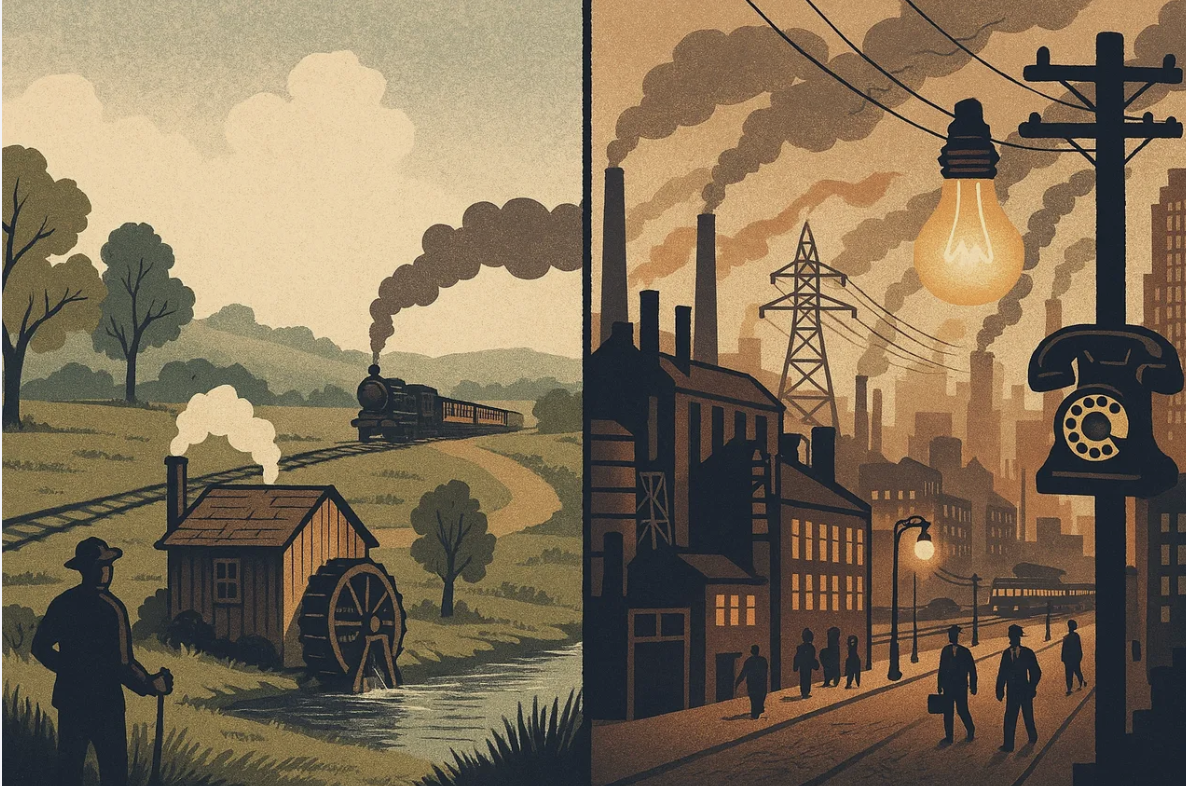
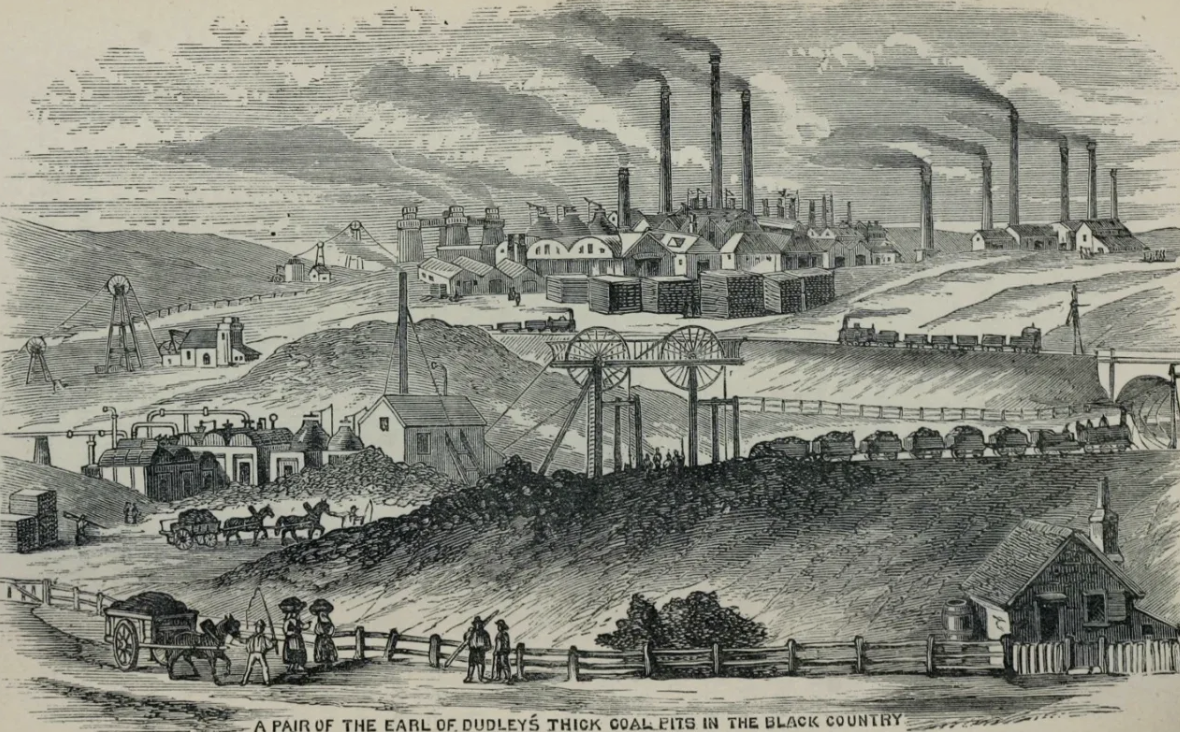
    By 1920, these countries were replete with steel mills, rail systems, electricity generation and transmission, electric lighting, telephones, canneries, and large industrial cities. Their economies reorganized around new infrastructure, industries, and social arrangements.

    The governments of eight countries — the USA, Britain, Germany, France, Italy, Belgium, the Netherlands, and Japan — played decisive roles in steering these changes in partnership with the private sector. Governments set national missions, built infrastructure, shaped markets, expanded education, and helped manage inherent disruption and conflict.

    For Latin America and the Caribbean, this history matters. The world is entering a new era of disruptive technological change built around green and digital technologies. This new wave presents a significant opportunity for the region. Government choices will determine national trajectories over the next 50 years. This blog shows that rapid transformation is possible, even for latecomers, when states, societies, and markets align around a shared mission.

    This blog examines how these countries navigated the third great technology wave by exploring what changed, what drove those changes, and the role governments played. 

    The global human ecosystem was transformed.

    From 1870 to 1920, natural and socio-economic systems changed dramatically across these countries. The Bessemer and Siemens‑Martin steelmaking processes became the backbone of development in Germany and the USA. US steel production rose from 68,000 tons in 1870 to 42 million tons in 1920 — a 600-fold increase. Electrification after 1890 reorganized production and urbanization, with the USA and Germany building large grids, followed by Britain, France, and Belgium. These countries went from producing no electricity in 1870 to generating tens of terawatt‑hours by 1920.

    Coal extraction intensified environmental change in the Ruhr, Appalachia, Wallonia, and northern France, while Japan and Italy relied on imported minerals, demonstrating that resource scarcity was not a limitation. Rail networks unified national markets and helped accelerate urbanization. Electric lighting extended working hours, and telephones and telegraphs enabled broader and more effective coordination — supporting US corporations, Britain’s global trade, and Germany’s universal banks. Canning, led by the USA and Britain, reshaped diets and urban supply chains. Public health systems — water, sanitation, and pasteurization — improved urban living conditions and supported population growth.

    Social systems and institutions also evolved. State capacities expanded to universal schooling, welfare, and stronger regulation. Land‑grant colleges in the USA, technical education in Germany, and republican schools in France built human capital. Germany pioneered social insurance; Britain introduced national insurance; Belgium and France expanded labor protections. Antitrust laws emerged in the USA; labor laws strengthened in Britain and France; and administrative modernization advanced in Japan and the Netherlands.

    Nationalist narratives linked modernization and industrial strength in Germany, Japan, Britain, and the USA. Mass media — newspapers, cinema, and early radio — diffused national cultures. Scientific and technical capacities expanded, with universities in Germany, France, and Britain leading globally. Class structures hardened, with strong labor movements in Britain, Belgium, and Germany, and labor conflicts in the USA and France. Women’s suffrage expanded toward the end of the period, though patriarchal norms persisted. 

    Britain was the world’s premier creditor until World War I, holding foreign assets worth twice its GDP in 1914. The USA shifted from a capital importer in 1870 to a major creditor by 1920, with New York rivaling London. Germany, France, Belgium, and the Netherlands also exported capital, while Italy and Japan imported capital and technology.

    Transatlantic migration reshaped labor markets: Italians, Germans, and Belgians migrated in the millions, many to the USA. Britain, France, Belgium, and the Netherlands extracted resources and labor from their empires. Rural‑to‑urban migration accelerated, fueling industrialization and transforming social institutions.

    Steel, electricity, and telecommunications diffused rapidly through global trade networks. Germany and the USA dominated machinery and chemical exports. Japan and Italy imported technologies to industrialize. By 1920, these eight countries — home to about 20% of the world’s population — produced half of global economic output and 70% of global industrial production. 

    Drivers of change between 1870 and 1920.

    Countries with strong coal and iron resources — the USA, Germany, Britain, Belgium, and France — built heavy industry. Japan, Italy, and the Netherlands relied on trade and efficiency. Technologies such as steel, electricity, and machinery reorganized production and logistics. Canning, refrigeration, sanitation, and public health supported dense urbanization.

    The USA and Germany built large integrated corporations and universal banks; Britain and Belgium relied on merchant‑finance networks. US Steel, founded in 1901, became the world’s first billion-dollar corporation; economies of scale are critical in global competitiveness. Germany and France built strong bureaucratic and fiscal states; Britain and the Netherlands refined liberal‑parliamentary systems. Built infrastructure — railways, ports, and electrical grids — shaped national trajectories.

    Cultural traditions — German Bildung, French republicanism, British imperialism, American settler republicanism, and Japanese nationalism — shaped modernization. Belgium and the Netherlands developed pillarized societies: separate social groups with their own institutions. Strong unions emerged in Britain and Germany; class politics intensified in Italy and France.

    Countries that produce steel, machinery, electricity, and chemicals dominate the global industry. Japan and Italy entered global markets through textiles and light industry. Military competition reinforced demand for steel and machinery, unfortunately, culminating in World War I.

    Large integrated firms outcompeted smaller producers. Industrial clusters — the Ruhr, Northeast USA, northern Italy, Wallonia, and the Randstad — became growth poles. Electrified and connected cities outperformed historical coal‑and steam regions. Labor movements reshaped institutions: countries that reformed adaptively maintained stronger trajectories. National narratives tied modernization to national destiny. 

    Successful countries institutionalized new routines. They enacted laws, built infrastructure, and expanded education systems. Germany, France, the USA, Japan, and the Netherlands moved toward universal schooling. High-cost infrastructure — railways, ports, power grids, telecommunications — are locked in development paths. Path dependence means that early choices matter. State set 

    Welfare and labor institutions expanded. Technologies diffused through trade, foreign investment, and imitation. Corporate and financial models spread. The media shaped ideas about modern lifestyles. Once heavy industry bases were established, research, skills, and capital created cascades of innovation. Japan and Italy selected technologies suited to their conditions, shaping future constraints.

    Multiple institutional models emerged — corporate capitalism (USA), liberal‑parliamentary capitalism (Britain), state-organized capitalism (Germany), pillarized systems (Netherlands and Belgium), and French republican statism. 

    What was the role of the state?

    The state sets direction, mandates, coordinates, and partners with the private sector. Governments articulated modernization narratives — the USA’s continental expansion, Britain’s imperial mission, Germany’s industrial‑scientific state, Japan’s “rich country, strong army.” Statutory reforms in education, civil service, and the military created durable foundations. State-mandated delivery units — railway ministries, telecommunications authorities, public works agencies — coordinated large-scale projects.

    States identified bottlenecks and developed solutions — Germany’s technical education, Japan’s administrative modernization. They expanded suffrage, enacted parliamentary reforms, and introduced welfare and labor protections. Multi-level governance coordinated diverse regions. Crises — wars, depressions, financial shocks — were managed to accelerate reforms.

    States shaped markets through rules and standards. Spatial planning and eminent domain enabled infrastructure. Standardized gauges, safety codes, and engineering norms reduced costs. Technical standards for electricity, telephones, and railways enabled diffusion. Urban zoning and public health systems supported density.

    Corporate law reforms enabled capital pooling. Labor laws stabilized industrial relations. Financial regulation enabled long-term industrial finance. Tariffs shaped specialization: subsidies and procurement created early markets for steel, telephones, and electrification.

    States mobilized capital through development banks, sovereign bonds, insurance, and guarantees. They invested in railways, ports, electricity, telegraph and telephone networks, and water systems. Education and public health improved productivity. R&D ecosystems — German chemical institutes, US agricultural experiment stations, Japanese technical schools — built absorptive capacity. Industrial clusters were supported through targeted policy. Adaptive management, statistics, and monitoring improved governance.

    States also managed social conflict resulting from change and disruption. Early welfare systems, arbitration, inspectors, and social insurance reduced the risks of unrest. Migration policies shaped labor supply. The USA received more than 30 million immigrants between 1870 and 1920.  

    Conclusion – 

    The transformations of 1870–1920 were fundamental. They were not only about steel mills, power grids, and telephones — they were about nation-building. Countries that aligned technology, institutions, and finance advanced rapidly. Crises became opportunities for reform.

    For Latin America and the Caribbean, the lesson is clear: rapid change is possible when the state provides direction, legitimacy, and market-shaping tools to mobilize capital toward new objectives. The region is at a turning point. Green technologies and digitalization are reshaping global competition.

    Countries that industrialized between 1870 and 1920 did three things: they aligned behind a national mission; they built institutions and infrastructure; and they managed disruption by protecting people. These principles remain essential today. 

  • First Industrial Revolution: Mines, Canals, Steam, and Textiles

    First Industrial Revolution: Mines, Canals, Steam, and Textiles

    From 1760 to 1830, Britain did not just industrialize; it rewired its economy, society, and infrastructure. In about 50 years, the country moved from cottage industries and water wheels to steam-powered factories, canal transport networks, and global trade dominance. 

    Britain’s share of world industrial output rose from modest to dominant over this period. Britain’s economy grew because of rapid changes across an integrated system of capital, natural resources, and institutions. 

    What can we learn from examining Britain’s and the world’s first experience in changing capital and capital flows through shifting social institutions and active state support? This blog explores Britain’s unique capital, the changes in capital flows, the context and institutions that drove them, and why Britain moved first and fastest to lead the world’s first industrial revolution. 

    Capital and capital flows shifted rapidly. 

    The changes in Britain were not just technological; they were systemic. Coal replaced timber as the energy source, and output more than tripled from 1770 to 1820 to 15-20 million tons. Iron and copper became strategic as part of supply chains, as the basis for steam engines, factories, transport, and industrial infrastructure. Cotton imports from the Americas became the core input for the newly mechanized textile production system. 

    Mechanization transformed textile production. Innovations like the spinning jenny, water frame, mule, and power loom became standard. As a result, labor productivity soared, and the number of factories grew from 120 in 1760 to 5,500 in 1830. Where a hand spinner worked a single spindle, early spinning jennies let one worker operate 8–24 spindles; later models operated over 100; and spinning mules in large mills eventually carried over a thousand spindles on a single machine. These machines reorganized production around centralized power sources and standardized processes, enabling levels of scale and speed impossible in the cottage industry. 

    Steam power expanded 30-fold between 1770 and 1820, enabling rapid scaling and greater reliability. Geographical flexibility came from canal systems expanding from 55 miles in 1760 to 2,600 miles in 1830, reducing transport costs and helping the concentration of factories and connections to export and import ports. Cotton output rose from 105 million pounds to 950 million pounds, a 9-fold increase. Coal prices at the mine versus delivered prices changed with improved canal transportation. Mechanized British textiles, powered by coal-fired steam engines and fed by imported raw cotton, became dramatically cheaper than hand-spun and hand-woven cloth produced in traditional centers such as India. The number of steam engines grew exponentially, with energy production increasing by a factor of 30.

    Financial investments for large projects, including canals and factories, expanded through national banks, canal share markets, and credit circles, which acted as intermediaries. The enlightenment reframed knowledge as a productive asset, and scientific societies, technical publications, and patent law created a culture of innovation and diffusion. As a result, the urban population doubled, with cities like Manchester and Liverpool seeing tenfold growth and creating both labor markets and expanding national product demand. Britain’s exports grew from £14.7 million in 1760 to £43.2 million in 1800. 

    The context and the system accelerated change. 

    High wages and cheap coal exerted intense pressure for labor-saving, energy-intensive technologies, including steam-powered textile machines. Steam power massively increased factory productivity, driving textile growth and urbanization. Britain had abundant coal and iron, which became more accessible through the canal network, and these resources were geographically close to rapidly growing ports, notably Liverpool, which handled over 80% of the cotton, and Newcastle, which became a coal-export powerhouse. Britain imported raw cotton from the rapidly expanding agriculture of the Americas to feed its increasingly mechanized textile mills. 

    The “industrial enlightenment” reframed knowledge as a productive good, enabling systems for experimentation, improvement, and knowledge sharing. Britain’s culture of experimentation drew on institutions like the Royal Society—founded in 1660—which had already spent a century nurturing scientific exchange and practical inquiry by the time industrial innovators began transforming machines, materials, and production. Networks of artisans, engineers, and entrepreneurs, and scientific studies and burgeoning scientific publications, accelerated innovation and diffusion across the country. Apprenticeships were also important, allowing the rapid scaling of skilled labor. People were connected through workshops, foundries, patent records, scientific societies, and informal knowledge circuits, accelerating the development and diffusion of innovative technologies. Continuous incremental improvements in spinning, weaving, carding, and steam power reduced costs, increased reliability, and made factory production decisively cheaper than traditional methods.

    The state played an essential role in ensuring predictable rules, property rights, and contract enforcement, enabling private investment. Parliament shaped infrastructure through the Canal Acts, which helped create structures to raise funds, addressed eminent-domain issues, and set predictable transportation fees. Financial institutions mobilized capital at scale – pooling savings and commercial profits to fund factories, mines, canals, and machinery – thereby reducing financial risk and enabling capital pooling. For example, the Bridgewater Canal Company—authorized by Parliament in 1759—raised capital through shares that merchants, manufacturers, and even small savers could purchase. Its success in halving coal prices in Manchester sparked a wave of canal companies financed through similar joint‑stock structures.

    Canal and mining infrastructure were major catalysts, enabling industrial-scale expansion by connecting coal and iron mines to manufacturing and ports, thereby reducing transport costs. Parliament also approved the Enclosure Acts, which changed agriculture by consolidating farms, eliminating common rights, and enabling more intensive agriculture, but disrupted traditional rural livelihoods and indirectly displaced rural populations. The state approved patent law that enhanced innovation and supportive commercial regulations. The “system” was path-dependent and replete with positive feedback loops. Canals provided cheaper coal and cheaper energy for textile production with machines, leading to higher exports and generating more capital for canals and mining. Infrastructure enhanced production through mines and canals, opening the space for steam engines to expand. Steam power was already available and used in mines before textile factories. The textile expansion drove cotton imports, port growth, and urbanization, creating and reinforcing national demand and productive labor. Britain also worked to expand Atlantic and imperial trade networks, so that capital, infrastructure, technology, production, and trade all reinforced one another. 

    Britain moved extremely fast; other countries did not.

    Britain had the natural, economic, and social capital, the social systems, and an appropriate social order to enable rapid change. They had a unified market, stable governance, high labor costs, and weak guilds, which lowered barriers to mechanization. They had the bases for dense clusters for focused growth in Manchester, Birmingham, and the Midlands. They also had substantial export markets that rewarded scale, standardization, and cost-reducing innovations. British real wages were also higher than those in France and Germany, while coal was cheaper.

    France, on the other hand, had lower wages, higher energy costs, fragmented markets, and prolonged political upheaval, which reduced incentives for mechanization. France underwent a revolution for 12 years from 1787, then revolutionary wars with other European states for 10 more years, followed by the Napoleonic wars for 12 more years. The German states had strong guilds, fragmented governance reflected in wars among the states and then war with Napoleon, and an underdeveloped infrastructure for their coal. Britain’s stable governance and unified market directly enabled rapid industrialization, while France’s political turmoil and Germany’s fragmentation hindered them. The United States was at an earlier stage of development, with abundant land, scarce labor, and only nascent infrastructure, which pushed it toward a different early path, e.g., water-powered mills and frontier expansion, before large-scale coal-based industrialization.

    Britain was also at war, but never in Britain – the wars created massive state demand for iron, ships, textiles, and weapons – and the wars also allowed Britain to have global naval dominance to secure trade routes and cotton supplies.

    Belgium was the second European country to industrialize after 1807. They had ready access to coal and iron, merchant capital, and benefited from Napoleonic legal reforms and direct imports of British machinery and expertise. Belgium’s success was remarkable, but it could not occur until other states had stopped fighting over their territories.  

    Conclusion. 

    Britain’s industrial revolution offers essential lessons about the conditions that engender technological revolutions. The lessons include the critical importance of infrastructure – canals and mining – that built the backbone for economic change. The second lesson is the importance of aligning and integrating financial capital, institutions, and innovation for growth. Britain’s unified approach enabled it to achieve economies of scale. Third, Britain was able to move because it was ready to move – it had the natural capital, social and economic capital, and already the bases of strong institutions. One condition was critical: labor costs were high enough to ensure the profitability of a shift to textile machines and steam engines. The British state played a strong leadership role – they fully supported the direction of growth, set the rules, invested in infrastructure, helped manage risk, created innovation ecosystems, and reinforced trade systems. The positive feedback loops and economies of scale continued to reduce costs and sustain the system’s growth. 

    What lessons from Britain’s industrial revolution can guide today’s technological transformations? 

  • Economic Evolution and Revolution: Resources

    Economic Evolution and Revolution: Resources

    All economies change over time. Most of the time, that change is slow and incremental. But under certain conditions, an economy can shift rapidly — almost explosively — into a new mode of creating value. These moments are economic revolutions: system-wide reorganizations of production, technology, and social coordination. During these periods, annual growth rates can jump from 1–3% to 5–25%, reducing doubling times from 24–72 years to 3–14 years. 

    Revolutions compress centuries of change into 50 years.

    The world is in the middle of a technological wave. The question for Latin America and the Caribbean (LAC) is whether countries will ride this wave or watch it pass by. To seize the moment, countries will need to transform, despite uneven capabilities, fragmented institutions, and rising external shocks. 

    Bringing together evolutionary economics and the study of technological revolutions can help identify where action is most urgent — and most possible. 

    Natural resources and economic change

    Economic health depends on the stocks and flows of natural, socio-economic, and cultural capital. Natural resources — minerals, land, water, forests, and energy — often form the backbone of development. Countries with strong natural endowments can position themselves strategically in global supply chains. Chile’s Atacama Desert, with its high levels of solar radiation and lithium reserves, gives it leverage in the battery and electric vehicle sectors. Brazil’s landmass and hydropower underpin its agricultural and bioenergy strength. Suriname and Guyana are navigating the opportunities and risks of new offshore oil discoveries, balancing fiscal expectations with the need to diversify before the next commodity cycle turns.

    Natural‑resource rents from copper, soy, oil, and hydropower can expand fiscal space for investments in infrastructure, digital connectivity, innovation, and institutional capabilities. Chile and Brazil have used this space to extend transmission lines and integrate renewable energy into their grids. In contrast, Haiti’s long history of resource extraction and deforestation has eroded soils, reduced agricultural productivity, and trapped the country in a low‑productivity equilibrium.

    Countries with resource constraints face different pressures. Droughts affecting water for drinking and agriculture have pushed Central American governments to reform water governance and invest in drought-resistant crops. Chile’s lack of domestic oil and gas has accelerated its push toward solar, wind, and storage. Fossil‑fuel import dependence in the Caribbean and Central America exposes economies to price shocks and balance‑of‑payments stress, creating strong incentives to adopt renewables, efficiency measures, and regional energy integration. When traditional energy pathways are expensive or politically constrained, countries may leapfrog directly to renewables and distributed systems — as Uruguay and Costa Rica have demonstrated.

    Resource shocks can also trigger paradigm shifts. Commodity booms and busts — such as the post‑2014 decline in oil and mineral prices — have forced Brazil and Colombia to rethink their dependence on extractives and explore diversification and green competitiveness. Climate-related shocks, including hurricanes, droughts, and floods, can cause losses of 10–30% of GDP in Caribbean and Central American countries. In extreme cases, such as Dominica, Grenada, and Antigua & Barbuda, when hit by Maria, Ivan, and Irma, estimated damages have exceeded annual GDP. These events reshape business models, accelerate resilience investments, and open political space for reforms that would otherwise be impossible. 

    Resource flows are the basis of economies

    People are a foundational economic resource. Worker mobility, migration, and diasporas spread knowledge across firms and borders. In Costa Rica, engineers trained at Intel have seeded capabilities across the local tech ecosystem. Regional hubs — Campinas (ICT/biotech), Guadalajara (electronics), Montevideo (gov-tech/fintech) — accelerate innovation and diffusion. The Colombian diaspora in Miami and Madrid has become a channel for entrepreneurial knowledge, fintech innovation, and cultural industries. Education and training institutions amplify these flows. SENAI in Brazil, INCAE and CATIE in Costa Rica, and Mexico’s automotive training centers build absorptive capacity and help firms adopt innovative technologies and business models.

    Scaling during economic revolutions depends on scaling resource flows. Capital flows matter not only for firms but for the infrastructure that moves people, energy, materials, and knowledge. Grids, transmission lines, ports, roads, railways, fiber‑optic cables, canals, and airports are the physical networks that enable production. Panama’s canal, ports, and free zones illustrate how logistics platforms can become regional hubs for trade, data, and services. Cheap and reliable energy underpins global competitiveness and enables electricity-intensive industries such as data centers.

    Other socio-economic resources — ideas, standards, regulations, and networks — create coherence across firms and sectors. Government standards and procurement can level the playing field and accelerate diffusion. Online platforms and performance-based contracts can push innovation. Cultural capital — trust, legitimacy, professional associations, chambers of commerce, and clusters — reduces perceived risk and helps new practices spread. 

    Financial resources are crucial

    Crises can accelerate change. Debt, inflation, and banking crises in the 1980s forced structural adjustments across the region. Commodity shocks reshape investor expectations and redirect capital. Public finance remains essential for strategic change: aligning budgets, supporting state-owned or parastatal enterprises, and using development banks to steer investment toward future-ready sectors. Brazil’s BNDES has long shaped national priorities through investments in biofuels, agriculture, and renewables.

    Economics is about how systems work, not just about money. But economic revolutions depend heavily on finance. Capital allocation is shaped by profitability (past and present performance) and investment attractiveness (future potential). The hardest part of a technological revolution is identifying future winners and losers as global paradigms shift. Early phases of a technological wave attract speculative finance; later phases see production capital scale proven models. Countries that align their policies, regulations, infrastructure, and capabilities with emerging technologies are best positioned to attract long‑term investment.

    Two features of technological revolutions matter especially for LAC. First, as production expands, costs fall, and quality improves — a dynamic known as Wright’s Law. Second, innovative technologies emerge in clusters that reinforce one another. LAC is already seeing clusters around artificial intelligence, online platforms, cloud computing, electric vehicles, batteries, renewable energy, digital payments, e-commerce, and logistics. These clusters spill over into digital identity, e-government, and improved tax collection. Countries should target clusters rather than isolated technologies, using policy to connect finance with energy, transport, and skills to enable scalable production. 

    Conclusion

    Economic revolutions occur when resources — natural, human, institutional, cultural, and financial — align and reinforce one another. Finance alone cannot drive transformation; it must be connected to knowledge, raw materials, energy, and human capabilities. Today’s technological wave is a once-in-a-generation opportunity for LAC countries to reposition themselves and expand their productive capacity. The region has the resources to succeed. What it needs now is the commitment, organization, and capability to recombine those resources into new engines of growth.

    As Carlota Perez argues, countries must target clusters of technologies and avoid slipping back into the role of raw‑material suppliers. The challenge — and the opportunity — is to turn natural endowments into competitive advantages and become core actors in the next global technological surge. 

    The advice would be to: 

    · Target clusters of technologies, not isolated technologies. Build ecosystems around EVs, batteries, AI, and digital services.

    · Redirect capital toward future-ready sectors rather than patching old systems.

    · Invest in absorptive capacity. Skills, standards, and institutions determine whether technologies take root.

    · Align public finance with the new paradigm. Development banks, budgets, and regulations should steer investment toward scalable and integrated systems.

    · Build infrastructure that lowers costs. Energy, transport, universities, and digital networks are the backbone of competitiveness.