Tag: energy-transition

Examines shifts in energy systems and their implications for economies, states, and ecosystems.

  • How Costa Rica Made EVs Scale

    How Costa Rica Made EVs Scale

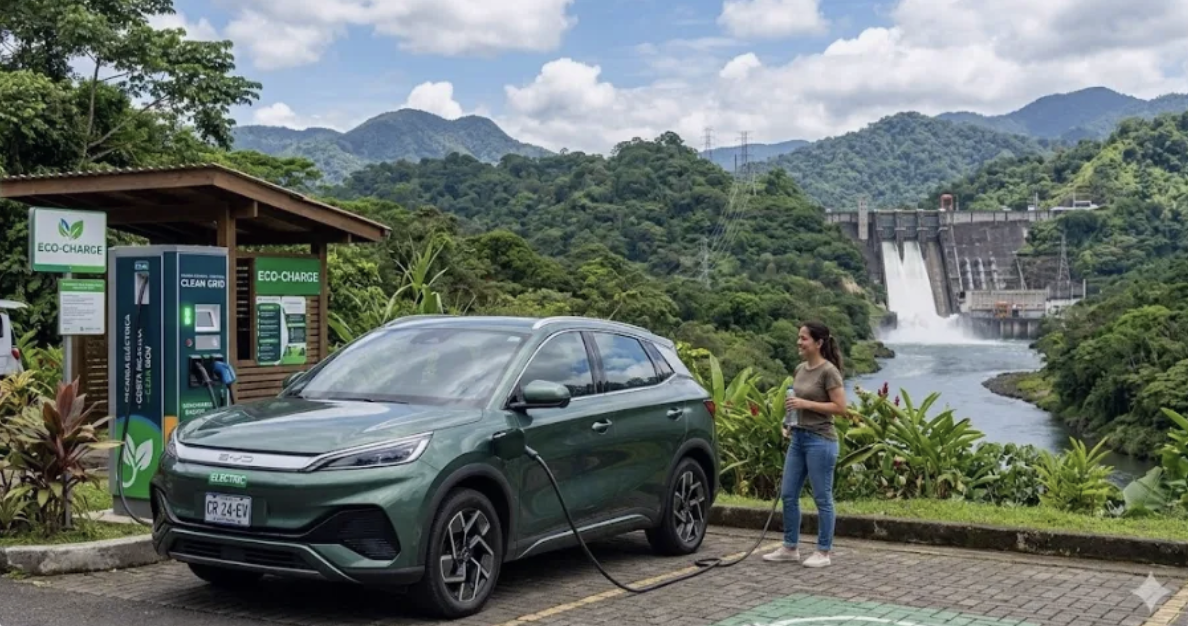
    In 2015, Costa Rica registered fewer than 500 electric vehicles. By 2024, EVs accounted for more than 1 in 10 new registrations—powered almost entirely by renewable electricity. The country did this without oil money, without a massive industrial base, and across two major political transitions. That is the puzzle this blog tries to explain—and to translate for policymakers elsewhere in the region.

    Costa Rica shifted toward high-value manufacturing and knowledge-based services after 2015. Services accounted for most output and export earnings, and export earnings concentrated in sophisticated segments. Real GDP growth averaged about 3.5% before 2020, contracted sharply when the pandemic hit, then rebounded strongly in 2021 and remained solid through 2023–2024. The free trade zone (FTZ) platform and foreign direct investment (FDI) in life sciences and corporate services anchored export performance and modern-sector jobs.

    The core argument is simple: Costa Rica’s transformation since 2015 did not come from a single policy or sector. Three enabling systems reinforced each other—an export platform anchored in FTZ-led sophistication, a renewable electricity base that enables low-carbon electrification, and a state able to digitize high-volume services. The lesson for policymakers elsewhere in Latin America is not to copy a flagship reform, but to focus on sequencing and reinforcement: what changes when these systems are built in parallel rather than in isolation.

    The sections that follow show how the systems compounded: first, shifts in capital stocks, institutions, and economic structure; second, how variation, selection, and diffusion turned pilots into routines; and third, how laws, market rules, coordination, and adaptive management helped reforms persist across political cycles.

    What is transferable—and what is not

    Costa Rica is a structural outlier in Latin America: it is small (roughly 5 million people), has maintained an overwhelmingly renewable power mix, lacks a hydrocarbon sector, and, since 2021, has been anchored by OECD accession standards. The point is not that other countries can replicate these conditions, but that many can adapt the mechanisms that turned them into durable change. Read the case by separating transferable policy design from context-dependent enablers:

    Broadly transferable lessons (mechanisms): stabilize incentives with a clear glidepath (e.g., extend EV incentives to 2034 with phased adjustments rather than abrupt reversals); run charging rollout as a service network with spacing and reliability targets; start digital transformation with one or two high-volume services (such as digital health) before pushing interoperability across government; and coordinate an export platform (investment promotion, skills, and supplier development) so tradable upgrading can finance and legitimize longer-horizon transitions.

    Context-dependent lessons (starting conditions): a near-zero-carbon power system makes transport electrification immediately low-emissions; countries with fossil-heavy grids may need to pair EV rollout with a credible power-sector decarbonization and reliability plan. OECD accession provided an external governance anchor (a credible external commitment that raises the cost of backsliding on institutional reforms); where that is unavailable, governments can mimic the effect through domestic fiscal rules, independent regulators, performance compacts, and peer-review partnerships. Costa Rica’s small geography and concentrated corridors simplified charging rollout; larger countries may need phased corridors (freight and bus depots first, then intercity routes, then nationwide coverage) and stronger subnational execution capacity.

    Three systems, not one policy, drove the shift

    Costa Rica shifted its capital stock toward knowledge-intensive production amid persistent physical infrastructure constraints. Electricity generation remained overwhelmingly renewable after 2015, anchored in hydropower and complemented by geothermal and wind power, laying the groundwork for low-carbon electrification. Fiscal reforms strengthened buffers, with debt declining from pandemic peaks and international reserves reaching historically high levels by mid‑2025. In tradables, the economy deepened its specialization in advanced manufacturing—especially medical devices—supported by FTZ infrastructure and sustained FDI inflows that recovered after the 2020 shock and reached high levels by 2024. Transport energy use remained dominated by liquid fuels because most vehicles still relied on internal combustion engines, even as new registrations shifted. The distinction is between rapid electrification in new private vehicles and slower, operations‑constrained electrification in high‑utilization segments such as buses, taxis, and delivery fleets. Those segments often deliver larger emissions and air-quality gains per vehicle but require depot charging, route planning, financing, and maintenance capacity. The dual reality is a clean-electricity base and fast-moving EV adoption at the margin, alongside a legacy fleet and public-transport systems that still drive emissions and dependence on fuel imports.

    Costa Rica focused institutional reforms on three domains: fiscal governance, decarbonization policy, and digital government coordination. In 2018, the legislature passed a major fiscal reform that introduced a spending cap and broadened taxation through a value-added tax framework, reshaping what the state could fund and how it could finance it. Also in 2018, lawmakers enacted an EV incentives law that created tax exemptions for EVs and charging infrastructure and assigned responsibilities for charging rollout and fleet transitions. In 2019, the executive launched a long-horizon decarbonization plan that set economy-wide direction and embedded transport electrification targets within a broader net‑zero pathway. In public administration, successive digital transformation strategies culminated in a 2023–2027 framework, and the state created a national digital government agency to coordinate interoperability and service delivery across institutions. These moves turned political intent into enforceable rules, multi-year plans, and implementation mandates that could survive electoral cycles.

    Economic and social outcomes shifted unevenly: growth strengthened alongside persistent labor-market duality and regional disparities. In 2020, tourism and contact-intensive services collapsed, unemployment surged, and household vulnerability increased. After reopening, export manufacturing, corporate services, and tourism drove the recovery, with unemployment falling to low single digits by late 2025. Informality remained high—about 40% of workers in several recent years—showing that productivity gains in the modern sector did not automatically translate into broad formalization. High-skill jobs and the export platform stayed concentrated in the Greater Metropolitan Area, while regional inequality motivated new territorial policy instruments, including a regional development law designed to strengthen regional planning and financing. The period combined macro stabilization and modern-sector dynamism with distributional frictions that complicate inclusive growth and the politics of sustained reform.

    The pandemic sorted winners and losers — and Costa Rica was ready

    By 2019, Costa Rica’s public health system had implemented a single nationwide digital health record, changing how clinics recorded visits, handled referrals, and interacted with patients. In transport, an EV incentives law and early charging corridors lowered the perceived risk of owning an EV and attracted private investment in EV models, chargers, and maintenance services. After the 2022 cybersecurity crisis, agencies improvised new coordination and operating practices under pressure, accelerating changes in how the state managed digital systems. When the pandemic hit in 2020, these were not contingency measures—they were already operating routines, which made them resilience assets rather than emergency responses. In evolutionary terms, these were sources of “variation”: policy experiments and shocks that introduced new routines in public services, mobility, and administrative coordination. The takeaway is that the highest-impact pilots were not symbolic; they were designed (or forced) to touch high-volume transactions and operational bottlenecks, so learning could accumulate quickly and be institutionalized.

    Selection is the filter that decides which experiments scale and which fade. In Costa Rica, the 2018 EV incentive law tilted relative prices toward battery-electric vehicles and helped EVs outcompete conventional vehicles where exemptions and operating costs mattered most. As more global manufacturers offered EV models and prices fell, competition expanded choice and lowered entry barriers. The pandemic acted as an economy-wide selection event: it punished tourism in 2020 while favoring export manufacturing and digitally enabled services that could keep operating. Fiscal rules and IMF-supported stabilization limited room for recurrent spending expansions, pushing the state toward reforms that improved compliance and efficiency rather than simply adding programs. OECD accession reinforced institutional upgrades by tying governance standards and peer expectations to membership. These filters favored tradable upgrading, digital service modernization, and electrified mobility—while making infrastructure delivery, skills supply, and implementation capacity the binding constraints.

    Diffusion is where Costa Rica’s story is most useful for implementation-minded readers: it shows how a pilot becomes “the way the system works.” In digital health, a single record and workflow moved from partial rollout to near-universal use by 2019. Clinics and hospitals stopped treating digitization as an add-on and treated the digital record as the default system of record for visits, prescriptions, and referrals. That shift required a multi-year bet: standardized processes and an implementation owner able to roll the system out site by site until coverage became routine. In electric mobility, diffusion looked like an ecosystem: as registrations rose, charging points expanded, dealerships broadened model lines, and early user experience reduced perceived risk for the next cohort of buyers. Diffusion sticks when rules are stable enough for private actors to invest, the service platform is visible to users (a record they must use, a charger they can find), and an accountable owner sustains execution through the unglamorous years of rollout. But diffusion at this scale doesn’t happen by accident — it requires a state that has converted political intent into durable rules and institutions, which is the subject of the next section.

    Rules outlast governments: how policy survived three elections

    Costa Rica made the transition durable by embedding long-horizon objectives in rules, standards, and market architecture rather than relying on ad hoc programs. The 2019 decarbonization plan defined a pathway to net‑zero by 2050 and translated it into sectoral commitments, with transport electrification as a central pillar. The EV law established a concrete incentive regime—tax exemptions and institutional obligations—that altered relative prices and clarified the responsibilities of agencies and utilities. The 2018 fiscal reform created binding constraints through a fiscal rule and tax base changes, narrowing the feasible set of public choices while strengthening credibility with lenders and investors. OECD accession in 2021 added a governance anchor, reinforcing continuity across areas such as competition policy, statistics, and institutional standards. These actions reduced uncertainty for investors and households and created a predictable environment for adoption and upgrading.

    The state backed the rules with enabling infrastructure and platforms, even as infrastructure quality remained a constraint. The national electricity utility (ICE) and the broader electricity system maintained near-universal access and a renewable generation base, giving Costa Rica a backbone for electrifying end uses without increasing power-sector emissions. After the EV law set rollout expectations, utilities and partners expanded public charging points as EV demand rose. In health, the public system financed and rolled out nationwide digital records and supporting applications through a multi-year effort. Telecommunications policy and regulator-led programs expanded broadband coverage, widening the user base for digital public services. In tradables, the state sustained the FTZ framework and export promotion institutions that helped attract and retain investment in life sciences and corporate services. Coordination across ministries, regulators, utilities, and promotion agencies aligned rules, investments, and execution—and often shaped outcomes as much as budget spending did.

    Costa Rica’s institutions learned by adjusting policies, carrying out reforms across administrations, and changing implementation practices after shocks exposed weaknesses. In 2022, policymakers revised the EV incentive regime and extended it through 2034, phasing benefits as the market matured and reducing the risk of abrupt withdrawal. After the 2022 cyber crisis, agencies changed how they govern and operate digital systems by introducing new coordination mechanisms and strengthening operational security for cross-agency response. Successive digital transformation strategies signaled a shift from isolated digitization projects to whole-of-government interoperability. In macro-fiscal management, the fiscal rule and post-pandemic consolidation kept stabilization mechanisms in place as debt ratios declined from their peaks. Institutions learned by recalibrating incentives as markets evolved, strengthening governance after failures, and retaining reforms that improved credibility and reduced fiscal risk.

    One episode illustrates crisis-driven learning: the 2022 cybersecurity attack disrupted core government digital services and forced leaders to treat cyber resilience as an operational problem rather than an IT add-on. Agencies responded by tightening incident-response routines (who declares an incident, who communicates, and how systems are isolated and restored), increasing cross-agency coordination, and strengthening continuity planning for critical services. Digital government scales safely only when the state invests in the backbone—security standards, shared monitoring, clear authority in a crisis, and practiced recovery procedures—alongside visible user-facing platforms.

    The lesson for LAC: sequence matters more than ambition

    The compounding dynamic shows up in outcomes. Growth dipped sharply in 2020 but rebounded with record growth in 2021 and remained robust through 2023–2024, reflecting resilience in tradables and recovery in services. EV adoption moved from near zero to a sizable share of new registrations by 2023–2024, supported by a stable incentive regime and expanding charging availability. Digital delivery proved feasible at scale in health services, where nationwide digital records and high usage normalized citizen interaction with state systems through digital channels. These outcomes show how an export base, clean power, and state capacity reinforce one another—while also revealing where constraints (skills, infrastructure delivery, and electricity-system resilience) become binding as adoption grows. The sequence that worked in Costa Rica—stabilize the fiscal position, anchor a renewable power base, build export sophistication, then layer in electrification and digital transformation incentives—is not a universal template, but the logic is: don’t let adoption outrun the infrastructure and institutions that make it durable. That is why the next phase is harder: as electrification and digital government move from early wins to economy-wide coverage, fiscal space, digital service capacity, and electricity-system resilience increasingly determine whether progress continues.

    The desired future state is an economy that sustains export upgrading while turning electrification and digitalization into broad productivity gains rather than enclave performance. That requires transport electrification to move beyond early adopters toward high‑utilization segments—buses, taxis, ride-hailing, municipal fleets, and logistics—while maintaining electricity reliability as hydrological variability increases pressure on the generation mix. It also requires digital government to move from flagship systems to routine, cross-agency interoperability so firms and households face lower transaction costs and better everyday service. On the labor side, narrowing skill mismatches and reducing informality would help tradable sophistication translate into broader income security and tax capacity. The practical question is not just “train more,” but “build pathways”: competency-based technical programs aligned with employer demand, paid work-based learning (apprenticeships/internships), portable certifications, and placement mechanisms that connect graduates—especially from outside the main metropolitan area—to formal jobs in export-linked firms and their suppliers.

    Policymakers can act by prioritizing measures that strengthen infrastructure-to-adoption feedback loops, reduce duality, and improve execution capacity across institutions—while adapting choices to national starting conditions (power mix, geography/scale, and available governance anchors). First, align workforce development with the export platform’s needs by moving from “training supply” to “training-to-job pathways”: co-designed curricula with employers, paid apprenticeships, short modular credentials in priority occupations, and placement support that connects trainees to formal jobs (including in supplier networks and outside the capital region). Second, protect the credibility of EV incentives while tightening delivery on charging corridor coverage and reliability so adoption does not outpace infrastructure—and treat public transport and fleets as the scale lever by pairing vehicle incentives with operator-ready enablers (depot charging, grid connections, maintenance training, and financing/procurement models that pay for uptime). In countries with fossil-heavy grids or weak reliability, pair EV scaling with a power-sector plan that improves firmness, affordability, and emissions intensity. Third, scale digital government by enforcing interoperability standards and institutional workplans, using platforms like digital health as templates for other high-volume services. Fourth, preserve macro-fiscal credibility by maintaining fiscal rule discipline while prioritizing high-return public investment to relieve infrastructure bottlenecks, strengthen electricity system resilience, and support productivity.
  • Making Renewables Work: Brazil’s Transformation, 2010–2025

    Making Renewables Work: Brazil’s Transformation, 2010–2025

    Recent changes in Brazil’s power system provide a clear case study of rapid renewable-scale-up under real constraints, including droughts, high domestic interest rates, and land-use challenges. Between 2010 and 2025, Brazil added more than 30 GW of wind and tens of gigawatts of solar capacity, including distributed photovoltaics. Brazil fundamentally changed who produces electricity and how the grid operates. This case study shows how to lower prices through competitive procurement, mobilize capital through development finance, and build industrial capabilities. It also illustrates challenges—such as curtailment, licensing bottlenecks, and distributional conflicts—that can derail the transition process. 

    The region already has relatively clean energy matrices, and many countries are committed to expanding renewables—but lack the institutional and infrastructure capacity to make renewables reliable and socially legitimate. Brazil’s experience demonstrates the upside of market‑making and the downside of permitting processes and equity considerations lagging deployment. 

    Renewable energy plans should deliver four outcomes simultaneously: (1) low-cost supply, (2) drought resilience, (3) bankable investment contexts, and (4) credible social and environmental safeguards without depending on unsustainable fiscal subsidies. Renewable energy should be viewed as a systemic transformation, not just technology procurement. As such, changes to market rules, grids, financing, and governance are needed to enable wind and solar to scale without creating stranded assets or social conflicts. 

    This blog examines how the human ecosystem surrounding renewable energy has changed, what drove those changes, and what the state did to implement them. 

    Shifting assets, flows, and risks

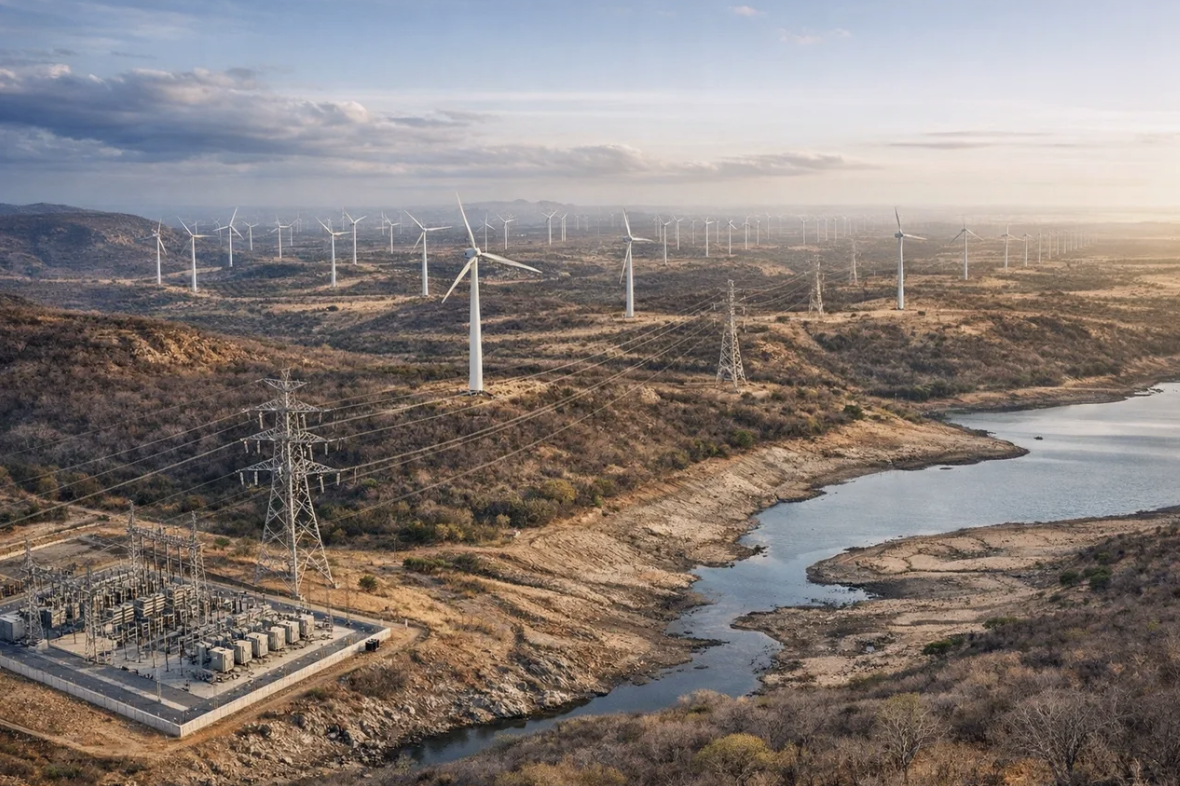
    Capital stocks shifted from hydroelectric plants toward a more diverse portfolio, including wind, utility-scale solar, and mass-distributed solar. Wind capacity scaled from about 1 GW in 2010 to over 33 GW by 2025—leveraging the northeastern dry season to mitigate hydropower variability. Distributed solar expanded rapidly from less than 1 GW in 2018 to over 40 GW by 2025, with 3.7 million small-scale systems installed on homes and businesses. This diversification responded directly to drought-induced constraints on hydropower production, with wind and solar taking larger shares of the generation mix. 

    Capital flows shifted from state-centered lending and centralized dispatch toward blended finance for new market segments and more complex grid flows. Finance evolved from heavy reliance on BNDES toward de-risking strategies aimed at attracting institutional investors, including green debentures, with public finance playing a catalytic role. Electricity flows shifted as wind from the Northeast and solar from multiple regions fed the national system. Behind-the-meter generation helped address part of the supply challenge, but also created revenue‑model challenges for utilities. Knowledge deepened as firms adapted technologies to local conditions—for example, modifying wind turbines to match Brazilian wind regimes and turbulence. 

    Institutions co-evolved with these changes. New tensions emerged around land use for wind farms, electricity affordability, and the risks of boom‑and‑bust investment cycles. Brazil’s national energy regulator and energy planning agency institutionalized competitive electricity auctions, setting a benchmark across Latin America for transparent pricing and investor confidence. Social tensions were particularly acute where wind farms overlapped with traditional communities and required active management. The 2025 Ecological Transformation Plan highlighted the need for a just transition, emphasizing fairness and the impacts on communities, as well as the potential creation of 2 million jobs and a 0.8% increase in GDP. The drought and water crisis of 2021 accelerated diversification, while electricity bill increases of roughly 20% between 2021 and 2023 intensified pressure to reduce costs through renewables. 

    Crises, markets, and policy choices

    Brazilian energy policies deliberately encouraged experimentation across technologies and business models. Markets and crises then selected the most effective approaches, which diffused domestically and beyond Brazil. Policy generated diversity across technologies, ownership structures, and system solutions. Hybrid plants that combine wind, solar, and storage have emerged to address constrained transmission corridors in the Northeast. The free energy market expanded, enabling power‑purchase agreements that bypassed traditional utilities for large consumers. 

    Auctions and droughts pushed the system toward rewarding low-cost, complementary, and bankable projects in contrast to the fragility of large hydropower. Competitive auctions drove prices down until wind and solar outcompeted new thermal additions; by 2024, the levelized costs of new wind and solar were lower than maintaining expensive natural-gas-based backup capacity. The droughts of 2014 and 2021 forced systemic change, penalizing systems that lacked diversification or firm‑energy guarantees. Affordability became a primary driver as rising electricity bills increased pressure for lower-cost direct generation and diversified renewables. 

    Business models and generation systems that proved effective spread across Brazil and influenced regional peers. Brazil’s auction model informed procurement approaches in Colombia and Argentina. Infrastructure—particularly high‑voltage transmission lines—was critical to moving renewable energy from the North and Northeast to demand centers in the Southeast. Storage diffusion accelerated following regulatory advances beginning in 2023, aimed at managing the growing share of variable solar generation. 

    How the state made renewables bankable

    Brazil’s government acted not as a passive regulator but as a market‑maker and risk absorber. This approach focused on targeted state functions that unlocked private investment while maintaining reliability and social legitimacy. The state provided direction through long-term planning and institutional continuity, anchored in investments that outlasted political cycles. The 2025 Ecological Transformation Plan articulated this mission, projecting up to 2 million jobs and an average annual increase in GDP of 0.8% under full implementation scenarios. Planning entities and system operators prioritized reliability. The independence of the National Electric System Operator was critical in buffering political instability. The 2021 drought—the worst in roughly 90 years—severely depleted hydropower reservoirs, triggering emergency measures and reinforcing diversification as an energy‑security strategy.

    The state shaped market architecture through auctions, distributed‑generation legislation, bankability standards, and continuous adaptive management. Reverse auctions provided transparent price discovery and long-term contracts. Distributed generation legislation increased regulatory certainty and underpinned the rapid scaling of solar. The state also advanced green taxonomies and carbon‑market frameworks aligned with international standards. 

    The state mobilized capital for public investment and innovation ecosystems, but grid constraints became the binding bottleneck. BNDES concessional loans with local‑content requirements supported domestic wind‑manufacturing clusters. Transmission and interconnection emerged as strategic public goods, yet grid expansion lagged variable renewable deployment, contributing to curtailment. Eco‑Invest introduced mechanisms to hedge currency risk and reduce foreign‑exchange exposure for foreign investors. Public research and development supported agrivoltaics and floating solar on reservoirs, aiming to convert hydropower assets into hybrid generation hubs. 

    Three lessons from a big system transition

    Brazil’s 2010–2025 transition shows that renewable energy success rests on institutions—market rules, planning capacity, financial structures, and social safeguards—not just on installed capacity. The three key messages are:

    · Use auctions and clear contracting to drive costs down—but pair them with grid and permitting capacity, or curtailment and delays will destroy value.

    · Development finance can catalyze private investment and industrial learning, but over-reliance is fiscally risky—design a glide path toward capital‑market financing.

    · Social legitimacy is a system constraint: territorial rights, benefit sharing, and affordability must be embedded in market architecture, not treated as afterthoughts in licensing.

    Brazil demonstrated that a hydropower-heavy system can evolve into a diversified renewable powerhouse. The next step—for Brazil and the region—is to make the transition not only fast and low‑cost, but also grid‑secure, fiscally durable, and socially fair.

  • Chile’s Renewable Leap: What LAC Can Copy—and What to Fix

    Chile’s Renewable Leap: What LAC Can Copy—and What to Fix

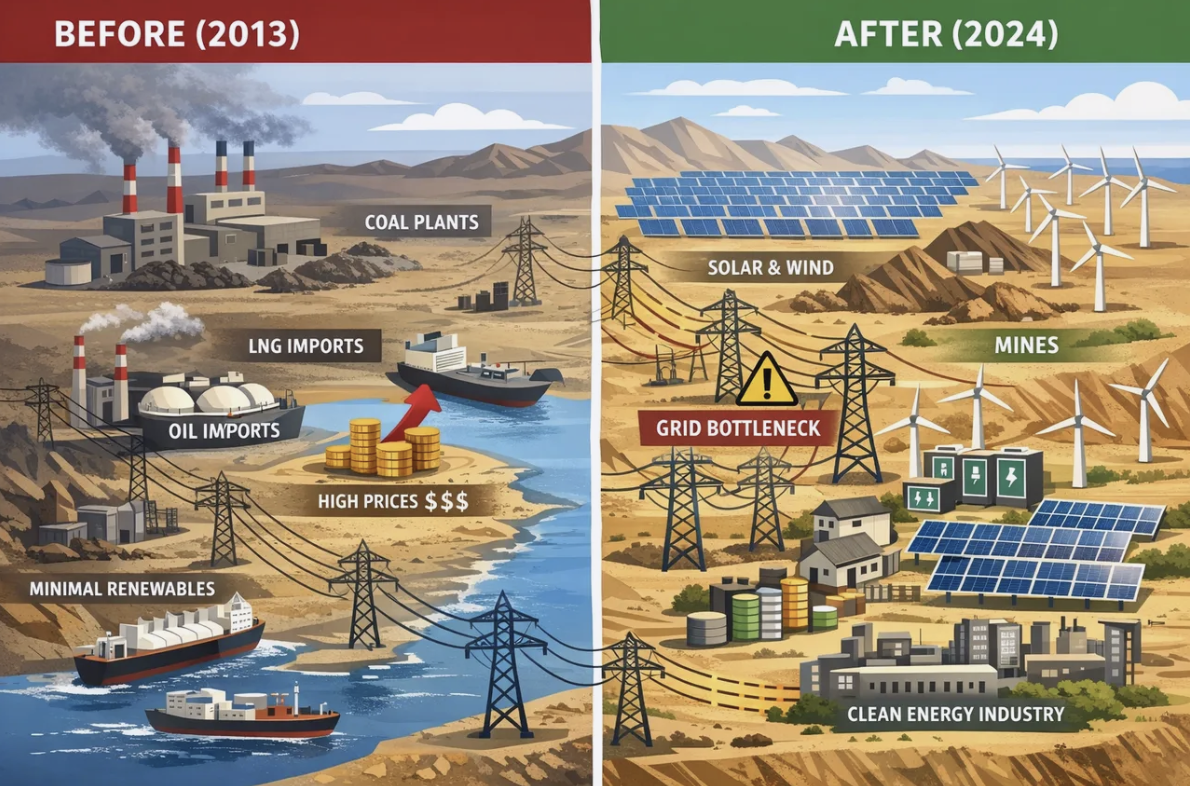
    Chile shows that clean power can be a competitiveness strategy—not just an environmental commitment. In one decade, the country moved from about 63% fossil-fuel generation in 2013 to a system in which renewables provided about 70% of electricity in 2024, with solar and wind accounting for roughly one-third of national generation. 

    The hard part was not “getting renewables built.” The hard part was building systems that scale—grids, flexibility, permitting capacity, and social license—fast enough that cheap renewable power becomes usable power, not curtailed power. Chile’s experience makes this visible: solar and wind curtailment reached about 6 TWh in 2024, a warning sign that infrastructure and governance can lag private investment. 

    Chile’s transition was engineered through market design and state capability. Competitive auctions and long-term contracts drove prices down—bids reached US$13/MWh in the 2021 supply auction, with an average awarded price of US$24/MWh—and mining demand served as an anchor buyer through corporate power purchase agreements (PPAs). Transmission reform and institutional upgrades were aimed at keeping the system reliable as renewables grew. 

    For LAC countries, the prize is clear: lower power costs, stronger export competitiveness, and a credible path to transformation—without triggering backlash from communities or destabilizing the grid. This blog highlights what changed in Chile, why it changed, and why renewables won, and what the state did to turn private capital into scale, and where it still needs to catch up. 

    What changed: assets, money, power flows, and institutions

    Natural capital – the Atacama Desert’s solar resources – was converted into installed solar photovoltaic (PV) capacity. Capacity grew from below 500 MW in 2014 to more than 13 GW in 2024. Wind capacity expanded from 1 GW to over 4 GW in the same period. Socio-economic capital deepened through investment and new industrial energy portfolios. By 2023, there was a pipeline of planned renewable investments that exceeded US$ 15B, mostly foreign direct investment in Atacama solar, transmission, and storage. Mining and energy firms built new, long-term portfolios of utility-scale PV, wind, and storage assets to address risks from imported fuel prices and stabilize energy supply. Chile shifted culturally and institutionally toward “green energy” and away from “energy scarcity.” 

    Energy flows were decarbonized—but also constrained by the grid. Chile reduced fossil-fuel import dependence. Fossil-fuel generation accounted for about 63% in 2013, and renewables reached about 70% by 2024. Yet the success of attracting finance for generation created congestion: renewable curtailment reached around 6 TWh in 2024, because low-cost supply outpaced transmission and grid flexibility. Finance shifted toward competitive pricing and new instruments. Chile attracted low-cost renewable energy finance and shifted from conventional project finance to green bonds and sustainability-linked lending. Auction design and long-term contracting led to dramatic price reductions—solar bids fell from more than US$100/MWh in 2013 to about US$13/MWh in 2021, reinforcing capital reallocation toward renewables. Knowledge flows accelerated through learning-by-doing and improvements in system operations—new capabilities formed in grid management, dispatch, and storage integration. By 2025, 1.7 GW of storage was operational or in testing, with more than 1 GW operational by mid-2025, deployed in part to mitigate curtailment challenges. Public-private partnerships (e.g., through Chile’s Economic Development Agency, CORFO) illustrate that Chile was not only importing technology but also adapting it to national and local operating conditions. 

    Market institutions were reorganized around auctions and corporate PPAs. Chile’s auction system and bilateral contracting (especially for large customers) became central in steering investment. Mining companies became major renewable buyers through corporate PPAs, turning industrial demand into an ‘anchor’ that reduced risk and accelerated scale. Technical institutions such as the Electricity Coordinator (CEN) and the National Energy Commission (CNE) strengthened planning and dispatch to modernize the energy system, but coordination gaps remained. The Energy Transition Law (2024) was intended to expedite the adoption of transmission and grid-forming technologies—an institutional response to system complexity. Social order shifted with new distributional tensions. While renewables improved air quality in coal-heavy regions and supported competitiveness through lower prices, the changes led to conflicts over land use, transmission corridors, consultation, and water governance—especially in the Atacama Desert. 

    Why things changed: experimentation → market selection → rapid scaling

    Chile’s transition began with competing pathways to energy self-sufficiency: coal expansion, liquefied natural gas imports, and renewables. Over the decade, the system tested utility-scale PV, onshore wind, and concentrated solar power with storage, such as Cerro Dominador, as well as small-scale distributed generation projects (500 kW–9 MW) under stabilized pricing regimes. Hybrid projects pairing renewables with 4-hour battery energy storage systems also emerged to address intermittency. Policy innovation produced ‘institutional variation.’ A key reform was the auction redesign (2014 onward), which allowed renewable providers to bid into specific time blocks, enabling solar to compete with 24/7 thermal generation on a more comparable product basis. Spatial variation mattered: Atacama’s resource strength attracted mass deployment but also highlighted the importance of siting, grid access, and social license, leading to uneven project outcomes across different regions. 

    Cost-based selection strongly favored solar and wind. Competitive auctions and corporate procurement revealed solar as the cheapest scalable option; coal and other thermal assets lost viability when solar prices dropped to around US$13/MWh in 2021. Environmental and political selection accelerated coal decline, including through coal phase-out agreements accompanied by just transition strategies for communities. By 2024, 11 plants, or about 1.2 GW of coal capacity, had been retired or converted, reflecting both the direction of climate policy and shifting economics. Industrial selection, especially from mining, is reinforcing the case for renewables. Large mining firms (e.g., Codelco and BHP) selected renewables to lower costs and meet emerging ‘green copper’ demand, making export competitiveness a direct selection pressure. 

    Technology diffusion was rapid: solar and wind spread from Atacama/northern corridors toward central Chile as capabilities and financing templates matured. Storage diffusion followed the pressures that arose from curtailment. Institutional diffusion also occurred: the ‘Chilean model’ of auctions has been studied and adapted by other LAC countries (e.g., Colombia) to de-risk renewable energy pipelines. Diffusion depended on enabling infrastructure. Major transmission projects, e.g., the 1,500 km Kimal–Lo Aguirre line, were considered public goods and designed to connect Atacama solar to central demand. Diffusion thus required both market signals and grid build-out. 

    What the state did: markets, grids, risk, and legitimacy

    Chile used long-horizon planning and policy to provide a ‘North Star’ for investors and agencies. Energy 2050 is a state policy designed to outlast political cycles, in line with the direction set by the Framework Law on Climate Change. The state’s coordination role was essential because the climate transition is cross-sectoral. Energy policy interacted with mining competitiveness, environmental justice, and territorial governance; government convening and planning capacity shaped the pace and credibility of the transition. Where coordination lagged—especially between generation growth and grid expansion—system costs rose through congestion and curtailment, underscoring the state’s responsibility for sequencing reforms and infrastructure. 

    Technology-neutral auctions rewarded the lowest cost and created transparent price signals. Auction reforms and time-block design enabled renewables to compete credibly and delivered price discovery that reoriented investment away from fossil options. Grid access and system rules evolved to support higher variable renewable penetration. Changes included stronger technical agencies (CEN and CNE), modernization of the national energy system, and reforms to allow non-discriminatory grid access and stabilized pricing for smaller developers. Environmental and social standards were both enabling and constraining. Chile worked to streamline permitting and develop standards (e.g., green hydrogen certification and environmental impact assessments). But uneven local impacts—water use, land conflict, and Indigenous consultation—show that standards and enforcement capacity must scale with deployment. 

    Transmission reform was a decisive state intervention. The 2016 transmission law enabled long-distance solar integration, and the state treated major projects (e.g., the US$2B Kimal–Lo Aguirre high-voltage direct current line) as public goods essential for the transition. Public risk absorption catalyzed early investments and first-of-a-kind projects. Blended finance and early risk-sharing, including through state instruments and development finance, e.g., the Cerro Pabellón geothermal project, reduced barriers until private finance scaled. Innovation ecosystems were actively fostered. CORFO supported research and development and concessional finance for first-of-a-kind green hydrogen facilities and public-private initiatives, building Chile’s capacity to deploy and partially adapt technologies rather than only import them. 

    The LAC takeaway: build systems that scale

    Three headlines from Chile’s decade:

    · Market design can unlock scale. Technology-neutral auctions and bankable long-term contracts made renewables investable and drove dramatic price discovery.

    · Competitiveness anchors transitions. Mining demand and corporate PPAs helped convert renewable potential into real investment and industrial advantage. 

    · Success creates new challenges. When grid expansion and flexibility lag, abundance becomes waste: solar and wind curtailment in 2024, demonstrating that the transition’s bottleneck shifts from “building MW” to “integrating MW.”

    For LAC policymakers, some key lessons include that well-designed auctions and contracts can reward low-cost generation and deliverability; investing early in transmission and grid system flexibility as public goods prevents the grid from becoming a constraint; and building permitting and consultation capacity so projects have social license at the pace needed for deployment – legitimacy is as critical as finance. 

    It is not just about building more renewables – but about building systems that value reliable renewables and make them politically durable.

  • The Playbook of Uruguay’s Energy Transition 2010–2024

    The Playbook of Uruguay’s Energy Transition 2010–2024

    In the early 2000s, Uruguay’s electricity system was exposed on two fronts: drought could collapse hydropower output, and the backstop was imported fossil energy, exactly when regional prices were high and regional supply could be uncertain. In severe years, Uruguay could spend as much as 2% of GDP on energy imports, turning weather into a macroeconomic event.

    Between 2010 and 2024, Uruguay rewired that vulnerability into a new asset base. By 2024, Uruguay generated 99% of its electricity from renewables (hydro: 42%, wind: 28%, biomass: 26%, solar: 3%, fossil: 1%). It exported 2,026 GWh of electricity—enough to treat surplus power as an economic opportunity rather than a reliability risk. 

    Uruguay’s story is best understood as two linked transitions. The First Energy Transition decarbonized the grid and strengthened the system’s ability to manage variable renewables; the Second Energy Transition shifts attention to what electricity alone cannot solve—especially transport, a sector Uruguay identifies as the largest source of energy-sector CO₂ emissions and the main frontier for further decarbonization. 

    For LAC policymakers and citizens, the transferable lesson is not “build wind.” It is how Uruguay reduced risk, redirected capital flows into domestic productive assets, and embedded learning capacity in institutions—while also managing the tradeoffs that come with long-term contracts, grid constraints, and the harder economics of decarbonizing fuels beyond the power sector. 

    This blog examines what changed in Uruguay, what drove those changes, and the role of the state in delivering change. 

    Changes in capital, institutions, and resilience

    Uruguay’s energy transition fundamentally restructured the country’s physical and financial capital stock. More than US $8 billion was invested since 2010—largely by private actors—into wind, biomass, solar, and associated grid infrastructure, replacing recurrent fossil-fuel import expenditures with long-lived domestic assets. Uruguay doubled its generation capacity in about 10 years through the renewable buildout. This shift transformed energy from a source of macroeconomic vulnerability into a stabilizing factor, reducing exposure to oil price volatility and enabling Uruguay to become a net electricity exporter in average hydrological years. In 2024, Uruguay exported 2,026 GWh of energy, worth about US $104 million. 

    Institutionally, the transition was enabled by a distinctive public–social order. Uruguay’s 1992 referendum rejected privatizing state enterprises and preserved UTE as a trusted public utility with control over transmission and distribution. The turnout was 82.8%, and the repeal was approved by 72.6%. This allowed the creation of a hybrid market: private firms invested in generation under competitive contracts, while the grid remained a public good, maintaining social legitimacy and energy sovereignty.

    At the level of social cycles, the transition decoupled economic growth from carbon emissions and hydrological risk. GDP expanded while power-sector emissions fell sharply, and drought years no longer triggered billion‑dollar fossil import shocks. Uruguay’s matrix remained at 92% renewables even during the 2023 drought, the lowest hydro year on record. A diversified renewable portfolio—hydro, wind, solar, and biomass—now acts as a systemic buffer, increasing the resilience of the human ecosystem against climate variability.

    Crisis, competition, and learning-by-doing

    Uruguay’s transition was catalyzed by path dependence and crisis. Lock-in to imported oil and unreliable regional gas made the pre‑2008 energy regime increasingly maladaptive. Required energy imports could cost the country up to 2% of GDP. The 2008 energy crisis functioned as a selection pressure, forcing policymakers to abandon incremental fixes and rapidly scale alternative technologies—particularly wind—that could form a new dominant regime. Uruguay used auctions for biomass, wind, and solar across different years as a deliberate regime shift. 

    Rather than betting on a single technology, Uruguay deliberately fostered technological variety. Competitive auctions and long-term contracts allowed evolutionary selection to favor the most cost-effective and system-compatible options. Over time, wind emerged as the cornerstone because of its strong complementarity with existing large-scale hydro, while biomass and solar filled additional niches. In 2021, Uruguay often ranked second globally, after Denmark, in terms of the share of variable renewables (solar and wind). 

    Crucially, the transition accumulated knowledge and hardware. Collaboration between the National Administration of Power Plants and Electric Transmission (UTE) and the Universidad de la República produced sophisticated system models using decades of climate data. This institutional learning allowed Uruguay to manage intermittency through system design and operations rather than premature investment in expensive storage, embedding intangible capital that increased the system’s adaptive capacity. Smart meter installation enhanced the digital grid and learning across the system, while hydro helped as storage. 

    De-risking markets, building grids, and enabling the transition

    The state played a central coordinating role. Uruguay XXI: Energy Policy 2005-2030 was approved in 2008 and ratified in 2010 through a multi‑party agreement. This plan anchored the energy transition as a State Policy rather than a Government Policy, ensuring continuity across administrations. This political durability lowered investors’ perceived risk and enabled planning horizons consistent with those of long-lived infrastructure assets. Importantly, consensus is critical to lock in future direction – but should not freeze adaptive management in the face of external changes; regulatory updates are part of the Uruguay model. 

    Market architecture was deliberately designed to de-risk private investment while retaining public control. Long-term power purchase agreements guaranteed that UTE would buy renewable electricity at fixed prices, creating a bankable environment for international financing. Importantly, benefits were redistributed by reducing residential tariffs by 30% in real terms. At the same time, regulation evolved continuously—adjusting dispatch rules, tariffs, load shifting and electrification incentives, and standards—to accommodate very high shares of variable renewable energy.

    In the Second Energy Transition, the state has again taken an active role through public investment and innovation platforms. Initiatives such as the Renewable Energy Innovation Fund (REIF) and the H2U Program are shaping new markets for electric mobility, green hydrogen, and e‑fuels. Rather than picking winners, the state is creating options: funding pilots, building enabling infrastructure, and developing regulatory frameworks that allow new sectors to emerge under managed risk. There are emerging global market risks associated with hydrogen investments that will need to be managed adaptively going forward. 

    Three transferable lessons—and the tradeoffs to plan for

    Uruguay’s 2010–2024 experience shows that rapid power-sector decarbonization is not a technology challenge—it is an institutional challenge. Uruguay paired auctions and long-term contracting with an institutional architecture capable of planning, operating, and updating rules for a high-renewables system, resulting in a grid that can remain overwhelmingly renewable even when hydrology is unfavorable. 

    But Uruguay’s success also clarifies the next problem for LAC: electricity is only part of the energy system. Even as the power grid becomes ultra-low carbon, the wider energy mix can remain exposed to imported fuels—Uruguay still has a large oil share in total energy supply in recent years, which is why the country frames the Second Transition around transport electrification, efficiency, and new fuels like green hydrogen and e-fuels. 

    Three practical takeaways travel well across the region. First, build political durability: Uruguay’s multi-year direction reduced the risk premium that kills long-horizon investment. Second, use a credible system orchestrator: a capable utility (public or private) must run procurement, grid upgrades, and dispatch rules as one coherent strategy. Third, invest in “soft infrastructure”—data, modeling, standards, and regulatory learning—because these are what make high shares of renewables stable and what enable the Second Transition to scale without chaos in charging, tariffs, and permitting. 

    Finally, plan for tradeoffs rather than hiding them. Long-term contracts can lock in costs; electrification can shift peak loads; and hydrogen can become a fiscal sink if it is subsidized before demand, certification, and infrastructure are ready. Uruguay’s approach to the Second Transition—pilots, blended finance platforms, and interinstitutional coordination—offers a template for creating options in the face of uncertainty rather than betting national budgets on a single outcome. 

  • Costa Rica (1950-2010): a Distinctive Development Trajectory.

    Costa Rica (1950-2010): a Distinctive Development Trajectory.

    In 1948, Costa Rica redirected the money it had been spending on its military into schools and hospitals. Emerging from a brief civil war in 1948, the country abolished its army, redirected public resources to schools, health, and infrastructure, and developed a policy mix that combined social inclusion with environmental protection. 

    Between 1950 and 2010, Costa Rica built one of the most distinctive development trajectories in Latin America. Life expectancy rose from the mid-50s in 1950 to around 79 years by 2010. Adult literacy increased from roughly 80–85% in 1970 to about 95% by 2010, while GDP per capita approximately tripled between 1960 and 2010. This 60-year period matters for today’s green transition because it shows how a small, middle-income country can reshape its institutions, firms, and social norms and rebuild natural capital.

    During these decades, Costa Rica moved from an economy based on coffee, bananas, and cattle to one increasingly driven by services, ecotourism, and higher-value manufacturing, while recovering forest cover and decarbonizing its power system. Forest cover initially declined to around 20–25% by the mid‑1980s and recovered to over 50% by 2010. Public agencies such as the Instituto Costarricense de Electricidad (ICE), the national parks system, and later forest and climate institutions played central roles in steering investment and learning. By 2010, protected areas covered about 28% of land, and renewables accounted for roughly 85% of electricity generation.

    This blog explores that story through three lenses: what changed, what drove those changes, and what the state did to make them possible.

    From frontier expansion to forest recovery

    From 1950 onward, Costa Rica expanded human capital while undertaking a rapid boom‑and‑then‑recovery in natural capital. The country showed significant gains in literacy, life expectancy, and access to public services. At the same time, it experienced rapid deforestation between 1960 and 1980, followed by one of the most effective examples of tropical forest recovery in the world. Costa Rica maintained stable democratic institutions and built strong public service and environmental stewardship norms. Inequality and informality persisted, and fiscal pressures grew, especially around the 1980s debt crisis. By 2010, electricity and water access were both close to universal, and the country had held uninterrupted competitive elections since 1950.

    After abolishing military spending in 1948, Costa Rica redirected resources to education, health, and electricity generation. In 1949, ICE began investing in large-scale hydropower, later expanding into geothermal and wind power, laying the foundation for the country’s renewable power base in 2010. 

    Rapid agricultural expansion and cattle ranching between 1960 and 1980 drove massive deforestation, but this was reversed by the creation of protected areas from the 1980s onwards and the establishment of payments‑for‑environmental‑services schemes in the mid‑1990s. By 2010, more than a quarter of the country was protected, and forest cover had substantially recovered – serving as a base for a booming ecotourism sector and repositioning tropical forests as productive environmental assets.

    The Intel plant established in Costa Rica in the 1990s was the clearest signal that the country’s decades of social investment had paid off in ways the original policymakers hadn’t anticipated. Intel chose Costa Rica over larger, cheaper neighbors not because of low wages but because of workforce quality, political stability, and — critically — the environmental reputation that made the country attractive to a company that needed to be seen operating responsibly. 

    The country underwent structural transformation, shifting from primary commodities to services, tourism, and high-value manufacturing and business services. The share of services in GDP was over 60% by 2010, and FDI inflows reached more than 5% of GDP in the 2000s. Much of this shift was supported by foreign direct investment in electronics and medical devices. Costa Rica has built comparatively high levels of trust in institutions and political stability compared to its regional peers. The 1980s crisis and some later reforms reintroduced new inequality and employment pressures.

    Variation, selection, and diffusion in Costa Rica

    Costa Rica’s transformation was not planned from the beginning. It was the outcome of a series of experiments, some of which worked and many of which didn’t, with the market, political coalitions, and periodic crises doing the selecting. The country established new public agencies, introduced new environmental regulations, and explored new export‑promotion regimes. The private sector initially responded through natural‑resource‑extraction enterprises, which later shifted to eco‑lodges and tech clusters. Domestic political coalitions favored certain strategies, which were reinforced by changes in commodity prices and cycles of foreign direct investment. Social and environmental policies were retained through various coalitions, while a focus on frontier agriculture and import substitution was abandoned. Hydropower electrification, protected areas, payments for environmental services, and export services diffused across territories and sectors through replication, learning, and deliberate Costa Rica branding. The connections among clean energy, ecotourism, and high-tech assembly plants were synergistic, accelerating adoption.

    The 1980s debt crisis hit Costa Rica hard. Real wages fell, imports dried up, and the import-substitution industrial model that had underpinned the previous decade’s growth became fiscally unsustainable almost overnight. The debt crisis drove structural adjustment, leading to the failure of fiscally unsustainable and protectionist approaches. Social and environmental programs remained, and politically supported models of human‑capital investment, ecotourism, and grid-scale renewables were reinforced. Low productivity and extensive cattle expansion became less attractive from both national policy and market perspectives.

    The Costa Rica model did not stay inside Costa Rica. Today, Central America as a region stands out globally for its terrestrial protected area coverage of around 30 percent — a figure that reflects decades of regional learning and policy diffusion, substantially inspired by the Costa Rican example. Costa Rica has also historically led the storyline of a renewable-dominated power system and has linked its green agenda and brand to tourism, foreign direct investment, marketing, and diplomacy. Renewable energy accounted for around 80% of electricity generation by 2010, rising to more than 95% by 2015. This narrative has been crucial in shaping expectations amongst citizens, firms, and investors.

    The state as mission setter, investor, and learner

    The Costa Rican state was neither a passive observer of this transformation nor an omniscient planner. It set broad missions, built institutions capable of pursuing them, and then learned from what worked and what didn’t over the course of six decades. Post-1950 governments defined broad goals for social services, territorial integration, and environmental conservation, and established semi-autonomous public enterprises and ministries to deliver them. Over six decades, the state invested in dams, transmission lines, and roads, expanded social protection, and created regulatory frameworks for water, forests, and electricity that favored a shift toward low-carbon, nature-based development.

    These efforts were pursued despite limited fiscal space, reliance on external finance, and persistent tensions between conservation, agriculture, and urban expansion. The transformation required coordination among sectoral ministries, including energy, environment, agriculture, and planning. 

    Costa Rica’s decision to integrate energy and environment into a single ministry is worth considering. In most countries, these portfolios sit in separate ministries with separate budgets and often conflicting mandates — energy agencies prioritize generation and grid expansion. In contrast, environmental agencies resist the infrastructure required. Putting both under one roof forced those conflicts into the open, where they could be resolved at the policy level rather than being paralyzed by bureaucratic turf wars. The result was an energy strategy that treated hydropower, geothermal, and wind not just as power sources but as components of a national environmental identity. That institutional design choice — deliberately creating productive tension rather than administrative separation — is one of the most transferable lessons in the Costa Rica story.

    The Costa Rican state has been particularly strong in learning and course‑correction in forest policy and environmental regulation. Symbolic early moves—the abolition of the army and the establishment of robust social security, healthcare, and education systems—set a long-term trajectory focused on developing people, not war, while decisions to create national parks and protected forests embedded natural capital into the national mission.

    The state also guided public investment and rulemaking toward a green‑growth model. Agencies such as ICE focused on renewable energy infrastructure, building technical capacity, and attracting investment to ensure high electricity access rates while producing clean energy. Rules in forestry, land use, and environmental‑impact assessment progressively restricted environmentally destructive practices while creating financial incentives for forest conservation and restoration through payments for environmental services that blended national and climate finance with carbon markets. For example, payments for the environmental services scheme were supported by a fuel tax, while an airport arrival fee partly supported the protected areas system.

    The state also experimented and learned, ensuring co-evolution between the state and the market. Different governments have experimented with policies such as payments‑for‑environmental‑services schemes, ecotourism development and promotion, and free‑trade zones to test approaches to mobilizing private capital with public steering. Some experiments were not fully inclusive or financially sustainable, but the state has progressively aligned development with environmental and human‑capital objectives.

    Lessons for Latin America’s green transition

    From 1950 to 2010, Costa Rica did not follow a linear pathway. It went through severe deforestation, debt crises, and distributional challenges. It remains a middle-income country with real development challenges. Yet over 60 years, it combined institutional stability, social investment, and environmental recovery in ways that altered its asset base and contributed to development. Electricity shifted from fossil fuels to renewables; the economy shifted from commodities to knowledge-intensive services, driven by strong human capital and environmental conservation.

    Three lessons stand out. First, green transitions are cumulative and path-dependent: Costa Rica’s renewable power system in 2010 was only possible because ICE started building hydropower dams in 1949, before anyone called it a green transition. Decisions made under one set of conditions create capabilities that enable entirely different decisions a generation later. Countries that want to lead the next technological wave need to start making foundational investments now. Second, state capability matters more than state size. What made ICE effective was not that it was public but that it was technically competent, financially autonomous, and given a clear long-term mandate that survived changes of government. Building that kind of institutional capacity takes decades and cannot be shortcut. Third, natural capital can be rebuilt faster than most models assume: Costa Rica’s forest transition occurred within 30 years of peak deforestation, suggesting that ecosystems are more resilient than standard development economics credits them with — provided the incentive structure changes and the political will holds.

    For policymakers and investors, the Costa Rica model suggests it is possible to anchor growth in human capital, services, and environmental assets through public utilities, protected‑area systems, payment incentives, and green branding to engage global markets and attract foreign direct investment. Costa Rica’s path cannot be copied. It is a small, unusually politically stable country with no oil wealth, and a foundational decision in 1948 that most countries will never take. But its logic can be borrowed: invest in people alongside infrastructure, price environmental destruction honestly, build public institutions that learn, and treat the natural environment as an economic asset rather than a constraint on growth. 

    The countries that will lead Latin America’s green transition are not those that try to replicate a model built on six decades of choices they didn’t make — they are those that find their own version of these commitments, starting with the decisions available to them today.

  • The Great Shift: 2020–2070 in Latin America and the Caribbean

    The Great Shift: 2020–2070 in Latin America and the Caribbean

    Chile exports US$50 billion in copper annually. At the same time, Chile imports the software that runs its mines, manages its power grid, and processes its financial transactions. By 2050, which side of this export–import equation will matter more?

    Energy systems are shifting quickly. Jobs are changing. Innovative technologies are emerging and spreading. These changes are already visible across Latin America and the Caribbean, where the energy is already clean. Exports of technology, information technology services, and business services have grown at double-digit rates in recent years. The future cannot be predicted with precision, but the broad direction is clear and widely recognized among futurists.

    Artificial intelligence is advancing at an extraordinary speed. Energy and mobility systems are being restructured. Work is being reorganized. Democracies are under pressure as online worlds reshape how people communicate and mobilize. Climate impacts are increasingly visible.

    The region enters this transition with a mix of vulnerabilities and advantages. Growth has been volatile. Many economies depend heavily on natural resource rents; in Chile and Peru, these rents account for 10–15 percent of GDP. Inequality remains high, and political power is often concentrated. At the same time, LAC holds abundant renewable‑energy resources, critical minerals, young populations, rich biodiversity, and a rapidly expanding digital ecosystem. Chile and Peru produce about 40 percent of the world’s copper, and Chile, Argentina, and Brazil together produce one-third of global lithium.

    Countries that build the capacity to adapt, learn, and steer change will be best positioned to ensure that these transformations improve people’s lives. This blog outlines how the human ecosystem is likely to evolve, the forces driving those changes, and how states can guide transitions already underway. The future that emerges is likely to feature lower energy costs, cleaner transportation, more accessible public services, and broader opportunities.

    Where is the capital shifting?

    Energy remains the foundation of every economy. The coming decades will be shaped by clean, affordable energy, widespread electrification, and intelligent infrastructure. Financial capital is already shifting away from fossil-fuel assets toward large-scale investment in renewable energy, modern grids, energy storage, and electrified transport. As clean technologies scale, costs fall, which accelerates further deployment. Countries that move early will gain productivity, reduce energy costs, and build competitive industrial ecosystems. Those who delay risk being locked into high-cost fossil‑fuel systems, facing stranded assets, and losing competitiveness.

    The energy transition is also reshaping global demand for critical minerals such as lithium, cobalt, copper, and rare‑earth elements. This shift creates a major opportunity for LAC, which holds some of the world’s most important reserves and production capacity.

    Natural capital will become increasingly valuable as high-income economies move toward circular material flows. LAC can generate new revenue streams by recognizing and monetizing the value of its ecosystems. The region contains some of the world’s most productive agricultural land and freshwater reserves. Regenerative agriculture and climate-smart farming could position LAC as a global anchor for food security.

    Knowledge will continue to expand rapidly, but so will misinformation and fragmentation. The ability to filter, absorb, and apply information will matter more than access to information itself. A small number of global actors will dominate energy and knowledge technologies, and LAC risks remaining a consumer rather than a producer unless it invests in capabilities and innovation.

    How will institutions and societies change?

    Social institutions will be reshaped by the online world and artificial intelligence. Economies will become more service-oriented and more dependent on knowledge-intensive work. AI will automate coordination, logistics, and decision-making across sectors. This will require novel approaches to governance, transparency, and workforce development, including changes in academic training.

    Institutions that fail to modernize will face legitimacy challenges. Those that adapt will become more networked, multi-stakeholder, and technocratic, using digital tools to guide decisions. Trade will shift toward services, data, and intellectual property, as well as regionalization, friend-shoring, and customized products. LAC can benefit from these shifts if it manages governance, energy, and logistics costs effectively. Mexico is already one of the United States’ top trading partners, reflecting these trends.

    Social systems will need to adapt to rising temperatures, droughts, and extreme events—especially in smaller states and coastal cities. As automation expands globally, the region’s traditional advantage in low‑ and mid-skilled labor will erode, pushing economies toward commodities and natural‑resource rents unless they diversify.

    How will social order evolve?

    Transitions in energy, mobility, logistics, and labor will disrupt existing hierarchies and political coalitions. Conflicts over land, minerals, and labor mobility are likely to intensify. Social media will amplify polarization and shorten political cycles. Fragmentation and institutional erosion could weaken states’ ability to plan and execute long-term strategies.

    The global order will continue shifting toward a more multipolar system built around regional blocs and shared markets. LAC’s regional institutions—such as the Americas Partnership for Economic Prosperity, CARICOM, and MERCOSUR—are likely to play larger roles. Societies that embrace inclusive governance will be more stable; those that do not may face greater fragmentation and confrontation.

    What drives which technologies and practices win?

    A new wave of technologies—AI, digital platforms, advanced materials, synthetic biology, robotics—will reshape production and services. AI will reduce experimentation costs, enabling rapid innovation in design, business models, and industrial processes. Countries such as Chile, Colombia, Brazil, and Mexico are already expanding electric‑vehicle adoption and electrifying bus fleets.

    Market selection will favor technologies that reduce costs. AI and clean energy will lower marginal costs, increase reliability, and enable faster scaling across energy generation, storage, electrification, and logistics. Economies of scale, network effects, and cost curves will reinforce these trends. Subsidies, standards, regulations, and procurement will shape which technologies succeed. Social movements and public opinion will also influence adoption.

    Digital networks will accelerate the spread of ideas and practices, but they will also create fragmentation and echo chambers. Technology diffusion will depend on state capacity, infrastructure readiness, and social acceptance. Countries with strong grids, digital connectivity, mass transit, and the ability to mobilize capital will see faster diffusion. Those with weaker institutions or limited social license will lag. Corporate supply chains will accelerate cross-border diffusion, and policy emulation will spread successful models.

    What can states do?

    States will remain central to setting direction, defining mandates, and coordinating across sectors. The focus will increasingly be on improving livelihoods, creating quality jobs, and reducing the cost of living, rather than just meeting international targets. Strategic coordination is essential to build pathways to lower energy costs, electrification, digital infrastructure, and AI deployment. Clear direction reduces the risk of technological lock-in and market fragmentation.

    States must also shape market rules that align profitability with social outcomes. These include results-based contracts, revenue‑stabilization mechanisms, infrastructure reforms, new financial instruments, data standards, and AI governance. States will continue to absorb risks that enable private investment in modern technologies and infrastructure.

    Multilateral systems will remain important but will progress slowly. Smaller groups of aligned states, technological partners, and regional blocs will drive faster implementation.

    Public investment in infrastructure, public goods, and industrial ecosystems will remain essential. States will lay the foundations for clean energy and the AI economy. Public finance will be critical for blending with private capital to scale investment. Chile and Uruguay are leading in innovative financing instruments such as green and sustainability-linked sovereign bonds, while Ecuador, Belize, and Barbados have recently completed debt conversions. Industrial innovation policies, skills development, and institutional learning systems will be key enabling conditions. Infrastructure and computational capacity will become strategic assets.

    Some states will move quickly with coordinated governance; others will remain reactive and fragmented.

    Conclusion

    Between 2020 and 2070, the global human ecosystem will be reshaped once again. Each country’s trajectory will depend on how effectively the state directs, coordinates, and manages technological change, volatility, protest, and inequality. The future will unfold regardless, but it can be shaped by choices that lower the cost of living, improve public services, and expand opportunities.

    Countries that harness existing and emerging technologies will reduce costs and improve the efficiency of energy, transport, sanitation, water, logistics, communications, and health services. The alternative is to remain trapped in oligopolistic markets and elite-driven decision-making that deepen inequality, slow growth, and leave societies exposed to external shocks. The world is changing; standing still is not an option. 

  • Natural Selection and Technological Revolutions

    Natural Selection and Technological Revolutions

    Policy makers in Latin America and the Caribbean today face a historic challenge. The world is entering a new technological revolution, reshaping energy, transport, and infrastructure. At the same time, the urgency of climate change demands that this revolution be green, fair, and inclusive. The question is not whether change will happen, but how it will unfold—and whether our region will lead or lag.

    The metaphor of natural selection offers a powerful way to understand this process. Just as species evolve through variation, selection, and survival, technologies and institutions evolve through competition, adaptation, and diffusion. Policy makers are not passive observers of this process. They are the architects who design the conditions under which new ideas survive, spread, and transform societies.

    This blog explores how policymakers in Latin America and the Caribbean can use the logic of natural selection to guide green transitions. It shows how variation in technologies and institutions creates opportunities, how selection pressures determine winners and losers, and how successful innovations spread to reshape economies and cultures. Most importantly, it highlights the role of policy in shaping these dynamics—ensuring that transitions are not only efficient and competitive, but also fair and sustainable.

    Setting the Stage: Why Policy Makers Matter

    Technological revolutions do not happen in a vacuum. They depend on the right mix of policies, institutions, and cultural conditions. For Latin America and the Caribbean, this means building frameworks that encourage innovation, reduce costs, and ensure that benefits reach all citizens.

    Competitiveness is at stake. Countries that lead in green technologies will reduce service costs, attract investment, and secure long-term growth. Those that fall behind will be locked into outdated systems, facing higher costs and weaker resilience. Policy makers must therefore act as architects of competitiveness, designing the rules and incentives that allow new technologies to flourish.

    The region already has a strong foundation. In 2025, over 75% of electricity in Latin America and the Caribbean comes from renewable sources, one of the highest shares in the world. Hydropower remains dominant, but solar and wind are expanding rapidly. Chile, for example, increased solar generation from just 2% in 2015 to more than 20% in 2024, while Brazil added over 16 GW of solar capacity in 2023 alone. These shifts show that the region is not starting from zero—it is already a global leader in clean energy.

    Understanding Variation: The Raw Material of Innovation

    Variation is the starting point of natural selection. In the technological world, variation exists in ideas, inventions, business models, cultural practices, and institutions.

    In energy generation, we see variation across fossil fuels, nuclear power, solar, wind, geothermal, and hydropower. Each has strengths and weaknesses. Fossil fuels are dense and reliable, but polluting. Solar and wind are clean but intermittent. Nuclear is powerful but politically sensitive. Geothermal and hydropower are location-dependent.

    In storage, variation exists across fossil fuel reserves, lithium-ion batteries, solid-state batteries, and other emerging technologies. Each offers different trade-offs in terms of energy density, safety, affordability, and infrastructure needs.

    In mobility, variation is evident across internal combustion engine, hybrid, battery electric, and hydrogen fuel cell vehicles. Each technology competes for survival, shaped by consumer preferences, regulatory frameworks, and infrastructure readiness.

    Variation is not a problem—it is an opportunity. It provides the raw material from which better solutions can emerge. Policy makers must therefore nurture variation, supporting research, experimentation, and pilot projects. Barbados offers a good example: its National Energy Policy aims for 100% renewable energy and carbon neutrality by 2030, backed by an investment plan of nearly USD 9.5 billion. By encouraging diverse solutions, Barbados is creating space for new technologies to prove themselves.

    Selection: How To Determine Winners and Losers

    Selection is the process by which some technologies survive and spread while others decline. In business and technology, selection depends on efficiency, profitability, cultural resonance, political support, and policy frameworks.

    Consider energy generation. Solar and wind have become dominant in many countries because they offer lower costs per kilowatt-hour, economies of scale, and scalability. Once China and Europe invested heavily, costs fell globally, making these technologies competitive everywhere. In Latin America, Chile’s rapid solar expansion and Brazil’s booming wind sector show how policy support can tilt the balance.

    Consider storage. Lithium-ion batteries have dominated because they combine high energy density with affordability and scalability. But solid-state batteries are emerging, offering faster charging and greater safety. Policymakers can accelerate their adoption by supporting research and building infrastructure.

    Consider mobility. Electric vehicles are spreading rapidly because they offer efficiency, lower maintenance costs, and are supported by regulatory changes. Infrastructure is catching up, with charging networks expanding worldwide. Colombia, for instance, has introduced tax incentives and streamlined licensing to support renewable projects, helping EV adoption grow alongside solar and wind.

    Selection is not random—policy choices shape selection. Brazil’s National Energy Transition Policy (2024) will mobilize nearly USD 400 billion in investment, while its Future Fuel Law boosted bioenergy and small-scale solar. These frameworks show how governments can guide markets toward sustainable solutions.

    Diffusion: How Successful Innovations Spread

    Once a technology proves successful, it spreads, reshaping economies and cultures: the diffusion stage of natural selection.

    Solar and wind provide a clear example. Once solar and wind reached scale in China and Europe, they became globally dominant. In Latin America, Chile’s solar boom and Brazil’s wind expansion are now influencing regional markets.

    Batteries show another example. Lithium-ion batteries have spread rapidly, aligning with other innovations such as electric vehicles. Solid-state batteries are emerging, promising even greater efficiency. Policy makers can accelerate diffusion by supporting supply chains, building infrastructure, and encouraging consumer adoption.

    Electric vehicles illustrate the power of diffusion. Production is surging worldwide, and infrastructure is catching up. Costa Rica, which already sources 99% of its electricity from renewable sources, is well-positioned to integrate EVs into its clean energy matrix.

    Diffusion is not automatic. It requires policy support. Without the right frameworks, successful innovations may remain limited to niche markets. Policy makers must therefore design strategies that accelerate diffusion while maintaining economic and cultural stability.

    The Role of Policy: Guiding Evolution

    The metaphor of natural selection highlights the importance of policy, just as environmental conditions shape which species survive, policy conditions shape which technologies thrive.

    Policy makers must therefore act as evolutionary architects, designing frameworks that guide variation, selection, and diffusion:

    · Encouraging variation through research funding, pilot projects, and innovation hubs.

    · Shaping selection through subsidies, regulations, and infrastructure investments.

    · Accelerating diffusion through supply chain support, consumer incentives, and cultural engagement.

    The goal is not to pick winners directly, but to create conditions where the best solutions emerge naturally, avoiding the risk of locking into outdated technologies while ensuring fair and sustainable transitions.

    Practical Steps for Policy Makers in Latin America and the Caribbean

    1. Invest in Research and Development  

    Support universities, research centers, and private companies in exploring new technologies. Encourage collaboration across borders to share knowledge and resources.

    2. Build Infrastructure  

    Invest in grids, charging networks, and storage facilities. Ensure that infrastructure reaches both urban and rural areas, reducing inequality.

    3. Design Smart Regulations  

    Use regulations to tilt the playing field toward sustainable solutions. For example, set efficiency standards, require renewable integration, and limit emissions.

    4. Provide Incentives  

    Offer subsidies, tax breaks, or low-interest loans for green technologies. Encourage consumers to adopt new solutions by reducing costs until they scale and become cheaper than the competition.

    5. Engage Culturally  

    Recognize that technologies must resonate with local cultures. Promote narratives that connect green transitions to regional identity and values.

    6. Guide Finance Flows  

    Encourage speculative capital for early innovation, but ensure production capital for scaling. MDBs and IDFC channeled US$29 billion to Latin America and the Caribbean for climate mitigation.

    7. Ensure Inclusivity  

    Design policies that ensure no one is left behind. Provide support for vulnerable communities, retraining for workers, and access to affordable services.

    Conclusion: Architects of the Future

    Latin America and the Caribbean are not passive observers of technological revolutions. Policy makers here are architects of the green transition, capable of shaping the evolutionary process of innovation.

    By diagnosing systems, creating enabling institutions, and fostering cultural conditions, leaders can ensure that the region remains globally competitive, reduces local service costs, and builds social and environmental resilience.

    The green transition is not just about survival—it is about leadership. Policy makers in Latin America and the Caribbean can guide variation, shape selection, and accelerate diffusion. By doing so, they can ensure that the region not only adapts to change but leads it.

    The future belongs to those who design the conditions for survival. In the natural world, the strongest survive. In the technological world, policymakers decide what strength means. For Latin America and the Caribbean, strength means sustainability, inclusivity, and resilience.

    Over the past five years, countries like Chile and Brazil have shown how renewable investment and access to sovereign and private green finance can transform energy systems. Barbados has set a bold target of 100% renewable energy by 2030, while Costa Rica already generates nearly all its electricity from clean sources. Colombia is expanding solar and wind capacity at record speed. These examples prove that the region has both the ambition and the capacity to lead.

    The challenge is great, but the opportunity is greater. By embracing their role as evolutionary architects, policymakers can ensure that the green transition is not only successful but also transformative. They can build competitive economies, inclusive societies, and resilient environments.

    Latin America and the Caribbean stand at the frontier of history. The choices made today will determine whether the region becomes a leader in the global green revolution or will be left behind. With vision, courage, and decisive action, policymakers can ensure that the region thrives in this new era—an era defined not by fossil fuels and fragility, but by renewable energy and sustainable prosperity.