In 1960, Brazil imported food. In 2023, it supplied global markets at a scale that rivals the European Union’s agricultural exports. The Cerrado—roughly 200 million hectares—was long treated as marginal land; what changed was not the savanna but the state machinery around it. Brazil built public agricultural research and development, subsidized credit, and enabled infrastructure that made frontier production bankable and scalable. That same toolkit is available across Latin America and the Caribbean (LAC), where governments face a simultaneous mandate: raise output, defend climate credibility, and avoid a new wave of land conversion that triggers social conflict and ecosystem loss.
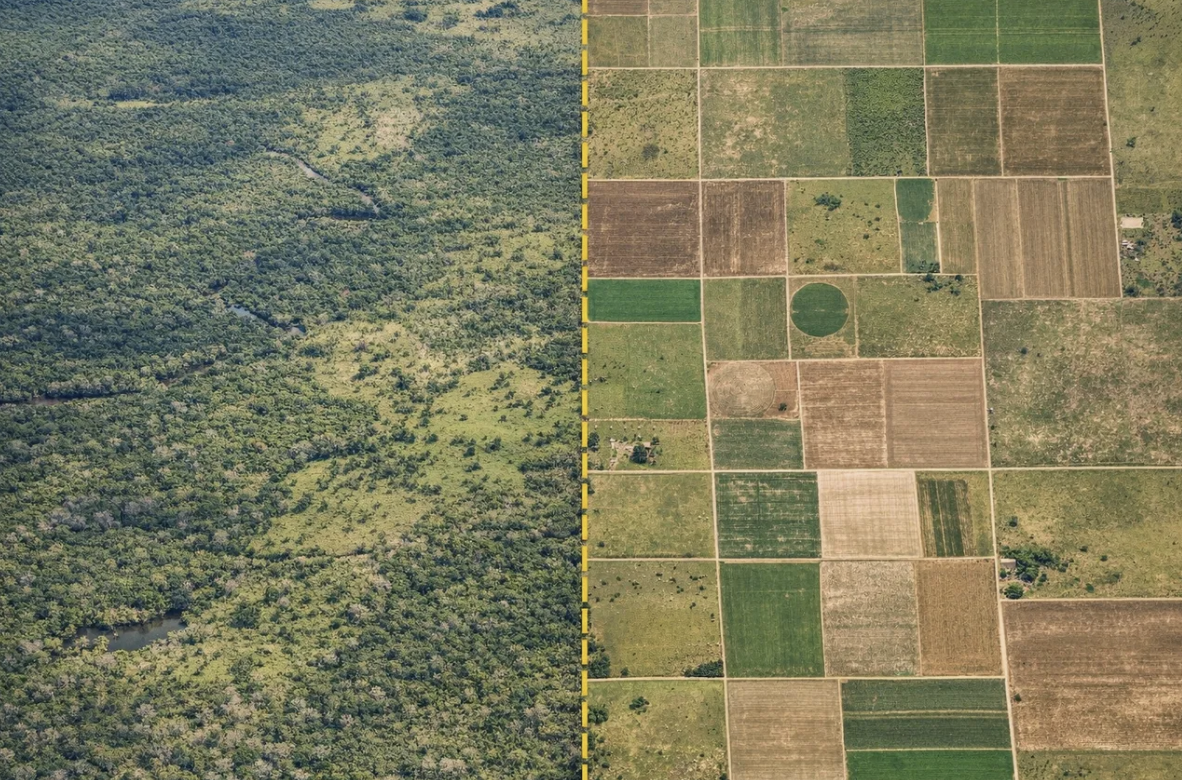
The core policy problem is a sequencing gap: growth instruments move faster than land and social governance, so expansion outruns control. Brazil’s agricultural total factor productivity (TFP)—output growth not explained by more land, labor, or capital—grew at roughly 3% per year from the mid‑1980s to 2010, and soybean yields roughly doubled from the 1970s to the 2010s. Since 2000, studies commonly find that about 70–80% of new cropland came from converted pasture and 20–30% from native vegetation, with the higher‑risk share concentrated near frontier zones between the Cerrado and the Amazon. The cadaster (the official parcel-level land registry) and enforcement capacity improved more slowly than credit and logistics, so regulators often could not screen projects quickly enough to prevent illegal clearing or high-risk siting. The mechanism is frontier spillover pressure or indirect land-use change: when cropland expands onto pasture, displaced pasture and land speculation can shift pressure toward frontier areas, even if direct conversion appears to slow.
The implication for LAC is operational: treat land governance as a binding constraint on how fast you can safely scale output. Start by expanding cadaster coverage, clarifying tenure, and funding enforcement so the state can deny permits, credit, and public benefits to noncompliant expansion before capital locks in land‑use patterns. Then design demand and finance tools to reward low land impact rather than volume, using performance screens and differentiated support that investors can understand, and regulators can audit. This requires an eligibility gate—a hard requirement that projects demonstrate clean land status before receiving public finance or permits—so inclusion and environmental safeguards are built into scale rather than layered on afterward. This blog examines what changed in Brazil during this process, what drove those changes, and the role of the state in guiding them.
How governance lagged investment
Investment support created a lock-in by paying for long-lasting assets—roads, storage, ports, plants, and machinery—that required high, steady output to remain profitable. Subsidized credit, public risk absorption, and private balance sheets financed frontier roads and storage, export terminals, processing plants, and on‑farm machinery. Those assets lowered delivery costs and increased returns to scale, so producers and processors pushed for higher volumes to pay back what they had already invested. The evidence is clear in the timeline: Brazil moved from a food importer to an export-scale supplier, and infrastructure helped maintain that scale. Once these assets were in place, land became the hard limit, and expansion shifted toward the lowest-friction options, especially pasture conversion.
Brazil built stronger institutions for productivity than for land control, so output rose before governance caught up. In the 1970s, Brazil established Embrapa to build domestic capacity in tropical science. Estimates commonly place Embrapa’s social return on investment at 7:1 or higher. Those capabilities supported sustained productivity gains, including TFP growth of roughly 3% per year from the mid‑1980s to 2010. Land institutions—cadaster quality, tenure clarity, compliance monitoring, and enforcement—improved more slowly, so the state often could not verify where and how expansion occurred. The result was a familiar imbalance: investment and offtake could scale in years, while land governance improved much more slowly.
The growth model shifted power toward actors who control capital, logistics, and compliance. As land values rose and processing and export logistics clustered, large producers, traders, and processors gained influence over standards, credit terms, and where infrastructure went. The spread of flex‑fuel vehicles after the early 2000s broadened a political coalition around fuel consumers and stabilized parts of the modernization agenda. Smallholders lost ground—literally—as land values rose near new roads and processing plants, concentrating benefits among actors who already had capital and logistics access. This pattern matters for LAC because once these coalitions form, tightening land governance later becomes more politically and financially costly. The actors who captured most of the gains were not those on the frontier — they were the traders, processors, and logistics firms that controlled the chokepoints between the field and the market.
How scale got selected and locked in
Variation expanded the feasible production set in the Cerrado by turning agronomic uncertainty into testable options that producers could adopt or discard. In the 1970s, Embrapa and partner networks generated multiple packages—soil correction (liming and nutrient management for acidic soils), new cultivars, and livestock genetics—rather than a single blueprint. Producers then experimented across crops and systems (soy, sugarcane, and livestock) under frontier conditions where initial yields were uncertain. The outcome was a widened feasibility frontier: by the 2010s, soybean yields had roughly doubled relative to the 1970s baseline, making large areas commercially viable. This mechanism matters for LAC because public research and development can quickly expand “what is possible.” Still, it also accelerates the speed at which land becomes contested if governance capacity does not scale in parallel.
Policy picked the winners—and it picked the ones that could scale, document output, and plug into existing export channels. Subsidized credit and standards increased returns to producers who could meet specifications and deliver volume through established trading and processing systems. Where governments added demand-side tools (for example, ethanol blending), they created a large, policy-stabilized outlet; by the mid-2010s, ethanol displaced roughly 45–50% of gasoline demand in Brazil’s light-vehicle fleet. The result was concentration: capital‑intensive models dominated because they best matched the incentives embedded in credit, infrastructure, and offtake (a guaranteed purchase obligation) rules. This logic applies beyond fuels: any subsidy tied to guaranteed buying can push scale faster than land oversight can keep up with managing land spillovers.
Brazil did try to use a biofuels policy for inclusion. Biodiesel programs included family-farm participation requirements, but they did not materially shift the production structure once mandate volumes scaled up. Similarly, soy, with logistics advantages and existing supply chains, absorbed compliance demand faster than targeted suppliers could expand to meet it. The lesson is not that inclusion provisions are wrong; it is that volume-scale mandates overwhelm symbolic participation targets. Inclusion must be built into the eligibility architecture before scale, not layered on top afterward.
Diffusion locked the model in by making it routine across supply chains, finance, and infrastructure. Processors standardized contracts, banks repeated the same lending templates, and logistics investments lowered delivery costs, enabling the package to replicate across municipalities. Offtake reduced demand risk and sped up replication, especially when policy tools stabilized outlets. Governance fell behind—regulators could track yields, not where the frontier was moving—so enforcement and screening did not keep pace with expansion incentives. The result was persistent land competition and frontier spillover pressure because the system kept rewarding expansion faster than land oversight could respond.
What the state did – and in what order
State coordination mattered because Brazil could align rules and markets and mobilize private investment faster than frontier governance could mature. The state used standards and credit conditions to make production and processing investments viable, and sometimes used demand tools, including ProÁlcool (Brazil’s 1975 national ethanol program, which mandated blending, financed mills, and sustained demand through price policy) and ethanol blending rules. The mechanism is capacity, not intent: when agencies coordinate across agriculture, energy, and trade, they reduce uncertainty and speed up scaling. The risk for LAC is that if land administration cannot coordinate with these growth levers, expansion outruns verification and enforcement.
Public investment and finance facilitation accelerated Cerrado expansion by lowering risk and financing scale-critical assets. Brazil invested in applied science and extension capacity, and it used subsidized credit and public risk absorption to crowd in private finance once profitability was realized. These tools amplified scale by reducing capital costs for frontier logistics, processing, and on-farm modernization. The governance implication follows from the post-2000 land-use pattern: studies commonly find that 20–30% of new cropland originated from native vegetation in frontier zones, even though most expansion occurred through pasture conversion. For LAC, this means finance and infrastructure programs should scale only as fast as land verification capacity can screen eligibility and enforce penalties.
Brazil raised productivity by building a learning system that repeatedly solved practical problems, rather than through a one-time technology transfer. Embrapa conducted long-term research in soil chemistry, breeding, and livestock genetics. Learning‑by‑doing—cost reductions and process improvements from repeated production and scaling—then spread routines through processors, input suppliers, and logistics networks. The measurable result was sustained productivity growth and large yield gains. The limiting factor was coordination and governance: higher yields do not prevent land conversion unless cadaster, enforcement, and screening capacity expand at the same pace as the technologies and the capital they attract.
Policy actions for LAC
LAC’s challenge is to grow farm output without letting weak land rules turn that growth into land loss and credibility problems. Brazil shows how quickly growth policy can work. Brazil also shows why land rules must set the pace for scaling. Frontier spillover pressure raised risk when pasture displacement and frontier dynamics pushed expansion outward. The mechanism is simple: when credit, infrastructure, and guaranteed buying move faster than the official parcel-level land registry and enforcement, expansion outruns verification.
Success looks like raising productivity on land that is already cleared, rather than expanding the farmed area. That path is realistic: Brazil sustained TFP growth and achieved large yield gains, including roughly doubled soybean yields. It also requires practical land administration: an official parcel-level land registry with high coverage, clear tenure records, and routine compliance checks that can block noncompliant projects from credit, permits, and procurement. Demand can still grow, but it must follow the rules; ethanol displacing roughly 45–50% of gasoline demand shows how fast policy can create outlets, so land checks must come first. The goal is durable growth that can pass climate and trade scrutiny because it is documented and enforceable.
Before expanding mandates, concessional finance, or procurement, policymakers should put in place three requirements: an eligibility gate, performance-based incentives, and enforceable inclusion. The eligibility gate is a hard rule: projects must show clean land status before they can receive public finance or permits, using land-registry checks, tenure verification, and the ability to deny credit, permits, and public purchasing when land records do not clear. Use performance-based incentives by offering better subsidy rates or credit terms to producers with a smaller land footprint and, where relevant, lower lifecycle emissions verified through measurement, reporting, and verification—the same measurement systems required by carbon-market buyers and climate-finance providers—rather than paying for volume. Make inclusion enforceable by requiring payment of any social premium only when audits confirm the existence of real contracts, on-time payments, and a functioning grievance process. Colombia’s expanding palm sector and Bolivia’s shifting soy frontier face this sequencing choice now: scale only what you can verify and enforce, because once sunk assets accumulate—as they did in Brazil from 1960 to 2023—reversal becomes politically and financially expensive.