Tag: systemic-risk

Systemic risk is the risk that failures in one sector or institution trigger widespread economic or financial disruption, rather than remaining isolated.

  • Dominican Republic: economic booms can hide financial fragility

    Dominican Republic: economic booms can hide financial fragility

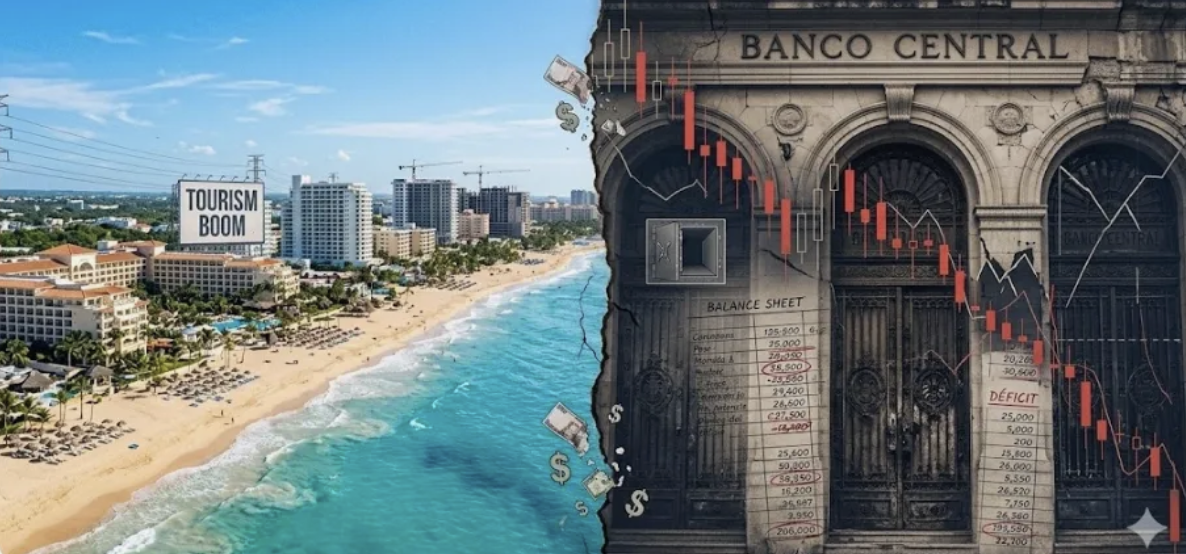
    In 2003, the Dominican Republic’s growth model collapsed, turning a boom into a national emergency. Three banks failed, depositors lost roughly US$2.2 billion, unemployment approached 20 percent, and the peso lost about half its value amid surging inflation. This was not a random accident: it was a sequencing failure—financial liberalization and fast credit growth ran ahead of the supervisory capacity needed to detect fraud, enforce prudential rules, and resolve weak institutions quickly. For today’s nearshoring and tourism agenda in Latin America and the Caribbean, the DR case matters because it shows how quickly headline growth can be erased when oversight is added after the fact.

    Between 1990 and 2005, the Dominican Republic shifted from protectionism toward outward‑oriented growth. By the mid‑1990s, trade liberalization had dismantled hundreds of import restrictions, unified the exchange rate, and opened all sectors to foreign investment. Export Processing Zones became the backbone of goods exports, accounting for more than four‑fifths of total exports by 2000, while tourism revenues more than doubled during the 1990s. By 2005, services employed over 60 percent of the workforce, and agricultural employment had fallen to just over one‑tenth—but the 2003 banking crisis showed how fragile these gains could be when oversight lagged market opening.

    Across Latin America and the Caribbean, nearshoring is reshaping where factories locate, and tourism is rebounding post‑pandemic—often faster than the institutions meant to regulate finance, utilities, and land use. The Dominican Republic’s 1990–2005 experience is a useful dress rehearsal: export processing zones and mass tourism delivered rapid growth, but the same investment push also heightened incentives for regulatory arbitrage and exposed supervisory gaps, connected lending, and hidden balance‑sheet risks. This post uses the 2003 banking crisis as the lens for interpreting the preceding boom—and for drawing lessons for today’s nearshoring and tourism agenda. It first shows how capital, institutions, and labor shifted as free zones and tourism scaled, then explains how incentive regimes and shocks reshaped what firms did and how dominant models spread, and finally shows where the state enabled scale while regulatory capacity fell behind.

    Capital and jobs shifted to exports and tourism

    Capital stocks and flows shifted decisively toward services, export manufacturing, and external finance. Physical capital expanded rapidly in tourism and export manufacturing, with hotel room stock rising from just over 7,000 in the mid-1980s to more than 45,000 by the late 1990s, and export processing parks increasing from a handful to more than 50 by the early 2000s. Foreign direct investment averaged around 4 percent of GDP, concentrated in tourism, telecommunications, and free zones. Financial inflows were complemented by growing remittance flows, which reached more than US$2 billion by 2004 and helped stabilize consumption during downturns. Human capital indicators improved in coverage, with gross primary and secondary enrollment rising by more than 40 percentage points between 1992 and 2002, even as average years of schooling among new labor market entrants remained low. Knowledge capital deepened mainly through imported routines and technologies embedded in multinational firms rather than domestic research, as national R&D spending remained negligible.

    Social institutions were reconfigured to support export orientation and private investment. New laws and agencies reshaped the institutional landscape, beginning with the creation of a comprehensive export processing regime that granted full tax exemptions to zone firms and defined a parallel customs framework. A decade‑long education plan doubled basic education spending and standardized curricula, expanding access even if quality gains lagged. Foreign investment legislation in the mid‑1990s eliminated restrictions on capital entry and repatriation, locking in openness across sectors. Partial privatization of state enterprises in energy and sugar shifted operational control to private partners while retaining public stakes. Financial regulation was modernized in 2002, but supervisory capacity proved insufficient to detect systemic fraud until the crisis struck.

    Social order and economic cycles were transformed through rapid sectoral reallocation and uneven distributional outcomes. Labor moved out of agriculture into services and export manufacturing, with agriculture’s employment share falling from roughly one‑quarter to just over one‑tenth between 1990 and 2005. Urbanization accelerated around tourism poles and industrial parks, reshaping regional economies and labor markets. Growth was rapid but uneven, with inequality remaining high and a significant share of the population living on low daily incomes even at the height of expansion. The 2003 banking crisis marked a sharp cyclical break, with unemployment nearing 20 percent and poverty rising as inflation spiked and the currency collapsed. By 2005, recovery restored growth but left lasting fiscal and social scars.

    Incentives and shocks chose winners as models scaled

    New export and tourism models took shape under incentive regimes. In plain terms, this section tracks which new business models emerged, which survived major shocks, and how the winners spread. Export Processing Zones introduced new organizational routines centered on offshore assembly for foreign markets, initially dominated by garments and light manufacturing. Firms experimented with production arrangements that split tasks across borders, gradually moving some operations toward higher‑value products such as medical devices. In tourism, foreign hotel chains standardized all‑inclusive resort models that integrated accommodation, food, and entertainment into a single routine. These experiments created a diverse set of production practices distinct from traditional agriculture and import substitution. Variation was largely driven by foreign firms responding to policy incentives rather than by domestic entrepreneurial discovery.

    Trade rules and shocks determined which sectors endured. Trade liberalization and export incentives removed anti‑export biases and selected for firms capable of competing internationally. Preferential access to foreign markets sheltered some activities, particularly apparel, until external conditions shifted. The expiration of global textile quotas in 2005 acted as a powerful selection shock, eliminating low-skilled garment producers and favoring more specialized manufacturing. The 2003 financial crisis functioned as a systemic selection event, forcing the exit of fraudulent banks and imposing new prudential standards on survivors. Together, these pressures determined which routines persisted and which were extinguished.

    Winning models spread through replication, rules, and training. Successful models spread geographically as industrial parks and tourism poles were replicated across regions. Vocational training institutions disseminated standardized production techniques from leading firms to the broader manufacturing base. Legal frameworks for foreign investment and free zones stabilized expectations and reduced policy uncertainty, embedding export orientation into the economic architecture. Tourism clusters achieved lock‑in through dedicated infrastructure and international marketing, reinforcing scale advantages. Diffusion favored breadth and speed over deep domestic integration, leaving enclave characteristics largely intact.

    Breaking the enclave is a design choice, not an automatic spillover. The DR experience suggests that zones and resorts will not deepen domestic linkages on their own: without explicit requirements and enabling institutions, investors optimize for speed, imported inputs, and tightly managed supply chains. Costa Rica offers partial evidence that governments can tilt incentives toward integration by tying benefits to skills pipelines and supplier development (for example, structured technical training partnerships, supplier certification support, and performance-based incentives that reward local procurement or technology transfer rather than simply granting blanket tax holidays). Honduras illustrates the opposite outcome: when zones expand under weak domestic capability and few linkage mandates, export jobs grow, but supplier networks and upgrading remain thin. For policymakers, the operational levers are concrete—attach time-bound incentives to measurable linkage targets, fund supplier-upgrading programs and standards labs that let local firms meet lead-firm requirements, and build training compacts that move workers into higher-skill tasks inside and beyond the zone.

    State incentives scaled growth, while oversight lagged

    The state provided direction and market rules that reshaped incentives and reduced policy uncertainty. Early reforms articulated a clear shift toward outward‑oriented growth through trade liberalization, exchange‑rate unification, and the removal of price controls. Export processing and tourism laws establish enforceable incentive regimes with clear eligibility and duration, providing investors with predictable conditions. Tariff simplification reduced dispersion and lowered maximum rates, reinforcing openness. These measures were sequenced to dismantle protection before scaling incentives, reshaping market signals across the economy. The direction was clear, even as oversight capacity lagged behind market expansion.

    Public investment and coordination mobilized private capital and concentrated growth spatially. State agencies identified and serviced priority tourism regions with basic infrastructure, enabling private hotel investment to scale rapidly. The government directly owned shares in industrial parks, lowering entry barriers for manufacturers while crowding in private operators. Partial privatization in energy and airports mobilized foreign capital and management expertise, though operational challenges persisted. During the crisis, the state absorbed massive financial losses to protect depositors, stabilizing the system at high fiscal cost. Coordination succeeded in mobilizing scale but struggled to manage risks.

    Institutional learning was reactive, shaped more by crisis than by systematic evaluation. The banking collapse forced a rapid overhaul of supervision, audits, and resolution frameworks, embedding new rules into law and practice. Fiscal policy shifted from generalized subsidies to targeted social assistance programs after 2003, improving the precision of social support. Program interruptions and restarts revealed the influence of political cycles on reform implementation. Learning occurred through failure rather than through continuous monitoring, with limited evidence of ex ante policy evaluation. Adaptation improved resilience but did not fully address underlying structural weaknesses.

    Export and services growth requires credible supervision and domestic linkages

    The strongest evidence shows that export processing and tourism can drive rapid growth when paired with credible liberalization. The Dominican Republic achieved one of the fastest growth episodes in the region by combining openness, incentives, and foreign investment. Structural change reallocated labor and capital toward higher‑productivity activities, transforming the economic base. Legal and institutional reforms locked in investor confidence and enabled scale. At the same time, weak financial oversight allowed systemic risks to accumulate.

    The desired future state is one where growth is matched by institutional depth and domestic integration. Sustained expansion requires financial systems that detect and deter risk before a crisis. Export and tourism regimes need stronger linkages to domestic suppliers and skills formation to deepen value creation. Social protection systems must adjust automatically to shocks rather than expand only after a crisis. Stability depends on aligning growth engines with institutional capacity.

    Policymakers should act on a focused set of priorities grounded in this experience. First, sequence market opening with supervisory strengthening, especially in finance and utilities, because in the DR, Banco InterContinental’s hidden, off‑balance‑sheet liabilities went undetected as auditors were captured and supervisory reporting was not routinely cross‑validated across institutions and payment systems. Second, redesign export and tourism incentives to reward domestic sourcing and skills upgrading—because free zones and all-inclusive resorts scaled quickly but retained enclave characteristics, with limited supplier linkages and spillover of learning occurring only where training institutions deliberately transmitted standardized techniques beyond lead firms. Third, invest early in monitoring systems that track systemic risk and distributional outcomes—because the 2003 break was preceded by rapid credit growth, connected lending, and widening balance‑sheet mismatches, while labor reallocation and crisis inflation translated quickly into unemployment and poverty; fourth, institutionalize policy evaluation to convert learning‑by‑failure into learning‑by‑design—because key upgrades in supervision and social protection came only after the crash, rather than through regular stress tests, independent reviews of incentive programs, and pre‑committed triggers for tightening rules when risk indicators flash red.
  • 300 Years of Technological Revolutions Reshaping Nations

    300 Years of Technological Revolutions Reshaping Nations

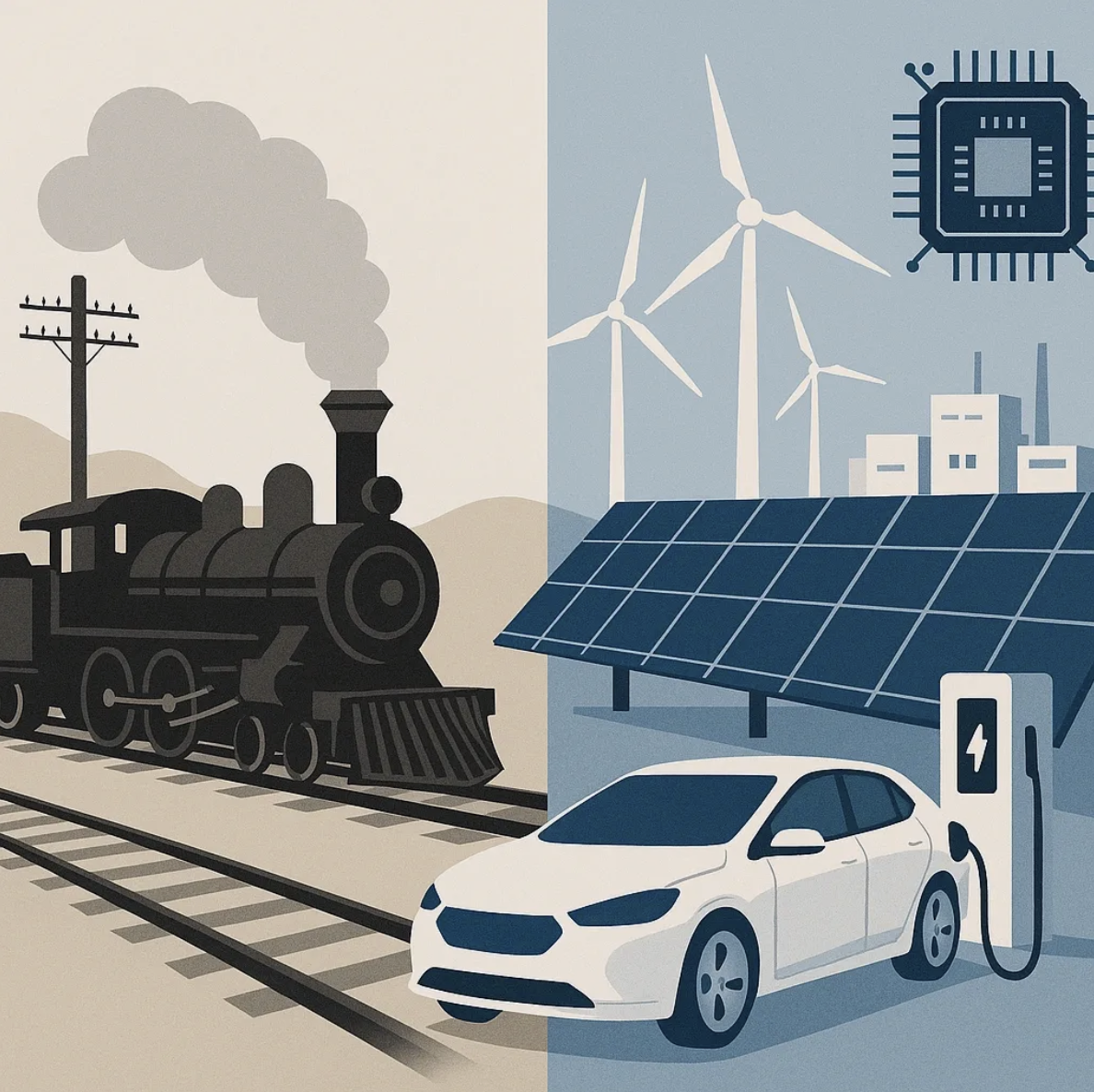
    Technological revolutions do not just introduce modern technology and business innovations. They reorganize the entire economic ecosystem. They accelerate flows of energy, materials, capital, and knowledge. Over the last three centuries, successive technological revolutions have increased global energy use by more than an order of magnitude. They hit fast, scale hard, and reorganize entire economies before institutions can catch their breath. Electricity, cars, and the internet all transformed daily life faster than governments could adapt. Technological revolutions destabilize the social order in ways that can lift nations—or break them. Understanding these dynamics is essential for any country navigating the next wave.

    Latin America and the Caribbean have lived through this pattern before—from the steam age to electrification to the digital wave—and each time the region has faced the same question: adapt early or absorb the shock later. 

    Today’s transition is larger and faster than any previous one. AI, clean energy, electrification, and digital‑physical integration are reshaping global markets, supply chains, and geopolitical power. Some estimate that AI adoption doubles every 6-12 months, that international clean energy investment will surpass 2 trillion in 2025, and that global EV production will continue to grow at 25-30% year-on-year. Countries that can manage these shifts will unlock new sources of productivity, industrial competitiveness, investment, and resilience; those that cannot face widening gaps, rising volatility, and growing social pressure.

    The challenge is simple to state but difficult to execute. Technological revolutions transform flows, institutions, and social orders far more quickly than societies can absorb them. The only actors with the mandate, scale, and legitimacy to guide these transitions are states. And the region’s future depends on whether governments can build the capabilities, coalitions, and long-term strategies needed to steer this wave rather than be swept aside by it.

    This blog distills the core lessons from past technological revolutions—what changes they drove, what drove them, and what states must do to turn disruption into development.

    Human ecosystems change faster than societies can absorb.

    Capital stocks and flows transform at breakneck speeds. Every technological revolution begins with a surge in flows—energy, materials, finance, and information. Between 1800 and 1910, global freight capacity increased by orders of magnitude as steamships and railways reshaped trade routes and volumes. These flows expand by orders of magnitude and shift their geographic centers. They create new capital stocks: railways, grids, ports, data networks, and industrial clusters that lock in development paths for decades. The speed of expansion often outpaces society’s ability to adapt, triggering bubbles, busts, fiscal pressure, infrastructure bottlenecks, and geopolitical competition as states and firms race to control the new flow architecture.

    Institutions struggle to keep up with the pace of change. Institutions designed for smaller, slower economies suddenly face volumes and velocities they were never built to manage. Institutional responses to major technological shifts often lag by a decade or more. Governments must reinvent planning, legal systems, financial architectures, education systems, procurement, and regulatory regimes to address new risks and coordinate larger markets. When adaptation lags, inequality spikes, political polarization intensifies, and governance systems enter crisis. Only four LAC countries: Chile, Brazil, Mexico, and Costa Rica, appear towards the top of the Global Innovation Index, reflecting persistent institutional gaps in science, technology, research, and development. 

    Social order becomes more volatile and turbulent. Mechanized industry in Europe triggered dozens of major riots and uprisings between 1811 and 1848. Technological revolutions reorder power. They disrupt labor markets, unsettle political coalitions, and challenge established elites. The result is turbulence: protest waves, backlash movements, and, at times, open conflict. Policy sequencing and transition management are critical to success. Wars, revolutions, and authoritarian turns often emerge when old orders resist change or when new groups demand inclusion. These cycles determine whether societies harness technological change or fall into militarization and rivalry.

    Variation, selection, and diffusion drive technological revolutions.

    Variation increases when knowledge flows, and innovative ideas flourish. For example, the number of scientific publications has doubled every decade since 1950. Breakthroughs emerge when communication technologies, scientific institutions, and cultural norms increase the generation and exchange of ideas. Variation spikes when experimentation becomes cheaper, literacy rises, and dense urban clusters intensify knowledge flows. These bursts of novelty create the raw material for new industries, infrastructures, and social models.

    Selection rewards technologies that reduce distance effects and complexity. Across all waves, winning technologies are those that reduce the cost of moving energy, people, goods, and information. Steam engines, railways, electricity, automobiles, microchips, and digital networks all share this trait. Steam engines cut transport costs by 90%; railways cut travel times by 95%; containerization reduced shipping costs by 50%. These changes enable the emergence of larger markets and more complex organizations. Industrial policy choices select successful firms, reinforced by capital flows, standards, and political decisions that privilege scalable, interoperable systems.

    Diffusion rates depend on institutions and social capacities. Technologies spread fastest where states and firms can mobilize capital, build complementary infrastructure, and train skilled labor. Diffusion is slow where hierarchies and elites resist change, institutions lack capacity, or social norms discourage experimentation. Countries with stronger institutions tend to adopt innovative technologies more rapidly than those with weak regulatory and financial systems. The speed and breadth of diffusion determine whether revolutions generate inclusive growth or deepen global divergence.

    States must guide technological revolutions.

    States need to build core infrastructures. Every successful technological revolution sits on foundational systems—transport, energy, communications, finance, and standards. In the United States, the federal government provided substantial support for early railway expansion and covered most of the cost of the interstate highway system. China’s state-led development model channeled several trillion dollars into energy and transport infrastructure between 2000 and 2020. These infrastructures reduce uncertainty, lower transaction costs, and enable large-scale investment. Private actors cannot build them alone. Public-private coordination and state support for long-term financing are crucial. Without state leadership, innovative technologies remain local curiosities rather than national or global systems.

    States need to manage social disruption and its causes and stabilize expectations. Technological revolutions create winners and losers. States must cushion shocks through education, social insurance, labor protections, and redistribution. Countries that invest in social protection during technological transitions tend to experience fewer episodes of political instability. Managing social disruption is particularly important in LAC, where up to half of the workers may be informal, making them highly vulnerable to technological displacement. Effective states prevent disruption from spiraling into unrest or authoritarianism by ensuring transitions are socially and politically sustainable. When states fail, societies fracture.

    States need to steer direction through long-term strategy and low volatility standards. In LAC, a small group of countries: Barbados, Chile, Colombia, Costa Rica, Uruguay, Brazil, Guyana, and Mexico have adopted national or sectoral strategies with multi-decadal horizons. States shape technological trajectories by setting standards, funding research, coordinating industrial policy, and negotiating international rules. As flows globalize, multilateral and regional institutions become essential for governing cross-border capital, data, energy, and materials. Strategic states use these tools to align revolutions with national priorities. Intra-LAC trade accounts for only 15% of total trade, compared with approximately 60% in the EU. External forces shape weak states, not the other way around. 

    Conclusion

    Technological revolutions are not just periods of technological and business innovation. They are system-level reorganizations of how societies produce, govern, and live. They determine who grows, who falls behind, and who gets left out entirely. For LAC, the next wave is already underway. AI is reshaping production systems, and some suggest it could add up to US$15 trillion to the global economy by 2030. Still, without a deliberate strategy, LAC would capture only a small share of this value. Clean energy is redrawing the international map of competitiveness. Electrification is reshaping cities, transport, and industry. Deep electrification in the LAC region could reduce oil imports by tens of billions of dollars annually. Industrial competitiveness and fiscal stability are bound to this technological revolution. 

    The region has a choice. It can treat these shifts as external shocks and respond to them, thereby perpetuating the cycle of late adoption and limited gains. Or it can approach this moment as a strategic opportunity: to modernize institutions, mobilize investment, build productive capacity, and design transitions that are fair, stable, and aligned with national priorities. States will need to plan and coordinate across sectors to deliver the required investments. 

    History is clear. Countries that lead technological revolutions do so because their governments act early, decisively, and with a long view. They build the infrastructure on which markets depend. They manage disruption before it becomes a crisis. They set standards that shape industries. They negotiate internationally from a position of purpose rather than vulnerability.

    The next technological wave will reward ambition and punish hesitation. LAC can shape this transition—if its states choose to be at the forefront.

  • The Costs of Technological Change

    The Costs of Technological Change

    Latin America and the Caribbean have experienced multiple technological waves, beginning with steam and railways. The region has been more of a spectator to these waves than a participant, arriving late to the party of innovative technologies. The first railway line in Britain appeared in 1825; LAC built its first lines between 1850 and 1860. We have already entered a new technological wave, and the region is beginning to see the effects – commodity pressures and global market shifts. LAC can play a significant role in this technological wave, if only because of its mineral wealth and renewable energy potential. 

    If the region is to become a more active participant in this technological wave, it is helpful to understand the consequences of past technological waves to better manage the process. 

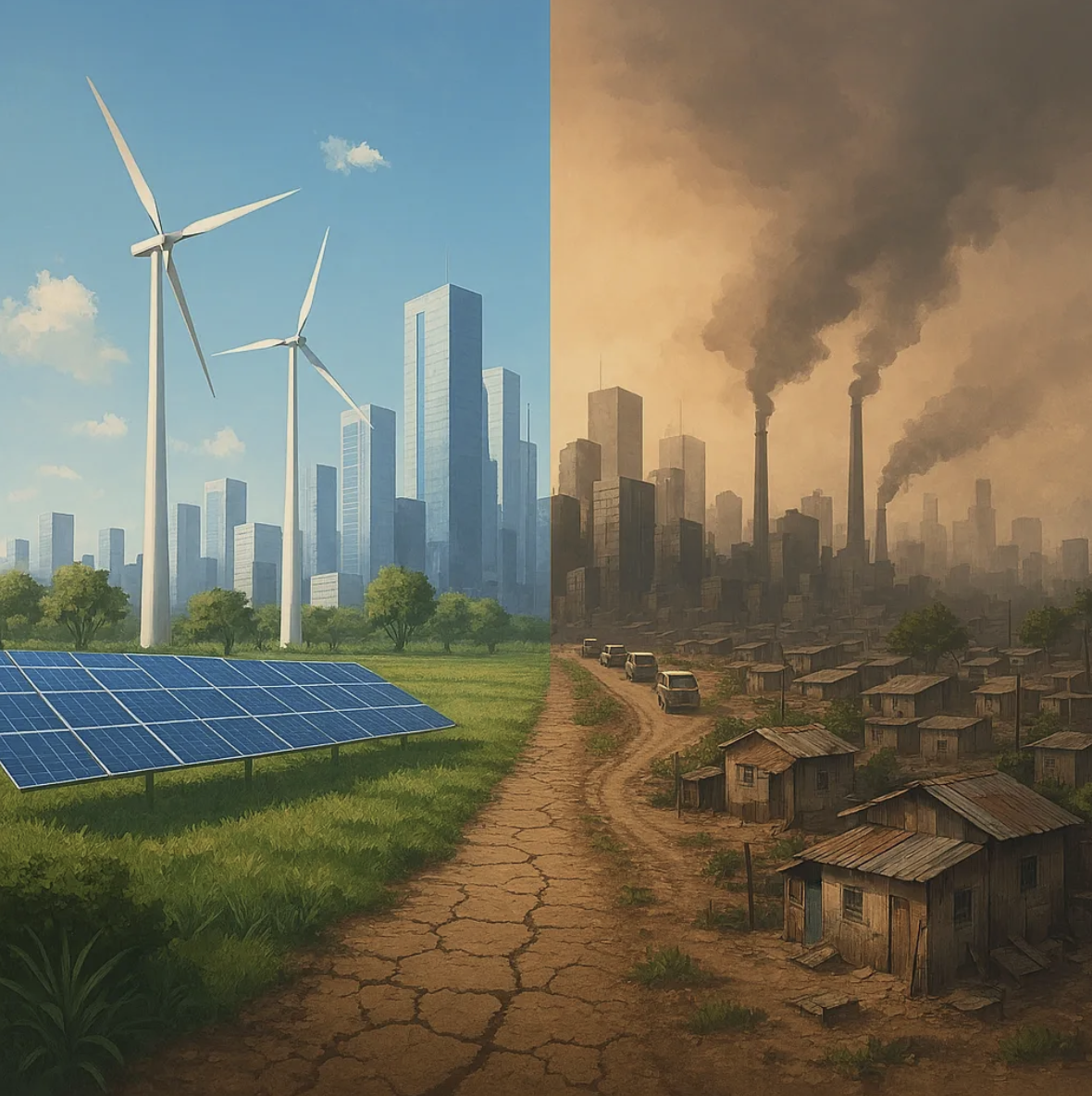
    Technological revolutions tend to deplete natural capital, widen inequality, destabilize institutions, and fracture social order. LAC can be left behind by failing to lead change and by failing to manage the inevitable consequences of change. While technological revolutions offer many positive socioeconomic changes, they also have documented negative consequences, including stranded industries, volatile markets, weakened governance, and communities left behind. The purpose of this blog is to present the more negative aspects of technological revolutions. By understanding the pressures on capital, social institutions, and social order, LAC could design a more resilient transition. 

    Technological revolutions reshape prosperity

    Past technological revolutions have rapidly increased the extraction of natural capital. Innovative technologies accelerate the conversion of forests, soils, minerals, and water systems into inputs for rapid industrial expansion. The growth of coal extraction in Britain between 1770 and 1830, which multiplied severalfold, devastated landscapes in northern England and Wales. Environmental challenges concentrate in areas that are either the origins of natural resources or the destinations – cities – where industrial production takes place. Both types of areas are subject to pollution and environmental degradation. Manchester in the 1850s was a pollution hotspot, while the London Smog of 1952, which killed up to 12,000 people, illustrates the effect of urbanization and industrialization with minimal regulation. Demand for resources and inputs can also lead states to justify militarized control over other nations’ resources to secure the inputs needed for continued growth. The competition for African minerals between 1880 and 1914 to feed European industry led to the use of military force to control 90% of the landmass. 

    Inequality increases within countries and between countries. High-skill workers and emerging industrial and urban elites disproportionately capture the gains of change, while low-skill workers may face displacement and wage stagnation. The Luddite rebellions of textile workers in Britain between 1811 and 1816 illustrate these conflicts, as factories and mechanized looms displaced traditional textile workers. Older industries from past technological revolutions and their workers may face obsolescence, with assets and jobs becoming stranded. The decline of coal mining in Britain from the 1970s to the 1990s left entire communities stranded. Employment in mining declined from 300,000 to 10,000 over 40 years, fueling significant conflict among the government, mine owners, and miners. Financial systems often become more volatile, as speculative finance and credit booms can drive bubbles in which many firms attempt to capture market share in innovative technologies. Everyone wanted to build railways in the 1840s, but not everyone could make them economically viable, which led to railway share prices collapsing by half. The dot-com bubble between 1995 and 2000 saw many companies fail, leading to a 75% decline in the NASDAQ index between 2000 and 2002. In the past, these imbalances could push societies toward hegemonic economic strategies – domination over emerging technologies or the supply chains to compensate for volatility at home. 

    Cultural capital is profoundly affected by technological revolutions and takes the longest to recover. Traditional knowledge systems lose legitimacy as the focus grows on areas of rapid economic growth, and social trust erodes. Many key agricultural products, such as maize, derive from indigenous traditional knowledge, but agrarian modernization between 1900 and 1950 focused exclusively on industrial agriculture. Migration and urbanization, driven by technological revolutions and new wealth hierarchies, can weaken community bonds and even disrupt intergenerational continuity. LAC’s urbanization rate rose from 40% in 1950 to more than 80% today, fundamentally changing the region. Artistic expression is often commercialized or homogenized to align with global norms, displacing localized identities. Simpler nationalist narratives may begin to replace more complex cultural narratives to bind communities and ensure unity and purpose in rapidly changing states.

    Social institutions fall behind

    Governance, regulatory systems, and institutions often struggle to keep pace with technological change. The earliest factory acts were enacted in 1833, decades after factories were established in Britain. Regulations were not yet ready, and it takes time for lawmakers to address new industries. For example, U.S. antitrust laws were enacted in 1890 and applied to Standard Oil in 1911, well after the company had dominated the oil industry, controlling up to 90% of refining capacity. Oversight systems become outdated or unable to manage rapid expansion, as in the U.S. railroads between 1850 and 1880. Some sectors or regions move rapidly, while others remain unchanged, making coordination challenging. Newly created governance and policy gaps create openings that individuals and corporations can exploit through elite capture, corruption, or the abuse of incentives. Under these circumstances, some governments turn to stronger centralized authority or coercion to reassert control, for example, Soviet industrialization in the 1930s.

    Public services such as health, education, housing, and social protection are often overwhelmed as people migrate to cities. The massive expansion and fivefold population growth in Manchester and London between 1800 and 1850 completely overloaded nascent urban services. New risks may emerge as pollution drives new health system needs. Education systems may not produce the skilled workforce required for innovative technologies. Housing shortages may increase in rapidly growing cities – or cities may shift to elevated levels of disorganization and informality. Informality is characteristic of the peripheral areas of many Latin American cities, resulting in favelas and barrios where more than a third of residents live. Social protection models often cannot keep pace with new areas of insecurity. Gig workers between 2010 and 2020 struggled to secure protections because they were outside traditional labor-management systems.

    Fiscal, financial, and infrastructure institutions are also acutely stressed during rapid economic growth. Tax systems may not be well equipped to capture value from emerging sectors. Digital platforms established between 2000 and 2020 often operated beyond traditional tax frameworks. Subsidies and industrial policy may be outdated and targeted toward supporting now-defunct industrial sectors. Coal subsidies in Europe between 1950 and 2000 persisted long after coal had become economically unviable and uncompetitive. Existing infrastructure systems may become congested or expand unevenly, creating bottlenecks that slow growth or, in some cases, creating investment bubbles or stranded assets as new forms of infrastructure take over. 

    Social order and cycles become turbulent

    Social order destabilizes as new power hierarchies fragment identities. New economic elites often emerge, sharpening the rural-urban divide and creating geographical inequalities. Silicon Valley created new technological elites and corporations between 1980 and 2020. Generational tensions can increase around innovative technologies and the values they may embody. The generational divide is particularly vivid as communications technologies have shifted from radio in the 1920s, to TV in the 1950s, and to the internet and social media in the 1990s. Societies may reformulate informal norms to meet new ordering needs. Changing identities creates opportunities to forge new political alliances around the new winners. 

    The “normal” individual, institutional, and environmental cycles are often substantively changed by technological change. Shift work in factories and mining in the 1800s, with 60-70-hour workweeks, significantly altered traditional daily work and family cycles. As a result, people who need to accommodate the massive social, economic, and cultural changes, including changes in work and urban environments, experience rising anxiety and burnout with health consequences. Political cycles can often shorten when governments respond reactively to public frustration, rather than working through structured long-term plans that recognize and manage change.

    Technological revolutions strain environmental, demographic, and market cycles. They can increase commodity pressures by demanding inputs, such as rubber, copper, and oil, between 1880 and 1970. They can create environmental crises through resource extraction or pollution, and they can shift migration pressures as countries seek new skills and people seek new opportunities. An excellent example of an ecological crisis caused by technological change is the Dust Bowl of the 1930s, which displaced hundreds, if not thousands, of people due to a shift to mechanized farming. Market cycles are integral to technological revolutions, with the initial stages dominated by speculative capital, which can often lead to investment bubbles and crashes. 

    Conclusion

    Technological revolutions reshape societies. The present technological wave will reshape countries across LAC. The region can either absorb the shocks of this ongoing revolution and capitalize on opportunities, or countries can shape their own pathways. 

    The likely consequences of technological waves are predictable and historically documented, even if it is challenging to predict the specific technological changes. It is possible to design transitions by focusing on stronger institutional capabilities, protecting people, and preserving cultural identity while still embracing, even leading, technological change. 

    The challenge for LAC countries is to anticipate changes before they arrive, lead the necessary institutional shifts, and ensure that the technological wave serves as a foundation for shared prosperity across the region rather than another missed opportunity. Today, states should consider the necessary skills, systems, planning processes, governance shifts, and industrial policy sequencing to maximize regional benefits.