Tag: resilience

Analysis of the capacity of social‑ecological and economic systems to absorb shocks and adapt without collapse.

  • Brazil’s Cerrado Growth Model: State Capacity and Land Governance

    Brazil’s Cerrado Growth Model: State Capacity and Land Governance

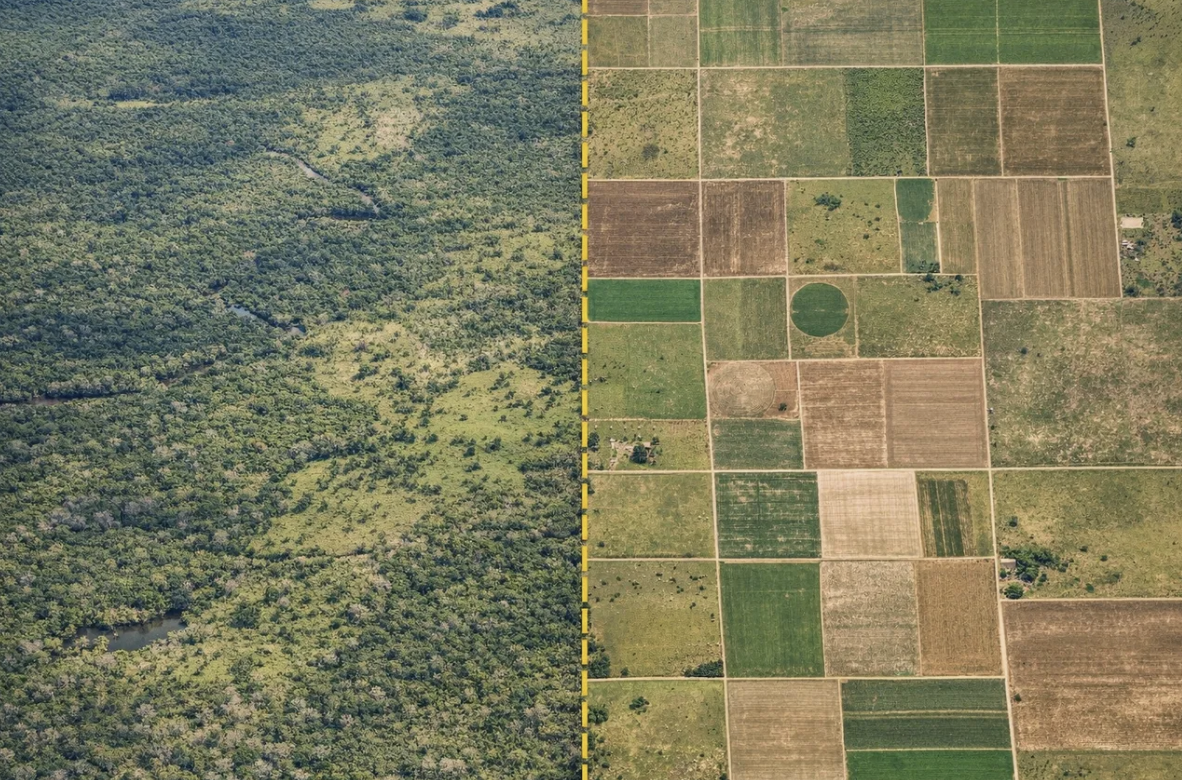
    In 1960, Brazil imported food. In 2023, it supplied global markets at a scale that rivals the European Union’s agricultural exports. The Cerrado—roughly 200 million hectares—was long treated as marginal land; what changed was not the savanna but the state machinery around it. Brazil built public agricultural research and development, subsidized credit, and enabled infrastructure that made frontier production bankable and scalable. That same toolkit is available across Latin America and the Caribbean (LAC), where governments face a simultaneous mandate: raise output, defend climate credibility, and avoid a new wave of land conversion that triggers social conflict and ecosystem loss.

    The core policy problem is a sequencing gap: growth instruments move faster than land and social governance, so expansion outruns control. Brazil’s agricultural total factor productivity (TFP)—output growth not explained by more land, labor, or capital—grew at roughly 3% per year from the mid‑1980s to 2010, and soybean yields roughly doubled from the 1970s to the 2010s. Since 2000, studies commonly find that about 70–80% of new cropland came from converted pasture and 20–30% from native vegetation, with the higher‑risk share concentrated near frontier zones between the Cerrado and the Amazon. The cadaster (the official parcel-level land registry) and enforcement capacity improved more slowly than credit and logistics, so regulators often could not screen projects quickly enough to prevent illegal clearing or high-risk siting. The mechanism is frontier spillover pressure or indirect land-use change: when cropland expands onto pasture, displaced pasture and land speculation can shift pressure toward frontier areas, even if direct conversion appears to slow.

    The implication for LAC is operational: treat land governance as a binding constraint on how fast you can safely scale output. Start by expanding cadaster coverage, clarifying tenure, and funding enforcement so the state can deny permits, credit, and public benefits to noncompliant expansion before capital locks in land‑use patterns. Then design demand and finance tools to reward low land impact rather than volume, using performance screens and differentiated support that investors can understand, and regulators can audit. This requires an eligibility gate—a hard requirement that projects demonstrate clean land status before receiving public finance or permits—so inclusion and environmental safeguards are built into scale rather than layered on afterward. This blog examines what changed in Brazil during this process, what drove those changes, and the role of the state in guiding them. 

    How governance lagged investment

    Investment support created a lock-in by paying for long-lasting assets—roads, storage, ports, plants, and machinery—that required high, steady output to remain profitable. Subsidized credit, public risk absorption, and private balance sheets financed frontier roads and storage, export terminals, processing plants, and on‑farm machinery. Those assets lowered delivery costs and increased returns to scale, so producers and processors pushed for higher volumes to pay back what they had already invested. The evidence is clear in the timeline: Brazil moved from a food importer to an export-scale supplier, and infrastructure helped maintain that scale. Once these assets were in place, land became the hard limit, and expansion shifted toward the lowest-friction options, especially pasture conversion.

    Brazil built stronger institutions for productivity than for land control, so output rose before governance caught up. In the 1970s, Brazil established Embrapa to build domestic capacity in tropical science. Estimates commonly place Embrapa’s social return on investment at 7:1 or higher. Those capabilities supported sustained productivity gains, including TFP growth of roughly 3% per year from the mid‑1980s to 2010. Land institutions—cadaster quality, tenure clarity, compliance monitoring, and enforcement—improved more slowly, so the state often could not verify where and how expansion occurred. The result was a familiar imbalance: investment and offtake could scale in years, while land governance improved much more slowly. 

    The growth model shifted power toward actors who control capital, logistics, and compliance. As land values rose and processing and export logistics clustered, large producers, traders, and processors gained influence over standards, credit terms, and where infrastructure went. The spread of flex‑fuel vehicles after the early 2000s broadened a political coalition around fuel consumers and stabilized parts of the modernization agenda. Smallholders lost ground—literally—as land values rose near new roads and processing plants, concentrating benefits among actors who already had capital and logistics access. This pattern matters for LAC because once these coalitions form, tightening land governance later becomes more politically and financially costly. The actors who captured most of the gains were not those on the frontier — they were the traders, processors, and logistics firms that controlled the chokepoints between the field and the market.

    How scale got selected and locked in

    Variation expanded the feasible production set in the Cerrado by turning agronomic uncertainty into testable options that producers could adopt or discard. In the 1970s, Embrapa and partner networks generated multiple packages—soil correction (liming and nutrient management for acidic soils), new cultivars, and livestock genetics—rather than a single blueprint. Producers then experimented across crops and systems (soy, sugarcane, and livestock) under frontier conditions where initial yields were uncertain. The outcome was a widened feasibility frontier: by the 2010s, soybean yields had roughly doubled relative to the 1970s baseline, making large areas commercially viable. This mechanism matters for LAC because public research and development can quickly expand “what is possible.” Still, it also accelerates the speed at which land becomes contested if governance capacity does not scale in parallel.

    Policy picked the winners—and it picked the ones that could scale, document output, and plug into existing export channels. Subsidized credit and standards increased returns to producers who could meet specifications and deliver volume through established trading and processing systems. Where governments added demand-side tools (for example, ethanol blending), they created a large, policy-stabilized outlet; by the mid-2010s, ethanol displaced roughly 45–50% of gasoline demand in Brazil’s light-vehicle fleet. The result was concentration: capital‑intensive models dominated because they best matched the incentives embedded in credit, infrastructure, and offtake (a guaranteed purchase obligation) rules. This logic applies beyond fuels: any subsidy tied to guaranteed buying can push scale faster than land oversight can keep up with managing land spillovers. 

    Brazil did try to use a biofuels policy for inclusion. Biodiesel programs included family-farm participation requirements, but they did not materially shift the production structure once mandate volumes scaled up. Similarly, soy, with logistics advantages and existing supply chains, absorbed compliance demand faster than targeted suppliers could expand to meet it. The lesson is not that inclusion provisions are wrong; it is that volume-scale mandates overwhelm symbolic participation targets. Inclusion must be built into the eligibility architecture before scale, not layered on top afterward.

    Diffusion locked the model in by making it routine across supply chains, finance, and infrastructure. Processors standardized contracts, banks repeated the same lending templates, and logistics investments lowered delivery costs, enabling the package to replicate across municipalities. Offtake reduced demand risk and sped up replication, especially when policy tools stabilized outlets. Governance fell behind—regulators could track yields, not where the frontier was moving—so enforcement and screening did not keep pace with expansion incentives. The result was persistent land competition and frontier spillover pressure because the system kept rewarding expansion faster than land oversight could respond. 

    What the state did – and in what order

    State coordination mattered because Brazil could align rules and markets and mobilize private investment faster than frontier governance could mature. The state used standards and credit conditions to make production and processing investments viable, and sometimes used demand tools, including ProÁlcool (Brazil’s 1975 national ethanol program, which mandated blending, financed mills, and sustained demand through price policy) and ethanol blending rules. The mechanism is capacity, not intent: when agencies coordinate across agriculture, energy, and trade, they reduce uncertainty and speed up scaling. The risk for LAC is that if land administration cannot coordinate with these growth levers, expansion outruns verification and enforcement. 

    Public investment and finance facilitation accelerated Cerrado expansion by lowering risk and financing scale-critical assets. Brazil invested in applied science and extension capacity, and it used subsidized credit and public risk absorption to crowd in private finance once profitability was realized. These tools amplified scale by reducing capital costs for frontier logistics, processing, and on-farm modernization. The governance implication follows from the post-2000 land-use pattern: studies commonly find that 20–30% of new cropland originated from native vegetation in frontier zones, even though most expansion occurred through pasture conversion. For LAC, this means finance and infrastructure programs should scale only as fast as land verification capacity can screen eligibility and enforce penalties.

    Brazil raised productivity by building a learning system that repeatedly solved practical problems, rather than through a one-time technology transfer. Embrapa conducted long-term research in soil chemistry, breeding, and livestock genetics. Learning‑by‑doing—cost reductions and process improvements from repeated production and scaling—then spread routines through processors, input suppliers, and logistics networks. The measurable result was sustained productivity growth and large yield gains. The limiting factor was coordination and governance: higher yields do not prevent land conversion unless cadaster, enforcement, and screening capacity expand at the same pace as the technologies and the capital they attract. 

    Policy actions for LAC

    LAC’s challenge is to grow farm output without letting weak land rules turn that growth into land loss and credibility problems. Brazil shows how quickly growth policy can work. Brazil also shows why land rules must set the pace for scaling. Frontier spillover pressure raised risk when pasture displacement and frontier dynamics pushed expansion outward. The mechanism is simple: when credit, infrastructure, and guaranteed buying move faster than the official parcel-level land registry and enforcement, expansion outruns verification.

    Success looks like raising productivity on land that is already cleared, rather than expanding the farmed area. That path is realistic: Brazil sustained TFP growth and achieved large yield gains, including roughly doubled soybean yields. It also requires practical land administration: an official parcel-level land registry with high coverage, clear tenure records, and routine compliance checks that can block noncompliant projects from credit, permits, and procurement. Demand can still grow, but it must follow the rules; ethanol displacing roughly 45–50% of gasoline demand shows how fast policy can create outlets, so land checks must come first. The goal is durable growth that can pass climate and trade scrutiny because it is documented and enforceable.

    Before expanding mandates, concessional finance, or procurement, policymakers should put in place three requirements: an eligibility gate, performance-based incentives, and enforceable inclusion. The eligibility gate is a hard rule: projects must show clean land status before they can receive public finance or permits, using land-registry checks, tenure verification, and the ability to deny credit, permits, and public purchasing when land records do not clear. Use performance-based incentives by offering better subsidy rates or credit terms to producers with a smaller land footprint and, where relevant, lower lifecycle emissions verified through measurement, reporting, and verification—the same measurement systems required by carbon-market buyers and climate-finance providers—rather than paying for volume. Make inclusion enforceable by requiring payment of any social premium only when audits confirm the existence of real contracts, on-time payments, and a functioning grievance process. Colombia’s expanding palm sector and Bolivia’s shifting soy frontier face this sequencing choice now: scale only what you can verify and enforce, because once sunk assets accumulate—as they did in Brazil from 1960 to 2023—reversal becomes politically and financially expensive.
  • The Playbook of Uruguay’s Energy Transition 2010–2024

    The Playbook of Uruguay’s Energy Transition 2010–2024

    In the early 2000s, Uruguay’s electricity system was exposed on two fronts: drought could collapse hydropower output, and the backstop was imported fossil energy, exactly when regional prices were high and regional supply could be uncertain. In severe years, Uruguay could spend as much as 2% of GDP on energy imports, turning weather into a macroeconomic event.

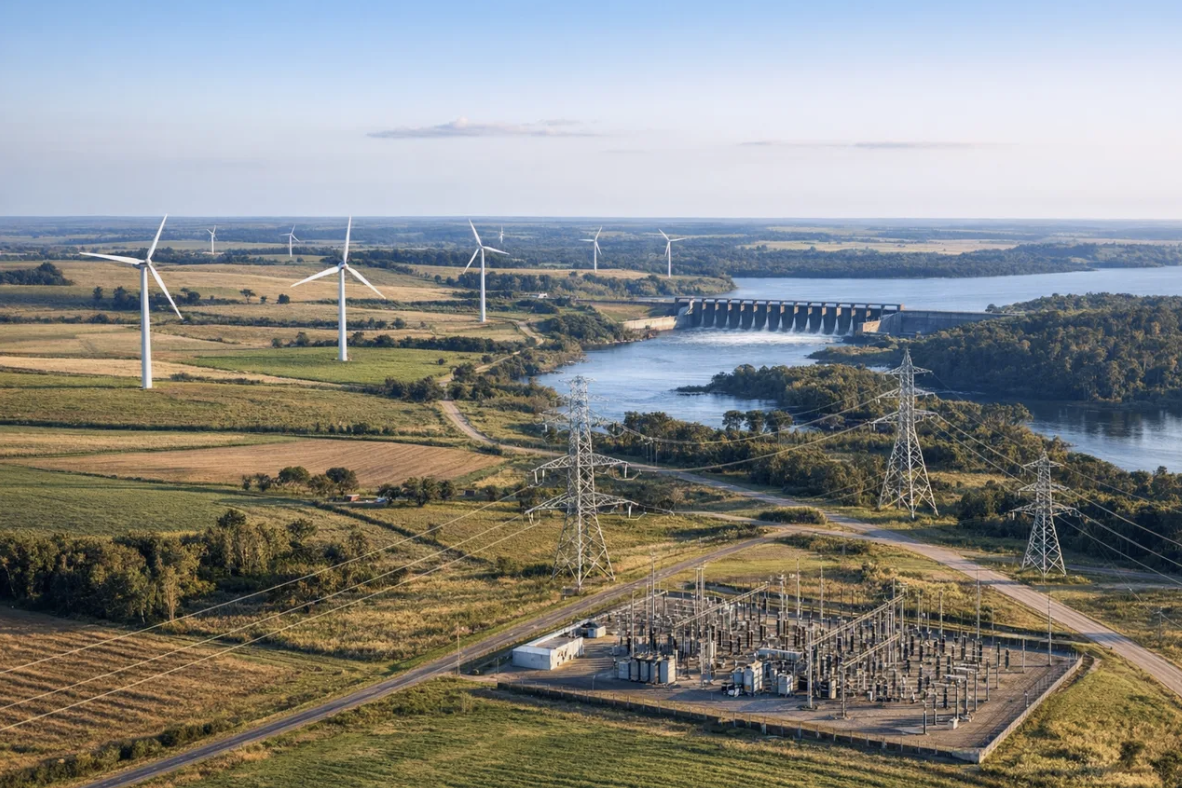
    Between 2010 and 2024, Uruguay rewired that vulnerability into a new asset base. By 2024, Uruguay generated 99% of its electricity from renewables (hydro: 42%, wind: 28%, biomass: 26%, solar: 3%, fossil: 1%). It exported 2,026 GWh of electricity—enough to treat surplus power as an economic opportunity rather than a reliability risk. 

    Uruguay’s story is best understood as two linked transitions. The First Energy Transition decarbonized the grid and strengthened the system’s ability to manage variable renewables; the Second Energy Transition shifts attention to what electricity alone cannot solve—especially transport, a sector Uruguay identifies as the largest source of energy-sector CO₂ emissions and the main frontier for further decarbonization. 

    For LAC policymakers and citizens, the transferable lesson is not “build wind.” It is how Uruguay reduced risk, redirected capital flows into domestic productive assets, and embedded learning capacity in institutions—while also managing the tradeoffs that come with long-term contracts, grid constraints, and the harder economics of decarbonizing fuels beyond the power sector. 

    This blog examines what changed in Uruguay, what drove those changes, and the role of the state in delivering change. 

    Changes in capital, institutions, and resilience

    Uruguay’s energy transition fundamentally restructured the country’s physical and financial capital stock. More than US $8 billion was invested since 2010—largely by private actors—into wind, biomass, solar, and associated grid infrastructure, replacing recurrent fossil-fuel import expenditures with long-lived domestic assets. Uruguay doubled its generation capacity in about 10 years through the renewable buildout. This shift transformed energy from a source of macroeconomic vulnerability into a stabilizing factor, reducing exposure to oil price volatility and enabling Uruguay to become a net electricity exporter in average hydrological years. In 2024, Uruguay exported 2,026 GWh of energy, worth about US $104 million. 

    Institutionally, the transition was enabled by a distinctive public–social order. Uruguay’s 1992 referendum rejected privatizing state enterprises and preserved UTE as a trusted public utility with control over transmission and distribution. The turnout was 82.8%, and the repeal was approved by 72.6%. This allowed the creation of a hybrid market: private firms invested in generation under competitive contracts, while the grid remained a public good, maintaining social legitimacy and energy sovereignty.

    At the level of social cycles, the transition decoupled economic growth from carbon emissions and hydrological risk. GDP expanded while power-sector emissions fell sharply, and drought years no longer triggered billion‑dollar fossil import shocks. Uruguay’s matrix remained at 92% renewables even during the 2023 drought, the lowest hydro year on record. A diversified renewable portfolio—hydro, wind, solar, and biomass—now acts as a systemic buffer, increasing the resilience of the human ecosystem against climate variability.

    Crisis, competition, and learning-by-doing

    Uruguay’s transition was catalyzed by path dependence and crisis. Lock-in to imported oil and unreliable regional gas made the pre‑2008 energy regime increasingly maladaptive. Required energy imports could cost the country up to 2% of GDP. The 2008 energy crisis functioned as a selection pressure, forcing policymakers to abandon incremental fixes and rapidly scale alternative technologies—particularly wind—that could form a new dominant regime. Uruguay used auctions for biomass, wind, and solar across different years as a deliberate regime shift. 

    Rather than betting on a single technology, Uruguay deliberately fostered technological variety. Competitive auctions and long-term contracts allowed evolutionary selection to favor the most cost-effective and system-compatible options. Over time, wind emerged as the cornerstone because of its strong complementarity with existing large-scale hydro, while biomass and solar filled additional niches. In 2021, Uruguay often ranked second globally, after Denmark, in terms of the share of variable renewables (solar and wind). 

    Crucially, the transition accumulated knowledge and hardware. Collaboration between the National Administration of Power Plants and Electric Transmission (UTE) and the Universidad de la República produced sophisticated system models using decades of climate data. This institutional learning allowed Uruguay to manage intermittency through system design and operations rather than premature investment in expensive storage, embedding intangible capital that increased the system’s adaptive capacity. Smart meter installation enhanced the digital grid and learning across the system, while hydro helped as storage. 

    De-risking markets, building grids, and enabling the transition

    The state played a central coordinating role. Uruguay XXI: Energy Policy 2005-2030 was approved in 2008 and ratified in 2010 through a multi‑party agreement. This plan anchored the energy transition as a State Policy rather than a Government Policy, ensuring continuity across administrations. This political durability lowered investors’ perceived risk and enabled planning horizons consistent with those of long-lived infrastructure assets. Importantly, consensus is critical to lock in future direction – but should not freeze adaptive management in the face of external changes; regulatory updates are part of the Uruguay model. 

    Market architecture was deliberately designed to de-risk private investment while retaining public control. Long-term power purchase agreements guaranteed that UTE would buy renewable electricity at fixed prices, creating a bankable environment for international financing. Importantly, benefits were redistributed by reducing residential tariffs by 30% in real terms. At the same time, regulation evolved continuously—adjusting dispatch rules, tariffs, load shifting and electrification incentives, and standards—to accommodate very high shares of variable renewable energy.

    In the Second Energy Transition, the state has again taken an active role through public investment and innovation platforms. Initiatives such as the Renewable Energy Innovation Fund (REIF) and the H2U Program are shaping new markets for electric mobility, green hydrogen, and e‑fuels. Rather than picking winners, the state is creating options: funding pilots, building enabling infrastructure, and developing regulatory frameworks that allow new sectors to emerge under managed risk. There are emerging global market risks associated with hydrogen investments that will need to be managed adaptively going forward. 

    Three transferable lessons—and the tradeoffs to plan for

    Uruguay’s 2010–2024 experience shows that rapid power-sector decarbonization is not a technology challenge—it is an institutional challenge. Uruguay paired auctions and long-term contracting with an institutional architecture capable of planning, operating, and updating rules for a high-renewables system, resulting in a grid that can remain overwhelmingly renewable even when hydrology is unfavorable. 

    But Uruguay’s success also clarifies the next problem for LAC: electricity is only part of the energy system. Even as the power grid becomes ultra-low carbon, the wider energy mix can remain exposed to imported fuels—Uruguay still has a large oil share in total energy supply in recent years, which is why the country frames the Second Transition around transport electrification, efficiency, and new fuels like green hydrogen and e-fuels. 

    Three practical takeaways travel well across the region. First, build political durability: Uruguay’s multi-year direction reduced the risk premium that kills long-horizon investment. Second, use a credible system orchestrator: a capable utility (public or private) must run procurement, grid upgrades, and dispatch rules as one coherent strategy. Third, invest in “soft infrastructure”—data, modeling, standards, and regulatory learning—because these are what make high shares of renewables stable and what enable the Second Transition to scale without chaos in charging, tariffs, and permitting. 

    Finally, plan for tradeoffs rather than hiding them. Long-term contracts can lock in costs; electrification can shift peak loads; and hydrogen can become a fiscal sink if it is subsidized before demand, certification, and infrastructure are ready. Uruguay’s approach to the Second Transition—pilots, blended finance platforms, and interinstitutional coordination—offers a template for creating options in the face of uncertainty rather than betting national budgets on a single outcome. 

  • Costa Rica (1950-2010): a Distinctive Development Trajectory.

    Costa Rica (1950-2010): a Distinctive Development Trajectory.

    In 1948, Costa Rica redirected the money it had been spending on its military into schools and hospitals. Emerging from a brief civil war in 1948, the country abolished its army, redirected public resources to schools, health, and infrastructure, and developed a policy mix that combined social inclusion with environmental protection. 

    Between 1950 and 2010, Costa Rica built one of the most distinctive development trajectories in Latin America. Life expectancy rose from the mid-50s in 1950 to around 79 years by 2010. Adult literacy increased from roughly 80–85% in 1970 to about 95% by 2010, while GDP per capita approximately tripled between 1960 and 2010. This 60-year period matters for today’s green transition because it shows how a small, middle-income country can reshape its institutions, firms, and social norms and rebuild natural capital.

    During these decades, Costa Rica moved from an economy based on coffee, bananas, and cattle to one increasingly driven by services, ecotourism, and higher-value manufacturing, while recovering forest cover and decarbonizing its power system. Forest cover initially declined to around 20–25% by the mid‑1980s and recovered to over 50% by 2010. Public agencies such as the Instituto Costarricense de Electricidad (ICE), the national parks system, and later forest and climate institutions played central roles in steering investment and learning. By 2010, protected areas covered about 28% of land, and renewables accounted for roughly 85% of electricity generation.

    This blog explores that story through three lenses: what changed, what drove those changes, and what the state did to make them possible.

    From frontier expansion to forest recovery

    From 1950 onward, Costa Rica expanded human capital while undertaking a rapid boom‑and‑then‑recovery in natural capital. The country showed significant gains in literacy, life expectancy, and access to public services. At the same time, it experienced rapid deforestation between 1960 and 1980, followed by one of the most effective examples of tropical forest recovery in the world. Costa Rica maintained stable democratic institutions and built strong public service and environmental stewardship norms. Inequality and informality persisted, and fiscal pressures grew, especially around the 1980s debt crisis. By 2010, electricity and water access were both close to universal, and the country had held uninterrupted competitive elections since 1950.

    After abolishing military spending in 1948, Costa Rica redirected resources to education, health, and electricity generation. In 1949, ICE began investing in large-scale hydropower, later expanding into geothermal and wind power, laying the foundation for the country’s renewable power base in 2010. 

    Rapid agricultural expansion and cattle ranching between 1960 and 1980 drove massive deforestation, but this was reversed by the creation of protected areas from the 1980s onwards and the establishment of payments‑for‑environmental‑services schemes in the mid‑1990s. By 2010, more than a quarter of the country was protected, and forest cover had substantially recovered – serving as a base for a booming ecotourism sector and repositioning tropical forests as productive environmental assets.

    The Intel plant established in Costa Rica in the 1990s was the clearest signal that the country’s decades of social investment had paid off in ways the original policymakers hadn’t anticipated. Intel chose Costa Rica over larger, cheaper neighbors not because of low wages but because of workforce quality, political stability, and — critically — the environmental reputation that made the country attractive to a company that needed to be seen operating responsibly. 

    The country underwent structural transformation, shifting from primary commodities to services, tourism, and high-value manufacturing and business services. The share of services in GDP was over 60% by 2010, and FDI inflows reached more than 5% of GDP in the 2000s. Much of this shift was supported by foreign direct investment in electronics and medical devices. Costa Rica has built comparatively high levels of trust in institutions and political stability compared to its regional peers. The 1980s crisis and some later reforms reintroduced new inequality and employment pressures.

    Variation, selection, and diffusion in Costa Rica

    Costa Rica’s transformation was not planned from the beginning. It was the outcome of a series of experiments, some of which worked and many of which didn’t, with the market, political coalitions, and periodic crises doing the selecting. The country established new public agencies, introduced new environmental regulations, and explored new export‑promotion regimes. The private sector initially responded through natural‑resource‑extraction enterprises, which later shifted to eco‑lodges and tech clusters. Domestic political coalitions favored certain strategies, which were reinforced by changes in commodity prices and cycles of foreign direct investment. Social and environmental policies were retained through various coalitions, while a focus on frontier agriculture and import substitution was abandoned. Hydropower electrification, protected areas, payments for environmental services, and export services diffused across territories and sectors through replication, learning, and deliberate Costa Rica branding. The connections among clean energy, ecotourism, and high-tech assembly plants were synergistic, accelerating adoption.

    The 1980s debt crisis hit Costa Rica hard. Real wages fell, imports dried up, and the import-substitution industrial model that had underpinned the previous decade’s growth became fiscally unsustainable almost overnight. The debt crisis drove structural adjustment, leading to the failure of fiscally unsustainable and protectionist approaches. Social and environmental programs remained, and politically supported models of human‑capital investment, ecotourism, and grid-scale renewables were reinforced. Low productivity and extensive cattle expansion became less attractive from both national policy and market perspectives.

    The Costa Rica model did not stay inside Costa Rica. Today, Central America as a region stands out globally for its terrestrial protected area coverage of around 30 percent — a figure that reflects decades of regional learning and policy diffusion, substantially inspired by the Costa Rican example. Costa Rica has also historically led the storyline of a renewable-dominated power system and has linked its green agenda and brand to tourism, foreign direct investment, marketing, and diplomacy. Renewable energy accounted for around 80% of electricity generation by 2010, rising to more than 95% by 2015. This narrative has been crucial in shaping expectations amongst citizens, firms, and investors.

    The state as mission setter, investor, and learner

    The Costa Rican state was neither a passive observer of this transformation nor an omniscient planner. It set broad missions, built institutions capable of pursuing them, and then learned from what worked and what didn’t over the course of six decades. Post-1950 governments defined broad goals for social services, territorial integration, and environmental conservation, and established semi-autonomous public enterprises and ministries to deliver them. Over six decades, the state invested in dams, transmission lines, and roads, expanded social protection, and created regulatory frameworks for water, forests, and electricity that favored a shift toward low-carbon, nature-based development.

    These efforts were pursued despite limited fiscal space, reliance on external finance, and persistent tensions between conservation, agriculture, and urban expansion. The transformation required coordination among sectoral ministries, including energy, environment, agriculture, and planning. 

    Costa Rica’s decision to integrate energy and environment into a single ministry is worth considering. In most countries, these portfolios sit in separate ministries with separate budgets and often conflicting mandates — energy agencies prioritize generation and grid expansion. In contrast, environmental agencies resist the infrastructure required. Putting both under one roof forced those conflicts into the open, where they could be resolved at the policy level rather than being paralyzed by bureaucratic turf wars. The result was an energy strategy that treated hydropower, geothermal, and wind not just as power sources but as components of a national environmental identity. That institutional design choice — deliberately creating productive tension rather than administrative separation — is one of the most transferable lessons in the Costa Rica story.

    The Costa Rican state has been particularly strong in learning and course‑correction in forest policy and environmental regulation. Symbolic early moves—the abolition of the army and the establishment of robust social security, healthcare, and education systems—set a long-term trajectory focused on developing people, not war, while decisions to create national parks and protected forests embedded natural capital into the national mission.

    The state also guided public investment and rulemaking toward a green‑growth model. Agencies such as ICE focused on renewable energy infrastructure, building technical capacity, and attracting investment to ensure high electricity access rates while producing clean energy. Rules in forestry, land use, and environmental‑impact assessment progressively restricted environmentally destructive practices while creating financial incentives for forest conservation and restoration through payments for environmental services that blended national and climate finance with carbon markets. For example, payments for the environmental services scheme were supported by a fuel tax, while an airport arrival fee partly supported the protected areas system.

    The state also experimented and learned, ensuring co-evolution between the state and the market. Different governments have experimented with policies such as payments‑for‑environmental‑services schemes, ecotourism development and promotion, and free‑trade zones to test approaches to mobilizing private capital with public steering. Some experiments were not fully inclusive or financially sustainable, but the state has progressively aligned development with environmental and human‑capital objectives.

    Lessons for Latin America’s green transition

    From 1950 to 2010, Costa Rica did not follow a linear pathway. It went through severe deforestation, debt crises, and distributional challenges. It remains a middle-income country with real development challenges. Yet over 60 years, it combined institutional stability, social investment, and environmental recovery in ways that altered its asset base and contributed to development. Electricity shifted from fossil fuels to renewables; the economy shifted from commodities to knowledge-intensive services, driven by strong human capital and environmental conservation.

    Three lessons stand out. First, green transitions are cumulative and path-dependent: Costa Rica’s renewable power system in 2010 was only possible because ICE started building hydropower dams in 1949, before anyone called it a green transition. Decisions made under one set of conditions create capabilities that enable entirely different decisions a generation later. Countries that want to lead the next technological wave need to start making foundational investments now. Second, state capability matters more than state size. What made ICE effective was not that it was public but that it was technically competent, financially autonomous, and given a clear long-term mandate that survived changes of government. Building that kind of institutional capacity takes decades and cannot be shortcut. Third, natural capital can be rebuilt faster than most models assume: Costa Rica’s forest transition occurred within 30 years of peak deforestation, suggesting that ecosystems are more resilient than standard development economics credits them with — provided the incentive structure changes and the political will holds.

    For policymakers and investors, the Costa Rica model suggests it is possible to anchor growth in human capital, services, and environmental assets through public utilities, protected‑area systems, payment incentives, and green branding to engage global markets and attract foreign direct investment. Costa Rica’s path cannot be copied. It is a small, unusually politically stable country with no oil wealth, and a foundational decision in 1948 that most countries will never take. But its logic can be borrowed: invest in people alongside infrastructure, price environmental destruction honestly, build public institutions that learn, and treat the natural environment as an economic asset rather than a constraint on growth. 

    The countries that will lead Latin America’s green transition are not those that try to replicate a model built on six decades of choices they didn’t make — they are those that find their own version of these commitments, starting with the decisions available to them today.

  • 300 Years of Technological Revolutions Reshaping Nations

    300 Years of Technological Revolutions Reshaping Nations

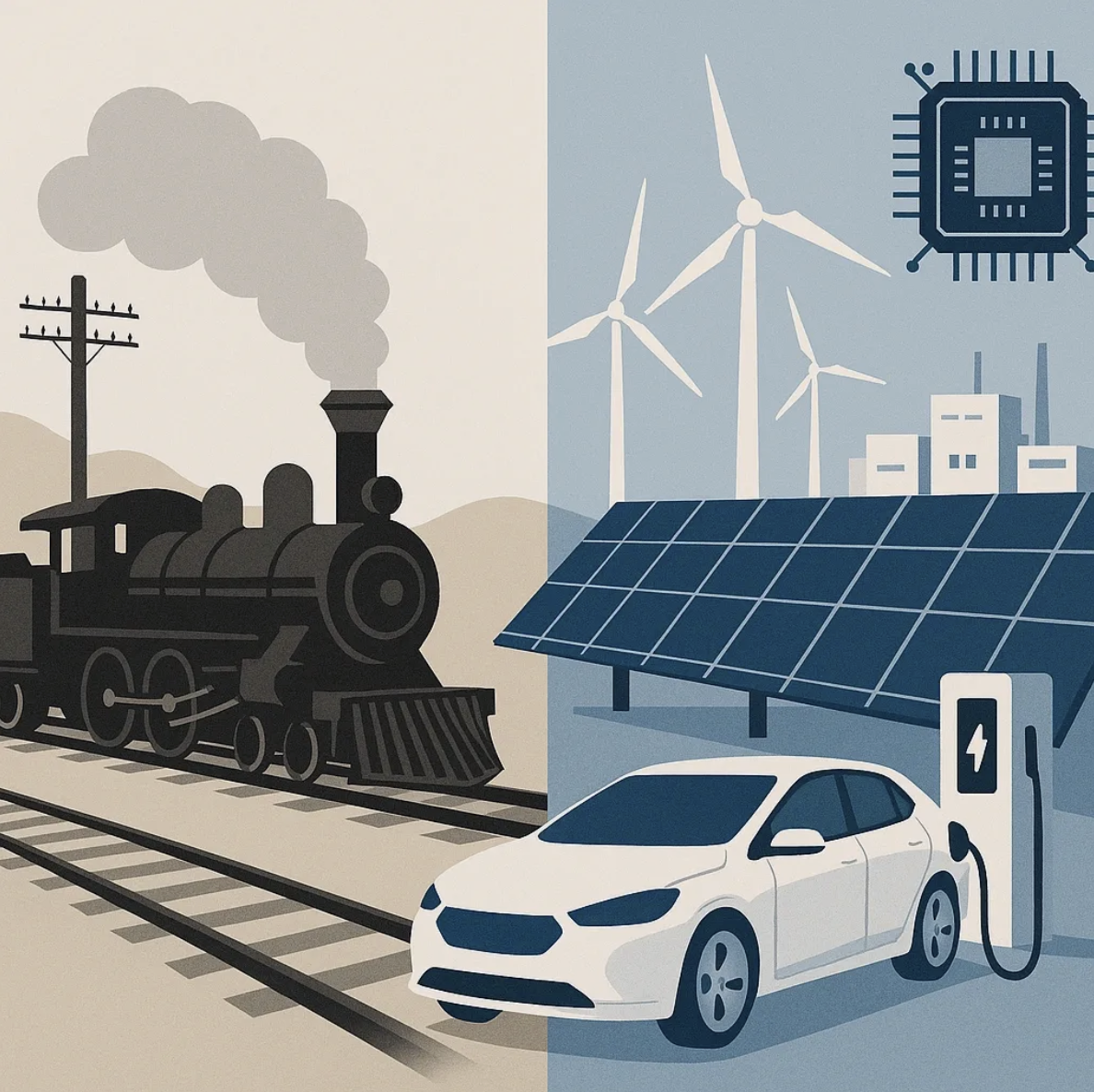
    Technological revolutions do not just introduce modern technology and business innovations. They reorganize the entire economic ecosystem. They accelerate flows of energy, materials, capital, and knowledge. Over the last three centuries, successive technological revolutions have increased global energy use by more than an order of magnitude. They hit fast, scale hard, and reorganize entire economies before institutions can catch their breath. Electricity, cars, and the internet all transformed daily life faster than governments could adapt. Technological revolutions destabilize the social order in ways that can lift nations—or break them. Understanding these dynamics is essential for any country navigating the next wave.

    Latin America and the Caribbean have lived through this pattern before—from the steam age to electrification to the digital wave—and each time the region has faced the same question: adapt early or absorb the shock later. 

    Today’s transition is larger and faster than any previous one. AI, clean energy, electrification, and digital‑physical integration are reshaping global markets, supply chains, and geopolitical power. Some estimate that AI adoption doubles every 6-12 months, that international clean energy investment will surpass 2 trillion in 2025, and that global EV production will continue to grow at 25-30% year-on-year. Countries that can manage these shifts will unlock new sources of productivity, industrial competitiveness, investment, and resilience; those that cannot face widening gaps, rising volatility, and growing social pressure.

    The challenge is simple to state but difficult to execute. Technological revolutions transform flows, institutions, and social orders far more quickly than societies can absorb them. The only actors with the mandate, scale, and legitimacy to guide these transitions are states. And the region’s future depends on whether governments can build the capabilities, coalitions, and long-term strategies needed to steer this wave rather than be swept aside by it.

    This blog distills the core lessons from past technological revolutions—what changes they drove, what drove them, and what states must do to turn disruption into development.

    Human ecosystems change faster than societies can absorb.

    Capital stocks and flows transform at breakneck speeds. Every technological revolution begins with a surge in flows—energy, materials, finance, and information. Between 1800 and 1910, global freight capacity increased by orders of magnitude as steamships and railways reshaped trade routes and volumes. These flows expand by orders of magnitude and shift their geographic centers. They create new capital stocks: railways, grids, ports, data networks, and industrial clusters that lock in development paths for decades. The speed of expansion often outpaces society’s ability to adapt, triggering bubbles, busts, fiscal pressure, infrastructure bottlenecks, and geopolitical competition as states and firms race to control the new flow architecture.

    Institutions struggle to keep up with the pace of change. Institutions designed for smaller, slower economies suddenly face volumes and velocities they were never built to manage. Institutional responses to major technological shifts often lag by a decade or more. Governments must reinvent planning, legal systems, financial architectures, education systems, procurement, and regulatory regimes to address new risks and coordinate larger markets. When adaptation lags, inequality spikes, political polarization intensifies, and governance systems enter crisis. Only four LAC countries: Chile, Brazil, Mexico, and Costa Rica, appear towards the top of the Global Innovation Index, reflecting persistent institutional gaps in science, technology, research, and development. 

    Social order becomes more volatile and turbulent. Mechanized industry in Europe triggered dozens of major riots and uprisings between 1811 and 1848. Technological revolutions reorder power. They disrupt labor markets, unsettle political coalitions, and challenge established elites. The result is turbulence: protest waves, backlash movements, and, at times, open conflict. Policy sequencing and transition management are critical to success. Wars, revolutions, and authoritarian turns often emerge when old orders resist change or when new groups demand inclusion. These cycles determine whether societies harness technological change or fall into militarization and rivalry.

    Variation, selection, and diffusion drive technological revolutions.

    Variation increases when knowledge flows, and innovative ideas flourish. For example, the number of scientific publications has doubled every decade since 1950. Breakthroughs emerge when communication technologies, scientific institutions, and cultural norms increase the generation and exchange of ideas. Variation spikes when experimentation becomes cheaper, literacy rises, and dense urban clusters intensify knowledge flows. These bursts of novelty create the raw material for new industries, infrastructures, and social models.

    Selection rewards technologies that reduce distance effects and complexity. Across all waves, winning technologies are those that reduce the cost of moving energy, people, goods, and information. Steam engines, railways, electricity, automobiles, microchips, and digital networks all share this trait. Steam engines cut transport costs by 90%; railways cut travel times by 95%; containerization reduced shipping costs by 50%. These changes enable the emergence of larger markets and more complex organizations. Industrial policy choices select successful firms, reinforced by capital flows, standards, and political decisions that privilege scalable, interoperable systems.

    Diffusion rates depend on institutions and social capacities. Technologies spread fastest where states and firms can mobilize capital, build complementary infrastructure, and train skilled labor. Diffusion is slow where hierarchies and elites resist change, institutions lack capacity, or social norms discourage experimentation. Countries with stronger institutions tend to adopt innovative technologies more rapidly than those with weak regulatory and financial systems. The speed and breadth of diffusion determine whether revolutions generate inclusive growth or deepen global divergence.

    States must guide technological revolutions.

    States need to build core infrastructures. Every successful technological revolution sits on foundational systems—transport, energy, communications, finance, and standards. In the United States, the federal government provided substantial support for early railway expansion and covered most of the cost of the interstate highway system. China’s state-led development model channeled several trillion dollars into energy and transport infrastructure between 2000 and 2020. These infrastructures reduce uncertainty, lower transaction costs, and enable large-scale investment. Private actors cannot build them alone. Public-private coordination and state support for long-term financing are crucial. Without state leadership, innovative technologies remain local curiosities rather than national or global systems.

    States need to manage social disruption and its causes and stabilize expectations. Technological revolutions create winners and losers. States must cushion shocks through education, social insurance, labor protections, and redistribution. Countries that invest in social protection during technological transitions tend to experience fewer episodes of political instability. Managing social disruption is particularly important in LAC, where up to half of the workers may be informal, making them highly vulnerable to technological displacement. Effective states prevent disruption from spiraling into unrest or authoritarianism by ensuring transitions are socially and politically sustainable. When states fail, societies fracture.

    States need to steer direction through long-term strategy and low volatility standards. In LAC, a small group of countries: Barbados, Chile, Colombia, Costa Rica, Uruguay, Brazil, Guyana, and Mexico have adopted national or sectoral strategies with multi-decadal horizons. States shape technological trajectories by setting standards, funding research, coordinating industrial policy, and negotiating international rules. As flows globalize, multilateral and regional institutions become essential for governing cross-border capital, data, energy, and materials. Strategic states use these tools to align revolutions with national priorities. Intra-LAC trade accounts for only 15% of total trade, compared with approximately 60% in the EU. External forces shape weak states, not the other way around. 

    Conclusion

    Technological revolutions are not just periods of technological and business innovation. They are system-level reorganizations of how societies produce, govern, and live. They determine who grows, who falls behind, and who gets left out entirely. For LAC, the next wave is already underway. AI is reshaping production systems, and some suggest it could add up to US$15 trillion to the global economy by 2030. Still, without a deliberate strategy, LAC would capture only a small share of this value. Clean energy is redrawing the international map of competitiveness. Electrification is reshaping cities, transport, and industry. Deep electrification in the LAC region could reduce oil imports by tens of billions of dollars annually. Industrial competitiveness and fiscal stability are bound to this technological revolution. 

    The region has a choice. It can treat these shifts as external shocks and respond to them, thereby perpetuating the cycle of late adoption and limited gains. Or it can approach this moment as a strategic opportunity: to modernize institutions, mobilize investment, build productive capacity, and design transitions that are fair, stable, and aligned with national priorities. States will need to plan and coordinate across sectors to deliver the required investments. 

    History is clear. Countries that lead technological revolutions do so because their governments act early, decisively, and with a long view. They build the infrastructure on which markets depend. They manage disruption before it becomes a crisis. They set standards that shape industries. They negotiate internationally from a position of purpose rather than vulnerability.

    The next technological wave will reward ambition and punish hesitation. LAC can shape this transition—if its states choose to be at the forefront.

  • Variation Matters: Diversity Shapes Economies in Latin America

    Variation Matters: Diversity Shapes Economies in Latin America

    Variation and diversity define the world people experience every day. They are also the foundation of how economies evolve. Differences across people, firms, industries, and countries shape how quickly societies adapt, how they respond to shocks, and why policies succeed in one place but not another. Variation is central to productivity growth, innovation, competitiveness, job quality, fiscal stability, and resilience.

    Countries in Latin America and the Caribbean (LAC) start from vastly distinct positions. They have different resource endowments, geographies, and population sizes. Their industries vary in maturity, competitiveness, and technological depth. Some countries are large and complex, making coordination difficult. Others are small, or island states that face constraints on scale but can sometimes move more quickly. Across the region, policymakers and citizens are seeking ways to build on existing strengths, raise productivity, expand opportunities, and ensure that global shifts do not derail national development paths.

    This blog examines variation across people, firms, industries, and countries—and what it means for the evolution of LAC economies.

    Individual and Firm-to-Firm Variation

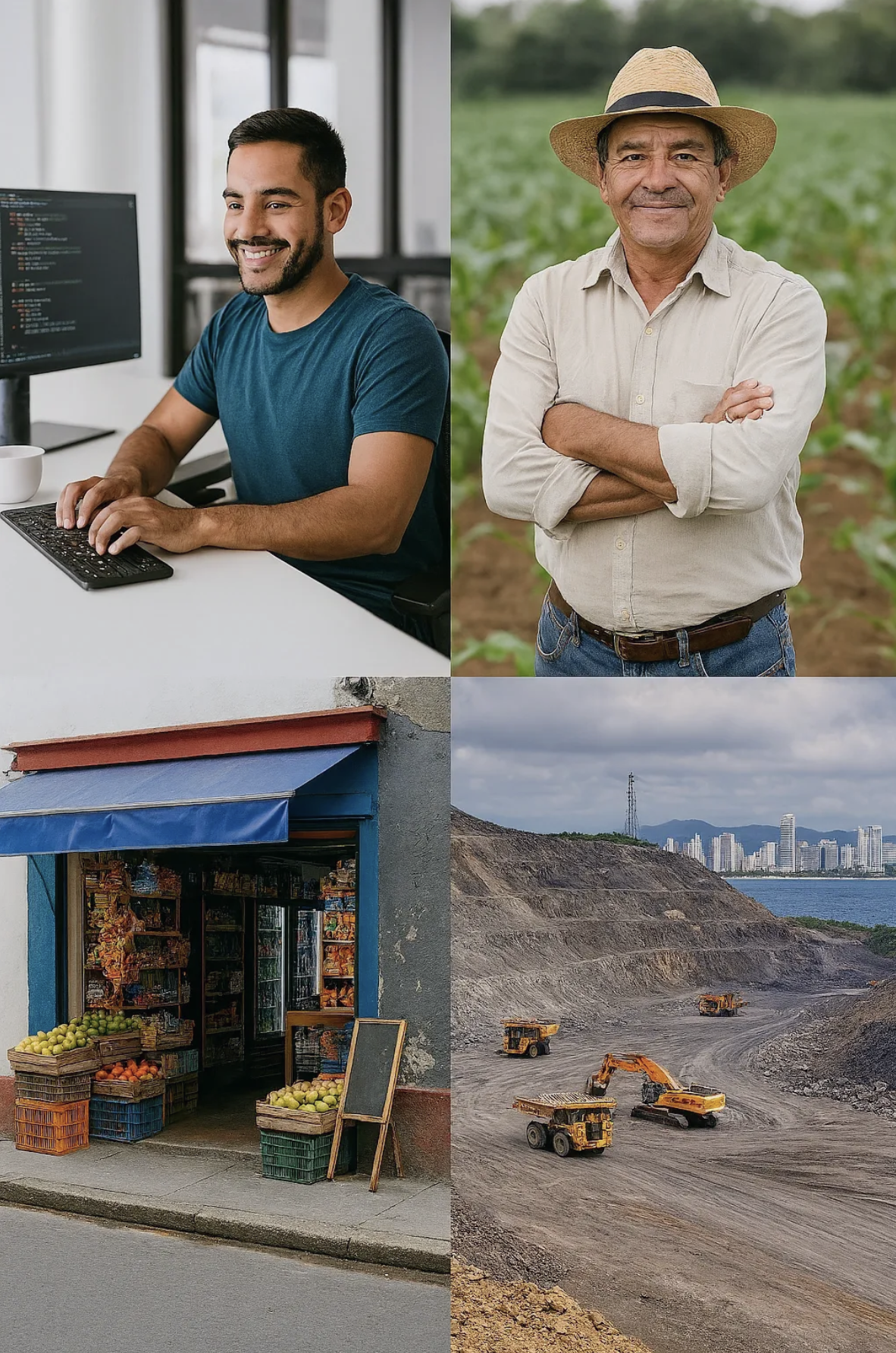
    People differ in skills, capacities, values, and behaviors. In LAC, this variation is visible in the contrast between software developers in Brazil and Mexico, agricultural workers in Guatemala and Haiti, and the millions of Venezuelan migrants who have brought new skills and practices to Colombia, Peru, Chile, and beyond. Indigenous communities across the Andes, Central America, and the Caribbean maintain distinct knowledge systems and cultural traditions that shape their engagement with markets, natural resources, and institutions.

    These differences influence labor markets, entrepreneurship, and innovation. Individuals bring diverse networks, learning capacities, and experiences. They make choices based on identity, opportunity, and constraints. This micro-level variation is the foundation of broader social and economic diversity.

    Firms are organizational expressions of this variation. They differ in strategy, capabilities, governance, and risk appetite. Tourism firms in the Dominican Republic and Barbados leverage global connections and economies of scale. At the same time, family-run guesthouses in Saint Lucia or Guyana compete through personalized service and niche positioning. Agribusiness leaders in Brazil, Argentina, and Paraguay use advanced technologies, logistics, and data systems, while smallholder farmers operate with limited capital and narrower risk tolerance.

    Firms also respond differently to shocks. During COVID-19, online delivery platforms in Colombia, Mexico, and Brazil expanded rapidly as consumer behavior shifted. In the Caribbean, where hurricanes are becoming more frequent and intense, construction firms and hotels are adopting more resilient building practices. Leadership plays a critical role in identifying new opportunities, mobilizing diverse teams, and selecting which innovations to scale.

    Industry-to-Industry Variation

    Industries are clusters of economic activity that share products, technologies, skills, institutions, and competitive dynamics. They vary widely across LAC.

    Some industries are highly concentrated. Water utilities in many Caribbean islands operate as natural monopolies. Telecommunications and aviation tend toward oligopoly, with a few major firms dominating national markets. By contrast, retail and informal commerce in Peru, Bolivia, and Guatemala are highly fragmented, with thousands of microenterprises competing on price and proximity.

    Industries also occupy various positions in global value chains. Mining in Chile and Peru, agriculture in Brazil and Argentina, and oil and gas in Trinidad and Tobago sit upstream, supplying raw materials to international markets. Downstream industries — such as retail, hospitality, and logistics — serve domestic and regional consumers.

    Capabilities vary as well. Brazil’s aerospace sector requires advanced engineering and strict safety certification. Operating the Panama Canal demands highly specialized maritime pilots and logistics managers. Fintech ecosystems in Brazil, Mexico, and Colombia innovate rapidly, supported by digital infrastructure and venture capital. Creative industries in Jamaica and Trinidad and Tobago thrive on experimentation and cultural expression.

    Institutional contexts differ across sectors. Aviation, energy, and infrastructure services operate under stringent safety and regulatory frameworks. Tourism depends heavily on service culture and reputation. Industries also face distinct levels of exposure to external shocks — from commodity price cycles to hurricanes, droughts, and global market shifts.

    State-to-State Variation

    LAC countries share specific broad characteristics, including Indigenous, African, and Hispanic cultural roots; high inequality; persistent informality; and rapid urbanization. The region includes several megacities — Mexico City, São Paulo, Buenos Aires, Lima, and Bogotá — as well as dozens of small island states in the Caribbean.

    Yet each country is distinct.

    Resource endowments vary widely. Brazil has vast agricultural lands. Chile, Peru, and Argentina have world-class mineral deposits. Caribbean islands have limited land but extensive marine resources. Exposure to natural hazards also differs: Dominica, for example, ranks among the world’s most disaster-prone countries due to hurricanes and storms, while Chile faces frequent earthquakes but has strong building codes.

    Geography shapes connectivity. Islands such as Jamaica and Trinidad and Tobago depend on ports and airports for all goods. Panama has leveraged its location to become a global logistics hub. Smaller states face diseconomies of scale — Saint Lucia and Grenada rely on regional partners for specialized health care and higher education.

    Cultural capital also varies. Uruguay consistently ranks among the region’s most trusted and institutionally stable societies. Countries with high emigration — such as El Salvador, Haiti, Jamaica, and the Dominican Republic — have large diasporas that influence remittances, labor markets, and political dynamics. Brazil and Mexico, with large populations, can sustain more diversified domestic markets.

    Governance approaches differ as well. Chile and Costa Rica have long traditions of planning and institutional continuity. Other countries face more frequent political turnover or shorter planning horizons. Smaller economies may be more vulnerable to elite capture but can also be more agile in adopting reforms. Barbados, for example, has moved quickly on climate resilience and fiscal stabilization. Regulatory capacity, legal system strength, and tolerance for experimentation vary across the region.

    Conclusion

    The story of Latin America and the Caribbean is one of diversity and opportunity. Variation across people, firms, industries, and countries is not a barrier to development — it is the foundation. When policymakers understand these differences, they can design strategies that match real capabilities, constraints, and opportunities. Development is most effective when solutions are country-driven, sector-specific, and grounded in local strengths.

    The region’s diversity is a strategic asset. Encouraging experimentation, investing in capabilities, and learning from what works can help countries adapt more quickly, compete more effectively, and improve people’s lives. By using variation as a source of advantage, LAC can shape a more resilient and prosperous future.