Tag: renewable-electricity

Focuses on the political economy and system impacts of renewable energy deployment.

  • Making Renewables Work: Brazil’s Transformation, 2010–2025

    Making Renewables Work: Brazil’s Transformation, 2010–2025

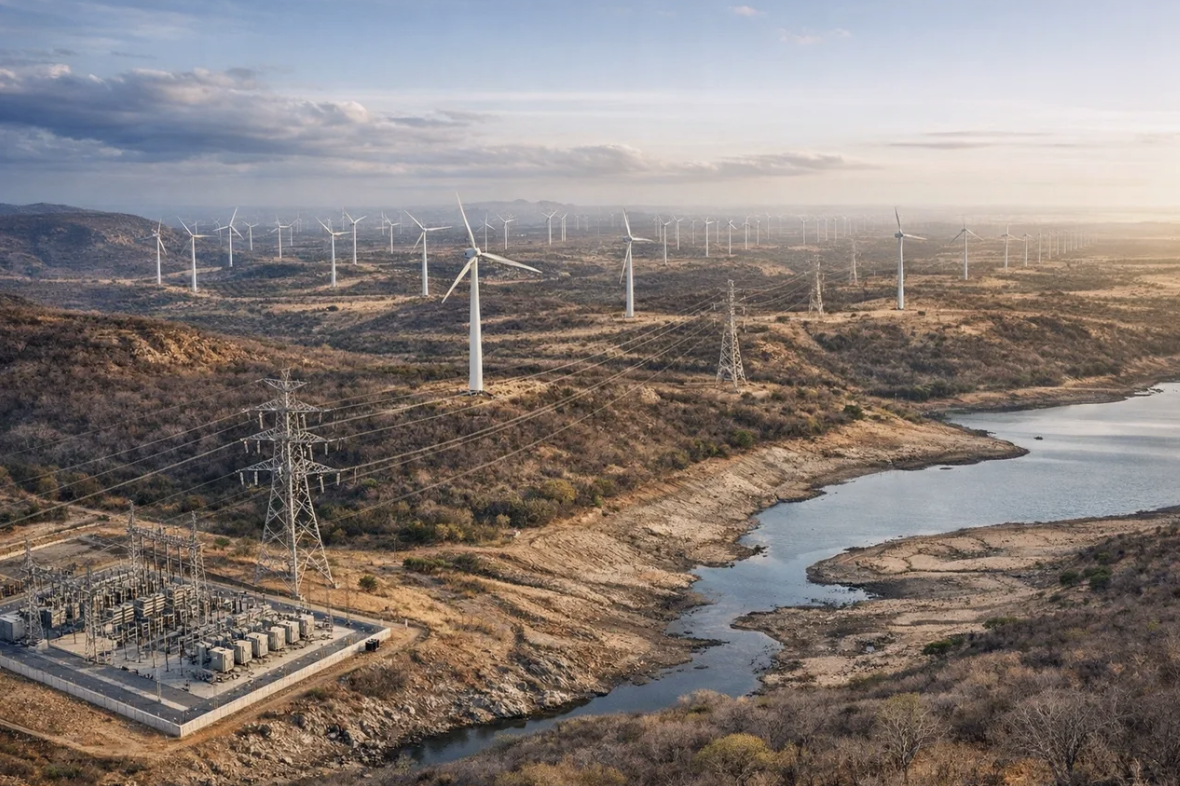
    Recent changes in Brazil’s power system provide a clear case study of rapid renewable-scale-up under real constraints, including droughts, high domestic interest rates, and land-use challenges. Between 2010 and 2025, Brazil added more than 30 GW of wind and tens of gigawatts of solar capacity, including distributed photovoltaics. Brazil fundamentally changed who produces electricity and how the grid operates. This case study shows how to lower prices through competitive procurement, mobilize capital through development finance, and build industrial capabilities. It also illustrates challenges—such as curtailment, licensing bottlenecks, and distributional conflicts—that can derail the transition process. 

    The region already has relatively clean energy matrices, and many countries are committed to expanding renewables—but lack the institutional and infrastructure capacity to make renewables reliable and socially legitimate. Brazil’s experience demonstrates the upside of market‑making and the downside of permitting processes and equity considerations lagging deployment. 

    Renewable energy plans should deliver four outcomes simultaneously: (1) low-cost supply, (2) drought resilience, (3) bankable investment contexts, and (4) credible social and environmental safeguards without depending on unsustainable fiscal subsidies. Renewable energy should be viewed as a systemic transformation, not just technology procurement. As such, changes to market rules, grids, financing, and governance are needed to enable wind and solar to scale without creating stranded assets or social conflicts. 

    This blog examines how the human ecosystem surrounding renewable energy has changed, what drove those changes, and what the state did to implement them. 

    Shifting assets, flows, and risks

    Capital stocks shifted from hydroelectric plants toward a more diverse portfolio, including wind, utility-scale solar, and mass-distributed solar. Wind capacity scaled from about 1 GW in 2010 to over 33 GW by 2025—leveraging the northeastern dry season to mitigate hydropower variability. Distributed solar expanded rapidly from less than 1 GW in 2018 to over 40 GW by 2025, with 3.7 million small-scale systems installed on homes and businesses. This diversification responded directly to drought-induced constraints on hydropower production, with wind and solar taking larger shares of the generation mix. 

    Capital flows shifted from state-centered lending and centralized dispatch toward blended finance for new market segments and more complex grid flows. Finance evolved from heavy reliance on BNDES toward de-risking strategies aimed at attracting institutional investors, including green debentures, with public finance playing a catalytic role. Electricity flows shifted as wind from the Northeast and solar from multiple regions fed the national system. Behind-the-meter generation helped address part of the supply challenge, but also created revenue‑model challenges for utilities. Knowledge deepened as firms adapted technologies to local conditions—for example, modifying wind turbines to match Brazilian wind regimes and turbulence. 

    Institutions co-evolved with these changes. New tensions emerged around land use for wind farms, electricity affordability, and the risks of boom‑and‑bust investment cycles. Brazil’s national energy regulator and energy planning agency institutionalized competitive electricity auctions, setting a benchmark across Latin America for transparent pricing and investor confidence. Social tensions were particularly acute where wind farms overlapped with traditional communities and required active management. The 2025 Ecological Transformation Plan highlighted the need for a just transition, emphasizing fairness and the impacts on communities, as well as the potential creation of 2 million jobs and a 0.8% increase in GDP. The drought and water crisis of 2021 accelerated diversification, while electricity bill increases of roughly 20% between 2021 and 2023 intensified pressure to reduce costs through renewables. 

    Crises, markets, and policy choices

    Brazilian energy policies deliberately encouraged experimentation across technologies and business models. Markets and crises then selected the most effective approaches, which diffused domestically and beyond Brazil. Policy generated diversity across technologies, ownership structures, and system solutions. Hybrid plants that combine wind, solar, and storage have emerged to address constrained transmission corridors in the Northeast. The free energy market expanded, enabling power‑purchase agreements that bypassed traditional utilities for large consumers. 

    Auctions and droughts pushed the system toward rewarding low-cost, complementary, and bankable projects in contrast to the fragility of large hydropower. Competitive auctions drove prices down until wind and solar outcompeted new thermal additions; by 2024, the levelized costs of new wind and solar were lower than maintaining expensive natural-gas-based backup capacity. The droughts of 2014 and 2021 forced systemic change, penalizing systems that lacked diversification or firm‑energy guarantees. Affordability became a primary driver as rising electricity bills increased pressure for lower-cost direct generation and diversified renewables. 

    Business models and generation systems that proved effective spread across Brazil and influenced regional peers. Brazil’s auction model informed procurement approaches in Colombia and Argentina. Infrastructure—particularly high‑voltage transmission lines—was critical to moving renewable energy from the North and Northeast to demand centers in the Southeast. Storage diffusion accelerated following regulatory advances beginning in 2023, aimed at managing the growing share of variable solar generation. 

    How the state made renewables bankable

    Brazil’s government acted not as a passive regulator but as a market‑maker and risk absorber. This approach focused on targeted state functions that unlocked private investment while maintaining reliability and social legitimacy. The state provided direction through long-term planning and institutional continuity, anchored in investments that outlasted political cycles. The 2025 Ecological Transformation Plan articulated this mission, projecting up to 2 million jobs and an average annual increase in GDP of 0.8% under full implementation scenarios. Planning entities and system operators prioritized reliability. The independence of the National Electric System Operator was critical in buffering political instability. The 2021 drought—the worst in roughly 90 years—severely depleted hydropower reservoirs, triggering emergency measures and reinforcing diversification as an energy‑security strategy.

    The state shaped market architecture through auctions, distributed‑generation legislation, bankability standards, and continuous adaptive management. Reverse auctions provided transparent price discovery and long-term contracts. Distributed generation legislation increased regulatory certainty and underpinned the rapid scaling of solar. The state also advanced green taxonomies and carbon‑market frameworks aligned with international standards. 

    The state mobilized capital for public investment and innovation ecosystems, but grid constraints became the binding bottleneck. BNDES concessional loans with local‑content requirements supported domestic wind‑manufacturing clusters. Transmission and interconnection emerged as strategic public goods, yet grid expansion lagged variable renewable deployment, contributing to curtailment. Eco‑Invest introduced mechanisms to hedge currency risk and reduce foreign‑exchange exposure for foreign investors. Public research and development supported agrivoltaics and floating solar on reservoirs, aiming to convert hydropower assets into hybrid generation hubs. 

    Three lessons from a big system transition

    Brazil’s 2010–2025 transition shows that renewable energy success rests on institutions—market rules, planning capacity, financial structures, and social safeguards—not just on installed capacity. The three key messages are:

    · Use auctions and clear contracting to drive costs down—but pair them with grid and permitting capacity, or curtailment and delays will destroy value.

    · Development finance can catalyze private investment and industrial learning, but over-reliance is fiscally risky—design a glide path toward capital‑market financing.

    · Social legitimacy is a system constraint: territorial rights, benefit sharing, and affordability must be embedded in market architecture, not treated as afterthoughts in licensing.

    Brazil demonstrated that a hydropower-heavy system can evolve into a diversified renewable powerhouse. The next step—for Brazil and the region—is to make the transition not only fast and low‑cost, but also grid‑secure, fiscally durable, and socially fair.
  • Chile’s Renewable Leap: What LAC Can Copy—and What to Fix

    Chile’s Renewable Leap: What LAC Can Copy—and What to Fix

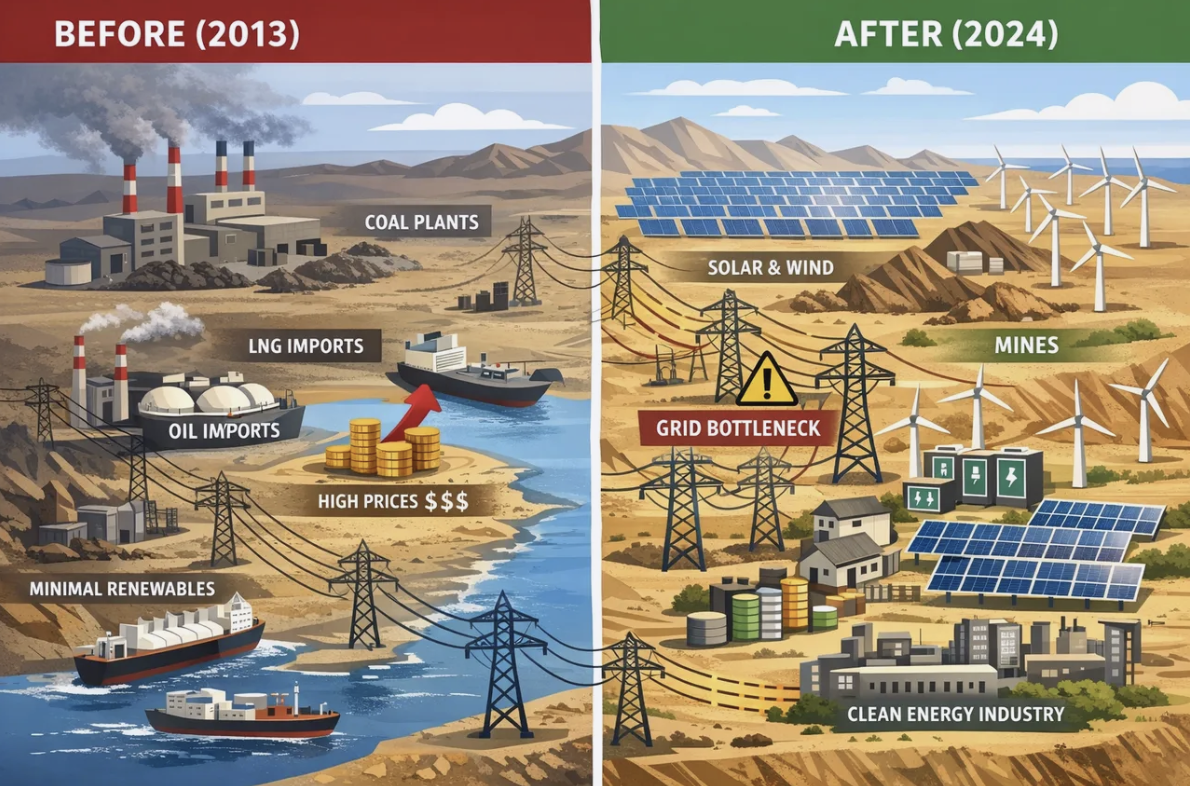
    Chile shows that clean power can be a competitiveness strategy—not just an environmental commitment. In one decade, the country moved from about 63% fossil-fuel generation in 2013 to a system in which renewables provided about 70% of electricity in 2024, with solar and wind accounting for roughly one-third of national generation. 

    The hard part was not “getting renewables built.” The hard part was building systems that scale—grids, flexibility, permitting capacity, and social license—fast enough that cheap renewable power becomes usable power, not curtailed power. Chile’s experience makes this visible: solar and wind curtailment reached about 6 TWh in 2024, a warning sign that infrastructure and governance can lag private investment. 

    Chile’s transition was engineered through market design and state capability. Competitive auctions and long-term contracts drove prices down—bids reached US$13/MWh in the 2021 supply auction, with an average awarded price of US$24/MWh—and mining demand served as an anchor buyer through corporate power purchase agreements (PPAs). Transmission reform and institutional upgrades were aimed at keeping the system reliable as renewables grew. 

    For LAC countries, the prize is clear: lower power costs, stronger export competitiveness, and a credible path to transformation—without triggering backlash from communities or destabilizing the grid. This blog highlights what changed in Chile, why it changed, and why renewables won, and what the state did to turn private capital into scale, and where it still needs to catch up. 

    What changed: assets, money, power flows, and institutions

    Natural capital – the Atacama Desert’s solar resources – was converted into installed solar photovoltaic (PV) capacity. Capacity grew from below 500 MW in 2014 to more than 13 GW in 2024. Wind capacity expanded from 1 GW to over 4 GW in the same period. Socio-economic capital deepened through investment and new industrial energy portfolios. By 2023, there was a pipeline of planned renewable investments that exceeded US$ 15B, mostly foreign direct investment in Atacama solar, transmission, and storage. Mining and energy firms built new, long-term portfolios of utility-scale PV, wind, and storage assets to address risks from imported fuel prices and stabilize energy supply. Chile shifted culturally and institutionally toward “green energy” and away from “energy scarcity.” 

    Energy flows were decarbonized—but also constrained by the grid. Chile reduced fossil-fuel import dependence. Fossil-fuel generation accounted for about 63% in 2013, and renewables reached about 70% by 2024. Yet the success of attracting finance for generation created congestion: renewable curtailment reached around 6 TWh in 2024, because low-cost supply outpaced transmission and grid flexibility. Finance shifted toward competitive pricing and new instruments. Chile attracted low-cost renewable energy finance and shifted from conventional project finance to green bonds and sustainability-linked lending. Auction design and long-term contracting led to dramatic price reductions—solar bids fell from more than US$100/MWh in 2013 to about US$13/MWh in 2021, reinforcing capital reallocation toward renewables. Knowledge flows accelerated through learning-by-doing and improvements in system operations—new capabilities formed in grid management, dispatch, and storage integration. By 2025, 1.7 GW of storage was operational or in testing, with more than 1 GW operational by mid-2025, deployed in part to mitigate curtailment challenges. Public-private partnerships (e.g., through Chile’s Economic Development Agency, CORFO) illustrate that Chile was not only importing technology but also adapting it to national and local operating conditions. 

    Market institutions were reorganized around auctions and corporate PPAs. Chile’s auction system and bilateral contracting (especially for large customers) became central in steering investment. Mining companies became major renewable buyers through corporate PPAs, turning industrial demand into an ‘anchor’ that reduced risk and accelerated scale. Technical institutions such as the Electricity Coordinator (CEN) and the National Energy Commission (CNE) strengthened planning and dispatch to modernize the energy system, but coordination gaps remained. The Energy Transition Law (2024) was intended to expedite the adoption of transmission and grid-forming technologies—an institutional response to system complexity. Social order shifted with new distributional tensions. While renewables improved air quality in coal-heavy regions and supported competitiveness through lower prices, the changes led to conflicts over land use, transmission corridors, consultation, and water governance—especially in the Atacama Desert. 

    Why things changed: experimentation → market selection → rapid scaling

    Chile’s transition began with competing pathways to energy self-sufficiency: coal expansion, liquefied natural gas imports, and renewables. Over the decade, the system tested utility-scale PV, onshore wind, and concentrated solar power with storage, such as Cerro Dominador, as well as small-scale distributed generation projects (500 kW–9 MW) under stabilized pricing regimes. Hybrid projects pairing renewables with 4-hour battery energy storage systems also emerged to address intermittency. Policy innovation produced ‘institutional variation.’ A key reform was the auction redesign (2014 onward), which allowed renewable providers to bid into specific time blocks, enabling solar to compete with 24/7 thermal generation on a more comparable product basis. Spatial variation mattered: Atacama’s resource strength attracted mass deployment but also highlighted the importance of siting, grid access, and social license, leading to uneven project outcomes across different regions. 

    Cost-based selection strongly favored solar and wind. Competitive auctions and corporate procurement revealed solar as the cheapest scalable option; coal and other thermal assets lost viability when solar prices dropped to around US$13/MWh in 2021. Environmental and political selection accelerated coal decline, including through coal phase-out agreements accompanied by just transition strategies for communities. By 2024, 11 plants, or about 1.2 GW of coal capacity, had been retired or converted, reflecting both the direction of climate policy and shifting economics. Industrial selection, especially from mining, is reinforcing the case for renewables. Large mining firms (e.g., Codelco and BHP) selected renewables to lower costs and meet emerging ‘green copper’ demand, making export competitiveness a direct selection pressure. 

    Technology diffusion was rapid: solar and wind spread from Atacama/northern corridors toward central Chile as capabilities and financing templates matured. Storage diffusion followed the pressures that arose from curtailment. Institutional diffusion also occurred: the ‘Chilean model’ of auctions has been studied and adapted by other LAC countries (e.g., Colombia) to de-risk renewable energy pipelines. Diffusion depended on enabling infrastructure. Major transmission projects, e.g., the 1,500 km Kimal–Lo Aguirre line, were considered public goods and designed to connect Atacama solar to central demand. Diffusion thus required both market signals and grid build-out. 

    What the state did: markets, grids, risk, and legitimacy

    Chile used long-horizon planning and policy to provide a ‘North Star’ for investors and agencies. Energy 2050 is a state policy designed to outlast political cycles, in line with the direction set by the Framework Law on Climate Change. The state’s coordination role was essential because the climate transition is cross-sectoral. Energy policy interacted with mining competitiveness, environmental justice, and territorial governance; government convening and planning capacity shaped the pace and credibility of the transition. Where coordination lagged—especially between generation growth and grid expansion—system costs rose through congestion and curtailment, underscoring the state’s responsibility for sequencing reforms and infrastructure. 

    Technology-neutral auctions rewarded the lowest cost and created transparent price signals. Auction reforms and time-block design enabled renewables to compete credibly and delivered price discovery that reoriented investment away from fossil options. Grid access and system rules evolved to support higher variable renewable penetration. Changes included stronger technical agencies (CEN and CNE), modernization of the national energy system, and reforms to allow non-discriminatory grid access and stabilized pricing for smaller developers. Environmental and social standards were both enabling and constraining. Chile worked to streamline permitting and develop standards (e.g., green hydrogen certification and environmental impact assessments). But uneven local impacts—water use, land conflict, and Indigenous consultation—show that standards and enforcement capacity must scale with deployment. 

    Transmission reform was a decisive state intervention. The 2016 transmission law enabled long-distance solar integration, and the state treated major projects (e.g., the US$2B Kimal–Lo Aguirre high-voltage direct current line) as public goods essential for the transition. Public risk absorption catalyzed early investments and first-of-a-kind projects. Blended finance and early risk-sharing, including through state instruments and development finance, e.g., the Cerro Pabellón geothermal project, reduced barriers until private finance scaled. Innovation ecosystems were actively fostered. CORFO supported research and development and concessional finance for first-of-a-kind green hydrogen facilities and public-private initiatives, building Chile’s capacity to deploy and partially adapt technologies rather than only import them. 

    The LAC takeaway: build systems that scale

    Three headlines from Chile’s decade:

    · Market design can unlock scale. Technology-neutral auctions and bankable long-term contracts made renewables investable and drove dramatic price discovery.

    · Competitiveness anchors transitions. Mining demand and corporate PPAs helped convert renewable potential into real investment and industrial advantage. 

    · Success creates new challenges. When grid expansion and flexibility lag, abundance becomes waste: solar and wind curtailment in 2024, demonstrating that the transition’s bottleneck shifts from “building MW” to “integrating MW.”

    For LAC policymakers, some key lessons include that well-designed auctions and contracts can reward low-cost generation and deliverability; investing early in transmission and grid system flexibility as public goods prevents the grid from becoming a constraint; and building permitting and consultation capacity so projects have social license at the pace needed for deployment – legitimacy is as critical as finance. 

    It is not just about building more renewables – but about building systems that value reliable renewables and make them politically durable.

  • The Playbook of Uruguay’s Energy Transition 2010–2024

    The Playbook of Uruguay’s Energy Transition 2010–2024

    In the early 2000s, Uruguay’s electricity system was exposed on two fronts: drought could collapse hydropower output, and the backstop was imported fossil energy, exactly when regional prices were high and regional supply could be uncertain. In severe years, Uruguay could spend as much as 2% of GDP on energy imports, turning weather into a macroeconomic event.

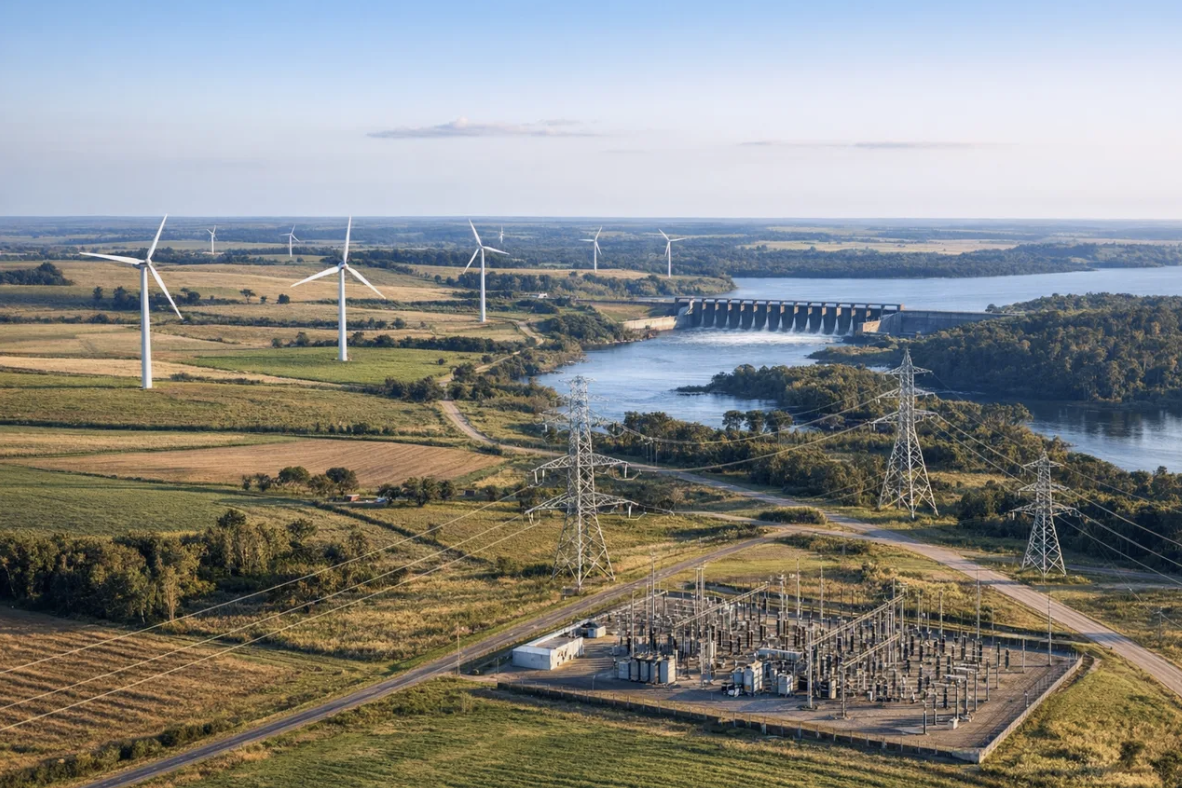
    Between 2010 and 2024, Uruguay rewired that vulnerability into a new asset base. By 2024, Uruguay generated 99% of its electricity from renewables (hydro: 42%, wind: 28%, biomass: 26%, solar: 3%, fossil: 1%). It exported 2,026 GWh of electricity—enough to treat surplus power as an economic opportunity rather than a reliability risk. 

    Uruguay’s story is best understood as two linked transitions. The First Energy Transition decarbonized the grid and strengthened the system’s ability to manage variable renewables; the Second Energy Transition shifts attention to what electricity alone cannot solve—especially transport, a sector Uruguay identifies as the largest source of energy-sector CO₂ emissions and the main frontier for further decarbonization. 

    For LAC policymakers and citizens, the transferable lesson is not “build wind.” It is how Uruguay reduced risk, redirected capital flows into domestic productive assets, and embedded learning capacity in institutions—while also managing the tradeoffs that come with long-term contracts, grid constraints, and the harder economics of decarbonizing fuels beyond the power sector. 

    This blog examines what changed in Uruguay, what drove those changes, and the role of the state in delivering change. 

    Changes in capital, institutions, and resilience

    Uruguay’s energy transition fundamentally restructured the country’s physical and financial capital stock. More than US $8 billion was invested since 2010—largely by private actors—into wind, biomass, solar, and associated grid infrastructure, replacing recurrent fossil-fuel import expenditures with long-lived domestic assets. Uruguay doubled its generation capacity in about 10 years through the renewable buildout. This shift transformed energy from a source of macroeconomic vulnerability into a stabilizing factor, reducing exposure to oil price volatility and enabling Uruguay to become a net electricity exporter in average hydrological years. In 2024, Uruguay exported 2,026 GWh of energy, worth about US $104 million. 

    Institutionally, the transition was enabled by a distinctive public–social order. Uruguay’s 1992 referendum rejected privatizing state enterprises and preserved UTE as a trusted public utility with control over transmission and distribution. The turnout was 82.8%, and the repeal was approved by 72.6%. This allowed the creation of a hybrid market: private firms invested in generation under competitive contracts, while the grid remained a public good, maintaining social legitimacy and energy sovereignty.

    At the level of social cycles, the transition decoupled economic growth from carbon emissions and hydrological risk. GDP expanded while power-sector emissions fell sharply, and drought years no longer triggered billion‑dollar fossil import shocks. Uruguay’s matrix remained at 92% renewables even during the 2023 drought, the lowest hydro year on record. A diversified renewable portfolio—hydro, wind, solar, and biomass—now acts as a systemic buffer, increasing the resilience of the human ecosystem against climate variability.

    Crisis, competition, and learning-by-doing

    Uruguay’s transition was catalyzed by path dependence and crisis. Lock-in to imported oil and unreliable regional gas made the pre‑2008 energy regime increasingly maladaptive. Required energy imports could cost the country up to 2% of GDP. The 2008 energy crisis functioned as a selection pressure, forcing policymakers to abandon incremental fixes and rapidly scale alternative technologies—particularly wind—that could form a new dominant regime. Uruguay used auctions for biomass, wind, and solar across different years as a deliberate regime shift. 

    Rather than betting on a single technology, Uruguay deliberately fostered technological variety. Competitive auctions and long-term contracts allowed evolutionary selection to favor the most cost-effective and system-compatible options. Over time, wind emerged as the cornerstone because of its strong complementarity with existing large-scale hydro, while biomass and solar filled additional niches. In 2021, Uruguay often ranked second globally, after Denmark, in terms of the share of variable renewables (solar and wind). 

    Crucially, the transition accumulated knowledge and hardware. Collaboration between the National Administration of Power Plants and Electric Transmission (UTE) and the Universidad de la República produced sophisticated system models using decades of climate data. This institutional learning allowed Uruguay to manage intermittency through system design and operations rather than premature investment in expensive storage, embedding intangible capital that increased the system’s adaptive capacity. Smart meter installation enhanced the digital grid and learning across the system, while hydro helped as storage. 

    De-risking markets, building grids, and enabling the transition

    The state played a central coordinating role. Uruguay XXI: Energy Policy 2005-2030 was approved in 2008 and ratified in 2010 through a multi‑party agreement. This plan anchored the energy transition as a State Policy rather than a Government Policy, ensuring continuity across administrations. This political durability lowered investors’ perceived risk and enabled planning horizons consistent with those of long-lived infrastructure assets. Importantly, consensus is critical to lock in future direction – but should not freeze adaptive management in the face of external changes; regulatory updates are part of the Uruguay model. 

    Market architecture was deliberately designed to de-risk private investment while retaining public control. Long-term power purchase agreements guaranteed that UTE would buy renewable electricity at fixed prices, creating a bankable environment for international financing. Importantly, benefits were redistributed by reducing residential tariffs by 30% in real terms. At the same time, regulation evolved continuously—adjusting dispatch rules, tariffs, load shifting and electrification incentives, and standards—to accommodate very high shares of variable renewable energy.

    In the Second Energy Transition, the state has again taken an active role through public investment and innovation platforms. Initiatives such as the Renewable Energy Innovation Fund (REIF) and the H2U Program are shaping new markets for electric mobility, green hydrogen, and e‑fuels. Rather than picking winners, the state is creating options: funding pilots, building enabling infrastructure, and developing regulatory frameworks that allow new sectors to emerge under managed risk. There are emerging global market risks associated with hydrogen investments that will need to be managed adaptively going forward. 

    Three transferable lessons—and the tradeoffs to plan for

    Uruguay’s 2010–2024 experience shows that rapid power-sector decarbonization is not a technology challenge—it is an institutional challenge. Uruguay paired auctions and long-term contracting with an institutional architecture capable of planning, operating, and updating rules for a high-renewables system, resulting in a grid that can remain overwhelmingly renewable even when hydrology is unfavorable. 

    But Uruguay’s success also clarifies the next problem for LAC: electricity is only part of the energy system. Even as the power grid becomes ultra-low carbon, the wider energy mix can remain exposed to imported fuels—Uruguay still has a large oil share in total energy supply in recent years, which is why the country frames the Second Transition around transport electrification, efficiency, and new fuels like green hydrogen and e-fuels. 

    Three practical takeaways travel well across the region. First, build political durability: Uruguay’s multi-year direction reduced the risk premium that kills long-horizon investment. Second, use a credible system orchestrator: a capable utility (public or private) must run procurement, grid upgrades, and dispatch rules as one coherent strategy. Third, invest in “soft infrastructure”—data, modeling, standards, and regulatory learning—because these are what make high shares of renewables stable and what enable the Second Transition to scale without chaos in charging, tariffs, and permitting. 

    Finally, plan for tradeoffs rather than hiding them. Long-term contracts can lock in costs; electrification can shift peak loads; and hydrogen can become a fiscal sink if it is subsidized before demand, certification, and infrastructure are ready. Uruguay’s approach to the Second Transition—pilots, blended finance platforms, and interinstitutional coordination—offers a template for creating options in the face of uncertainty rather than betting national budgets on a single outcome.