Tag: peru

  • Booms Without Transformation: Peru’s Guano and Chile’s Nitrates

    Booms Without Transformation: Peru’s Guano and Chile’s Nitrates

    Latin America has long been rich in natural resources, and for much of its history, those resources have been presented as a promise of progress. In the nineteenth century, Peru and Chile occupied a privileged position in the global economy because they controlled something the industrial world desperately needed: nitrogen. First through guano exported from Peruvian islands, and later through nitrates mined in the Atacama Desert, these countries became essential suppliers for global agriculture and warfare. Revenues were enormous, state budgets expanded rapidly, and foreign capital poured in. From the outside, it looked like development was inevitable.

    But prosperity based on extraction alone proved fragile. Despite decades of booming exports, neither Peru nor Chile used these resources to build diversified economies, strong technological capabilities, or inclusive social systems. Instead, wealth flowed outward through foreign firms, while states focused on collecting revenues rather than transforming production. When deposits were exhausted or global technology changed, fiscal crises, unemployment, and social instability followed. What had seemed like national success quickly became national vulnerability.

    This blog revisits the guano and nitrate booms not as distant historical curiosities, but as early warnings. By examining how these industries were organized—who controlled them, how labor was used, where profits went, and what institutions were built—we can better understand why extraordinary resource wealth failed to deliver long-term development. For today’s policymakers and citizens in Latin America and the Caribbean, these cases raise a critical question that remains unresolved: how can the region turn natural wealth into lasting economic and social capacity, rather than repeating cycles of boom and collapse?

    From Islands to Desert: The Rise of Latin America’s Nitrogen Economy

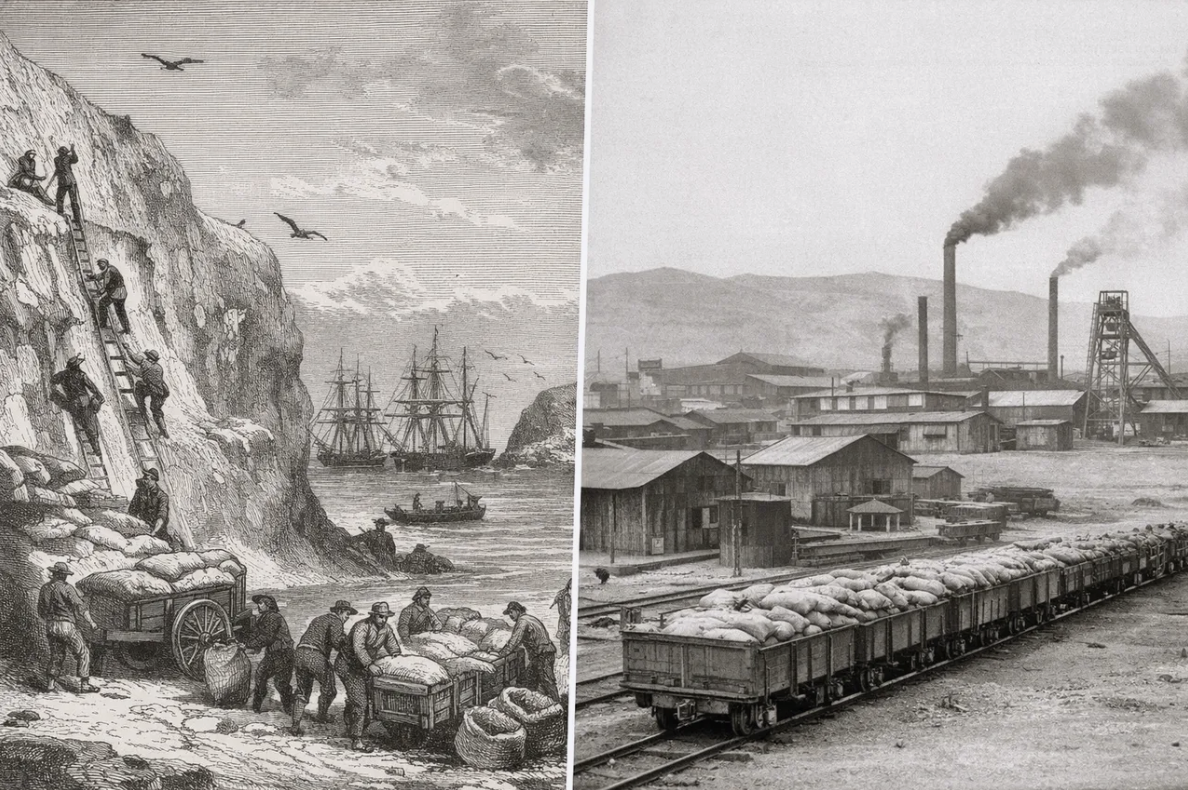
    Between the 1840s and 1860s, guano extracted from Peruvian coastal islands functioned as the dominant global source of industrial nitrogen fertilizer. Approximately 11–12 million tons were exported between 1840 and 1870, financing most Peruvian public expenditures during this period. The production system was based on rapid physical depletion rather than renewable management, leading to a collapse of the resource base beginning in the 1860s. Labor inputs were coercive and low-skilled, relying on convicts, indigenous laborers, and roughly 100,000 Chinese indentured workers operating under hazardous conditions. Exports were directed primarily to Europe and North America to support agricultural intensification during industrialization. British firms controlled shipping, marketing, and chemical validation, while Peru retained ownership through a state monopoly operating via consignment contracts. This structure maximized short-term fiscal revenue but produced minimal domestic spillovers in technology, skills, or institutional learning. 

    From the 1870s onward, sodium nitrate extracted from the Atacama Desert replaced guano as the primary nitrogen input for fertilizers and explosives. The underlying production model remained unchanged: dependence on a single export commodity, reliance on natural resource rents, dominance of foreign capital, and weak economic diversification. The War of the Pacific (1879–1883) reallocated control of nitrate reserves, with Chile annexing Peru’s Tarapacá region and Bolivia’s coastal territory, including Antofagasta. Following annexation, nitrate exports expanded rapidly, reaching approximately 2–3 million metric tons per year by 1910 and generating up to 60% of Chilean central government revenue. Extraction imposed high environmental costs, including land degradation and water depletion. Labor demand drove large-scale migration from Peru and Bolivia, with total employment reaching roughly 70,000 workers by the 1910s. Public and private investment focused on ports (notably Iquique and Pisagua) and railways connecting extraction zones to export terminals. 

    As with Argentina during the same period, British capital dominated ownership, finance, and trade logistics in Chile’s nitrate sector. A substantial share of profits was repatriated rather than reinvested domestically. Chile supplied up to 80% of global nitrate demand for European and U.S. markets. State capacity improved selectively, particularly in customs administration, export taxation, and regulatory oversight of nitrate shipments. However, institutional development remained narrowly focused on extraction. Labor protections were weak, investment in industrial diversification was minimal, and public support for technical or scientific education was limited. Mining towns operated as closed systems under company control, including housing, retail supply, and wage payment through company stores. Employment levels, fiscal revenues, and urban growth were therefore tightly coupled to nitrate price cycles, leaving the economy exposed to external shocks, including the post–World War I collapse following the introduction of synthetic nitrates. 

    The Forces Behind Expansion and Collapse

    Guano extraction exhibited limited technological variation due to its labor-intensive methods. In contrast, British-owned nitrate firms differed in size, processing approaches, logistics, and labor management. Firms adopted varying models for worker housing, compensation (cash wages versus company scrip), and transportation, particularly through railway integration. Most change occurred through expansion in the number of producing entities and consolidation rather than through innovation in extraction or processing technologies. 

    Global market selection mechanisms, institutional structures, and geopolitical pressures increased demand for nitrogen inputs as European agriculture and munitions production prioritized scale and cost efficiency. In the guano system, this favored low prices and high volumes. In Chile, export tax policy favored firms capable of sustaining high throughput. World War I temporarily increased demand for nitrates for munitions production. However, the commercialization of the Haber–Bosch process enabled synthetic nitrogen production at an industrial scale, rapidly eliminating the nitrate industry’s competitive advantage and market base.

    Profitable nitrate practices became institutionalized, but spillovers into domestic manufacturing, chemistry, or engineering education remained limited. Investment patterns reinforced specialization in raw-material extraction rather than in capability development. As a result, Chile became locked into a single‑commodity trajectory, increasing systemic vulnerability to technological substitution and demand shocks. 

    Fiscal Capacity Without Transformation

    The Peruvian state prioritized revenue generation over long-term development by maximizing guano rents without reinvesting in structural transformation. Revenues were centralized through a national monopoly and consignment system. Chile similarly relied on nitrate rents without articulating a diversification strategy or directing flows toward industrial upgrading. Neither state pursued value-added integration, such as linking nitrogen production to domestic agriculture, chemistry education, or human capital development. Fiscal capacity expanded, but political and social legitimacy eroded due to labor repression and visible inequality. 

    In Peru, state monopoly arrangements and exclusive contracts stabilized prices and volumes but constrained innovation. Public investment in railways and urban infrastructure supported extraction but not export diversification. Labor standards and resource stewardship received minimal attention. In Chile, export-oriented policy ensured stable property rights and predictable taxation for predominantly British capital. Significant public-private investment supported ports and railways servicing nitrate zones, but integration with the broader economy remained weak. Despite fiscal surpluses, funding for education, public health, and urban services remained limited. 

    The Peruvian state failed to account for depletion risk or the systemic vulnerability created by reliance on a single asset. Revenues were consumed or leveraged rather than saved or hedged. The resulting collapse triggered a fiscal crisis, sovereign default, and political instability, increasing Peru’s susceptibility to entering the War of the Pacific. Chile similarly underestimated fiscal dependence risks, consuming nitrate revenues without counter-cyclical planning. The collapse of the nitrate industry due to synthetic substitution led to mass unemployment, regional economic failure in Tarapacá and Antofagasta, and large-scale internal migration to Santiago and Valparaíso. The global economic collapse of 1929 amplified these effects. Unlike Peru, Chile used the crisis as a pivot toward state-led industrialization, expanded public ownership, and a strategic shift toward copper exports. 

    What Guano and Nitrates Still Teach Us

    The history of guano in Peru and nitrates in Chile shows that development does not come automatically from abundance. Both countries built highly effective systems to extract, tax, and export natural resources. Roads, ports, railways, and state institutions expanded rapidly. Yet these systems were designed to export raw materials rather than to strengthen domestic capabilities. Education, industrial diversification, and technological learning were treated as secondary concerns—until it was too late.

    When global conditions changed, the weaknesses became visible. Peru’s guano revenues collapsed with depletion, leaving the state financially fragile and politically unstable. Chile’s nitrate economy was destroyed not by exhaustion of the desert, but by a technological breakthrough abroad that made natural nitrates obsolete. Workers were displaced, entire regions declined, and public finances deteriorated. The difference between the two countries lies in their response: Chile eventually used the crisis as a turning point to pursue industrialization and new export sectors, while Peru lacked the institutional capacity to do so on the same scale.

    For Latin America and the Caribbean today, the lesson is not to reject natural resources, but to treat them with caution and strategy. Extractive industries can generate revenue, but without deliberate investment in people, technology, and diversification, they also generate dependency and risk. The guano islands and nitrate deserts remind us that the real challenge is not how much wealth a country extracts, but whether it uses that wealth to prepare for a future in which the boom will inevitably end. 
  • Peru’s Commodity Boom: Gains and Tensions

    Peru’s Commodity Boom: Gains and Tensions

    In 2013, Peru was one of the fastest-growing large economies in Latin America. National income had nearly doubled over the past decade. Poverty had fallen by half. The fiscal accounts were in surplus, and the central bank held reserves that most of the region envied. Yet, in the department of Cajamarca — home to Yanacocha, one of the largest gold mines in the world — the poverty rate was the highest in the country.

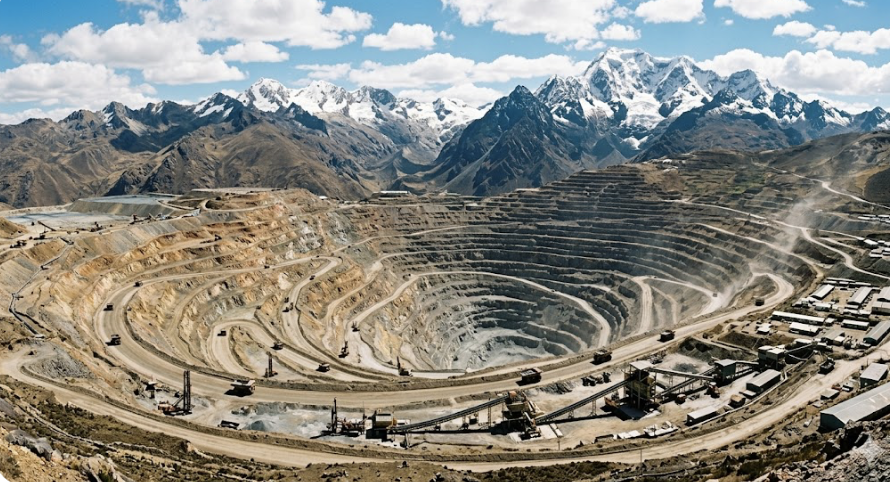
    That paradox is not a detail at the margins of Peru’s growth story. It is the center of it. Between 2003 and 2013, GDP per capita rose from roughly US$2,100 to nearly US$6,800, while national poverty fell from around half the population to roughly one quarter. Mining exports grew from under US$5 billion to more than US$25 billion, lifting mining’s share of total exports above 60 percent. Fiscal revenues from mining rose sharply, creating new resources for public spending and decentralization.

    The central policy implication of this period is that growth driven by extractives reshaped Peru’s economy faster than its institutions could adapt. The sections that follow examine how capital stocks, institutions, and social structures changed; how variation, selection, and diffusion shaped outcomes; and how the state steered, adjusted, and sometimes struggled to manage these dynamics. Together, these perspectives clarify why Peru achieved strong macro results but uneven territorial and social outcomes — and why the lessons matter urgently for the next commodity wave in lithium, copper, and other critical minerals now sweeping the region.

    Capital deepening reshaped institutions

    The most visible change was a rapid expansion of physical and financial capital linked to mining. Total mining investment rose from just over US$1 billion in the mid-2000s to more than US$8 billion by 2012, while exploration spending peaked above US$1 billion — ranking Peru first in Latin America and fourth globally. Foreign direct investment stock reached over US$22 billion by 2013, with mining absorbing the dominant share. Export revenues from copper, gold, and zinc increased more than fivefold, supported by both higher prices and rising volumes, particularly in copper. These flows were accompanied by expanded transport, port, and energy infrastructure connecting Andean mining zones to global markets.

    Running alongside the mining boom — and analytically distinct from it — was the Camisea natural gas project, the decade’s defining non-mining extractive investment. Camisea did not simply replicate the mineral dynamic. By substituting imported fuels and lowering domestic energy costs, it solved a structural input constraint: cheaper, more reliable gas reduced costs for industry and power generation across the economy. When Peru began exporting liquefied natural gas from 2010 onward, Camisea added a third major source of extractive income alongside copper and gold. The critical institutional choice, however, was made at inception: the 2003 royalty reductions offered to attract Camisea’s investors also locked in a gas pricing and offtake architecture oriented primarily toward export revenue. Trinidad and Tobago, facing an analogous choice, used its state gas company, NGC, as a monopsony buyer to price gas cheaply for domestic industrial users, seeding a world-scale petrochemicals cluster at Point Lisas. Peru’s architecture made a different bet — and a different developmental outcome followed. Like mining, Camisea also generated distributional and environmental conflict, particularly along pipeline corridors crossing Amazonian indigenous territories, reinforcing the broader governance challenge that ran through the entire boom period.

    Institutional change lagged capital accumulation but remained consequential. The mining legal framework established new obligations, including mine closure requirements and royalties, while decentralization laws redirected a large share of mining income taxes to regional and local governments. The Canon Minero mechanism dramatically increased subnational revenues from 2007 onward, multiplying transfers relative to the previous decade. New consultation rights for indigenous communities were enacted late in the period, reflecting rising conflict pressures. However, administrative capacity at subnational levels remained weak, limiting the effective use of transferred resources.

    Economic expansion altered Peru’s social structure unevenly. Labor gradually shifted from agriculture to services, construction, and mining, supporting the emergence of a larger urban middle class. National poverty declined rapidly, but outcomes diverged sharply across regions. Several mining-intensive regions continued to record high poverty rates despite large fiscal inflows. At the same time, social conflict around mining projects escalated, signaling tensions between national growth gains and local environmental and distributional concerns.

    Shocks and choices drove outcomes

    Variation during this period came primarily from new and expanded extractive projects rather than from broad-based industrial diversification. Large-scale copper and gold mines expanded capacity, and new projects entered production as prices rose. Mining technologies and operational practices diversified across sites, including lower-grade ore extraction made viable by global prices. Camisea introduced a separate variation track — gas-based petrochemical linkages at Pisco — and initiated a domestic gas distribution network, though neither reached the level of industrialization achieved in Trinidad and Tobago. Outside extractives, some non-traditional exports and services grew, but from relatively small bases. Policy experimentation also occurred through new social programs and decentralization mechanisms, introducing institutional diversity.

    Global commodity prices acted as the dominant selection mechanism. Rapid increases in copper, gold, and zinc prices determined which projects advanced and which sectors attracted capital. Peru’s open investment regime and fiscal stability reinforced this selection, channeling resources toward mining and related activities. The 2008–09 global crisis tested this model, briefly reducing growth before recovery confirmed the resilience of macroeconomic policies. Social conflict functioned as an additional selection pressure, delaying or halting projects that lacked local acceptance.

    Successful practices diffused unevenly — and the enclave pattern was structural, not incidental. Mining investment scaled rapidly as early projects demonstrated profitability and regulatory predictability. Fiscal and monetary discipline became entrenched across successive administrations, reinforcing macro stability. Revenue-sharing arrangements and social programs were institutionalized and expanded nationwide. But productivity gains and technological practices remained narrowly confined within extractive sectors. The mining and hydrocarbon complex was an enclave in the most precise sense: high in capital intensity, limited in direct job creation, and weakly linked to the domestic technology or manufacturing economy. This is the same structural outcome that characterized Trinidad and Tobago’s LNG industrialization and Venezuela’s oil boom of the mid-twentieth century: strong export revenues, weak productive spillover. Peru replicated the pattern in a new commodity and a new century.

    The state enabled growth, managed fallout

    The state provided clear direction through a stable macroeconomic and investment framework. Fiscal discipline, inflation targeting, and open trade policies reduced uncertainty and supported capital inflows. Mining-specific laws introduced royalties, closure obligations, and later profit-based taxation, shaping how rents were shared. Consultation requirements and environmental oversight expanded late in the period in response to conflict. The sequencing favored rapid investment and growth before governance mechanisms fully matured — the same sequencing that produced Peru’s central paradox: Cajamarca grew poorer as the mine above it grew richer.

    Public investment rose alongside private capital, financed in part by mining revenues. Infrastructure spending expanded in transport, energy, and urban services, while public–private partnerships mobilized additional resources. Canon Minero transfers provided unprecedented funding to subnational governments, intended to support local development. However, coordination challenges and limited project execution capacity constrained the developmental impact of these funds. Social programs scaled up nationally, cushioning poverty reduction but remaining largely separate from productive transformation strategies.

    The state demonstrated episodic adaptation rather than systematic learning. Mining tax reforms in 2011 adjusted the fiscal regime in response to political and social pressures. Consultation laws and ad hoc commissions responded to high-profile conflicts, signaling recognition of governance gaps. Yet conflicts persisted, and administrative weaknesses remained largely unresolved by 2013. The contrast with Chile is instructive. Chile built a three-layered fiscal buffer architecture — the Copper Stabilization Fund in 1987, a structural fiscal rule in 2001, and the Economic and Social Stabilization Fund in 2006 — before the super-cycle reached its peak. That architecture was constructed during periods of relative price normalcy, which gave it political legitimacy when the cycle turned. Peru managed a boom. Chile managed the cycle.

    Lesson: Growth can outpace institutions

    The strongest evidence shows that Peru’s 2003–2013 growth was rapid, externally driven, and fiscally transformative. Mining and hydrocarbon exports expanded dramatically, supporting macro stability and poverty reduction at the national level. Institutional frameworks enabled investment but adapted slowly to distributional and environmental pressures. Strong national performance developed alongside persistent local tensions and a structural enclave dynamic that transferred wealth upward and outward more readily than it built local productive capacity.

    A desirable future state builds on Peru’s demonstrated capacity for stability while closing the governance gaps the boom exposed. Effective management of resource revenues at subnational levels remains central to translating growth into local development. Stronger consultation, environmental enforcement, and administrative capacity would reduce conflict risks. Pre-positioning fiscal buffers before the next price peak — not during it — is the lesson Chile demonstrates and Peru did not fully implement.

    This evidence supports three immediate policy priorities for LAC policymakers as they face the next wave of commodities, including copper, lithium, and other critical minerals.

    First, build subnational institutional capacity before scaling revenue transfers. The Canon Minero experience is unambiguous: transferring fiscal resources to governments that lack the staff, systems, and accountability mechanisms to deploy them produces conflict, clientelism, and wasted capital — not development. The next wave of lithium and copper revenues will flow to subnational entities in Chile, Argentina, Peru, and Ecuador. The absorptive capacity question must be answered before the transfers arrive.

    Second, sequence investment frameworks with early attention to consultation and environmental governance. The projects that stall are not those with the worst deposits but those with the weakest social licenses. Delayed consultation and reactive environmental rules are not only governance failures — they are investment risks. The regulatory design choices made now for lithium in the Puna, copper in the Andes, and green hydrogen along southern coasts will determine project viability for decades. Third, treat gas, royalty, and local content architectures as industrial policy choices, not passive fiscal settings. Peru’s Camisea gas pricing decision in 2003 determined whether the country would receive export revenues or an industrial cluster. The same logic applies today: whether lithium is exported as raw brine or refined carbonate, whether copper concentrate is smelted domestically or shipped abroad, and whether green hydrogen is produced for export or anchors domestic industry are all structural choices that compound over decades. The window to make them is before investors commit capital, not after projects are running.