Tag: institutional-learning

Institutional learning is the process by which governments and organizations adapt rules, programs, and practices over time based on evidence, evaluation, and experience.

  • The Playbook of Uruguay’s Energy Transition 2010–2024

    The Playbook of Uruguay’s Energy Transition 2010–2024

    In the early 2000s, Uruguay’s electricity system was exposed on two fronts: drought could collapse hydropower output, and the backstop was imported fossil energy, exactly when regional prices were high and regional supply could be uncertain. In severe years, Uruguay could spend as much as 2% of GDP on energy imports, turning weather into a macroeconomic event.

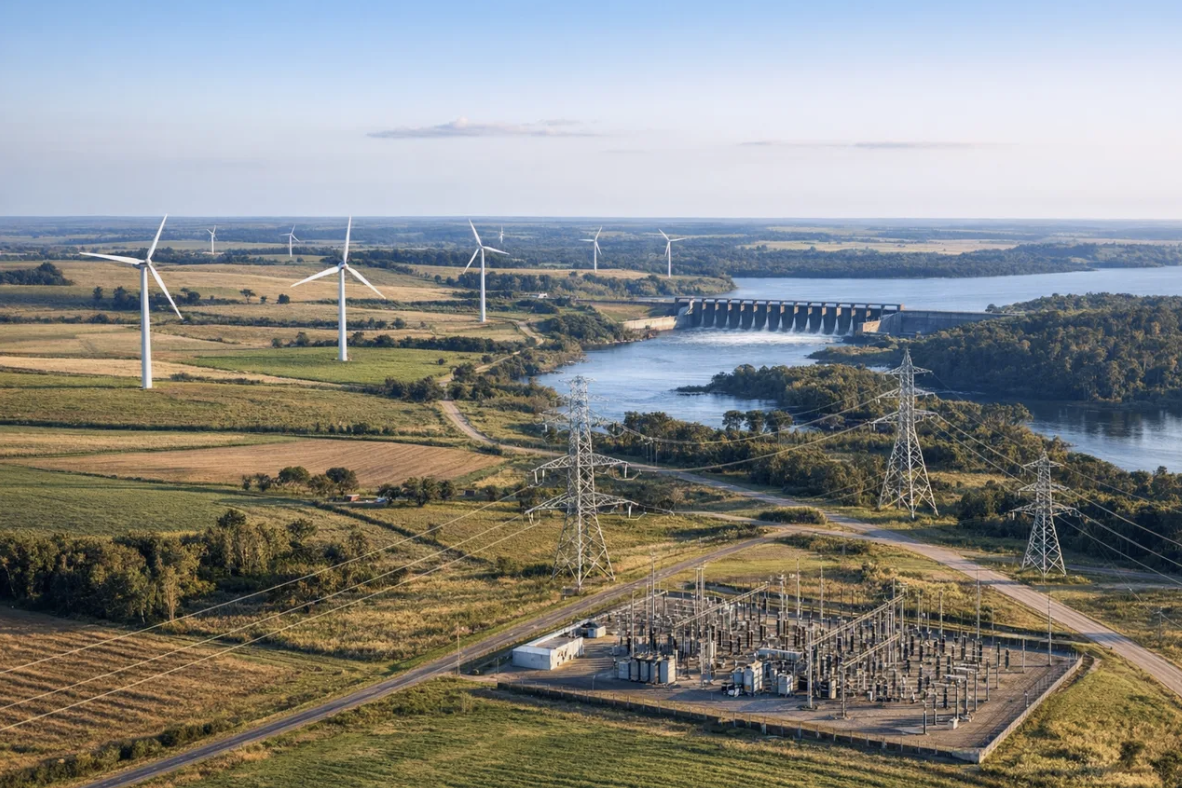
    Between 2010 and 2024, Uruguay rewired that vulnerability into a new asset base. By 2024, Uruguay generated 99% of its electricity from renewables (hydro: 42%, wind: 28%, biomass: 26%, solar: 3%, fossil: 1%). It exported 2,026 GWh of electricity—enough to treat surplus power as an economic opportunity rather than a reliability risk. 

    Uruguay’s story is best understood as two linked transitions. The First Energy Transition decarbonized the grid and strengthened the system’s ability to manage variable renewables; the Second Energy Transition shifts attention to what electricity alone cannot solve—especially transport, a sector Uruguay identifies as the largest source of energy-sector CO₂ emissions and the main frontier for further decarbonization. 

    For LAC policymakers and citizens, the transferable lesson is not “build wind.” It is how Uruguay reduced risk, redirected capital flows into domestic productive assets, and embedded learning capacity in institutions—while also managing the tradeoffs that come with long-term contracts, grid constraints, and the harder economics of decarbonizing fuels beyond the power sector. 

    This blog examines what changed in Uruguay, what drove those changes, and the role of the state in delivering change. 

    Changes in capital, institutions, and resilience

    Uruguay’s energy transition fundamentally restructured the country’s physical and financial capital stock. More than US $8 billion was invested since 2010—largely by private actors—into wind, biomass, solar, and associated grid infrastructure, replacing recurrent fossil-fuel import expenditures with long-lived domestic assets. Uruguay doubled its generation capacity in about 10 years through the renewable buildout. This shift transformed energy from a source of macroeconomic vulnerability into a stabilizing factor, reducing exposure to oil price volatility and enabling Uruguay to become a net electricity exporter in average hydrological years. In 2024, Uruguay exported 2,026 GWh of energy, worth about US $104 million. 

    Institutionally, the transition was enabled by a distinctive public–social order. Uruguay’s 1992 referendum rejected privatizing state enterprises and preserved UTE as a trusted public utility with control over transmission and distribution. The turnout was 82.8%, and the repeal was approved by 72.6%. This allowed the creation of a hybrid market: private firms invested in generation under competitive contracts, while the grid remained a public good, maintaining social legitimacy and energy sovereignty.

    At the level of social cycles, the transition decoupled economic growth from carbon emissions and hydrological risk. GDP expanded while power-sector emissions fell sharply, and drought years no longer triggered billion‑dollar fossil import shocks. Uruguay’s matrix remained at 92% renewables even during the 2023 drought, the lowest hydro year on record. A diversified renewable portfolio—hydro, wind, solar, and biomass—now acts as a systemic buffer, increasing the resilience of the human ecosystem against climate variability.

    Crisis, competition, and learning-by-doing

    Uruguay’s transition was catalyzed by path dependence and crisis. Lock-in to imported oil and unreliable regional gas made the pre‑2008 energy regime increasingly maladaptive. Required energy imports could cost the country up to 2% of GDP. The 2008 energy crisis functioned as a selection pressure, forcing policymakers to abandon incremental fixes and rapidly scale alternative technologies—particularly wind—that could form a new dominant regime. Uruguay used auctions for biomass, wind, and solar across different years as a deliberate regime shift. 

    Rather than betting on a single technology, Uruguay deliberately fostered technological variety. Competitive auctions and long-term contracts allowed evolutionary selection to favor the most cost-effective and system-compatible options. Over time, wind emerged as the cornerstone because of its strong complementarity with existing large-scale hydro, while biomass and solar filled additional niches. In 2021, Uruguay often ranked second globally, after Denmark, in terms of the share of variable renewables (solar and wind). 

    Crucially, the transition accumulated knowledge and hardware. Collaboration between the National Administration of Power Plants and Electric Transmission (UTE) and the Universidad de la República produced sophisticated system models using decades of climate data. This institutional learning allowed Uruguay to manage intermittency through system design and operations rather than premature investment in expensive storage, embedding intangible capital that increased the system’s adaptive capacity. Smart meter installation enhanced the digital grid and learning across the system, while hydro helped as storage. 

    De-risking markets, building grids, and enabling the transition

    The state played a central coordinating role. Uruguay XXI: Energy Policy 2005-2030 was approved in 2008 and ratified in 2010 through a multi‑party agreement. This plan anchored the energy transition as a State Policy rather than a Government Policy, ensuring continuity across administrations. This political durability lowered investors’ perceived risk and enabled planning horizons consistent with those of long-lived infrastructure assets. Importantly, consensus is critical to lock in future direction – but should not freeze adaptive management in the face of external changes; regulatory updates are part of the Uruguay model. 

    Market architecture was deliberately designed to de-risk private investment while retaining public control. Long-term power purchase agreements guaranteed that UTE would buy renewable electricity at fixed prices, creating a bankable environment for international financing. Importantly, benefits were redistributed by reducing residential tariffs by 30% in real terms. At the same time, regulation evolved continuously—adjusting dispatch rules, tariffs, load shifting and electrification incentives, and standards—to accommodate very high shares of variable renewable energy.

    In the Second Energy Transition, the state has again taken an active role through public investment and innovation platforms. Initiatives such as the Renewable Energy Innovation Fund (REIF) and the H2U Program are shaping new markets for electric mobility, green hydrogen, and e‑fuels. Rather than picking winners, the state is creating options: funding pilots, building enabling infrastructure, and developing regulatory frameworks that allow new sectors to emerge under managed risk. There are emerging global market risks associated with hydrogen investments that will need to be managed adaptively going forward. 

    Three transferable lessons—and the tradeoffs to plan for

    Uruguay’s 2010–2024 experience shows that rapid power-sector decarbonization is not a technology challenge—it is an institutional challenge. Uruguay paired auctions and long-term contracting with an institutional architecture capable of planning, operating, and updating rules for a high-renewables system, resulting in a grid that can remain overwhelmingly renewable even when hydrology is unfavorable. 

    But Uruguay’s success also clarifies the next problem for LAC: electricity is only part of the energy system. Even as the power grid becomes ultra-low carbon, the wider energy mix can remain exposed to imported fuels—Uruguay still has a large oil share in total energy supply in recent years, which is why the country frames the Second Transition around transport electrification, efficiency, and new fuels like green hydrogen and e-fuels. 

    Three practical takeaways travel well across the region. First, build political durability: Uruguay’s multi-year direction reduced the risk premium that kills long-horizon investment. Second, use a credible system orchestrator: a capable utility (public or private) must run procurement, grid upgrades, and dispatch rules as one coherent strategy. Third, invest in “soft infrastructure”—data, modeling, standards, and regulatory learning—because these are what make high shares of renewables stable and what enable the Second Transition to scale without chaos in charging, tariffs, and permitting. 

    Finally, plan for tradeoffs rather than hiding them. Long-term contracts can lock in costs; electrification can shift peak loads; and hydrogen can become a fiscal sink if it is subsidized before demand, certification, and infrastructure are ready. Uruguay’s approach to the Second Transition—pilots, blended finance platforms, and interinstitutional coordination—offers a template for creating options in the face of uncertainty rather than betting national budgets on a single outcome. 
  • Costa Rica (1950-2010): a Distinctive Development Trajectory.

    Costa Rica (1950-2010): a Distinctive Development Trajectory.

    In 1948, Costa Rica redirected the money it had been spending on its military into schools and hospitals. Emerging from a brief civil war in 1948, the country abolished its army, redirected public resources to schools, health, and infrastructure, and developed a policy mix that combined social inclusion with environmental protection. 

    Between 1950 and 2010, Costa Rica built one of the most distinctive development trajectories in Latin America. Life expectancy rose from the mid-50s in 1950 to around 79 years by 2010. Adult literacy increased from roughly 80–85% in 1970 to about 95% by 2010, while GDP per capita approximately tripled between 1960 and 2010. This 60-year period matters for today’s green transition because it shows how a small, middle-income country can reshape its institutions, firms, and social norms and rebuild natural capital.

    During these decades, Costa Rica moved from an economy based on coffee, bananas, and cattle to one increasingly driven by services, ecotourism, and higher-value manufacturing, while recovering forest cover and decarbonizing its power system. Forest cover initially declined to around 20–25% by the mid‑1980s and recovered to over 50% by 2010. Public agencies such as the Instituto Costarricense de Electricidad (ICE), the national parks system, and later forest and climate institutions played central roles in steering investment and learning. By 2010, protected areas covered about 28% of land, and renewables accounted for roughly 85% of electricity generation.

    This blog explores that story through three lenses: what changed, what drove those changes, and what the state did to make them possible.

    From frontier expansion to forest recovery

    From 1950 onward, Costa Rica expanded human capital while undertaking a rapid boom‑and‑then‑recovery in natural capital. The country showed significant gains in literacy, life expectancy, and access to public services. At the same time, it experienced rapid deforestation between 1960 and 1980, followed by one of the most effective examples of tropical forest recovery in the world. Costa Rica maintained stable democratic institutions and built strong public service and environmental stewardship norms. Inequality and informality persisted, and fiscal pressures grew, especially around the 1980s debt crisis. By 2010, electricity and water access were both close to universal, and the country had held uninterrupted competitive elections since 1950.

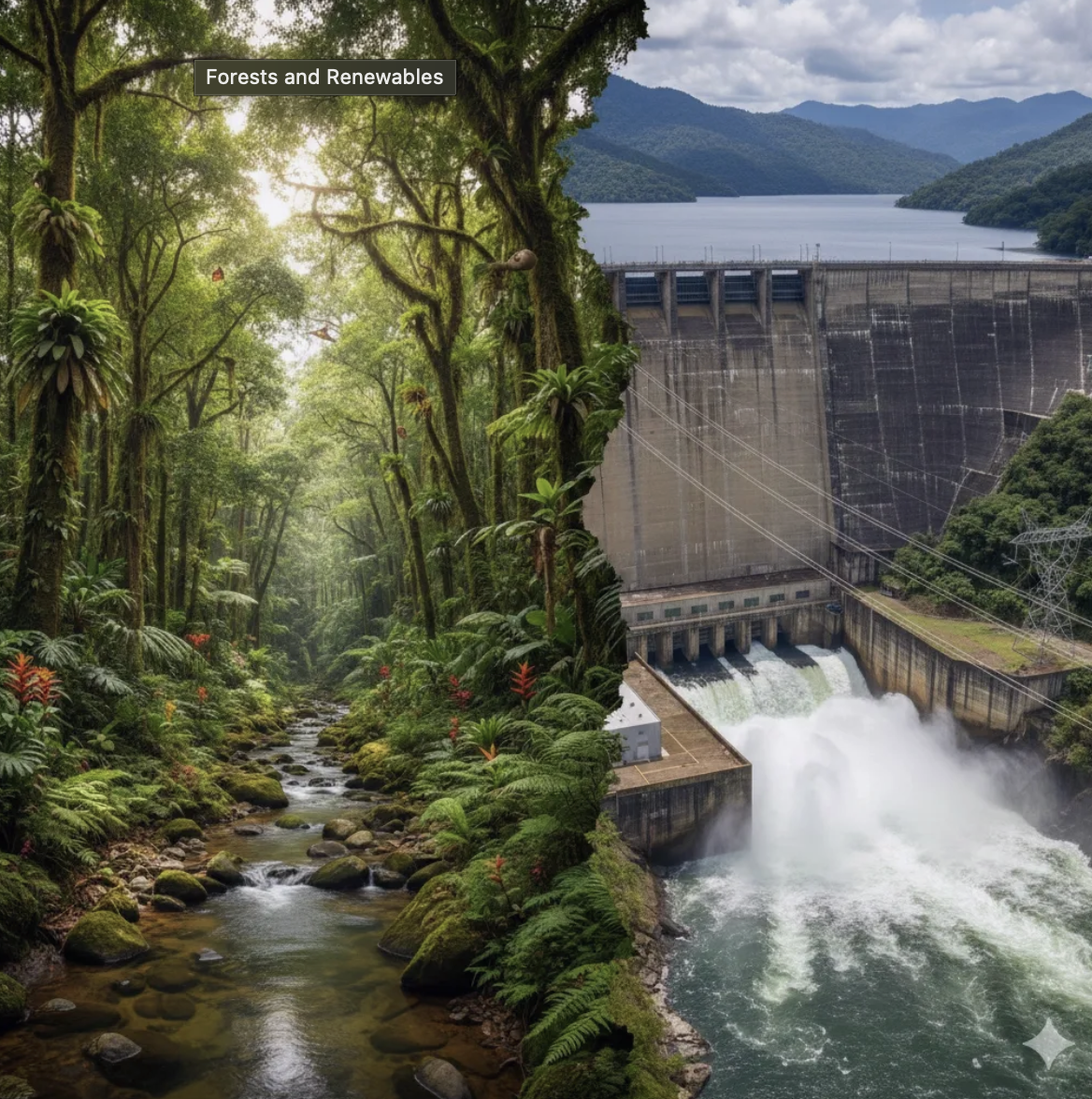
    After abolishing military spending in 1948, Costa Rica redirected resources to education, health, and electricity generation. In 1949, ICE began investing in large-scale hydropower, later expanding into geothermal and wind power, laying the foundation for the country’s renewable power base in 2010. 

    Rapid agricultural expansion and cattle ranching between 1960 and 1980 drove massive deforestation, but this was reversed by the creation of protected areas from the 1980s onwards and the establishment of payments‑for‑environmental‑services schemes in the mid‑1990s. By 2010, more than a quarter of the country was protected, and forest cover had substantially recovered – serving as a base for a booming ecotourism sector and repositioning tropical forests as productive environmental assets.

    The Intel plant established in Costa Rica in the 1990s was the clearest signal that the country’s decades of social investment had paid off in ways the original policymakers hadn’t anticipated. Intel chose Costa Rica over larger, cheaper neighbors not because of low wages but because of workforce quality, political stability, and — critically — the environmental reputation that made the country attractive to a company that needed to be seen operating responsibly. 

    The country underwent structural transformation, shifting from primary commodities to services, tourism, and high-value manufacturing and business services. The share of services in GDP was over 60% by 2010, and FDI inflows reached more than 5% of GDP in the 2000s. Much of this shift was supported by foreign direct investment in electronics and medical devices. Costa Rica has built comparatively high levels of trust in institutions and political stability compared to its regional peers. The 1980s crisis and some later reforms reintroduced new inequality and employment pressures.

    Variation, selection, and diffusion in Costa Rica

    Costa Rica’s transformation was not planned from the beginning. It was the outcome of a series of experiments, some of which worked and many of which didn’t, with the market, political coalitions, and periodic crises doing the selecting. The country established new public agencies, introduced new environmental regulations, and explored new export‑promotion regimes. The private sector initially responded through natural‑resource‑extraction enterprises, which later shifted to eco‑lodges and tech clusters. Domestic political coalitions favored certain strategies, which were reinforced by changes in commodity prices and cycles of foreign direct investment. Social and environmental policies were retained through various coalitions, while a focus on frontier agriculture and import substitution was abandoned. Hydropower electrification, protected areas, payments for environmental services, and export services diffused across territories and sectors through replication, learning, and deliberate Costa Rica branding. The connections among clean energy, ecotourism, and high-tech assembly plants were synergistic, accelerating adoption.

    The 1980s debt crisis hit Costa Rica hard. Real wages fell, imports dried up, and the import-substitution industrial model that had underpinned the previous decade’s growth became fiscally unsustainable almost overnight. The debt crisis drove structural adjustment, leading to the failure of fiscally unsustainable and protectionist approaches. Social and environmental programs remained, and politically supported models of human‑capital investment, ecotourism, and grid-scale renewables were reinforced. Low productivity and extensive cattle expansion became less attractive from both national policy and market perspectives.

    The Costa Rica model did not stay inside Costa Rica. Today, Central America as a region stands out globally for its terrestrial protected area coverage of around 30 percent — a figure that reflects decades of regional learning and policy diffusion, substantially inspired by the Costa Rican example. Costa Rica has also historically led the storyline of a renewable-dominated power system and has linked its green agenda and brand to tourism, foreign direct investment, marketing, and diplomacy. Renewable energy accounted for around 80% of electricity generation by 2010, rising to more than 95% by 2015. This narrative has been crucial in shaping expectations amongst citizens, firms, and investors.

    The state as mission setter, investor, and learner

    The Costa Rican state was neither a passive observer of this transformation nor an omniscient planner. It set broad missions, built institutions capable of pursuing them, and then learned from what worked and what didn’t over the course of six decades. Post-1950 governments defined broad goals for social services, territorial integration, and environmental conservation, and established semi-autonomous public enterprises and ministries to deliver them. Over six decades, the state invested in dams, transmission lines, and roads, expanded social protection, and created regulatory frameworks for water, forests, and electricity that favored a shift toward low-carbon, nature-based development.

    These efforts were pursued despite limited fiscal space, reliance on external finance, and persistent tensions between conservation, agriculture, and urban expansion. The transformation required coordination among sectoral ministries, including energy, environment, agriculture, and planning. 

    Costa Rica’s decision to integrate energy and environment into a single ministry is worth considering. In most countries, these portfolios sit in separate ministries with separate budgets and often conflicting mandates — energy agencies prioritize generation and grid expansion. In contrast, environmental agencies resist the infrastructure required. Putting both under one roof forced those conflicts into the open, where they could be resolved at the policy level rather than being paralyzed by bureaucratic turf wars. The result was an energy strategy that treated hydropower, geothermal, and wind not just as power sources but as components of a national environmental identity. That institutional design choice — deliberately creating productive tension rather than administrative separation — is one of the most transferable lessons in the Costa Rica story.

    The Costa Rican state has been particularly strong in learning and course‑correction in forest policy and environmental regulation. Symbolic early moves—the abolition of the army and the establishment of robust social security, healthcare, and education systems—set a long-term trajectory focused on developing people, not war, while decisions to create national parks and protected forests embedded natural capital into the national mission.

    The state also guided public investment and rulemaking toward a green‑growth model. Agencies such as ICE focused on renewable energy infrastructure, building technical capacity, and attracting investment to ensure high electricity access rates while producing clean energy. Rules in forestry, land use, and environmental‑impact assessment progressively restricted environmentally destructive practices while creating financial incentives for forest conservation and restoration through payments for environmental services that blended national and climate finance with carbon markets. For example, payments for the environmental services scheme were supported by a fuel tax, while an airport arrival fee partly supported the protected areas system.

    The state also experimented and learned, ensuring co-evolution between the state and the market. Different governments have experimented with policies such as payments‑for‑environmental‑services schemes, ecotourism development and promotion, and free‑trade zones to test approaches to mobilizing private capital with public steering. Some experiments were not fully inclusive or financially sustainable, but the state has progressively aligned development with environmental and human‑capital objectives.

    Lessons for Latin America’s green transition

    From 1950 to 2010, Costa Rica did not follow a linear pathway. It went through severe deforestation, debt crises, and distributional challenges. It remains a middle-income country with real development challenges. Yet over 60 years, it combined institutional stability, social investment, and environmental recovery in ways that altered its asset base and contributed to development. Electricity shifted from fossil fuels to renewables; the economy shifted from commodities to knowledge-intensive services, driven by strong human capital and environmental conservation.

    Three lessons stand out. First, green transitions are cumulative and path-dependent: Costa Rica’s renewable power system in 2010 was only possible because ICE started building hydropower dams in 1949, before anyone called it a green transition. Decisions made under one set of conditions create capabilities that enable entirely different decisions a generation later. Countries that want to lead the next technological wave need to start making foundational investments now. Second, state capability matters more than state size. What made ICE effective was not that it was public but that it was technically competent, financially autonomous, and given a clear long-term mandate that survived changes of government. Building that kind of institutional capacity takes decades and cannot be shortcut. Third, natural capital can be rebuilt faster than most models assume: Costa Rica’s forest transition occurred within 30 years of peak deforestation, suggesting that ecosystems are more resilient than standard development economics credits them with — provided the incentive structure changes and the political will holds.

    For policymakers and investors, the Costa Rica model suggests it is possible to anchor growth in human capital, services, and environmental assets through public utilities, protected‑area systems, payment incentives, and green branding to engage global markets and attract foreign direct investment. Costa Rica’s path cannot be copied. It is a small, unusually politically stable country with no oil wealth, and a foundational decision in 1948 that most countries will never take. But its logic can be borrowed: invest in people alongside infrastructure, price environmental destruction honestly, build public institutions that learn, and treat the natural environment as an economic asset rather than a constraint on growth. 

    The countries that will lead Latin America’s green transition are not those that try to replicate a model built on six decades of choices they didn’t make — they are those that find their own version of these commitments, starting with the decisions available to them today.