Tag: enclave-economy

An enclave economy is a development pattern in which capital‑intensive activities generate high export revenues but weak domestic linkages, limited employment, and little technology diffusion into the wider economy.

  • Guyana’s Oil Boom 2015 to Today: Fast Growth, Hard Choices

    Guyana’s Oil Boom 2015 to Today: Fast Growth, Hard Choices

    Guyana has moved quickly to put in place the core governance for its windfall — the Natural Resource Fund, a local content act, and a rapidly expanding public investment program — as production and revenues scale. The question now is whether these systems are performing well enough to govern a larger spending envelope and deliver results. The window for strengthening them is short because commitments are rising faster than institutions can mature.

    In Guyana, the period from the 2015 offshore discovery to today has produced one of the fastest economic transformations recorded in a small developing state. Recoverable reserves exceeding 11 billion barrels were rapidly converted into production, and nominal GDP rose from roughly USD 4.3 billion in 2015 to about USD 16.8 billion by 2023. After the first oil, real GDP growth surged during the base-effect years, often exceeding 40 percent annually; by 2024, growth remained extraordinary at 43.6 percent, and the IMF projected roughly 14 percent for 2025 as growth normalizes from explosive liftoff to fast expansion. Offshore output has also accelerated faster than earlier projections: after reaching about 616,000 barrels per day in 2024, production climbed to roughly 900,000 barrels per day by November 2025 following the start-up of Yellowtail (the fourth FPSO) in August 2025. Poverty and welfare outcomes, however, remain the defining political-economy test. Recent poverty measurement is publicly contested — with the government arguing poverty is below 20 percent and the IDB estimating 58 percent living below USD 6.85 per day — but all credible sources converge on the same core point: the distributional gap remains large, and converting macro growth into broad-based welfare improvements is the central challenge of the current mandate.

    The central policy question is whether Guyana’s institutions can keep up with its revenues. This analysis examines three dimensions of that question: what the Natural Resource Fund, local content rules, and capital-budget expansion have achieved — and where execution gaps remain; how the upstream contractual framework shaped the pace and structure of the boom; and what it will take for the state to translate growing revenues into durable services, diversification, and shared prosperity.

    Building institutions at pace

    Guyana is managing a historic-speed production ramp-up while building and stress-testing the institutions that must govern it. The risk is not neglect but implementation: spending and operational complexity are rising faster than oversight routines, procurement systems, and delivery capacity can fully keep pace.

    The scale of Guyana’s production ramp-up is without modern parallel for a state of this size. Offshore discoveries in the Stabroek Block — estimated at over 11 billion barrels of recoverable oil equivalent — were quickly converted from reserves into output, led by ExxonMobil as operator, alongside partners Hess Corporation and CNOOC. Production rose from zero in 2015 to about 400,000 barrels per day by 2022, reaching roughly 616,000 barrels per day by 2024. In August 2025, Yellowtail — the fourth FPSO — came online, and national production reached roughly 900,000 barrels per day by November 2025. The next wave is already scheduled: Uaru (fifth project) is expected in 2026, Whiptail in 2027, Hammerhead in 2029, and an additional project is under review. ExxonMobil now projects approximately 1.7 million barrels per day of production capacity by 2030 — a larger scale and arriving faster than earlier “late-2020s” projections implied. Petroleum has become the dominant driver of GDP, exports, and fiscal receipts, reshaping national economic aggregates faster than any domestic system — however capable — can fully adapt.

    The government moved quickly to build the institutional architecture needed to manage the boom. The Natural Resource Fund (NRF), established in 2019 and revised in 2021, created a formal framework for receiving, investing, and withdrawing oil revenues before they became material. The fund has also grown rapidly: it stood at roughly USD 3.1 billion at the end of 2024 and reached approximately USD 3.5 billion by early 2026. Notably, the IMF’s 2025 Article IV consultation explicitly commended Guyana’s rules-based management of the NRF — a useful counterpoint to the common worry that discipline weakens as fiscal space expands. The Local Content Act of 2021 mandated domestic participation across 40 categories of goods and services — an ambitious attempt to convert offshore wealth into domestic employment and business opportunities at speed. These are meaningful achievements. The practical constraint that follows from them is one of sequencing: institutions created while revenues are already flowing have less time for piloting and iterative refinement before they operate at a national scale. Rules and mandates can be solid on paper, while implementation capacity, oversight routines, and market readiness are still catching up.

    The social dimension of the boom has moved more slowly than the macroeconomy. Available evidence indicates persistently high poverty alongside rapid GDP growth, reinforcing perceptions that oil wealth is concentrated offshore and in coastal urban centers. These distributional concerns interact with real political pressures. The 2020 election integrity crisis — in which irregularities in the reporting of results were addressed through CARICOM and legal challenge — demonstrated that resource-era pressures test democratic institutions in specific and serious ways. That crisis was resolved, and Guyana’s institutions held. The lesson it leaves is that distributional expectations must be managed with demonstrable delivery: when citizens do not see the boom in their lives, political risk rises. Revenue debates are therefore becoming a central arena for accountability, and the government’s ability to show concrete results in health, education, and household welfare is directly linked to its political durability.

    The contractual framework and its consequences

    The 2016 Stabroek production-sharing agreement was negotiated when the block’s ultimate scale was unknown and deepwater frontier exploration carried genuine commercial risk. As production has far exceeded early projections, the policy priority has shifted: not renegotiation, but rigorous cost recovery oversight, disciplined fiscal management, and maximizing what the existing contractual framework can yield.

    The initial driver of change was technological and geological. Operators deployed advanced seismic imaging, subsea systems, and floating production technologies, unlocking high-quality, low-sulfur crude oil previously considered marginal. The emergence of FPSO-based development introduced a modular offshore operational model that differed sharply from Guyana’s historical economy of agriculture, mining, and forestry. In effect, deepwater technology created a viable petroleum export platform where none had previously existed.

    The contractual and market environment then rewarded speed and scale. Favorable production-sharing terms, high expected rents, and strong global investor appetite for low-cost, short-cycle projects created powerful incentives for rapid project sanctioning. Multiple FPSOs were approved in quick succession, enabling output to expand even amid global oil-price volatility. By 2022, oil production alone drove real GDP growth of 62.3 percent — the highest recorded globally that year. The contractual logic that produced this result also shapes the boundaries of near-term flexibility: approaches that would extend timelines, such as more stringent local-capability requirements or additional supply-side conditions, carry real execution risk and must be calibrated against delivery capacity.

    The gains from this model have diffused unevenly across the economy. Production capacity and offshore routines have scaled predictably, while the institutions that spread benefits onshore — public investment management, local supplier upgrading, and accountability mechanisms — require more deliberate support. Oil production is structurally enclave-prone: operators optimize for speed and tightly controlled supply chains, limiting automatic spillovers. Onshore gains therefore require deliberate channels: supplier development programs, skills pipelines aligned to industry demand, and local content rules that reward performance — quality, delivery, and learning — rather than participation alone. Cost recovery oversight is an immediate priority: rigorously scrutinizing recoverable costs is the fastest available lever to improve Guyana’s effective fiscal take under the existing agreement.

    Can the state keep up?

    The state has played a decisive and deliberate role in shaping this boom. Through project approvals and the acceptance of production-sharing terms, it created conditions that attracted large-scale investment while shifting exploration and price risk to private operators — a rational strategy given the risk environment of 2016. The result has been extraordinary production growth. The challenge now is that the same pace compresses the time available to test and refine the governance systems that channel revenues into public benefits. With capacity on track to reach roughly 1.7 million barrels per day by 2030, regulatory and fiscal institutions will need to operate at higher volumes, with faster project sequencing, and with rising contractual and operational complexity.

    Oil revenues have expanded fiscal space and enabled a surge in public investment: roads, energy infrastructure, health facilities, and schools. This is a serious coordination effort—public capital to lower costs for private activity and strengthen human-capital foundations. Whether it succeeds depends heavily on the quality of the implementation. Absorptive-capacity constraints — weak project appraisal, procurement bottlenecks, limited contract management capacity, thin monitoring and evaluation — can reduce value for money even when budgets are sound and intentions are clear. The gas-to-energy (gas-to-shore) project makes this risk concrete: first gas was originally expected by the end of 2024, slipped to 2025, and has since moved to mid-2026; reported costs rose from roughly USD 1.7 billion to USD 1.9 billion from a 2018 feasibility estimate of USD 478 million; and one contractor (CH4) left the partnership in July 2025. A second gas-to-shore project is already being advanced, underscoring how quickly the investment pipeline can compound. If these constraints are not addressed, the risk is not merely wasted money but hardened inequality: infrastructure that bypasses poor communities, contracts that flow to connected firms, and a gap between the headline story of prosperity and the lived experience of most Guyanese. The binding constraint may be implementation capacity rather than financing, especially as the investment pipeline continues to grow.

    Whether the state can keep up will depend on institutional learning and adaptive management. Local content rules and training initiatives have increased domestic participation, and local content employment has reached a meaningful scale: around 14,000 Guyanese are now directly employed in the oil and gas sector, with another 7,000 indirectly. The government is also revising the Local Content Act in 2025–2026 to raise targets and extend coverage beyond the oil sector. At the same time, much technical expertise remains foreign-supplied, and direct oil employment is structurally limited by the capital-intensive nature of production. The key transition is therefore from compliance-based local content to capability-based local content: using transparent registries, supplier-upgrading programs, and performance expectations that reward quality and learning. This requires feedback loops — routine measurement of what is working and what is not — so policies can be adjusted before lock-in makes correction costly. The IMF, World Bank, IDB, NRGI, and civil society are notably consistent on this point: the next phase is less about setting direction and more about iterating implementation capacity at speed.

    Five priorities for the next phase

    These five priorities are not equally urgent. Oversight and delivery capacity are the most time-sensitive: oversight shows whether systems are working, and delivery capacity determines whether spending produces results. Both become harder to build once spending has scaled and incentives have hardened. The remaining three priorities build on these foundations.

    Prioritize oversight of construction and transparent contracting while spending scales. The institutions that protect value for money — independent audit and fiscal oversight bodies, beneficial-ownership registries, transparent procurement, and cost recovery scrutiny — need to be fully operational before the investment pipeline doubles again. Oversight is not a governance formality; it is the mechanism through which the government can know whether its own programs are working. Without it, monitoring data is unreliable, course correction is guesswork, and the political cost of failures that could have been caught early falls on the administration that was too busy to look. Guyana has made progress here. The task is to make these systems fully operational in practice — staffed, funded, and empowered to act on what they find.

    Pace spending to what institutions can deliver. The central risk is not spending too little — it is spending faster than institutions can execute well. Roads abandoned halfway, hospitals built but not staffed, power plants commissioned without trained operators: these are the standard failures of oil booms, not hypotheticals. Before expanding the capital budget again, strengthen public investment management by ensuring rigorous project appraisal and prioritization, competitive procurement, construction supervision, and maintenance planning. Then direct spending toward education, health, and basic services — investments that raise productivity for decades regardless of oil prices. Absorptive capacity is not a bureaucratic detail; it is the binding constraint on whether the boom delivers lasting results.

    Make skills the engine of diversification — then remove the other obstacles. Diversification does not happen by hope or decree. It requires addressing specific, well-documented constraints: labor shortages and skill mismatches, unreliable infrastructure and power, and a business environment that discourages new entrants. Start with skills, because they take the longest and pay off most broadly. Fund teacher quality, expand STEM facilities, scale demand-linked training in engineering, construction trades, ICT, and energy systems, and develop the University of Guyana into an applied institution tied to national delivery priorities. Then work systematically through the infrastructure and regulatory constraints so that non-oil firms can grow, survive a price downturn, and eventually export.

    Protect fiscal space across the whole oil cycle. Chile’s copper story offers a relevant model: save more during boom years, avoid locking in recurrent spending commitments that cannot be sustained when prices fall, and maintain clear, predictable withdrawal rules for the Natural Resource Fund. Norway adds a complementary discipline: spend only real returns from the fund, not principal, so that revenues benefit future generations rather than being consumed in a single boom. Trinidad and Tobago’s experience is the most instructive cautionary case — geographically and institutionally closest to Guyana — where oil revenue crowded out the non-oil industry, diversification was deferred decade after decade, and the economy was left exposed when production declined. The key domestic risk is rent substitution: if oil revenues begin to replace rather than supplement tax revenue, the accountability relationship between government and citizens quietly erodes, and the non-oil fiscal base atrophies precisely when it will eventually be needed. Strengthen tax administration and broaden the non-oil base now, while the windfall provides the political space to do so.

    Turn Guyana’s climate position into a durable competitive advantage. Guyana’s Low Carbon Development Strategy — developed well before the oil boom — gives the country credibility in international climate forums that most petrostates cannot access. Combined with the world’s most intact tropical forest per capita, Guyana holds a genuine and rare claim to the carbon credit market. The task now is to make this fully operational rather than rhetorical: clarify the institutional home for LCDS implementation, scale forest-carbon revenue streams, and pair oil revenues with investments in reliable, low-carbon domestic power. Cheap, clean electricity is not only an environmental objective — it is the infrastructure precondition for data-intensive industries, manufacturing competitiveness, and the kinds of firms that can anchor a diversified economy. Oil finances the transition; the transition protects and extends what oil built.

    Guyana enters the next phase of its boom in a stronger institutional position than most oil states managed at this stage. The sovereign wealth fund exists. The local content framework exists. The investment program is underway. The framework is in place, but it needs to perform at the level the coming revenue volumes will demand. The decisions made in the next three years, on oversight, on spending discipline, on skills, and on fiscal structure, will determine whether this boom builds a resilient, diversified economy or leaves the familiar legacy of missed opportunity. Guyana has the tools. The task is execution.

  • Dominican Republic: economic booms can hide financial fragility

    Dominican Republic: economic booms can hide financial fragility

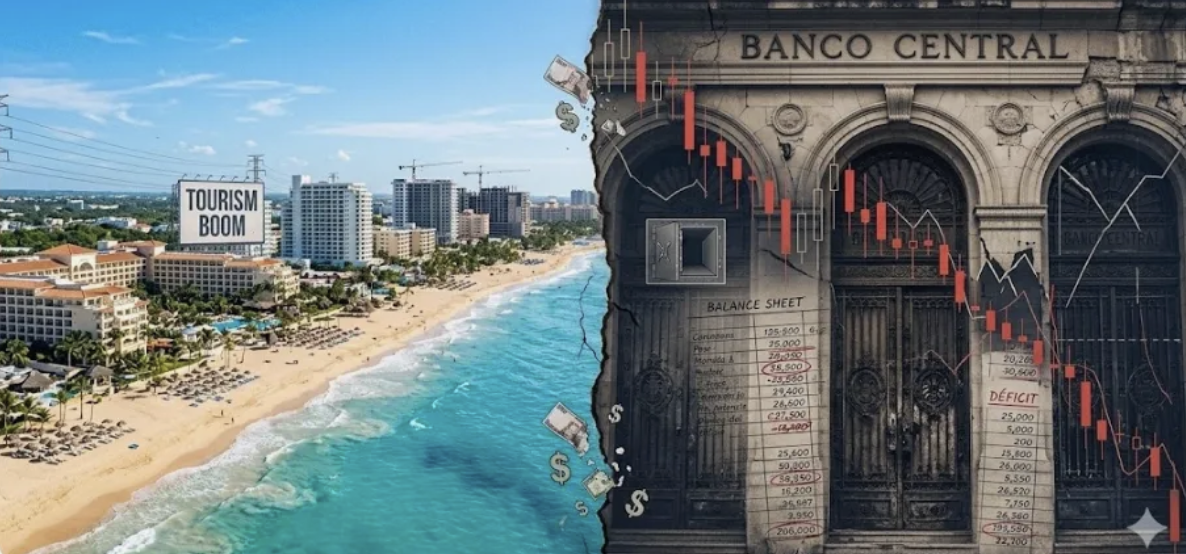
    In 2003, the Dominican Republic’s growth model collapsed, turning a boom into a national emergency. Three banks failed, depositors lost roughly US$2.2 billion, unemployment approached 20 percent, and the peso lost about half its value amid surging inflation. This was not a random accident: it was a sequencing failure—financial liberalization and fast credit growth ran ahead of the supervisory capacity needed to detect fraud, enforce prudential rules, and resolve weak institutions quickly. For today’s nearshoring and tourism agenda in Latin America and the Caribbean, the DR case matters because it shows how quickly headline growth can be erased when oversight is added after the fact.

    Between 1990 and 2005, the Dominican Republic shifted from protectionism toward outward‑oriented growth. By the mid‑1990s, trade liberalization had dismantled hundreds of import restrictions, unified the exchange rate, and opened all sectors to foreign investment. Export Processing Zones became the backbone of goods exports, accounting for more than four‑fifths of total exports by 2000, while tourism revenues more than doubled during the 1990s. By 2005, services employed over 60 percent of the workforce, and agricultural employment had fallen to just over one‑tenth—but the 2003 banking crisis showed how fragile these gains could be when oversight lagged market opening.

    Across Latin America and the Caribbean, nearshoring is reshaping where factories locate, and tourism is rebounding post‑pandemic—often faster than the institutions meant to regulate finance, utilities, and land use. The Dominican Republic’s 1990–2005 experience is a useful dress rehearsal: export processing zones and mass tourism delivered rapid growth, but the same investment push also heightened incentives for regulatory arbitrage and exposed supervisory gaps, connected lending, and hidden balance‑sheet risks. This post uses the 2003 banking crisis as the lens for interpreting the preceding boom—and for drawing lessons for today’s nearshoring and tourism agenda. It first shows how capital, institutions, and labor shifted as free zones and tourism scaled, then explains how incentive regimes and shocks reshaped what firms did and how dominant models spread, and finally shows where the state enabled scale while regulatory capacity fell behind.

    Capital and jobs shifted to exports and tourism

    Capital stocks and flows shifted decisively toward services, export manufacturing, and external finance. Physical capital expanded rapidly in tourism and export manufacturing, with hotel room stock rising from just over 7,000 in the mid-1980s to more than 45,000 by the late 1990s, and export processing parks increasing from a handful to more than 50 by the early 2000s. Foreign direct investment averaged around 4 percent of GDP, concentrated in tourism, telecommunications, and free zones. Financial inflows were complemented by growing remittance flows, which reached more than US$2 billion by 2004 and helped stabilize consumption during downturns. Human capital indicators improved in coverage, with gross primary and secondary enrollment rising by more than 40 percentage points between 1992 and 2002, even as average years of schooling among new labor market entrants remained low. Knowledge capital deepened mainly through imported routines and technologies embedded in multinational firms rather than domestic research, as national R&D spending remained negligible.

    Social institutions were reconfigured to support export orientation and private investment. New laws and agencies reshaped the institutional landscape, beginning with the creation of a comprehensive export processing regime that granted full tax exemptions to zone firms and defined a parallel customs framework. A decade‑long education plan doubled basic education spending and standardized curricula, expanding access even if quality gains lagged. Foreign investment legislation in the mid‑1990s eliminated restrictions on capital entry and repatriation, locking in openness across sectors. Partial privatization of state enterprises in energy and sugar shifted operational control to private partners while retaining public stakes. Financial regulation was modernized in 2002, but supervisory capacity proved insufficient to detect systemic fraud until the crisis struck.

    Social order and economic cycles were transformed through rapid sectoral reallocation and uneven distributional outcomes. Labor moved out of agriculture into services and export manufacturing, with agriculture’s employment share falling from roughly one‑quarter to just over one‑tenth between 1990 and 2005. Urbanization accelerated around tourism poles and industrial parks, reshaping regional economies and labor markets. Growth was rapid but uneven, with inequality remaining high and a significant share of the population living on low daily incomes even at the height of expansion. The 2003 banking crisis marked a sharp cyclical break, with unemployment nearing 20 percent and poverty rising as inflation spiked and the currency collapsed. By 2005, recovery restored growth but left lasting fiscal and social scars.

    Incentives and shocks chose winners as models scaled

    New export and tourism models took shape under incentive regimes. In plain terms, this section tracks which new business models emerged, which survived major shocks, and how the winners spread. Export Processing Zones introduced new organizational routines centered on offshore assembly for foreign markets, initially dominated by garments and light manufacturing. Firms experimented with production arrangements that split tasks across borders, gradually moving some operations toward higher‑value products such as medical devices. In tourism, foreign hotel chains standardized all‑inclusive resort models that integrated accommodation, food, and entertainment into a single routine. These experiments created a diverse set of production practices distinct from traditional agriculture and import substitution. Variation was largely driven by foreign firms responding to policy incentives rather than by domestic entrepreneurial discovery.

    Trade rules and shocks determined which sectors endured. Trade liberalization and export incentives removed anti‑export biases and selected for firms capable of competing internationally. Preferential access to foreign markets sheltered some activities, particularly apparel, until external conditions shifted. The expiration of global textile quotas in 2005 acted as a powerful selection shock, eliminating low-skilled garment producers and favoring more specialized manufacturing. The 2003 financial crisis functioned as a systemic selection event, forcing the exit of fraudulent banks and imposing new prudential standards on survivors. Together, these pressures determined which routines persisted and which were extinguished.

    Winning models spread through replication, rules, and training. Successful models spread geographically as industrial parks and tourism poles were replicated across regions. Vocational training institutions disseminated standardized production techniques from leading firms to the broader manufacturing base. Legal frameworks for foreign investment and free zones stabilized expectations and reduced policy uncertainty, embedding export orientation into the economic architecture. Tourism clusters achieved lock‑in through dedicated infrastructure and international marketing, reinforcing scale advantages. Diffusion favored breadth and speed over deep domestic integration, leaving enclave characteristics largely intact.

    Breaking the enclave is a design choice, not an automatic spillover. The DR experience suggests that zones and resorts will not deepen domestic linkages on their own: without explicit requirements and enabling institutions, investors optimize for speed, imported inputs, and tightly managed supply chains. Costa Rica offers partial evidence that governments can tilt incentives toward integration by tying benefits to skills pipelines and supplier development (for example, structured technical training partnerships, supplier certification support, and performance-based incentives that reward local procurement or technology transfer rather than simply granting blanket tax holidays). Honduras illustrates the opposite outcome: when zones expand under weak domestic capability and few linkage mandates, export jobs grow, but supplier networks and upgrading remain thin. For policymakers, the operational levers are concrete—attach time-bound incentives to measurable linkage targets, fund supplier-upgrading programs and standards labs that let local firms meet lead-firm requirements, and build training compacts that move workers into higher-skill tasks inside and beyond the zone.

    State incentives scaled growth, while oversight lagged

    The state provided direction and market rules that reshaped incentives and reduced policy uncertainty. Early reforms articulated a clear shift toward outward‑oriented growth through trade liberalization, exchange‑rate unification, and the removal of price controls. Export processing and tourism laws establish enforceable incentive regimes with clear eligibility and duration, providing investors with predictable conditions. Tariff simplification reduced dispersion and lowered maximum rates, reinforcing openness. These measures were sequenced to dismantle protection before scaling incentives, reshaping market signals across the economy. The direction was clear, even as oversight capacity lagged behind market expansion.

    Public investment and coordination mobilized private capital and concentrated growth spatially. State agencies identified and serviced priority tourism regions with basic infrastructure, enabling private hotel investment to scale rapidly. The government directly owned shares in industrial parks, lowering entry barriers for manufacturers while crowding in private operators. Partial privatization in energy and airports mobilized foreign capital and management expertise, though operational challenges persisted. During the crisis, the state absorbed massive financial losses to protect depositors, stabilizing the system at high fiscal cost. Coordination succeeded in mobilizing scale but struggled to manage risks.

    Institutional learning was reactive, shaped more by crisis than by systematic evaluation. The banking collapse forced a rapid overhaul of supervision, audits, and resolution frameworks, embedding new rules into law and practice. Fiscal policy shifted from generalized subsidies to targeted social assistance programs after 2003, improving the precision of social support. Program interruptions and restarts revealed the influence of political cycles on reform implementation. Learning occurred through failure rather than through continuous monitoring, with limited evidence of ex ante policy evaluation. Adaptation improved resilience but did not fully address underlying structural weaknesses.

    Export and services growth requires credible supervision and domestic linkages

    The strongest evidence shows that export processing and tourism can drive rapid growth when paired with credible liberalization. The Dominican Republic achieved one of the fastest growth episodes in the region by combining openness, incentives, and foreign investment. Structural change reallocated labor and capital toward higher‑productivity activities, transforming the economic base. Legal and institutional reforms locked in investor confidence and enabled scale. At the same time, weak financial oversight allowed systemic risks to accumulate.

    The desired future state is one where growth is matched by institutional depth and domestic integration. Sustained expansion requires financial systems that detect and deter risk before a crisis. Export and tourism regimes need stronger linkages to domestic suppliers and skills formation to deepen value creation. Social protection systems must adjust automatically to shocks rather than expand only after a crisis. Stability depends on aligning growth engines with institutional capacity.

    Policymakers should act on a focused set of priorities grounded in this experience. First, sequence market opening with supervisory strengthening, especially in finance and utilities, because in the DR, Banco InterContinental’s hidden, off‑balance‑sheet liabilities went undetected as auditors were captured and supervisory reporting was not routinely cross‑validated across institutions and payment systems. Second, redesign export and tourism incentives to reward domestic sourcing and skills upgrading—because free zones and all-inclusive resorts scaled quickly but retained enclave characteristics, with limited supplier linkages and spillover of learning occurring only where training institutions deliberately transmitted standardized techniques beyond lead firms. Third, invest early in monitoring systems that track systemic risk and distributional outcomes—because the 2003 break was preceded by rapid credit growth, connected lending, and widening balance‑sheet mismatches, while labor reallocation and crisis inflation translated quickly into unemployment and poverty; fourth, institutionalize policy evaluation to convert learning‑by‑failure into learning‑by‑design—because key upgrades in supervision and social protection came only after the crash, rather than through regular stress tests, independent reviews of incentive programs, and pre‑committed triggers for tightening rules when risk indicators flash red.

  • Trinidad & Tobago’s LNG Boom: 1998–2008

    Trinidad & Tobago’s LNG Boom: 1998–2008

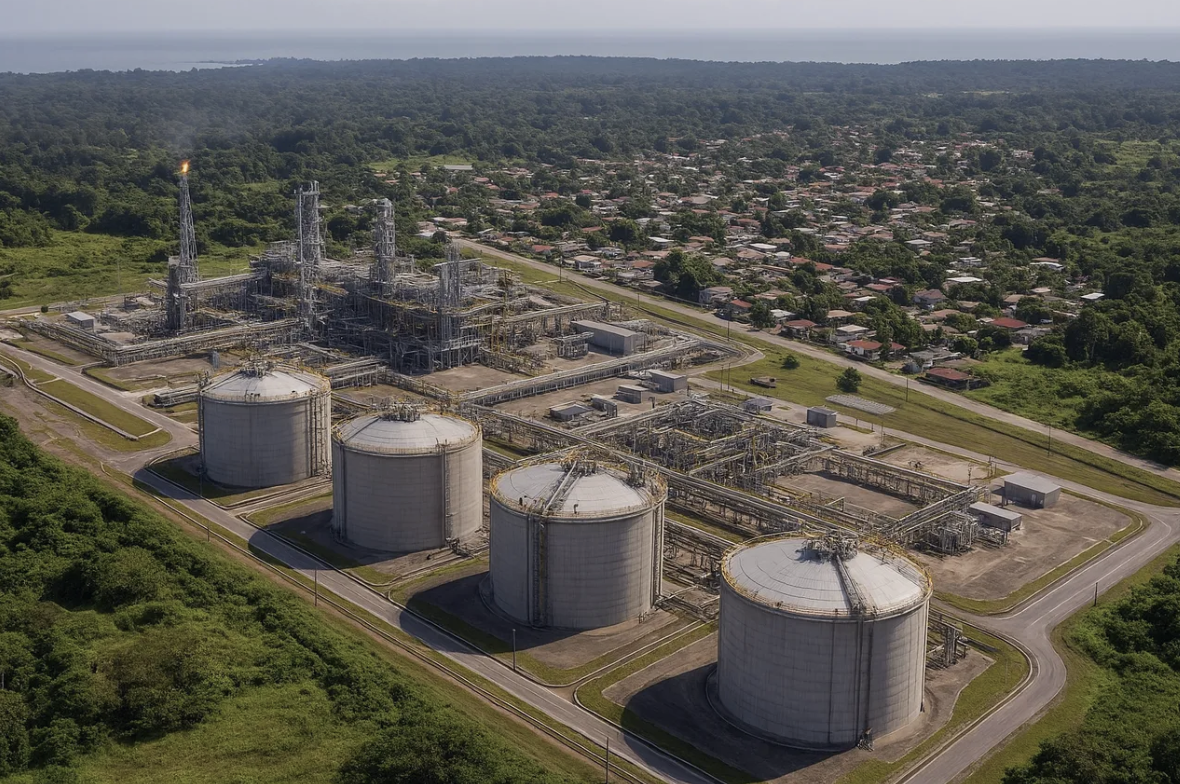
    Trinidad & Tobago transformed its development trajectory between 1998 and 2008 by converting an underused natural gas reserve into a globally competitive liquefied natural gas export platform. Over this decade, real per capita income rose sharply, and foreign investment reached historic levels as the Atlantic LNG complex expanded from a concept into four operating trains. This emergence as a major LNG exporter unlocked financing flows, attracted multinational partners, and reshaped national energy markets. At the same time, it introduced significant risks, including dependence on a narrow industrial base, exposure to global energy cycles, and limited diffusion of benefits into the broader economy. 

    This blog explains how the country’s human ecosystem changed during the boom, the evolutionary economic forces that drove the rapid transformation, and the state’s role in shaping institutions, rules, and investment sequencing. The purpose is to translate the Trinidad & Tobago experience into actionable insights for policymakers across Latin America and the Caribbean as they navigate their own transitions. 

    Economic and social transformation

    The human ecosystem changed fundamentally as natural capital was rapidly converted into financial and industrial capital. Offshore gas reserves that were largely stranded in the early 1990s led to the commissioning of four LNG production lines, or trains, between 1999 and 2005, with a cumulative investment of approximately US$3.6 billion. Gas utilization surged from ~550 million standard cubic feet per day in 1991 to ~3,760 million standard cubic feet per day by 2006, while methanol capacity expanded from 480,000 tons to 6.62 million tons and ammonia capacity from 2.17 million tons to over 5 million tons. These shifts generated major capital flows, with foreign direct investment stock reaching US$12.44 billion by 2007, and GDP per capita roughly quadrupled between the mid-1990s and mid-2000s. Social institutions evolved in parallel through the strengthening of the National Gas Company as the central aggregator and the consolidation of industrial estates at Point Lisas and Point Fortin. These governance structures created a specialized export-oriented social order focused almost exclusively on gas monetization. The social cycle also shifted into a pro-cyclical pattern, as surging LNG revenues after 1999 fueled rapid fiscal expansion and heightened vulnerability to price swings. By the mid-2000s, signals of rising reserve pressure and emerging competitors appeared, but the prevailing assumption remained continued expansion, based on discussions of additional trains and new downstream projects.

    Why LNG took off

    The country’s LNG expansion can be understood through the evolutionary dynamics of variation, selection, and diffusion. Variation emerged through multiple competing configurations for gas use, including LNG export, petrochemicals, power generation, and regional pipeline options. Within LNG itself, commercial structures varied across equity participation, tolling arrangements, and train scales, while successive trains adopted the Phillips Optimized Cascade process, enabling incremental technological learning and larger plant capacities. Selection pressures came from global demand signals in the United States and Europe, which favored Trinidad & Tobago’s reliable, cost-competitive gas supply underpinned by stable institutions. Domestic liberalization in the early 1990s and a clear gas-focused industrial policy further reinforced LNG as the dominant monetization pathway. As Train 1 succeeded, the rapid approval of Trains 2, 3, and 4 in 2000–2005 demonstrated institutional preference for scaling a proven model. Diffusion occurred through the construction of pipelines linking offshore fields to industrial nodes, long-term contracts with US and Spanish buyers in the first train, and the creation of revenue-management institutions such as the Heritage and Stabilisation Fund—these mechanisms locked in the LNG-petrochemical ecosystem, creating a durable path dependence in the industry. However, diffusion into non-energy sectors remained limited, and non-energy exports did not form a significant new cluster despite overall GDP growth.

    How the state shaped the gas economy

    The state acted as the strategic architect and market constructor by lifting the long-standing ban on gas exports, thereby enabling LNG development for the first time. It designated the National Gas Company as a quasi-monopsony buyer responsible for aggregating gas and selling it to downstream firms at administered prices, thereby helping establish competitive petrochemical production. It also developed a production‑sharing contract framework that defined how output and risks would be shared between investors and the state; this system was later recalibrated during the 2006 Petroleum Fiscal Review to improve rent capture. In parallel, the state undertook major public investments, including the 36-inch East Coast pipeline, the 56-inch Cross Island Pipeline, and industrial estate infrastructure under PLIPDECO. It also signaled willingness to absorb risk by taking equity in Train 1, which reassured private partners during the early phase. The state created revenue stabilization instruments such as the Interim Revenue Stabilisation Fund in 2000 and its successor, the Heritage and Stabilisation Fund in 2007, to buffer volatility. Despite these achievements, the state fell short in cultivating an indigenous innovation ecosystem. The industrialization-by-invitation model relied heavily on multinational expertise, limiting the development of deep domestic capabilities and contributing to the enclave character of the energy sector, which generated 80 percent of exports but only around 5 percent of jobs.

    Policy lessons from the LNG boom

    Three policy lessons stand out for resource-rich economies in Latin America and the Caribbean. First, credible rules matter more than state ownership: lifting restrictive bans, designing transparent contract frameworks, and ensuring predictable pricing can catalyze investment more effectively than insisting on large state equity shares. Second, infrastructure and institutional assets are the most durable legacies of a resource boom; pipeline networks, industrial estates, and competent energy agencies convert temporary natural capital into long-term socioeconomic value. Third, stabilization and diversification must begin early, before peak production. Stabilization funds need strict rules, and local content and skill-building mechanisms must be embedded from the outset to avoid the enclave dynamics observed in Trinidad & Tobago. The broader message is that successful industrialization requires not just capital and technology but deliberate institutional design to ensure that natural resource wealth produces sustainable, inclusive development. Policymakers today should apply these lessons to emerging opportunities in critical minerals and hydrocarbons, anticipating future vulnerabilities rather than responding to them after the fact. 

  • Peru’s Commodity Boom: Gains and Tensions

    Peru’s Commodity Boom: Gains and Tensions

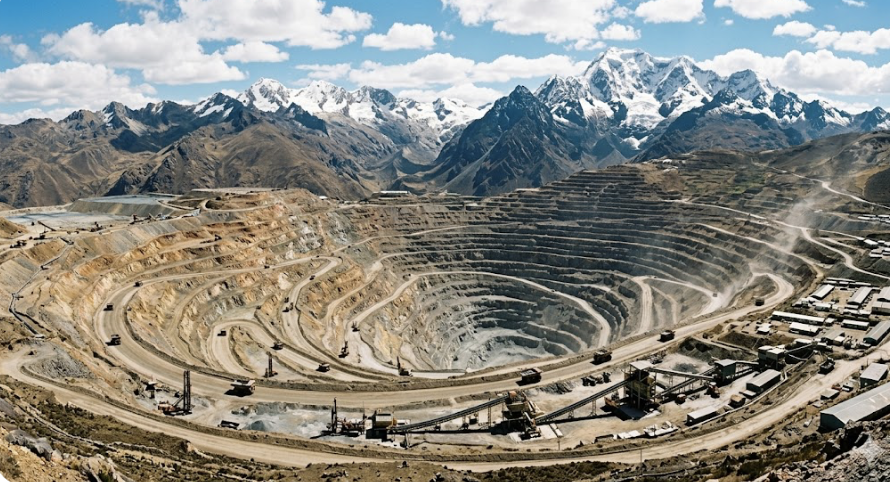
    In 2013, Peru was one of the fastest-growing large economies in Latin America. National income had nearly doubled over the past decade. Poverty had fallen by half. The fiscal accounts were in surplus, and the central bank held reserves that most of the region envied. Yet, in the department of Cajamarca — home to Yanacocha, one of the largest gold mines in the world — the poverty rate was the highest in the country.

    That paradox is not a detail at the margins of Peru’s growth story. It is the center of it. Between 2003 and 2013, GDP per capita rose from roughly US$2,100 to nearly US$6,800, while national poverty fell from around half the population to roughly one quarter. Mining exports grew from under US$5 billion to more than US$25 billion, lifting mining’s share of total exports above 60 percent. Fiscal revenues from mining rose sharply, creating new resources for public spending and decentralization.

    The central policy implication of this period is that growth driven by extractives reshaped Peru’s economy faster than its institutions could adapt. The sections that follow examine how capital stocks, institutions, and social structures changed; how variation, selection, and diffusion shaped outcomes; and how the state steered, adjusted, and sometimes struggled to manage these dynamics. Together, these perspectives clarify why Peru achieved strong macro results but uneven territorial and social outcomes — and why the lessons matter urgently for the next commodity wave in lithium, copper, and other critical minerals now sweeping the region.

    Capital deepening reshaped institutions

    The most visible change was a rapid expansion of physical and financial capital linked to mining. Total mining investment rose from just over US$1 billion in the mid-2000s to more than US$8 billion by 2012, while exploration spending peaked above US$1 billion — ranking Peru first in Latin America and fourth globally. Foreign direct investment stock reached over US$22 billion by 2013, with mining absorbing the dominant share. Export revenues from copper, gold, and zinc increased more than fivefold, supported by both higher prices and rising volumes, particularly in copper. These flows were accompanied by expanded transport, port, and energy infrastructure connecting Andean mining zones to global markets.

    Running alongside the mining boom — and analytically distinct from it — was the Camisea natural gas project, the decade’s defining non-mining extractive investment. Camisea did not simply replicate the mineral dynamic. By substituting imported fuels and lowering domestic energy costs, it solved a structural input constraint: cheaper, more reliable gas reduced costs for industry and power generation across the economy. When Peru began exporting liquefied natural gas from 2010 onward, Camisea added a third major source of extractive income alongside copper and gold. The critical institutional choice, however, was made at inception: the 2003 royalty reductions offered to attract Camisea’s investors also locked in a gas pricing and offtake architecture oriented primarily toward export revenue. Trinidad and Tobago, facing an analogous choice, used its state gas company, NGC, as a monopsony buyer to price gas cheaply for domestic industrial users, seeding a world-scale petrochemicals cluster at Point Lisas. Peru’s architecture made a different bet — and a different developmental outcome followed. Like mining, Camisea also generated distributional and environmental conflict, particularly along pipeline corridors crossing Amazonian indigenous territories, reinforcing the broader governance challenge that ran through the entire boom period.

    Institutional change lagged capital accumulation but remained consequential. The mining legal framework established new obligations, including mine closure requirements and royalties, while decentralization laws redirected a large share of mining income taxes to regional and local governments. The Canon Minero mechanism dramatically increased subnational revenues from 2007 onward, multiplying transfers relative to the previous decade. New consultation rights for indigenous communities were enacted late in the period, reflecting rising conflict pressures. However, administrative capacity at subnational levels remained weak, limiting the effective use of transferred resources.

    Economic expansion altered Peru’s social structure unevenly. Labor gradually shifted from agriculture to services, construction, and mining, supporting the emergence of a larger urban middle class. National poverty declined rapidly, but outcomes diverged sharply across regions. Several mining-intensive regions continued to record high poverty rates despite large fiscal inflows. At the same time, social conflict around mining projects escalated, signaling tensions between national growth gains and local environmental and distributional concerns.

    Shocks and choices drove outcomes

    Variation during this period came primarily from new and expanded extractive projects rather than from broad-based industrial diversification. Large-scale copper and gold mines expanded capacity, and new projects entered production as prices rose. Mining technologies and operational practices diversified across sites, including lower-grade ore extraction made viable by global prices. Camisea introduced a separate variation track — gas-based petrochemical linkages at Pisco — and initiated a domestic gas distribution network, though neither reached the level of industrialization achieved in Trinidad and Tobago. Outside extractives, some non-traditional exports and services grew, but from relatively small bases. Policy experimentation also occurred through new social programs and decentralization mechanisms, introducing institutional diversity.

    Global commodity prices acted as the dominant selection mechanism. Rapid increases in copper, gold, and zinc prices determined which projects advanced and which sectors attracted capital. Peru’s open investment regime and fiscal stability reinforced this selection, channeling resources toward mining and related activities. The 2008–09 global crisis tested this model, briefly reducing growth before recovery confirmed the resilience of macroeconomic policies. Social conflict functioned as an additional selection pressure, delaying or halting projects that lacked local acceptance.

    Successful practices diffused unevenly — and the enclave pattern was structural, not incidental. Mining investment scaled rapidly as early projects demonstrated profitability and regulatory predictability. Fiscal and monetary discipline became entrenched across successive administrations, reinforcing macro stability. Revenue-sharing arrangements and social programs were institutionalized and expanded nationwide. But productivity gains and technological practices remained narrowly confined within extractive sectors. The mining and hydrocarbon complex was an enclave in the most precise sense: high in capital intensity, limited in direct job creation, and weakly linked to the domestic technology or manufacturing economy. This is the same structural outcome that characterized Trinidad and Tobago’s LNG industrialization and Venezuela’s oil boom of the mid-twentieth century: strong export revenues, weak productive spillover. Peru replicated the pattern in a new commodity and a new century.

    The state enabled growth, managed fallout

    The state provided clear direction through a stable macroeconomic and investment framework. Fiscal discipline, inflation targeting, and open trade policies reduced uncertainty and supported capital inflows. Mining-specific laws introduced royalties, closure obligations, and later profit-based taxation, shaping how rents were shared. Consultation requirements and environmental oversight expanded late in the period in response to conflict. The sequencing favored rapid investment and growth before governance mechanisms fully matured — the same sequencing that produced Peru’s central paradox: Cajamarca grew poorer as the mine above it grew richer.

    Public investment rose alongside private capital, financed in part by mining revenues. Infrastructure spending expanded in transport, energy, and urban services, while public–private partnerships mobilized additional resources. Canon Minero transfers provided unprecedented funding to subnational governments, intended to support local development. However, coordination challenges and limited project execution capacity constrained the developmental impact of these funds. Social programs scaled up nationally, cushioning poverty reduction but remaining largely separate from productive transformation strategies.

    The state demonstrated episodic adaptation rather than systematic learning. Mining tax reforms in 2011 adjusted the fiscal regime in response to political and social pressures. Consultation laws and ad hoc commissions responded to high-profile conflicts, signaling recognition of governance gaps. Yet conflicts persisted, and administrative weaknesses remained largely unresolved by 2013. The contrast with Chile is instructive. Chile built a three-layered fiscal buffer architecture — the Copper Stabilization Fund in 1987, a structural fiscal rule in 2001, and the Economic and Social Stabilization Fund in 2006 — before the super-cycle reached its peak. That architecture was constructed during periods of relative price normalcy, which gave it political legitimacy when the cycle turned. Peru managed a boom. Chile managed the cycle.

    Lesson: Growth can outpace institutions

    The strongest evidence shows that Peru’s 2003–2013 growth was rapid, externally driven, and fiscally transformative. Mining and hydrocarbon exports expanded dramatically, supporting macro stability and poverty reduction at the national level. Institutional frameworks enabled investment but adapted slowly to distributional and environmental pressures. Strong national performance developed alongside persistent local tensions and a structural enclave dynamic that transferred wealth upward and outward more readily than it built local productive capacity.

    A desirable future state builds on Peru’s demonstrated capacity for stability while closing the governance gaps the boom exposed. Effective management of resource revenues at subnational levels remains central to translating growth into local development. Stronger consultation, environmental enforcement, and administrative capacity would reduce conflict risks. Pre-positioning fiscal buffers before the next price peak — not during it — is the lesson Chile demonstrates and Peru did not fully implement.

    This evidence supports three immediate policy priorities for LAC policymakers as they face the next wave of commodities, including copper, lithium, and other critical minerals.

    First, build subnational institutional capacity before scaling revenue transfers. The Canon Minero experience is unambiguous: transferring fiscal resources to governments that lack the staff, systems, and accountability mechanisms to deploy them produces conflict, clientelism, and wasted capital — not development. The next wave of lithium and copper revenues will flow to subnational entities in Chile, Argentina, Peru, and Ecuador. The absorptive capacity question must be answered before the transfers arrive.

    Second, sequence investment frameworks with early attention to consultation and environmental governance. The projects that stall are not those with the worst deposits but those with the weakest social licenses. Delayed consultation and reactive environmental rules are not only governance failures — they are investment risks. The regulatory design choices made now for lithium in the Puna, copper in the Andes, and green hydrogen along southern coasts will determine project viability for decades. Third, treat gas, royalty, and local content architectures as industrial policy choices, not passive fiscal settings. Peru’s Camisea gas pricing decision in 2003 determined whether the country would receive export revenues or an industrial cluster. The same logic applies today: whether lithium is exported as raw brine or refined carbonate, whether copper concentrate is smelted domestically or shipped abroad, and whether green hydrogen is produced for export or anchors domestic industry are all structural choices that compound over decades. The window to make them is before investors commit capital, not after projects are running.