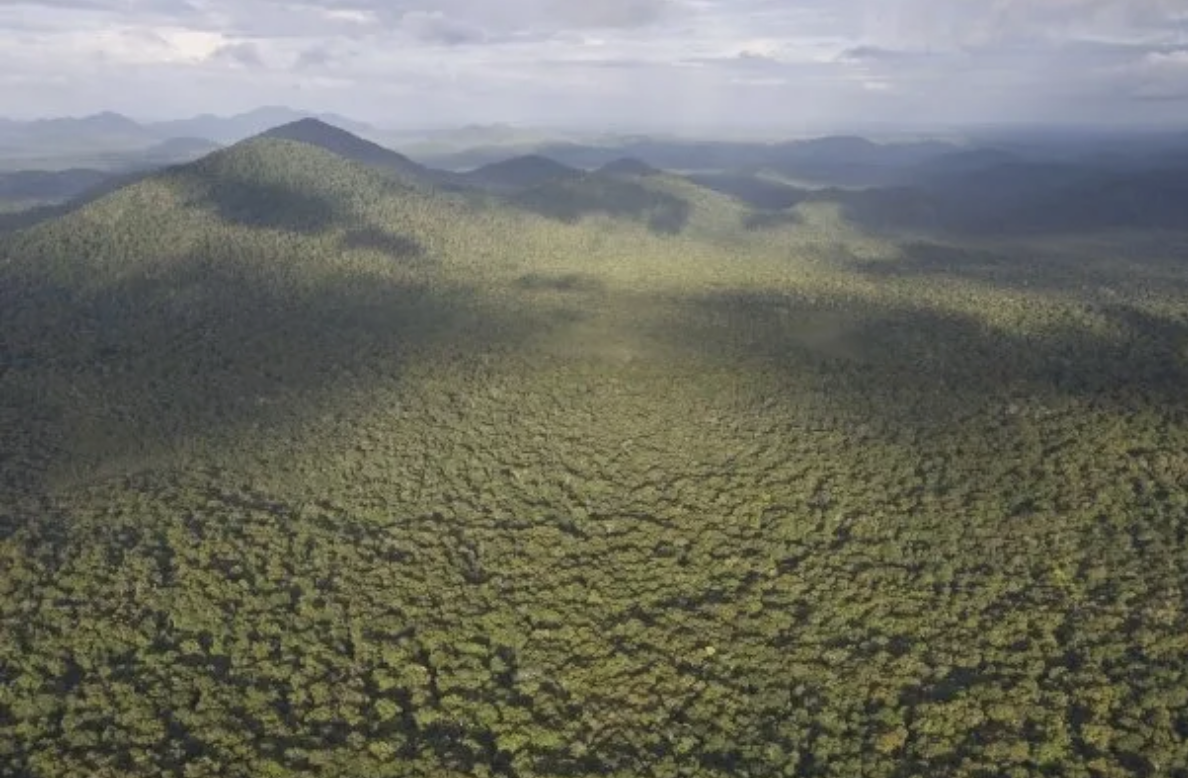
Forests in Latin America and the Caribbean are among the world’s most valuable natural assets. They store carbon, harbor biodiversity found nowhere else, and sustain the livelihoods of millions of people. Yet their value is not only ecological—it is increasingly financial, political, and strategic. In today’s world, strong forestry institutions are no longer optional. They are essential levers for generating revenue, improving competitiveness, enhancing fiscal resilience, and strengthening global positioning.
Governments across the region face a choice: either allow forestry commissions to remain underpowered or invest in their transformation so they can help unlock new opportunities in carbon and biodiversity finance, secure access to global markets, and strengthen legitimacy with communities.
Decision makers should recognize that forestry institutions are valuable gateways to international finance and trade. They enable countries to access jurisdictional carbon credits, biodiversity-linked finance, and innovative private sector deals. They also ensure compliance with global trade rules, protecting exports and diversifying national revenues. At the same time, they strengthen benefit-sharing with communities and enhance global reputation.
Latin America and the Caribbean already have a strong foundation. The region contains nearly half of the world’s tropical forests, and countries such as Guyana, Suriname, and Belize have among the lowest deforestation rates globally. (Explore the ecology and governance of Guyana’s Rupununi region at Rupununi: Rediscovering a Lost World.) Costa Rica has built a reputation as a pioneer in forest conservation, with more than 50% of its territory under forest cover and a payment-for-ecosystem-services program that channels finance directly to landowners. Brazil, despite challenges, has developed one of the largest forest monitoring systems in the world, while Mexico’s community forestry enterprises manage millions of hectares sustainably, generating income and jobs. These examples show that forests are not just ecological treasures—they are economic and political assets when institutions are strong.
Transforming forestry commissions, however, is not easy. It requires strengthening capacities, mobilizing financing, and keeping all stakeholders engaged. Many commissions face outdated systems, limited staff, and weak enforcement. Communities often feel excluded from decision-making. Global buyers demand deforestation-free supply chains, but institutions struggle to provide credible assurance. Governments must therefore see forestry commissions as strategic levers. A strong forestry institution supports market access, credibility, and global respect. It ensures inclusivity and integration with national development strategies. It is not just a technical agency—it is a national competitiveness institution.
Strengthening institutional capacities
Strengthening institutional capacity and governance is the priority. Monitoring, Reporting, and Verification (MRV) systems are the backbone of credibility. Guyana has already built a world-class MRV system, enabling it to track deforestation rates and carbon storage with precision. This system underpins Guyana’s participation in the ART-TREES carbon market, where the country signed a landmark deal with Hess for USD 750 million in jurisdictional credits. Brazil has also strengthened its satellite monitoring, enabling rapid detection of deforestation and illegal activity. These systems show how technology can build credibility and attract finance.
Legal and regulatory frameworks are equally important. Global trade rules are changing, with the European Union’s deforestation regulation requiring exporters to demonstrate the legality and sustainability of their products. Forestry commissions must align with frameworks like EU-FLEGT and update forest laws to embed carbon and biodiversity values alongside timber. Enforcement mechanisms must be clear and strong to reduce illegal logging and corruption. Belize’s recent modernization of its Forest Department demonstrates how institutional reform can improve enforcement and credibility, positioning the country to access new finance and markets.
Institutions are only as strong as their people. Professionalizing staff and leadership are therefore critical. Governments should invest in training for technical, financial, and community engagement skills, create career pathways to retain talent, and build leadership capacity to manage large-scale finance and international partnerships. Mexico’s community forestry model demonstrates the importance of building local technical capacity, while Costa Rica’s forestry institutions show how professional leadership can sustain long-term conservation programs.
Financing and market access
The second area of work is finance and market access. Forests are now financial assets, and forestry commissions must be able to capture their value. The real challenge is not only accessing concessional loans or donor grants but attracting private finance at scale. Innovative instruments are emerging across the region.
Uruguay has pioneered sovereign sustainability-linked bonds, tying debt costs to environmental performance, including forest protection. Ecuador and Belize have executed debt-for-nature conversions, restructuring sovereign debt in exchange for commitments to conserve forests and marine ecosystems. Brazil has announced the Tropical Forest Forever Facility, designed to mobilize long-term finance for forest protection. Guyana’s US$750M deal with Hess for ART-TREES credits demonstrates how jurisdictional carbon markets can attract private-sector investment at scale. Guatemala has accessed the Forest Carbon Partnership Facility of the World Bank, piloting results-based payments for emission reductions. These examples demonstrate that innovative finance is possible, but only if forestry institutions are strong enough to provide credibility, transparency, and enforcement.
Trade competitiveness is another priority. Global buyers increasingly demand deforestation-free supply chains. Forestry commissions can help exporters by implementing legality assurance systems, supporting certification schemes like FSC and PEFC, and diversifying into non-timber forest products and ecosystem services. Ensuring legality and sustainability will protect timber exports and open access to premium markets.
Guiding financial flows is essential. Governments can establish national forest finance facilities to channel innovative instruments like sustainability-linked bonds, debt-for-nature swaps, and carbon credit revenues. Blending sovereign, private, and community finance will create scalable projects. Ensuring that benefit-sharing mechanisms are in place so that revenues reach indigenous and local communities is critical for legitimacy. Guyana’s Low Carbon Development Strategy 2030 provides a model, channeling carbon revenues into community development and national infrastructure.
Community engagement and political stability
The third area of work is community engagement and political stability. Carbon and biodiversity revenues must reach communities. Indigenous and local groups are central to forest governance, and governments can design benefit-sharing mechanisms to ensure revenues flow to villages and community forestry groups. Transparent distribution systems are needed to avoid elite capture and to provide benefits linked to education, health, and local infrastructure. Guyana’s Amerindian Land Titling program strengthens community rights, while Mexico’s community forestry enterprises show how local groups can manage forests sustainably and profitably.
Governments are expanding community forestry programs with technical and financial support. Training in sustainable harvesting, monitoring, and governance is essential, and connecting community forestry to national carbon and biodiversity markets will ensure inclusivity. Costa Rica’s payment-for-ecosystem-services program provides a model for channeling finance directly to landowners and communities.
Governments are embedding participation in decision-making. Forestry commissions should institutionalize community representation in boards, use participatory mapping and consultation for forest planning, and build trust through regular dialogue and grievance mechanisms. Colombia’s experience with participatory forest governance highlights the importance of inclusion, while Guyana’s engagement with indigenous communities shows how to strengthen legitimacy.
Investing in forestry institutions for the future
The evidence is clear. Countries that invest in strong forestry institutions reap rewards. Guyana has already sold jurisdictional carbon credits, unlocking hundreds of millions in finance. Uruguay, Ecuador, and Belize have shown how to use sovereign debt instruments to strengthen forest protection. Brazil’s monitoring systems remain among the most advanced in the world, while Belize’s modernization of its Forest Department demonstrates how reform can strengthen enforcement and credibility. Costa Rica has built a global reputation as a conservation leader, attracting investment and tourism. Mexico’s community forestry enterprises generate income and jobs while sustaining forests. These examples demonstrate that when governments support institutions, they unlock finance, secure markets, and strengthen legitimacy.
Forests are no longer just ecological assets—they are strategic national assets. For Latin America and the Caribbean, strong forestry commissions are the key to unlocking carbon and biodiversity finance, securing trade competitiveness, and strengthening political legitimacy. Governments should therefore invest in institutional capacity, finance and market access, and community engagement. By doing so, they will not only protect forests but also generate revenue, diversify economies, and enhance global reputation.
The stakes are high. The region’s annual mitigation needs are substantial, and forest management is a significant component of mitigation efforts. The challenge is how to attract and scale private finance for forests. Sovereign sustainability-linked bonds, debt-for-nature conversions, carbon credit deals, and long-term forest facilities are emerging as solutions. But they will only succeed if forestry institutions are strong enough to provide credibility, transparency, and enforcement.
Reform should not be a burden, but an opportunity. Strong forestry institutions are a gateway to fiscal resilience, competitiveness, and global leadership. They ensure that forests contribute to national prosperity while sustaining communities and ecosystems.
Latin America and the Caribbean stand at the frontier of history. By supporting forestry institutions in their new and evolving role, governments can ensure that the region thrives in the green transition—an era defined not by deforestation and fragility, but by forest strength and sustainable prosperity. See also: Rupununi: Rediscovering a Lost World, which documents one of the LAC region’s most important forest governance case studies.