Tag: chile

  • How Chile Built Copper and Salmon Exports 1980–2010

    How Chile Built Copper and Salmon Exports 1980–2010

    Between 1980 and 2010, Chile moved from a volatile, copper-dependent economy toward a more complex export platform—still anchored in copper but complemented by a globally significant salmon aquaculture industry. The core policy challenge was not simply “grow exports,” but to convert a highly volatile copper rent stream into stable fiscal capacity, while building new tradable sectors capable of competing in demanding markets. Chile’s experience is relevant across Latin America and the Caribbean because it highlights two design problems that recur in resource-rich settings: how to build credible macro-fiscal buffers before the boom peaks, and how to create a sector where private investors will not initially bear technology and market-entry risk.

    This post unpacks the transformation through three lenses: (1) how Chile’s “human ecosystem” changed in terms of capital stocks/flows, institutions, and social cycles, (2) what drove changes via variation–selection–diffusion mechanisms, and (3) what the state did—especially in fiscal rulemaking, market architecture, and innovation catalysis. A practical objective is to make the mechanisms visible (rules, sequencing, incentives, and state capabilities), including where the economic model that was used imposed costs, most clearly in the salmon sector’s regulatory lag and disease crisis. 

    Human ecosystem shifts: capital, institutions, and cycles

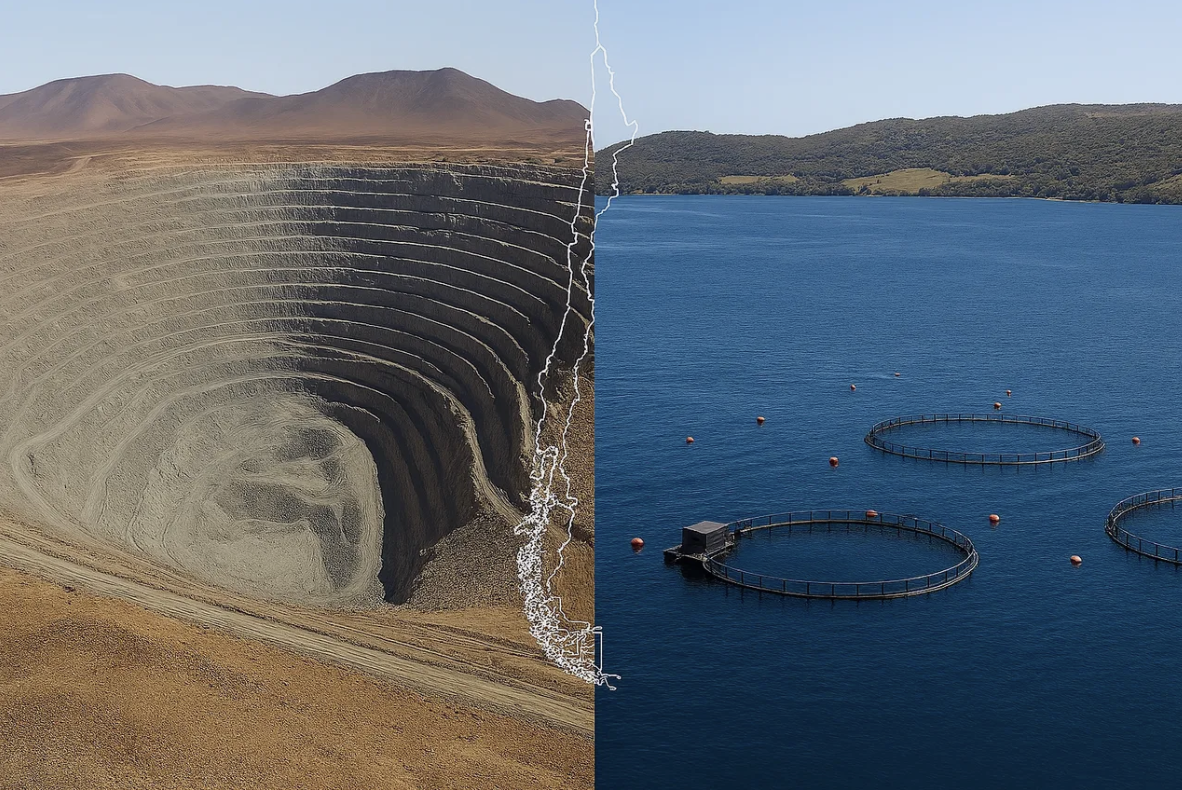
    The most visible shift in capital stocks and flows was scale. Copper production expanded from roughly 1 million metric tons (1980) to over 5.4 million (2010), reinforcing Chile’s role as a global copper leader. In parallel, salmon exports moved from near-zero in the early 1980s to a major non-traditional export. By 2007, exports reached about US$2.3 billion, and Chile became the world’s second-largest salmon producer. Macro-financial flows were also re-engineered: a stabilization fund architecture evolved from the mid-1980s copper fund into the Economic and Social Stabilization Fund (ESSF) created in 2007, enabling a countercyclical response during the global financial crisis, including a reported stimulus package of up to US$9 billion, including about US$4 billion of direct finance.

    Two institution-building pathways mattered during this time. First, in copper, Chile preserved a capable state producer (Corporación Nacional del Cobre de Chile (CODELCO)) while designing a legal and fiscal environment that could support large private investments over long horizons. Second, in salmon, the institutional breakthrough was a hybrid innovation vehicle: Fundación Chile helped transfer and adapt cage-farming technologies, absorbing early-stage uncertainty and demonstrating commercial viability before wider private entry. Over time, a supporting industrial ecosystem formed: by 2010, the salmon cluster included over 4,000 small and medium-sized enterprises (SMEs) in logistics and specialized inputs (e.g., vaccines). Social outcomes shifted as well: poverty rates fell from about 45% (1987) to 11.5% (2009), thereby expanding domestic socioeconomic resilience even as growth remained export-led.

    Chile’s political economy consolidated a “dual track”: copper rents were partly captured directly through CODELCO (accounting for a major share of total fiscal revenue), while private capital expanded production under secure rules. The fiscal system was redesigned to weaken boom–bust cycles through the Structural Fiscal Surplus Rule (2001) and the ESSF (2007), effectively decoupling domestic spending from copper price volatility. The salmon sector, however, illustrates the consequences of institutional lag in fast-growing resource-based activities: the infectious salmon anemia (ISA) virus crisis (2007–2010) caused a major rupture that forced post hoc upgrading of sanitary and environmental governance. The combined message is that Chile strengthened macroeconomic “shock absorbers” in copper earlier and more systematically than it built ecosystem and biosecurity shock absorbers in salmon.

    What drove the changes: variation, selection, and diffusion

    The 1980s are characterized as a period of experimentation. In mining, institutional variation took the form of a high-security concession model created by early-1980s changes in mining laws and the code, which introduced “constitutional concessions” that co-existed with state ownership. In aquaculture, variation combined natural endowments (southern cold waters) with imported production knowledge; Fundación Chile’s early pilots served as structured experiments that reduced uncertainty about whether salmon farming could be commercially viable at scale in Chile.

    Chile’s selection environment was not purely “market.” For copper, the Foreign Investment Statute (DL 600) is described as providing guarantees that improve predictability for investors, favoring large-scale, capital-intensive projects able to ride long commodity cycles (the Escondida mine is an emblematic case). For salmon, selection occurred through a state-supported proof-of-concept logic: public or hybrid pilots helped demonstrate profitability, after which private firms and a supplier base expanded rapidly. The same selection forces also revealed weaknesses: disease dynamics (ISA) and subsequent regulatory tightening acted as a harsh selection event, penalizing high-density growth models that had outpaced monitoring and enforcement capacity.

    In macroeconomic management, diffusion and retention were institutional: the copper fund architecture evolved into the ESSF, and the structural fiscal rule became a routine for transforming volatile rents into predictable fiscal space. In productive sectors, diffusion took the form of clustering and supply-chain deepening—especially in salmon, where know-how and specialized services spread through a dense regional ecosystem (including thousands of SMEs). A policy-relevant tension is apparent: Chile retained “good” fiscal governance routines relatively early. “Bad” routines in salmon production were maintained for perhaps too long, e.g., high-density expansion with insufficient biosecurity, increasing the probability and cost of a later crisis.

    State role: rules, finance, and learning

    The state’s central contribution was market architecture. In copper, Chile maintained a state anchor (CODELCO) while creating credible, high-security investment rules for private entry via concessions and the DL 600 framework. In macro policy, the state adopted a Structural Fiscal Surplus Rule (2001) to manage “Dutch disease” risks by saving during booms. This rules-based approach mattered because it made intertemporal trade-offs explicit and constrained short-term political spending pressures. The result was institutional continuity that survived major political transitions and supported long-duration investments typical of mining.

    Chile used copper-linked institutions to convert volatile revenues into countercyclical fiscal capacity. The sequence from earlier copper stabilization mechanisms to the ESSF (2007), which supported crisis-era spending, included the reported US$9 billion stimulus during the 2008–2009 shock. In parallel, the state supported the productive base by enabling investments in ports, energy, and related infrastructure, helping both private mining and aquaculture scale in geographically remote regions. The policy lesson is not “spend more,” but “spend with buffers”: stabilization funds and fiscal rules created room to maintain public investment when external conditions deteriorated.

    The salmon case underscores a specific state capability: acting as an early “venturer” when private investors will not fund uncertain learning. Through Fundación Chile (a public–private initiative between the Chilean state and International Telephone & Telegraph (ITT)), the state absorbed initial technical and market risks, proved a business model, and then exited by selling pilot companies to the private sector. This is a replicable design choice for LAC countries seeking new tradables: create an institution with technical autonomy and an explicit exit mechanism. The caution is equally important: innovation policy cannot stop at production know-how. The ISA crisis illustrates that regulatory science (biosecurity, environmental monitoring, and enforcement routines) must co-evolve with industrial scaling, or the state will have to rebuild the sector under crisis conditions.

    Policy takeaways for Latin America and the Caribbean

    Chile’s experience suggests that “resource-led” growth is not pre-determined by geology; it is shaped by institutional choices about rent management, market rules, and the state’s capacity to learn. 

    Three policy takeaways stand out:

    1. Build fiscal buffers as core infrastructure, not as a “nice to have.” Chile’s stabilization architecture (structural rule plus the ESSF) is a precondition for countercyclical policy in a commodity economy, not an optional add-on.

    2. Use hybrid institutions to create sectors—but design the exit and the governance. Fundación Chile’s model shows how a public–private vehicle can reduce technology and market-entry uncertainty and crowd in private investment; the institutional design (autonomy, technical capability, and an exit path) is the transferable element.

    3. Do not let production scale outrun regulatory science. Salmon’s rapid expansion delivered exports and clusters, but the ISA shock illustrates the costs of regulatory lag. Governance for biosecurity and environmental risk must be built early, alongside incentives for growth.

    For Latin America and the Caribbean policymakers, the practical implication is to treat sector strategy as a portfolio problem: protect the budget from commodity volatility, use targeted, capability-based institutions to build new tradables, and ensure that regulatory and monitoring capacity grows at the same pace as production. The opportunity is immediate for countries facing new mineral or aquaculture booms: build the fiscal and regulatory “shock absorbers” before scale makes reform politically and technically harder. 
  • Chile’s Renewable Leap: What LAC Can Copy—and What to Fix

    Chile’s Renewable Leap: What LAC Can Copy—and What to Fix

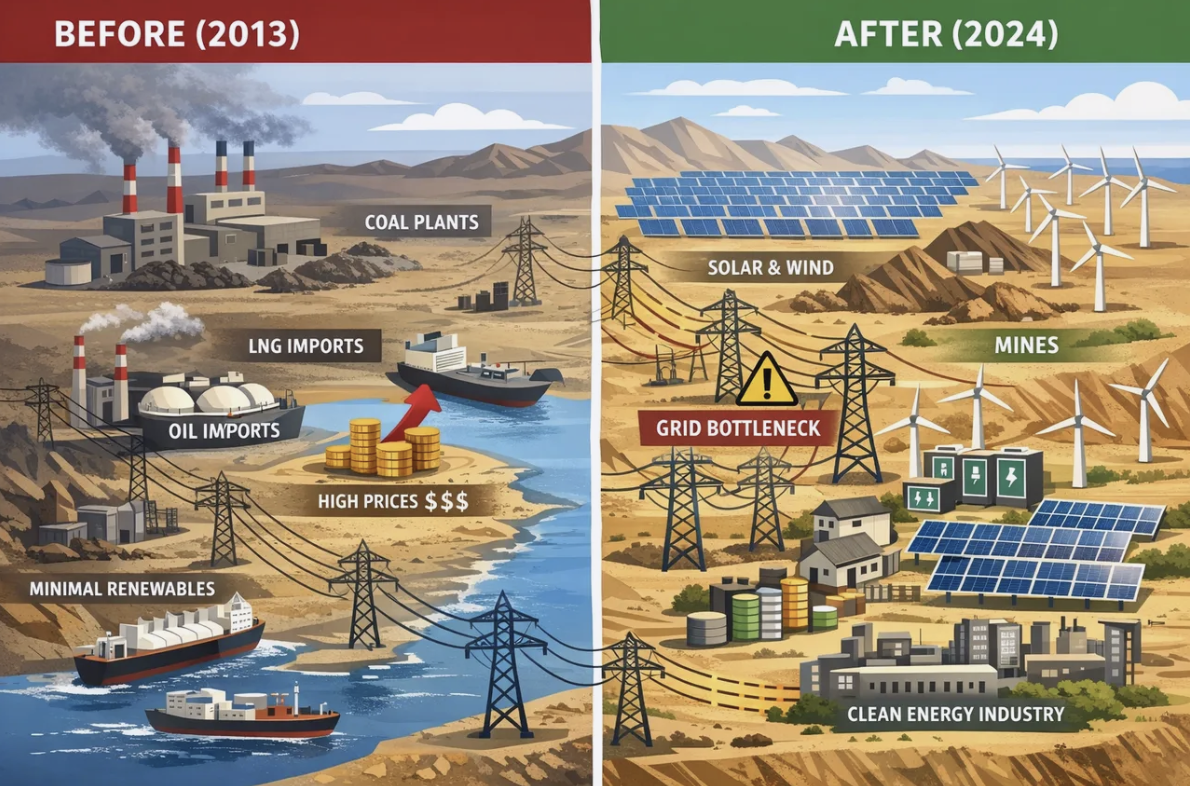
    Chile shows that clean power can be a competitiveness strategy—not just an environmental commitment. In one decade, the country moved from about 63% fossil-fuel generation in 2013 to a system in which renewables provided about 70% of electricity in 2024, with solar and wind accounting for roughly one-third of national generation. 

    The hard part was not “getting renewables built.” The hard part was building systems that scale—grids, flexibility, permitting capacity, and social license—fast enough that cheap renewable power becomes usable power, not curtailed power. Chile’s experience makes this visible: solar and wind curtailment reached about 6 TWh in 2024, a warning sign that infrastructure and governance can lag private investment. 

    Chile’s transition was engineered through market design and state capability. Competitive auctions and long-term contracts drove prices down—bids reached US$13/MWh in the 2021 supply auction, with an average awarded price of US$24/MWh—and mining demand served as an anchor buyer through corporate power purchase agreements (PPAs). Transmission reform and institutional upgrades were aimed at keeping the system reliable as renewables grew. 

    For LAC countries, the prize is clear: lower power costs, stronger export competitiveness, and a credible path to transformation—without triggering backlash from communities or destabilizing the grid. This blog highlights what changed in Chile, why it changed, and why renewables won, and what the state did to turn private capital into scale, and where it still needs to catch up. 

    What changed: assets, money, power flows, and institutions

    Natural capital – the Atacama Desert’s solar resources – was converted into installed solar photovoltaic (PV) capacity. Capacity grew from below 500 MW in 2014 to more than 13 GW in 2024. Wind capacity expanded from 1 GW to over 4 GW in the same period. Socio-economic capital deepened through investment and new industrial energy portfolios. By 2023, there was a pipeline of planned renewable investments that exceeded US$ 15B, mostly foreign direct investment in Atacama solar, transmission, and storage. Mining and energy firms built new, long-term portfolios of utility-scale PV, wind, and storage assets to address risks from imported fuel prices and stabilize energy supply. Chile shifted culturally and institutionally toward “green energy” and away from “energy scarcity.” 

    Energy flows were decarbonized—but also constrained by the grid. Chile reduced fossil-fuel import dependence. Fossil-fuel generation accounted for about 63% in 2013, and renewables reached about 70% by 2024. Yet the success of attracting finance for generation created congestion: renewable curtailment reached around 6 TWh in 2024, because low-cost supply outpaced transmission and grid flexibility. Finance shifted toward competitive pricing and new instruments. Chile attracted low-cost renewable energy finance and shifted from conventional project finance to green bonds and sustainability-linked lending. Auction design and long-term contracting led to dramatic price reductions—solar bids fell from more than US$100/MWh in 2013 to about US$13/MWh in 2021, reinforcing capital reallocation toward renewables. Knowledge flows accelerated through learning-by-doing and improvements in system operations—new capabilities formed in grid management, dispatch, and storage integration. By 2025, 1.7 GW of storage was operational or in testing, with more than 1 GW operational by mid-2025, deployed in part to mitigate curtailment challenges. Public-private partnerships (e.g., through Chile’s Economic Development Agency, CORFO) illustrate that Chile was not only importing technology but also adapting it to national and local operating conditions. 

    Market institutions were reorganized around auctions and corporate PPAs. Chile’s auction system and bilateral contracting (especially for large customers) became central in steering investment. Mining companies became major renewable buyers through corporate PPAs, turning industrial demand into an ‘anchor’ that reduced risk and accelerated scale. Technical institutions such as the Electricity Coordinator (CEN) and the National Energy Commission (CNE) strengthened planning and dispatch to modernize the energy system, but coordination gaps remained. The Energy Transition Law (2024) was intended to expedite the adoption of transmission and grid-forming technologies—an institutional response to system complexity. Social order shifted with new distributional tensions. While renewables improved air quality in coal-heavy regions and supported competitiveness through lower prices, the changes led to conflicts over land use, transmission corridors, consultation, and water governance—especially in the Atacama Desert. 

    Why things changed: experimentation → market selection → rapid scaling

    Chile’s transition began with competing pathways to energy self-sufficiency: coal expansion, liquefied natural gas imports, and renewables. Over the decade, the system tested utility-scale PV, onshore wind, and concentrated solar power with storage, such as Cerro Dominador, as well as small-scale distributed generation projects (500 kW–9 MW) under stabilized pricing regimes. Hybrid projects pairing renewables with 4-hour battery energy storage systems also emerged to address intermittency. Policy innovation produced ‘institutional variation.’ A key reform was the auction redesign (2014 onward), which allowed renewable providers to bid into specific time blocks, enabling solar to compete with 24/7 thermal generation on a more comparable product basis. Spatial variation mattered: Atacama’s resource strength attracted mass deployment but also highlighted the importance of siting, grid access, and social license, leading to uneven project outcomes across different regions. 

    Cost-based selection strongly favored solar and wind. Competitive auctions and corporate procurement revealed solar as the cheapest scalable option; coal and other thermal assets lost viability when solar prices dropped to around US$13/MWh in 2021. Environmental and political selection accelerated coal decline, including through coal phase-out agreements accompanied by just transition strategies for communities. By 2024, 11 plants, or about 1.2 GW of coal capacity, had been retired or converted, reflecting both the direction of climate policy and shifting economics. Industrial selection, especially from mining, is reinforcing the case for renewables. Large mining firms (e.g., Codelco and BHP) selected renewables to lower costs and meet emerging ‘green copper’ demand, making export competitiveness a direct selection pressure. 

    Technology diffusion was rapid: solar and wind spread from Atacama/northern corridors toward central Chile as capabilities and financing templates matured. Storage diffusion followed the pressures that arose from curtailment. Institutional diffusion also occurred: the ‘Chilean model’ of auctions has been studied and adapted by other LAC countries (e.g., Colombia) to de-risk renewable energy pipelines. Diffusion depended on enabling infrastructure. Major transmission projects, e.g., the 1,500 km Kimal–Lo Aguirre line, were considered public goods and designed to connect Atacama solar to central demand. Diffusion thus required both market signals and grid build-out. 

    What the state did: markets, grids, risk, and legitimacy

    Chile used long-horizon planning and policy to provide a ‘North Star’ for investors and agencies. Energy 2050 is a state policy designed to outlast political cycles, in line with the direction set by the Framework Law on Climate Change. The state’s coordination role was essential because the climate transition is cross-sectoral. Energy policy interacted with mining competitiveness, environmental justice, and territorial governance; government convening and planning capacity shaped the pace and credibility of the transition. Where coordination lagged—especially between generation growth and grid expansion—system costs rose through congestion and curtailment, underscoring the state’s responsibility for sequencing reforms and infrastructure. 

    Technology-neutral auctions rewarded the lowest cost and created transparent price signals. Auction reforms and time-block design enabled renewables to compete credibly and delivered price discovery that reoriented investment away from fossil options. Grid access and system rules evolved to support higher variable renewable penetration. Changes included stronger technical agencies (CEN and CNE), modernization of the national energy system, and reforms to allow non-discriminatory grid access and stabilized pricing for smaller developers. Environmental and social standards were both enabling and constraining. Chile worked to streamline permitting and develop standards (e.g., green hydrogen certification and environmental impact assessments). But uneven local impacts—water use, land conflict, and Indigenous consultation—show that standards and enforcement capacity must scale with deployment. 

    Transmission reform was a decisive state intervention. The 2016 transmission law enabled long-distance solar integration, and the state treated major projects (e.g., the US$2B Kimal–Lo Aguirre high-voltage direct current line) as public goods essential for the transition. Public risk absorption catalyzed early investments and first-of-a-kind projects. Blended finance and early risk-sharing, including through state instruments and development finance, e.g., the Cerro Pabellón geothermal project, reduced barriers until private finance scaled. Innovation ecosystems were actively fostered. CORFO supported research and development and concessional finance for first-of-a-kind green hydrogen facilities and public-private initiatives, building Chile’s capacity to deploy and partially adapt technologies rather than only import them. 

    The LAC takeaway: build systems that scale

    Three headlines from Chile’s decade:

    · Market design can unlock scale. Technology-neutral auctions and bankable long-term contracts made renewables investable and drove dramatic price discovery.

    · Competitiveness anchors transitions. Mining demand and corporate PPAs helped convert renewable potential into real investment and industrial advantage. 

    · Success creates new challenges. When grid expansion and flexibility lag, abundance becomes waste: solar and wind curtailment in 2024, demonstrating that the transition’s bottleneck shifts from “building MW” to “integrating MW.”

    For LAC policymakers, some key lessons include that well-designed auctions and contracts can reward low-cost generation and deliverability; investing early in transmission and grid system flexibility as public goods prevents the grid from becoming a constraint; and building permitting and consultation capacity so projects have social license at the pace needed for deployment – legitimacy is as critical as finance. 

    It is not just about building more renewables – but about building systems that value reliable renewables and make them politically durable.

  • Booms Without Transformation: Peru’s Guano and Chile’s Nitrates

    Booms Without Transformation: Peru’s Guano and Chile’s Nitrates

    Latin America has long been rich in natural resources, and for much of its history, those resources have been presented as a promise of progress. In the nineteenth century, Peru and Chile occupied a privileged position in the global economy because they controlled something the industrial world desperately needed: nitrogen. First through guano exported from Peruvian islands, and later through nitrates mined in the Atacama Desert, these countries became essential suppliers for global agriculture and warfare. Revenues were enormous, state budgets expanded rapidly, and foreign capital poured in. From the outside, it looked like development was inevitable.

    But prosperity based on extraction alone proved fragile. Despite decades of booming exports, neither Peru nor Chile used these resources to build diversified economies, strong technological capabilities, or inclusive social systems. Instead, wealth flowed outward through foreign firms, while states focused on collecting revenues rather than transforming production. When deposits were exhausted or global technology changed, fiscal crises, unemployment, and social instability followed. What had seemed like national success quickly became national vulnerability.

    This blog revisits the guano and nitrate booms not as distant historical curiosities, but as early warnings. By examining how these industries were organized—who controlled them, how labor was used, where profits went, and what institutions were built—we can better understand why extraordinary resource wealth failed to deliver long-term development. For today’s policymakers and citizens in Latin America and the Caribbean, these cases raise a critical question that remains unresolved: how can the region turn natural wealth into lasting economic and social capacity, rather than repeating cycles of boom and collapse?

    From Islands to Desert: The Rise of Latin America’s Nitrogen Economy

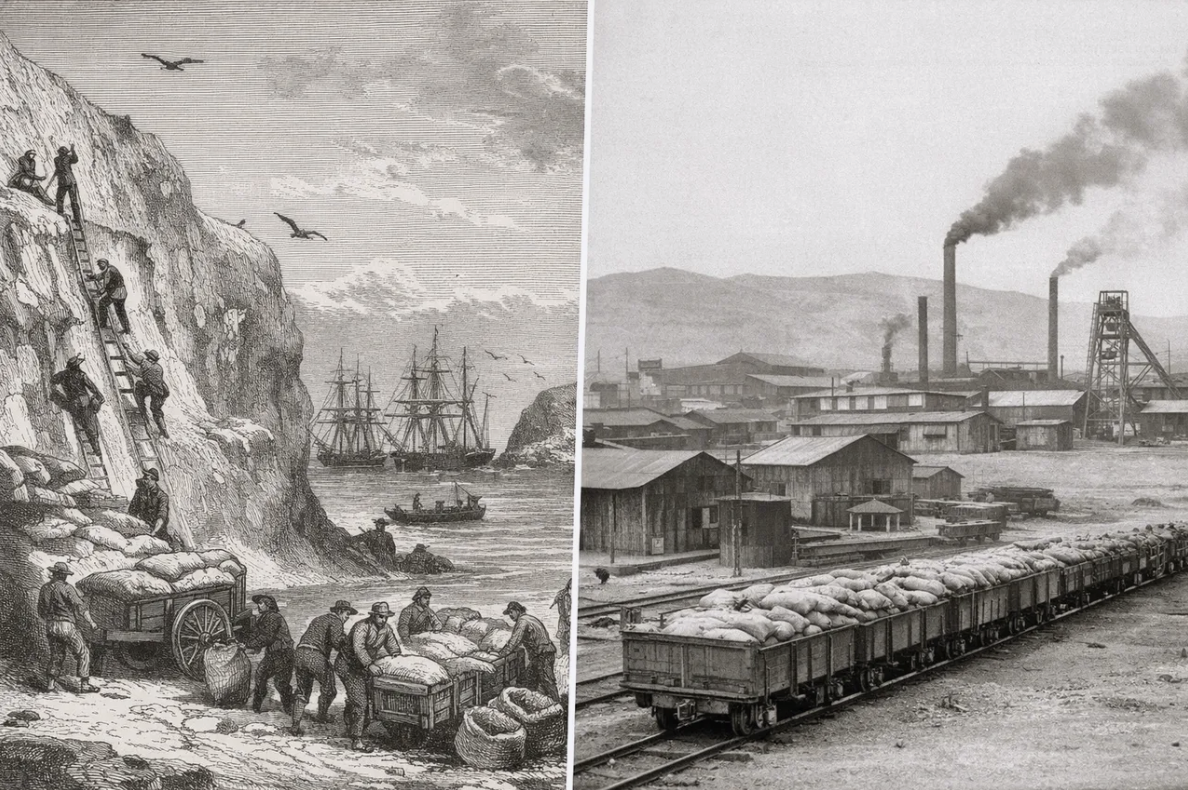
    Between the 1840s and 1860s, guano extracted from Peruvian coastal islands functioned as the dominant global source of industrial nitrogen fertilizer. Approximately 11–12 million tons were exported between 1840 and 1870, financing most Peruvian public expenditures during this period. The production system was based on rapid physical depletion rather than renewable management, leading to a collapse of the resource base beginning in the 1860s. Labor inputs were coercive and low-skilled, relying on convicts, indigenous laborers, and roughly 100,000 Chinese indentured workers operating under hazardous conditions. Exports were directed primarily to Europe and North America to support agricultural intensification during industrialization. British firms controlled shipping, marketing, and chemical validation, while Peru retained ownership through a state monopoly operating via consignment contracts. This structure maximized short-term fiscal revenue but produced minimal domestic spillovers in technology, skills, or institutional learning. 

    From the 1870s onward, sodium nitrate extracted from the Atacama Desert replaced guano as the primary nitrogen input for fertilizers and explosives. The underlying production model remained unchanged: dependence on a single export commodity, reliance on natural resource rents, dominance of foreign capital, and weak economic diversification. The War of the Pacific (1879–1883) reallocated control of nitrate reserves, with Chile annexing Peru’s Tarapacá region and Bolivia’s coastal territory, including Antofagasta. Following annexation, nitrate exports expanded rapidly, reaching approximately 2–3 million metric tons per year by 1910 and generating up to 60% of Chilean central government revenue. Extraction imposed high environmental costs, including land degradation and water depletion. Labor demand drove large-scale migration from Peru and Bolivia, with total employment reaching roughly 70,000 workers by the 1910s. Public and private investment focused on ports (notably Iquique and Pisagua) and railways connecting extraction zones to export terminals. 

    As with Argentina during the same period, British capital dominated ownership, finance, and trade logistics in Chile’s nitrate sector. A substantial share of profits was repatriated rather than reinvested domestically. Chile supplied up to 80% of global nitrate demand for European and U.S. markets. State capacity improved selectively, particularly in customs administration, export taxation, and regulatory oversight of nitrate shipments. However, institutional development remained narrowly focused on extraction. Labor protections were weak, investment in industrial diversification was minimal, and public support for technical or scientific education was limited. Mining towns operated as closed systems under company control, including housing, retail supply, and wage payment through company stores. Employment levels, fiscal revenues, and urban growth were therefore tightly coupled to nitrate price cycles, leaving the economy exposed to external shocks, including the post–World War I collapse following the introduction of synthetic nitrates. 

    The Forces Behind Expansion and Collapse

    Guano extraction exhibited limited technological variation due to its labor-intensive methods. In contrast, British-owned nitrate firms differed in size, processing approaches, logistics, and labor management. Firms adopted varying models for worker housing, compensation (cash wages versus company scrip), and transportation, particularly through railway integration. Most change occurred through expansion in the number of producing entities and consolidation rather than through innovation in extraction or processing technologies. 

    Global market selection mechanisms, institutional structures, and geopolitical pressures increased demand for nitrogen inputs as European agriculture and munitions production prioritized scale and cost efficiency. In the guano system, this favored low prices and high volumes. In Chile, export tax policy favored firms capable of sustaining high throughput. World War I temporarily increased demand for nitrates for munitions production. However, the commercialization of the Haber–Bosch process enabled synthetic nitrogen production at an industrial scale, rapidly eliminating the nitrate industry’s competitive advantage and market base.

    Profitable nitrate practices became institutionalized, but spillovers into domestic manufacturing, chemistry, or engineering education remained limited. Investment patterns reinforced specialization in raw-material extraction rather than in capability development. As a result, Chile became locked into a single‑commodity trajectory, increasing systemic vulnerability to technological substitution and demand shocks. 

    Fiscal Capacity Without Transformation

    The Peruvian state prioritized revenue generation over long-term development by maximizing guano rents without reinvesting in structural transformation. Revenues were centralized through a national monopoly and consignment system. Chile similarly relied on nitrate rents without articulating a diversification strategy or directing flows toward industrial upgrading. Neither state pursued value-added integration, such as linking nitrogen production to domestic agriculture, chemistry education, or human capital development. Fiscal capacity expanded, but political and social legitimacy eroded due to labor repression and visible inequality. 

    In Peru, state monopoly arrangements and exclusive contracts stabilized prices and volumes but constrained innovation. Public investment in railways and urban infrastructure supported extraction but not export diversification. Labor standards and resource stewardship received minimal attention. In Chile, export-oriented policy ensured stable property rights and predictable taxation for predominantly British capital. Significant public-private investment supported ports and railways servicing nitrate zones, but integration with the broader economy remained weak. Despite fiscal surpluses, funding for education, public health, and urban services remained limited. 

    The Peruvian state failed to account for depletion risk or the systemic vulnerability created by reliance on a single asset. Revenues were consumed or leveraged rather than saved or hedged. The resulting collapse triggered a fiscal crisis, sovereign default, and political instability, increasing Peru’s susceptibility to entering the War of the Pacific. Chile similarly underestimated fiscal dependence risks, consuming nitrate revenues without counter-cyclical planning. The collapse of the nitrate industry due to synthetic substitution led to mass unemployment, regional economic failure in Tarapacá and Antofagasta, and large-scale internal migration to Santiago and Valparaíso. The global economic collapse of 1929 amplified these effects. Unlike Peru, Chile used the crisis as a pivot toward state-led industrialization, expanded public ownership, and a strategic shift toward copper exports. 

    What Guano and Nitrates Still Teach Us

    The history of guano in Peru and nitrates in Chile shows that development does not come automatically from abundance. Both countries built highly effective systems to extract, tax, and export natural resources. Roads, ports, railways, and state institutions expanded rapidly. Yet these systems were designed to export raw materials rather than to strengthen domestic capabilities. Education, industrial diversification, and technological learning were treated as secondary concerns—until it was too late.

    When global conditions changed, the weaknesses became visible. Peru’s guano revenues collapsed with depletion, leaving the state financially fragile and politically unstable. Chile’s nitrate economy was destroyed not by exhaustion of the desert, but by a technological breakthrough abroad that made natural nitrates obsolete. Workers were displaced, entire regions declined, and public finances deteriorated. The difference between the two countries lies in their response: Chile eventually used the crisis as a turning point to pursue industrialization and new export sectors, while Peru lacked the institutional capacity to do so on the same scale.

    For Latin America and the Caribbean today, the lesson is not to reject natural resources, but to treat them with caution and strategy. Extractive industries can generate revenue, but without deliberate investment in people, technology, and diversification, they also generate dependency and risk. The guano islands and nitrate deserts remind us that the real challenge is not how much wealth a country extracts, but whether it uses that wealth to prepare for a future in which the boom will inevitably end.