Tag: brazil

  • Brazil’s Cerrado Growth Model: State Capacity and Land Governance

    Brazil’s Cerrado Growth Model: State Capacity and Land Governance

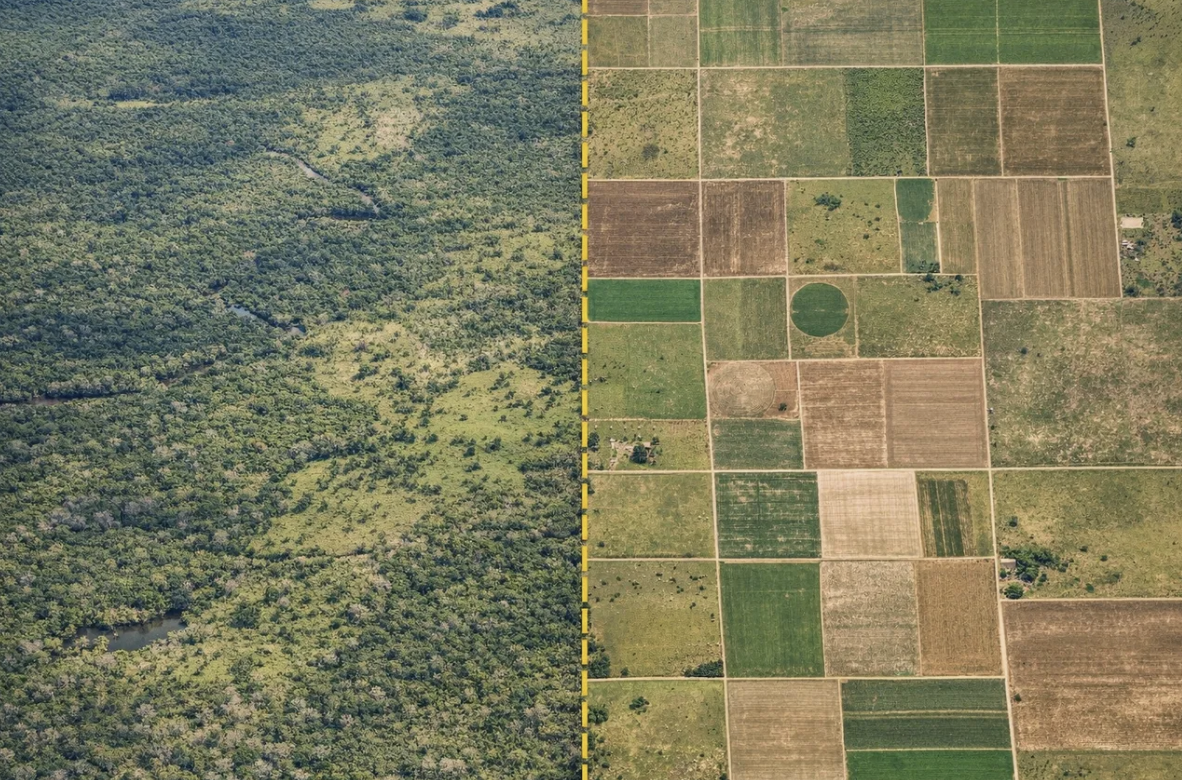
    In 1960, Brazil imported food. In 2023, it supplied global markets at a scale that rivals the European Union’s agricultural exports. The Cerrado—roughly 200 million hectares—was long treated as marginal land; what changed was not the savanna but the state machinery around it. Brazil built public agricultural research and development, subsidized credit, and enabled infrastructure that made frontier production bankable and scalable. That same toolkit is available across Latin America and the Caribbean (LAC), where governments face a simultaneous mandate: raise output, defend climate credibility, and avoid a new wave of land conversion that triggers social conflict and ecosystem loss.

    The core policy problem is a sequencing gap: growth instruments move faster than land and social governance, so expansion outruns control. Brazil’s agricultural total factor productivity (TFP)—output growth not explained by more land, labor, or capital—grew at roughly 3% per year from the mid‑1980s to 2010, and soybean yields roughly doubled from the 1970s to the 2010s. Since 2000, studies commonly find that about 70–80% of new cropland came from converted pasture and 20–30% from native vegetation, with the higher‑risk share concentrated near frontier zones between the Cerrado and the Amazon. The cadaster (the official parcel-level land registry) and enforcement capacity improved more slowly than credit and logistics, so regulators often could not screen projects quickly enough to prevent illegal clearing or high-risk siting. The mechanism is frontier spillover pressure or indirect land-use change: when cropland expands onto pasture, displaced pasture and land speculation can shift pressure toward frontier areas, even if direct conversion appears to slow.

    The implication for LAC is operational: treat land governance as a binding constraint on how fast you can safely scale output. Start by expanding cadaster coverage, clarifying tenure, and funding enforcement so the state can deny permits, credit, and public benefits to noncompliant expansion before capital locks in land‑use patterns. Then design demand and finance tools to reward low land impact rather than volume, using performance screens and differentiated support that investors can understand, and regulators can audit. This requires an eligibility gate—a hard requirement that projects demonstrate clean land status before receiving public finance or permits—so inclusion and environmental safeguards are built into scale rather than layered on afterward. This blog examines what changed in Brazil during this process, what drove those changes, and the role of the state in guiding them. 

    How governance lagged investment

    Investment support created a lock-in by paying for long-lasting assets—roads, storage, ports, plants, and machinery—that required high, steady output to remain profitable. Subsidized credit, public risk absorption, and private balance sheets financed frontier roads and storage, export terminals, processing plants, and on‑farm machinery. Those assets lowered delivery costs and increased returns to scale, so producers and processors pushed for higher volumes to pay back what they had already invested. The evidence is clear in the timeline: Brazil moved from a food importer to an export-scale supplier, and infrastructure helped maintain that scale. Once these assets were in place, land became the hard limit, and expansion shifted toward the lowest-friction options, especially pasture conversion.

    Brazil built stronger institutions for productivity than for land control, so output rose before governance caught up. In the 1970s, Brazil established Embrapa to build domestic capacity in tropical science. Estimates commonly place Embrapa’s social return on investment at 7:1 or higher. Those capabilities supported sustained productivity gains, including TFP growth of roughly 3% per year from the mid‑1980s to 2010. Land institutions—cadaster quality, tenure clarity, compliance monitoring, and enforcement—improved more slowly, so the state often could not verify where and how expansion occurred. The result was a familiar imbalance: investment and offtake could scale in years, while land governance improved much more slowly. 

    The growth model shifted power toward actors who control capital, logistics, and compliance. As land values rose and processing and export logistics clustered, large producers, traders, and processors gained influence over standards, credit terms, and where infrastructure went. The spread of flex‑fuel vehicles after the early 2000s broadened a political coalition around fuel consumers and stabilized parts of the modernization agenda. Smallholders lost ground—literally—as land values rose near new roads and processing plants, concentrating benefits among actors who already had capital and logistics access. This pattern matters for LAC because once these coalitions form, tightening land governance later becomes more politically and financially costly. The actors who captured most of the gains were not those on the frontier — they were the traders, processors, and logistics firms that controlled the chokepoints between the field and the market.

    How scale got selected and locked in

    Variation expanded the feasible production set in the Cerrado by turning agronomic uncertainty into testable options that producers could adopt or discard. In the 1970s, Embrapa and partner networks generated multiple packages—soil correction (liming and nutrient management for acidic soils), new cultivars, and livestock genetics—rather than a single blueprint. Producers then experimented across crops and systems (soy, sugarcane, and livestock) under frontier conditions where initial yields were uncertain. The outcome was a widened feasibility frontier: by the 2010s, soybean yields had roughly doubled relative to the 1970s baseline, making large areas commercially viable. This mechanism matters for LAC because public research and development can quickly expand “what is possible.” Still, it also accelerates the speed at which land becomes contested if governance capacity does not scale in parallel.

    Policy picked the winners—and it picked the ones that could scale, document output, and plug into existing export channels. Subsidized credit and standards increased returns to producers who could meet specifications and deliver volume through established trading and processing systems. Where governments added demand-side tools (for example, ethanol blending), they created a large, policy-stabilized outlet; by the mid-2010s, ethanol displaced roughly 45–50% of gasoline demand in Brazil’s light-vehicle fleet. The result was concentration: capital‑intensive models dominated because they best matched the incentives embedded in credit, infrastructure, and offtake (a guaranteed purchase obligation) rules. This logic applies beyond fuels: any subsidy tied to guaranteed buying can push scale faster than land oversight can keep up with managing land spillovers. 

    Brazil did try to use a biofuels policy for inclusion. Biodiesel programs included family-farm participation requirements, but they did not materially shift the production structure once mandate volumes scaled up. Similarly, soy, with logistics advantages and existing supply chains, absorbed compliance demand faster than targeted suppliers could expand to meet it. The lesson is not that inclusion provisions are wrong; it is that volume-scale mandates overwhelm symbolic participation targets. Inclusion must be built into the eligibility architecture before scale, not layered on top afterward.

    Diffusion locked the model in by making it routine across supply chains, finance, and infrastructure. Processors standardized contracts, banks repeated the same lending templates, and logistics investments lowered delivery costs, enabling the package to replicate across municipalities. Offtake reduced demand risk and sped up replication, especially when policy tools stabilized outlets. Governance fell behind—regulators could track yields, not where the frontier was moving—so enforcement and screening did not keep pace with expansion incentives. The result was persistent land competition and frontier spillover pressure because the system kept rewarding expansion faster than land oversight could respond. 

    What the state did – and in what order

    State coordination mattered because Brazil could align rules and markets and mobilize private investment faster than frontier governance could mature. The state used standards and credit conditions to make production and processing investments viable, and sometimes used demand tools, including ProÁlcool (Brazil’s 1975 national ethanol program, which mandated blending, financed mills, and sustained demand through price policy) and ethanol blending rules. The mechanism is capacity, not intent: when agencies coordinate across agriculture, energy, and trade, they reduce uncertainty and speed up scaling. The risk for LAC is that if land administration cannot coordinate with these growth levers, expansion outruns verification and enforcement. 

    Public investment and finance facilitation accelerated Cerrado expansion by lowering risk and financing scale-critical assets. Brazil invested in applied science and extension capacity, and it used subsidized credit and public risk absorption to crowd in private finance once profitability was realized. These tools amplified scale by reducing capital costs for frontier logistics, processing, and on-farm modernization. The governance implication follows from the post-2000 land-use pattern: studies commonly find that 20–30% of new cropland originated from native vegetation in frontier zones, even though most expansion occurred through pasture conversion. For LAC, this means finance and infrastructure programs should scale only as fast as land verification capacity can screen eligibility and enforce penalties.

    Brazil raised productivity by building a learning system that repeatedly solved practical problems, rather than through a one-time technology transfer. Embrapa conducted long-term research in soil chemistry, breeding, and livestock genetics. Learning‑by‑doing—cost reductions and process improvements from repeated production and scaling—then spread routines through processors, input suppliers, and logistics networks. The measurable result was sustained productivity growth and large yield gains. The limiting factor was coordination and governance: higher yields do not prevent land conversion unless cadaster, enforcement, and screening capacity expand at the same pace as the technologies and the capital they attract. 

    Policy actions for LAC

    LAC’s challenge is to grow farm output without letting weak land rules turn that growth into land loss and credibility problems. Brazil shows how quickly growth policy can work. Brazil also shows why land rules must set the pace for scaling. Frontier spillover pressure raised risk when pasture displacement and frontier dynamics pushed expansion outward. The mechanism is simple: when credit, infrastructure, and guaranteed buying move faster than the official parcel-level land registry and enforcement, expansion outruns verification.

    Success looks like raising productivity on land that is already cleared, rather than expanding the farmed area. That path is realistic: Brazil sustained TFP growth and achieved large yield gains, including roughly doubled soybean yields. It also requires practical land administration: an official parcel-level land registry with high coverage, clear tenure records, and routine compliance checks that can block noncompliant projects from credit, permits, and procurement. Demand can still grow, but it must follow the rules; ethanol displacing roughly 45–50% of gasoline demand shows how fast policy can create outlets, so land checks must come first. The goal is durable growth that can pass climate and trade scrutiny because it is documented and enforceable.

    Before expanding mandates, concessional finance, or procurement, policymakers should put in place three requirements: an eligibility gate, performance-based incentives, and enforceable inclusion. The eligibility gate is a hard rule: projects must show clean land status before they can receive public finance or permits, using land-registry checks, tenure verification, and the ability to deny credit, permits, and public purchasing when land records do not clear. Use performance-based incentives by offering better subsidy rates or credit terms to producers with a smaller land footprint and, where relevant, lower lifecycle emissions verified through measurement, reporting, and verification—the same measurement systems required by carbon-market buyers and climate-finance providers—rather than paying for volume. Make inclusion enforceable by requiring payment of any social premium only when audits confirm the existence of real contracts, on-time payments, and a functioning grievance process. Colombia’s expanding palm sector and Bolivia’s shifting soy frontier face this sequencing choice now: scale only what you can verify and enforce, because once sunk assets accumulate—as they did in Brazil from 1960 to 2023—reversal becomes politically and financially expensive.
  • Making Renewables Work: Brazil’s Transformation, 2010–2025

    Making Renewables Work: Brazil’s Transformation, 2010–2025

    Recent changes in Brazil’s power system provide a clear case study of rapid renewable-scale-up under real constraints, including droughts, high domestic interest rates, and land-use challenges. Between 2010 and 2025, Brazil added more than 30 GW of wind and tens of gigawatts of solar capacity, including distributed photovoltaics. Brazil fundamentally changed who produces electricity and how the grid operates. This case study shows how to lower prices through competitive procurement, mobilize capital through development finance, and build industrial capabilities. It also illustrates challenges—such as curtailment, licensing bottlenecks, and distributional conflicts—that can derail the transition process. 

    The region already has relatively clean energy matrices, and many countries are committed to expanding renewables—but lack the institutional and infrastructure capacity to make renewables reliable and socially legitimate. Brazil’s experience demonstrates the upside of market‑making and the downside of permitting processes and equity considerations lagging deployment. 

    Renewable energy plans should deliver four outcomes simultaneously: (1) low-cost supply, (2) drought resilience, (3) bankable investment contexts, and (4) credible social and environmental safeguards without depending on unsustainable fiscal subsidies. Renewable energy should be viewed as a systemic transformation, not just technology procurement. As such, changes to market rules, grids, financing, and governance are needed to enable wind and solar to scale without creating stranded assets or social conflicts. 

    This blog examines how the human ecosystem surrounding renewable energy has changed, what drove those changes, and what the state did to implement them. 

    Shifting assets, flows, and risks

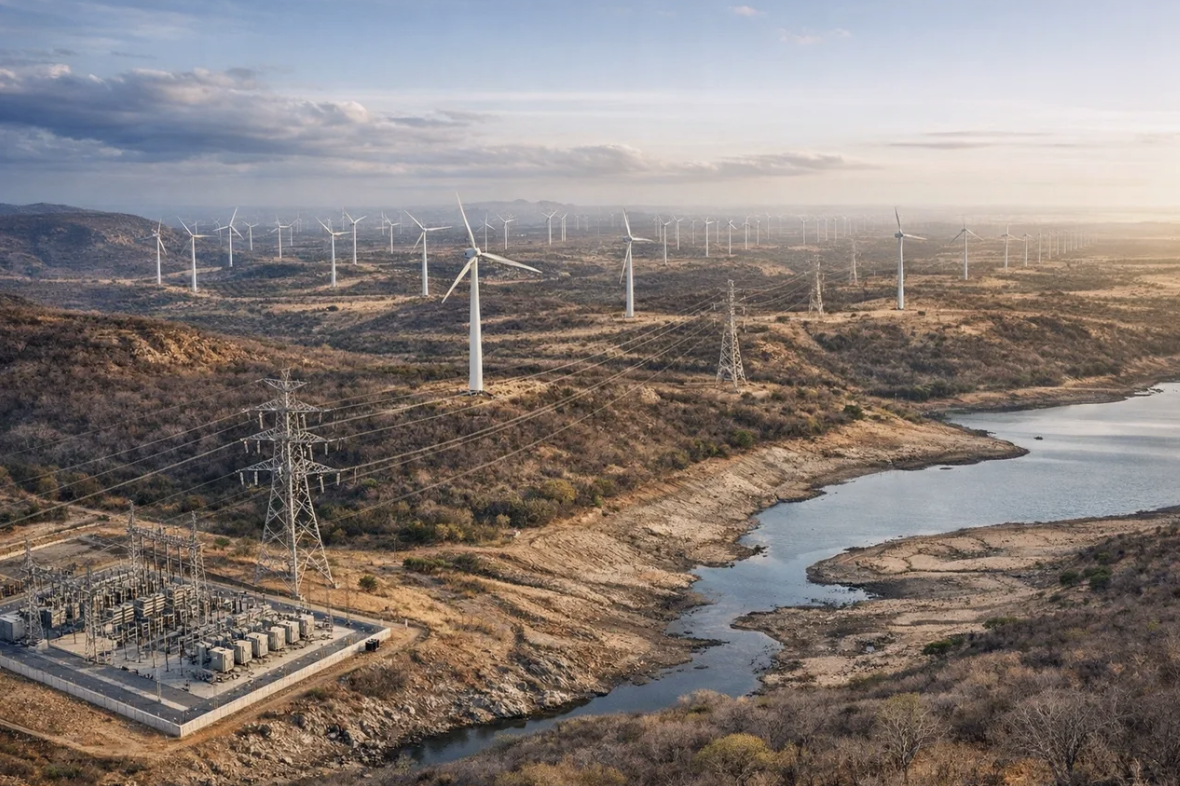
    Capital stocks shifted from hydroelectric plants toward a more diverse portfolio, including wind, utility-scale solar, and mass-distributed solar. Wind capacity scaled from about 1 GW in 2010 to over 33 GW by 2025—leveraging the northeastern dry season to mitigate hydropower variability. Distributed solar expanded rapidly from less than 1 GW in 2018 to over 40 GW by 2025, with 3.7 million small-scale systems installed on homes and businesses. This diversification responded directly to drought-induced constraints on hydropower production, with wind and solar taking larger shares of the generation mix. 

    Capital flows shifted from state-centered lending and centralized dispatch toward blended finance for new market segments and more complex grid flows. Finance evolved from heavy reliance on BNDES toward de-risking strategies aimed at attracting institutional investors, including green debentures, with public finance playing a catalytic role. Electricity flows shifted as wind from the Northeast and solar from multiple regions fed the national system. Behind-the-meter generation helped address part of the supply challenge, but also created revenue‑model challenges for utilities. Knowledge deepened as firms adapted technologies to local conditions—for example, modifying wind turbines to match Brazilian wind regimes and turbulence. 

    Institutions co-evolved with these changes. New tensions emerged around land use for wind farms, electricity affordability, and the risks of boom‑and‑bust investment cycles. Brazil’s national energy regulator and energy planning agency institutionalized competitive electricity auctions, setting a benchmark across Latin America for transparent pricing and investor confidence. Social tensions were particularly acute where wind farms overlapped with traditional communities and required active management. The 2025 Ecological Transformation Plan highlighted the need for a just transition, emphasizing fairness and the impacts on communities, as well as the potential creation of 2 million jobs and a 0.8% increase in GDP. The drought and water crisis of 2021 accelerated diversification, while electricity bill increases of roughly 20% between 2021 and 2023 intensified pressure to reduce costs through renewables. 

    Crises, markets, and policy choices

    Brazilian energy policies deliberately encouraged experimentation across technologies and business models. Markets and crises then selected the most effective approaches, which diffused domestically and beyond Brazil. Policy generated diversity across technologies, ownership structures, and system solutions. Hybrid plants that combine wind, solar, and storage have emerged to address constrained transmission corridors in the Northeast. The free energy market expanded, enabling power‑purchase agreements that bypassed traditional utilities for large consumers. 

    Auctions and droughts pushed the system toward rewarding low-cost, complementary, and bankable projects in contrast to the fragility of large hydropower. Competitive auctions drove prices down until wind and solar outcompeted new thermal additions; by 2024, the levelized costs of new wind and solar were lower than maintaining expensive natural-gas-based backup capacity. The droughts of 2014 and 2021 forced systemic change, penalizing systems that lacked diversification or firm‑energy guarantees. Affordability became a primary driver as rising electricity bills increased pressure for lower-cost direct generation and diversified renewables. 

    Business models and generation systems that proved effective spread across Brazil and influenced regional peers. Brazil’s auction model informed procurement approaches in Colombia and Argentina. Infrastructure—particularly high‑voltage transmission lines—was critical to moving renewable energy from the North and Northeast to demand centers in the Southeast. Storage diffusion accelerated following regulatory advances beginning in 2023, aimed at managing the growing share of variable solar generation. 

    How the state made renewables bankable

    Brazil’s government acted not as a passive regulator but as a market‑maker and risk absorber. This approach focused on targeted state functions that unlocked private investment while maintaining reliability and social legitimacy. The state provided direction through long-term planning and institutional continuity, anchored in investments that outlasted political cycles. The 2025 Ecological Transformation Plan articulated this mission, projecting up to 2 million jobs and an average annual increase in GDP of 0.8% under full implementation scenarios. Planning entities and system operators prioritized reliability. The independence of the National Electric System Operator was critical in buffering political instability. The 2021 drought—the worst in roughly 90 years—severely depleted hydropower reservoirs, triggering emergency measures and reinforcing diversification as an energy‑security strategy.

    The state shaped market architecture through auctions, distributed‑generation legislation, bankability standards, and continuous adaptive management. Reverse auctions provided transparent price discovery and long-term contracts. Distributed generation legislation increased regulatory certainty and underpinned the rapid scaling of solar. The state also advanced green taxonomies and carbon‑market frameworks aligned with international standards. 

    The state mobilized capital for public investment and innovation ecosystems, but grid constraints became the binding bottleneck. BNDES concessional loans with local‑content requirements supported domestic wind‑manufacturing clusters. Transmission and interconnection emerged as strategic public goods, yet grid expansion lagged variable renewable deployment, contributing to curtailment. Eco‑Invest introduced mechanisms to hedge currency risk and reduce foreign‑exchange exposure for foreign investors. Public research and development supported agrivoltaics and floating solar on reservoirs, aiming to convert hydropower assets into hybrid generation hubs. 

    Three lessons from a big system transition

    Brazil’s 2010–2025 transition shows that renewable energy success rests on institutions—market rules, planning capacity, financial structures, and social safeguards—not just on installed capacity. The three key messages are:

    · Use auctions and clear contracting to drive costs down—but pair them with grid and permitting capacity, or curtailment and delays will destroy value.

    · Development finance can catalyze private investment and industrial learning, but over-reliance is fiscally risky—design a glide path toward capital‑market financing.

    · Social legitimacy is a system constraint: territorial rights, benefit sharing, and affordability must be embedded in market architecture, not treated as afterthoughts in licensing.

    Brazil demonstrated that a hydropower-heavy system can evolve into a diversified renewable powerhouse. The next step—for Brazil and the region—is to make the transition not only fast and low‑cost, but also grid‑secure, fiscally durable, and socially fair.

  • Brazil’s Transformation from 1930 to 1980

    Brazil’s Transformation from 1930 to 1980

    Brazil transformed from a coffee exporter to an industrial economy between 1930 and 1980. This is one of the most deliberate and consequential development experiments of the twentieth century. This was not simply a story of Brazil building “more factories.” It was an economy-wide transformation: what Brazil invested in, how capital moved through the system, which institutions gained influence, how cities expanded, how work and living conditions changed, and how the state learned to plan and coordinate long-horizon development. Within a single lifetime, Brazil built industrial platforms, expanded infrastructure, created development finance institutions, and assembled policy tools to mobilize investment over decades. But that transformation did not occur under a single political regime: after the 1964 military coup, industrialization was pursued under authoritarian rule, which increased technocratic insulation and centralized coordination while constraining labor politics and civic feedback—changing both the pace of growth and the distribution of its gains.

    For policymakers across Latin America and the Caribbean (LAC), Brazil’s experience remains relevant because many countries today face a comparable challenge under new conditions. The green transition, rapid technological change, and geopolitical fragmentation are forcing economies to adapt quickly while maintaining social cohesion. The core question is no longer whether economies will change, but whether that change will be shaped deliberately or left to shocks. Brazil illustrates what becomes possible when structural transformation is treated as a national project—and what can go wrong when investment and production expand faster than the institutions needed to manage inflation, external exposure, and distributional conflict. 

    This blog offers a practical reading of Brazil’s transformation through three lenses. First, it clarifies what changed—from physical capital and capital flows to institutions, social order, and the rhythms of boom and vulnerability. Second, it explains what drove those changes—how crises and policy choices generated new economic “experiments,” how some models were selected and scaled, and how capabilities diffused across the economy. Third, it identifies how the state made the transition possible—through direction and coordination, macro rules, infrastructure and public goods, financing and risk management, and the learning systems needed to adapt over time. The goal is not to romanticize the era or offer a blueprint, but to extract usable lessons: what to emulate, what to avoid, and which institutional capacities matter most when a country attempts to industrialize under uncertainty.

    Scale and composition of Brazil’s structural shift

    Brazil shifted from a primarily agricultural export economy to a major industrial economy between 1930 and 1980. Import substitution played a central role, and early heavy-industry platforms were built in steel, with the National Steel Company (CSN) established in 1941 and operating by 1946. Vale (1942) and Petrobras (1953) emerged as additional platform firms supporting minerals/logistics and energy, respectively. By 1980, manufacturing accounted for roughly 30% of GDP. 

    Import-substitution policies reduced reliance on imported manufactures and redirected capital toward domestic production. Brazil founded its National Bank for Economic Development (BNDE) in 1952 (later renamed BNDES) to finance national development, focusing on infrastructure and industry. Alongside development banking, major private banks such as Bradesco (1943) and Itaú (1945) expanded financial intermediation as the urban-industrial economy scaled. Foreign capital inflows became increasingly important—especially in the 1970s, when imports grew faster than exports—supporting investment in capital-intensive sectors such as energy (Petrobras) and heavy-industry supply chains.

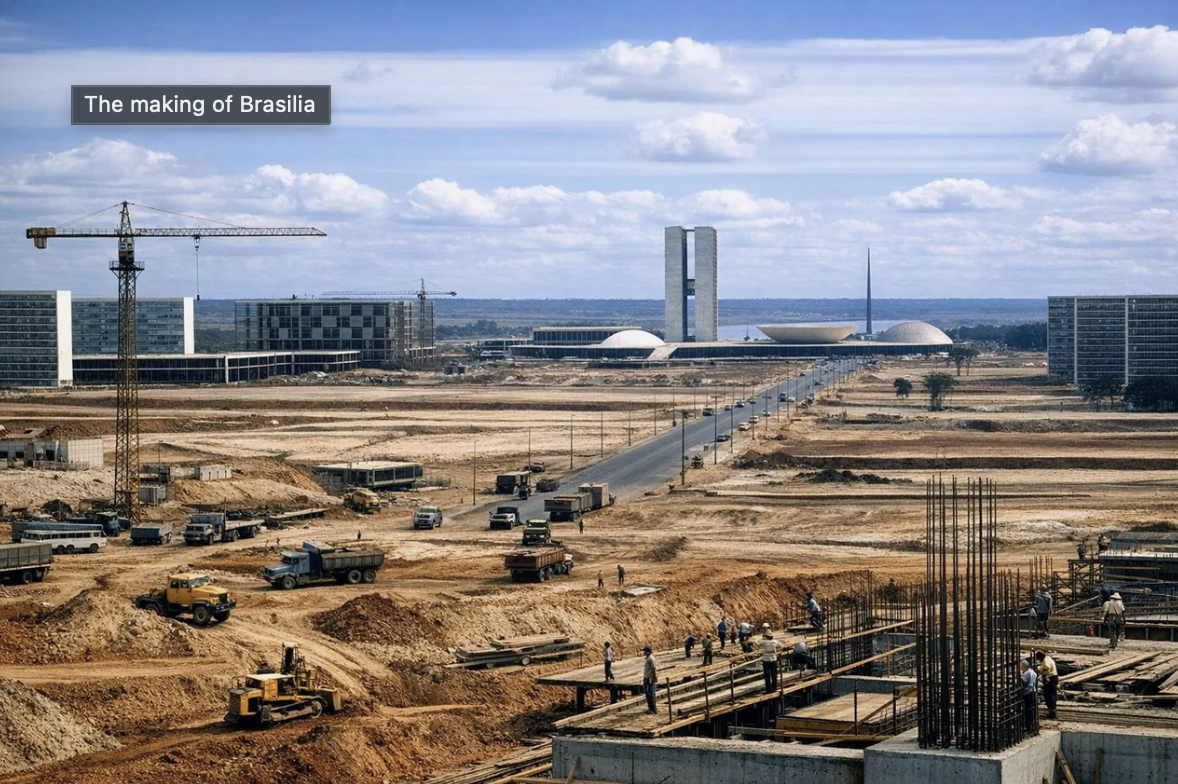
    Economic planning and coordinated industrial policy became the norm. The 1956–1961 Goals Plan (Plano de Metas) reflected this growing planning capacity, prioritizing energy, transport, and industry to reduce bottlenecks and accelerate investment. This period also supported the expansion of national power capabilities through firms such as Eletrobras. BNDES played a long-term role in infrastructure and industrial finance and later expanded its use of capital-market instruments to channel funds toward development priorities. Brasília—constructed as a new federal capital beginning in 1956—became the flagship “planning-as-project” symbol of the era, bundling transport links, housing, utilities, and administrative functions into a single national initiative. The 1964 military coup marked a structural break in how this coordination operated. Planning and macroeconomic management became increasingly centralized and insulated from politics, as the authoritarian regime curtailed labor bargaining and constrained subnational autonomy. After 1964, the Government Economic Action Plan (PAEG) strengthened modern central banking functions and fiscal controls under conditions that enabled wage restraint and tighter political control, helping govern inflation and stabilize investment cycles that affected capital‑intensive champions such as Petrobras and Eletrobras, and later strategic manufacturers such as Embraer, founded in 1969.

    Brazil urbanized rapidly, rising from an estimated 30% urban in 1930 to about 68% by 1980, driven by massive rural-to-urban migration of roughly 20 million people. Large transport megaprojects also reshaped settlement dynamics—most notably the Trans-Amazonian Highway, initiated in 1970 as part of a national integration strategy. Industrial labor markets and labor politics became central features of development. During the military dictatorship, rapid industrial expansion was accompanied by explicit repression of organized labor and limits on collective bargaining. Wage growth was deliberately compressed as part of a broader strategy to stabilize inflation and raise profitability, allowing capital accumulation and industry to advance while postponing distributional adjustment. As a result, the “economic miracle” rested not only on productivity gains and investment surges, but also on authoritarian management of labor relations and income distribution.

    Brazil sustained very high growth for decades, averaging roughly 8% per year from the 1950s through the 1970s. Growth peaked between 1968 and 1974 at roughly 11% annual real GDP growth. This expansion coexisted with chronic inflation: inflation peaked around 100% in 1964, declined to roughly 19% by the late 1960s, and then rose again to around 80% per year in the 1970s. The post‑1964 decline in inflation reflected not only improved macroeconomic instruments but also the regime’s capacity to suppress wage‑price spirals through political control. While this strengthened short‑term investment predictability, it also masked unresolved distributional pressures that re‑emerged later as macroeconomic fragility.

    Shocks, policy choices, and the build-out of capabilities

    External shocks—including the Great Depression and World War II-era disruptions—pushed the state to experiment with new industrial activities, from steel and autos to capital goods. Coffee’s dominance in the export economy heightened this vulnerability: between 1889 and 1933, coffee accounted for roughly 61% of export earnings. When global demand collapsed, coffee prices fell sharply, and the state intervened aggressively, purchasing and destroying roughly 78 million sacks of coffee between 1931 and 1944. In the 1960s and 1970s, policy shifted toward export diversification and large-scale industrial upgrading. 

    The state protected domestic industry through tariffs, trade controls, and market structuring, allowing firms time to learn, invest, and scale. State enterprises focused on strategic sectors underprovided by private capital—especially in heavy industry. Output indicators underline the scale of industrial deepening: steel production rose from about 2.8 million tons in 1964 to about 9.2 million tons in 1976, while passenger car production increased from roughly 184,000 in 1964 to about 986,000 in 1976. BNDE/BNDES financed development priorities and later expanded industrial finance instruments, including a Special Agency for Industrial Financing (FINAME), a key mechanism for financing industrial machinery and equipment. 

    Energy and transport investments lowered system-wide costs and enabled industrial activities to spread beyond initial enclaves, including the São Paulo industrial core that had grown around the earlier coffee economy. Urbanization accelerated the diffusion of labor, skills, and markets, creating larger industrial labor pools and consumer demand. Policy frameworks and investment pipelines—often implemented through large development projects—helped replicate industrial capabilities across sectors, although regional gaps persisted and some areas remained underserved.

    Planning, finance, and public investment as development engines

    The Brazilian state guided development through planning and policy, beginning with import substitution in the 1930s and expanding into broader industrialization from the 1950s through the 1970s. Goal-based planning made priorities explicit and emphasized rapid structural change. After 1964, coordination became highly centralized under authoritarian rule, enabling technocratic agencies to scale investment, deliver major infrastructure projects, and expand export capacity with limited political resistance. This insulation accelerated execution but reduced feedback from labor, regions, and civil society.

    The state also pursued macroeconomic stabilization and institution building during the 1960s, including the PAEG program in 1964 and the creation and strengthening of central banking functions. It established trade and industrial-policy rules—tariffs, incentives, and credit allocation mechanisms—that shaped investment and protected learning-by-doing in manufacturing. These reforms proved more durable under authoritarian conditions that constrained wage demands and political contestation. However, by resolving macroeconomic tensions through repression rather than negotiated adjustment, the model accumulated vulnerabilities that became visible once external conditions tightened and political liberalization began.

    Public investment in infrastructure and public goods provided the base for industrial development. Investment prioritized energy and transport, reducing bottlenecks and enabling scale. In practice, this included major state-led expansion of power generation and distribution from the 1940s onward, especially large-scale hydropower that supported industrial growth. State-owned enterprises built the base for upstream industries such as steel, a critical input for machinery, construction, autos, and infrastructure. Under military rule, large-scale projects also served political and geopolitical objectives—symbolizing regime modernity, reinforcing territorial control, and channeling capital through centralized state institutions. Investment in human capital and social welfare lagged behind physical infrastructure, contributing to uneven progress and compounding the long‑run costs of rapid industrialization. Some 1970s integration projects, including frontier highways, generated environmental and social stresses that were weakly addressed under authoritarian conditions. 

    BNDES played a critical role in mobilizing long-term capital. It financed infrastructure and industrial development and later evolved instruments to support equipment investment and equity participation. Crowding in private and foreign capital was also central to the model, helping fund expansion in capital-intensive sectors. However, reliance on imported inputs, capital goods, and external financing increased exposure to global shocks—vulnerabilities that became more visible after the 1970s.

    Import substitution built foundational capabilities for industrial production and broader industrial ecosystems. However, investment often outpaced adaptive management: the model scaled rapidly but struggled to reconfigure toward sustained export competitiveness. Urbanization and infrastructure clusters helped spread knowledge and capabilities, but the uneven diffusion across regions contributed to distributional tensions that became harder to manage over time.

    Practical lessons on industrial policy, macro-stability, and inclusion

    Brazil’s development arc from 1930 to 1980 shows that structural transformation can be engineered—especially when the state plays a sustained role as strategist, builder, and financier. Over these decades, Brazil expanded industrial capacity and infrastructure, strengthened planning and development finance, and built institutional scaffolding capable of coordinating long-horizon investment. At the same time, the experience of industrialization under military rule highlights that coordination achieved through authoritarian action is limited. Growth acceleration after 1964 relied on suppressing distributional conflict rather than resolving it through durable institutions. As a result, Brazil built industry faster than it built legitimate stabilizers—credible macro rules, social compacts, and adaptive governance mechanisms—leaving the model exposed when external shocks and political liberalization arrived. 

    At the same time, Brazil’s experience shows that growth and industrial scale are not the same as resilience and inclusion. The model’s most important weaknesses were institutional and social, not merely technical—rapid expansion coexisted with persistent inflationary pressure and rising macro fragility. Urbanization outpaced housing and service provision, and the distribution of gains often lagged what was needed to sustain long-term legitimacy. In short, Brazil built factories and infrastructure faster than it built stabilizers—credible rules, risk management, and social compacts—that protect development gains when conditions change. 

    For LAC policymakers today, the most useful lesson is to treat development strategy as a balanced portfolio of state functions rather than a single policy tool. Direction and coordination matter—but so do macro rules that prevent inflation and external exposure from undermining investment. Public investment must build enabling platforms and be matched with financing systems that mobilize private capital while managing risk. Above all, governments need dynamic capabilities: the ability to learn, correct course, and upgrade competitiveness as technologies and markets evolve. Brazil’s story is a reminder that industrialization is not a single leap, but a sequence of choices made over decades. Countries succeed not by avoiding shocks, but by building institutions strong enough to adapt—so that transformation becomes a source of shared prosperity rather than recurring vulnerability. 

  • What Coffee Did That Rubber Didn’t: Brazil, 1879–1912

    What Coffee Did That Rubber Didn’t: Brazil, 1879–1912

    Between 1879 and 1912, Brazil experienced two commodity booms that unfolded simultaneously within the same country and under the same global economic forces, yet produced radically different long-term outcomes. Rubber and coffee both connected Brazil to world markets, generated export revenues, and attracted labor and capital. But only one of these commodities helped build durable institutions, accumulate productive capabilities, and lay the groundwork for sustained development. The other collapsed, leaving behind wealth and growth but no transformation.

    This contrast matters well beyond Brazilian history. Across Latin America and the Caribbean, policymakers continue to grapple with a familiar dilemma: how to convert commodity abundance into long-term prosperity. Natural resources remain central to national economies, whether in agriculture, mining, energy, or biodiversity-based products. Yet the region’s experience shows that export success alone is not enough. What matters is how production is organized, how labor is incorporated, how infrastructure is built, and—above all—how the state engages with markets over time.

    The comparison between rubber and coffee offers a powerful lens for examining these issues. Rubber was extracted from the Amazon under conditions of weak governance, fragmented markets, coercive labor systems, and minimal state coordination. Despite Brazil’s near-monopoly position in global rubber markets, the boom proved fragile and collapsed rapidly once external competition emerged. Coffee, by contrast, became embedded in a denser institutional environment in São Paulo and the Southeast. It helped generate transport, finance, regulation, and labor systems that gradually aligned private incentives with public capacity. Over time, this alignment enabled adaptation, learning, diversification, and ultimately industrialization.

    Coffee production was not benign or equitable, nor was rubber doomed by nature or geography alone. Instead, this blog demonstrates how distinct institutional choices and state roles shaped the evolution of two commodity systems under similar external conditions. For contemporary policymakers and citizens alike, the lesson is clear: development is not determined by what a country exports, but by how economic activity is governed, coordinated, and allowed to evolve.

    How rubber and coffee rewired Brazil’s economy

    Between 1879 and 1912, Brazil underwent substantial economic and social transformations centered on rubber and coffee. Rubber was exported primarily as latex, with minimal value-added processing, whereas coffee production required processing, transportation, and the development of financial intermediation capacity. Rubber followed a classic boom‑and‑bust cycle, while coffee evolved through a longer-term, managed cycle.

    Rubber-producing cities such as Manaus and Belém expanded rapidly in the Amazon, while São Paulo grew as the center of the coffee economy. However, whereas population settlement in São Paulo was persistent, migration to the Amazon was more precarious and often reversible, with substantial return migration following the collapse of rubber prices. The Amazonian rubber economy relied on a transient labor system, while coffee production anchored migrants more durably into local demographic structures.

    Infrastructure investments in both the Amazon and Sao Paolo focused on ports, river steam navigation, and railways in areas where sufficient resources and political coordination were available. Despite export growth, most of Brazil remained poorly integrated and underdeveloped.

    Skill formation remained limited, particularly in the rubber economy, where production remained centered on extraction. Nevertheless, there was significant migration from northeastern Brazil to the Amazon and from Europe to São Paulo. Formal education systems advanced little during this period. Rubber extraction required minimal training and relied heavily on local ecological knowledge, whereas coffee production demanded agronomic, financial, and logistical expertise that could be accumulated, transmitted, and diffused regionally.

    Institutional capacity expanded significantly in São Paulo through taxation, rail regulation, and financial development. In contrast, the Amazon retained an informal, personalized governance structure characterized by weak, coercive authority and limited support for public goods. These patterns persisted after the fall of the Empire in 1889, as regional oligarchies consolidated power and continued their respective development paths. Social systems were highly hierarchical, with extreme inequality between owners and indigenous or migrant laborers, often enforced through violence.

    The rubber boom required relatively limited transformation of natural ecosystems, as latex was extracted directly from dispersed wild Hevea trees. Coffee cultivation, by contrast, required extensive land‑use conversion and soil depletion, pushing agricultural frontiers deeper into forested areas. In both systems, natural capital was treated as effectively inexhaustible.

    Coffee elites acquired national prominence and political influence. In contrast, wealth and power in the rubber economy were concentrated among the so-called “rubber barons,” who remained socially and culturally isolated within the Amazon. Rubber production relied heavily on debt peonage and coercion to secure labor, frequently accompanied by extreme violence, while coffee plantations gradually transitioned toward wage labor and contractual arrangements.

    Export rents from rubber were largely consumed or transferred abroad, including investment in luxury projects such as the Manaus opera house, rather than reinvested in productive diversification. 

    Why did the two systems evolve differently?

    In the rubber economy, production was constrained by an extractive system that could not be scaled efficiently because trees were widely dispersed and extraction techniques changed little over time. Coffee, in contrast, could be scaled through plantation agriculture and supported by innovations in transport, finance, and labor organization. Rubber production was structured around patronage-based debt networks between traders and tappers, whereas coffee was organized through firms, banks, transport systems, and export houses. The Amazon posed severe logistical challenges, including limited connectivity, high disease burdens, and weak or nonexistent institutions. The Southeast, by contrast, benefited from ports, railways, skilled migrants, and dense financial networks.

    Rubber succeeded as a raw material primarily in the absence of external competition. The industry collapsed rapidly once Asian plantation rubber entered global markets. Initial rubber profits were high but volatile and fragile. Coffee remained competitive as economies of scale expanded, supporting infrastructure development and improved coordination. Although coffee margins were lower, the system proved more resilient to external shocks, in part because coffee-growing regions developed institutions aligned with market needs. Rubber regions failed to institutionalize learning or adapt their production model.

    As an extractive industry, rubber exhibited little innovation and remained locked into coercive labor arrangements. Coffee production evolved in response to competition, developing increasingly sophisticated financial, logistical, and contractual systems. São Paulo later built on these institutional foundations to transition to industrialization after 1910.  

    The state makes a decisive difference

    In the early stages, the state played a limited role in both coffee and rubber, beyond promoting export expansion and relying heavily on commodity rents. Over time, coffee elites gained influence over federal policy, while rubber elites remained politically isolated and lacked national leverage. As infrastructure and public services expanded in São Paulo, the state assumed a progressively more legitimate and active role. In the Amazon, the absence of state authority enabled coercive labor practices and land appropriation, whereas in São Paulo, property rights, contract enforcement, and financial regulation became increasingly important for coffee production.

    Coffee production in São Paulo and the Southeast became embedded within strong state governments that developed fiscal, administrative, and coordination capacities. These governments actively shaped markets through infrastructure investment, immigration policies, banking development, and price management. By contrast, the rubber boom unfolded largely in the absence of effective state presence, with government involvement confined primarily to export taxation and territorial sovereignty. Coordinated market governance proved essential for stabilizing coffee prices amid external shocks, whereas such mechanisms were absent in the rubber economy. Labor systems in rubber production remained characterized by debt peonage, coercion, and violence, whereas coffee production gradually transitioned toward regulated free labor following abolition, supporting longer-term development. Political alignment between São Paulo, the Southeast, and the federal government was critical in securing national support, whereas the Amazon’s limited political power translated into minimal federal assistance.

    Rubber extraction depended almost entirely on river transport, and attempts to extend rail infrastructure—such as the Madeira–Mamore railway—were extraordinarily costly and often disastrous. Railways, ports, and financial institutions were central to the expansion of coffee. Coffee benefited from coordinated export systems, while the rubber market remained fragmented and predatory. In São Paulo and the Southeast, infrastructure development was part of an integrated, state-led process linking politics and the economy, creating durable institutions and enabling diversification. In the Amazon, rubber production was driven by the boom itself, with limited state involvement in long-term development or institutional durability.

    Export taxes played an important role in both systems, but were not effectively deployed to promote diversification or stabilization. The state proved unable to respond to the displacement of Amazonian rubber by Asian production after 1912. In contrast, the coffee sector adapted through price management and institutional evolution, supporting a gradual transition toward industrialization. 

    Lessons for development policy

    The Brazilian experience between 1879 and 1912 demonstrates that commodity booms are not inherently a curse or a blessing. They are moments of choice. Rubber and coffee generated wealth under similar global conditions, yet only one sustained a trajectory of development. The difference lay not in prices or demand, but in institutions, governance, and the evolving relationship between the state, markets, and society.

    Rubber’s collapse was not caused by a lack of global importance—Brazil supplied the vast majority of the world’s rubber at the height of the boom—nor by a lack of profits. It failed because production remained locked into an extractive model that discouraged learning, relied on coercion rather than contracts, fragmented markets, and operated largely beyond the reach of effective public authority. When competition arrived, the system had no capacity to adapt or shift focus. Coffee, by contrast, faced recurring crises of overproduction and price volatility, yet proved more resilient because it was embedded in institutions that enabled coordination, investment, and gradual transformation.

    For Latin America and the Caribbean today, this historical comparison carries a direct and practical message. Commodity-based growth can support development only when it is accompanied by deliberate efforts to build state capacity, regulate markets, protect labor, and reinvest rents into productive systems. Infrastructure without institutions is fragile. Market power without coordination is fleeting. And growth without learning rarely endures.

    As the region confronts new commodity frontiers—from energy transition minerals to artificial intelligence to biodiversity-based products and climate-related services—the question is not whether these resources can generate exports, but whether they can be embedded in economic systems that promote resilience, inclusion, and adaptation. Brazil’s past shows that outcomes are not predetermined. It is shaped by policy choices, political coalitions, and states’ willingness to move beyond extraction toward governance.

    History does not offer simple templates, but it does offer warnings—and possibilities. The tale of rubber and coffee ultimately reminds us that development is built not on commodities themselves, but on the institutions that grow around them.