Category: Case Studies

Empirical case studies examining development trajectories, policy choices, institutional responses, and social‑ecological outcomes across countries and regions.

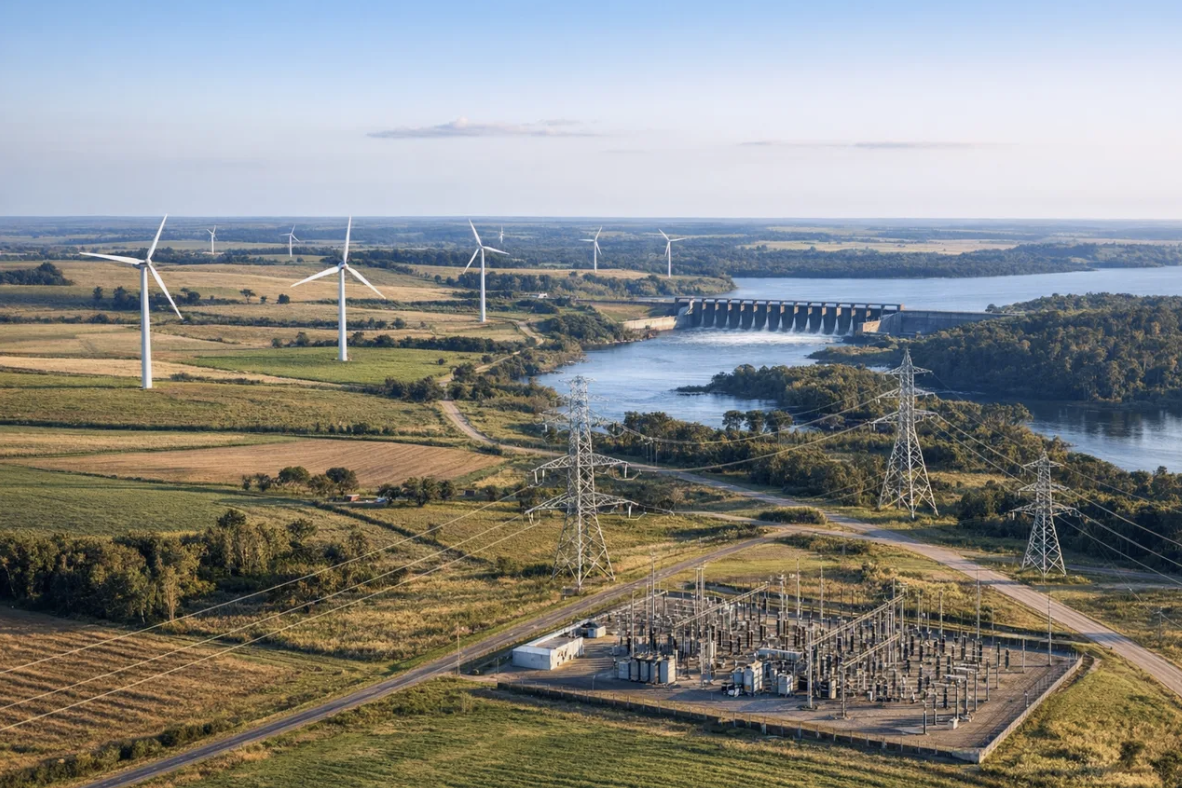
  • Making Renewables Work: Brazil’s Transformation, 2010–2025

    Making Renewables Work: Brazil’s Transformation, 2010–2025

    Recent changes in Brazil’s power system provide a clear case study of rapid renewable-scale-up under real constraints, including droughts, high domestic interest rates, and land-use challenges. Between 2010 and 2025, Brazil added more than 30 GW of wind and tens of gigawatts of solar capacity, including distributed photovoltaics. Brazil fundamentally changed who produces electricity and how the grid operates. This case study shows how to lower prices through competitive procurement, mobilize capital through development finance, and build industrial capabilities. It also illustrates challenges—such as curtailment, licensing bottlenecks, and distributional conflicts—that can derail the transition process. 

    The region already has relatively clean energy matrices, and many countries are committed to expanding renewables—but lack the institutional and infrastructure capacity to make renewables reliable and socially legitimate. Brazil’s experience demonstrates the upside of market‑making and the downside of permitting processes and equity considerations lagging deployment. 

    Renewable energy plans should deliver four outcomes simultaneously: (1) low-cost supply, (2) drought resilience, (3) bankable investment contexts, and (4) credible social and environmental safeguards without depending on unsustainable fiscal subsidies. Renewable energy should be viewed as a systemic transformation, not just technology procurement. As such, changes to market rules, grids, financing, and governance are needed to enable wind and solar to scale without creating stranded assets or social conflicts. 

    This blog examines how the human ecosystem surrounding renewable energy has changed, what drove those changes, and what the state did to implement them. 

    Shifting assets, flows, and risks

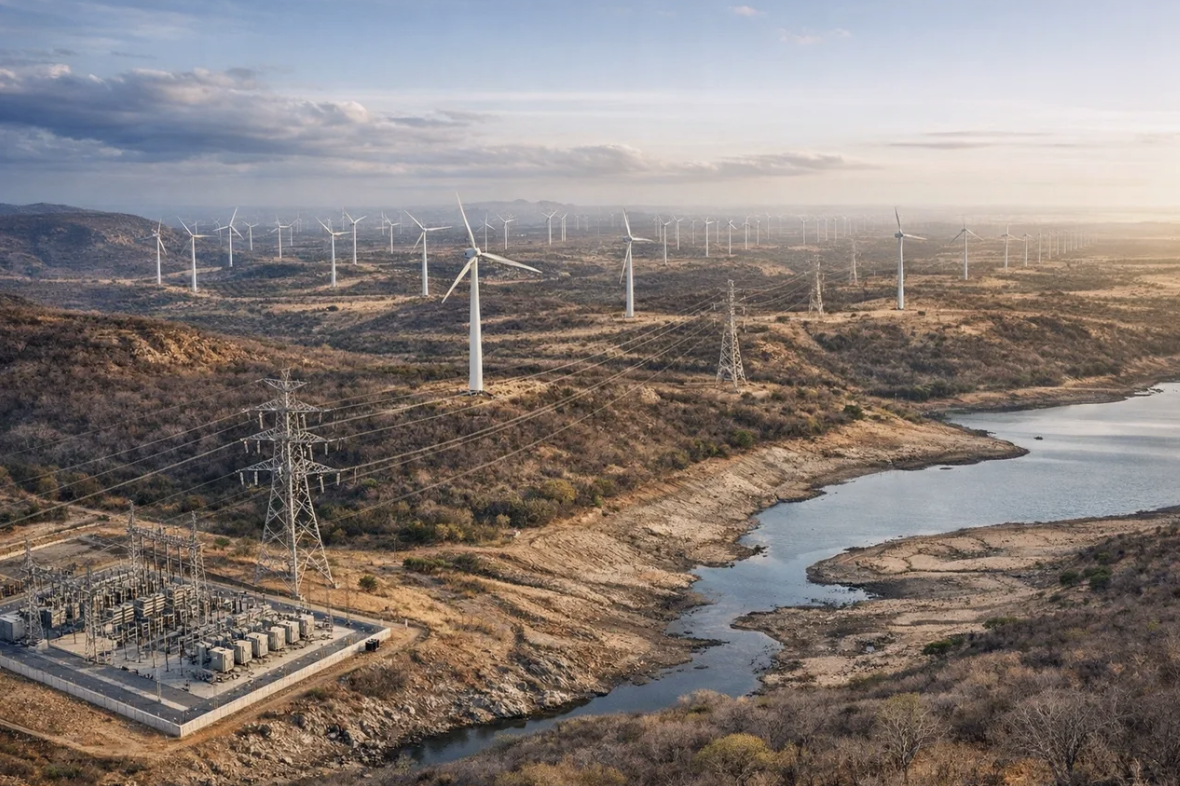
    Capital stocks shifted from hydroelectric plants toward a more diverse portfolio, including wind, utility-scale solar, and mass-distributed solar. Wind capacity scaled from about 1 GW in 2010 to over 33 GW by 2025—leveraging the northeastern dry season to mitigate hydropower variability. Distributed solar expanded rapidly from less than 1 GW in 2018 to over 40 GW by 2025, with 3.7 million small-scale systems installed on homes and businesses. This diversification responded directly to drought-induced constraints on hydropower production, with wind and solar taking larger shares of the generation mix. 

    Capital flows shifted from state-centered lending and centralized dispatch toward blended finance for new market segments and more complex grid flows. Finance evolved from heavy reliance on BNDES toward de-risking strategies aimed at attracting institutional investors, including green debentures, with public finance playing a catalytic role. Electricity flows shifted as wind from the Northeast and solar from multiple regions fed the national system. Behind-the-meter generation helped address part of the supply challenge, but also created revenue‑model challenges for utilities. Knowledge deepened as firms adapted technologies to local conditions—for example, modifying wind turbines to match Brazilian wind regimes and turbulence. 

    Institutions co-evolved with these changes. New tensions emerged around land use for wind farms, electricity affordability, and the risks of boom‑and‑bust investment cycles. Brazil’s national energy regulator and energy planning agency institutionalized competitive electricity auctions, setting a benchmark across Latin America for transparent pricing and investor confidence. Social tensions were particularly acute where wind farms overlapped with traditional communities and required active management. The 2025 Ecological Transformation Plan highlighted the need for a just transition, emphasizing fairness and the impacts on communities, as well as the potential creation of 2 million jobs and a 0.8% increase in GDP. The drought and water crisis of 2021 accelerated diversification, while electricity bill increases of roughly 20% between 2021 and 2023 intensified pressure to reduce costs through renewables. 

    Crises, markets, and policy choices

    Brazilian energy policies deliberately encouraged experimentation across technologies and business models. Markets and crises then selected the most effective approaches, which diffused domestically and beyond Brazil. Policy generated diversity across technologies, ownership structures, and system solutions. Hybrid plants that combine wind, solar, and storage have emerged to address constrained transmission corridors in the Northeast. The free energy market expanded, enabling power‑purchase agreements that bypassed traditional utilities for large consumers. 

    Auctions and droughts pushed the system toward rewarding low-cost, complementary, and bankable projects in contrast to the fragility of large hydropower. Competitive auctions drove prices down until wind and solar outcompeted new thermal additions; by 2024, the levelized costs of new wind and solar were lower than maintaining expensive natural-gas-based backup capacity. The droughts of 2014 and 2021 forced systemic change, penalizing systems that lacked diversification or firm‑energy guarantees. Affordability became a primary driver as rising electricity bills increased pressure for lower-cost direct generation and diversified renewables. 

    Business models and generation systems that proved effective spread across Brazil and influenced regional peers. Brazil’s auction model informed procurement approaches in Colombia and Argentina. Infrastructure—particularly high‑voltage transmission lines—was critical to moving renewable energy from the North and Northeast to demand centers in the Southeast. Storage diffusion accelerated following regulatory advances beginning in 2023, aimed at managing the growing share of variable solar generation. 

    How the state made renewables bankable

    Brazil’s government acted not as a passive regulator but as a market‑maker and risk absorber. This approach focused on targeted state functions that unlocked private investment while maintaining reliability and social legitimacy. The state provided direction through long-term planning and institutional continuity, anchored in investments that outlasted political cycles. The 2025 Ecological Transformation Plan articulated this mission, projecting up to 2 million jobs and an average annual increase in GDP of 0.8% under full implementation scenarios. Planning entities and system operators prioritized reliability. The independence of the National Electric System Operator was critical in buffering political instability. The 2021 drought—the worst in roughly 90 years—severely depleted hydropower reservoirs, triggering emergency measures and reinforcing diversification as an energy‑security strategy.

    The state shaped market architecture through auctions, distributed‑generation legislation, bankability standards, and continuous adaptive management. Reverse auctions provided transparent price discovery and long-term contracts. Distributed generation legislation increased regulatory certainty and underpinned the rapid scaling of solar. The state also advanced green taxonomies and carbon‑market frameworks aligned with international standards. 

    The state mobilized capital for public investment and innovation ecosystems, but grid constraints became the binding bottleneck. BNDES concessional loans with local‑content requirements supported domestic wind‑manufacturing clusters. Transmission and interconnection emerged as strategic public goods, yet grid expansion lagged variable renewable deployment, contributing to curtailment. Eco‑Invest introduced mechanisms to hedge currency risk and reduce foreign‑exchange exposure for foreign investors. Public research and development supported agrivoltaics and floating solar on reservoirs, aiming to convert hydropower assets into hybrid generation hubs. 

    Three lessons from a big system transition

    Brazil’s 2010–2025 transition shows that renewable energy success rests on institutions—market rules, planning capacity, financial structures, and social safeguards—not just on installed capacity. The three key messages are:

    · Use auctions and clear contracting to drive costs down—but pair them with grid and permitting capacity, or curtailment and delays will destroy value.

    · Development finance can catalyze private investment and industrial learning, but over-reliance is fiscally risky—design a glide path toward capital‑market financing.

    · Social legitimacy is a system constraint: territorial rights, benefit sharing, and affordability must be embedded in market architecture, not treated as afterthoughts in licensing.

    Brazil demonstrated that a hydropower-heavy system can evolve into a diversified renewable powerhouse. The next step—for Brazil and the region—is to make the transition not only fast and low‑cost, but also grid‑secure, fiscally durable, and socially fair.
  • Chile’s Renewable Leap: What LAC Can Copy—and What to Fix

    Chile’s Renewable Leap: What LAC Can Copy—and What to Fix

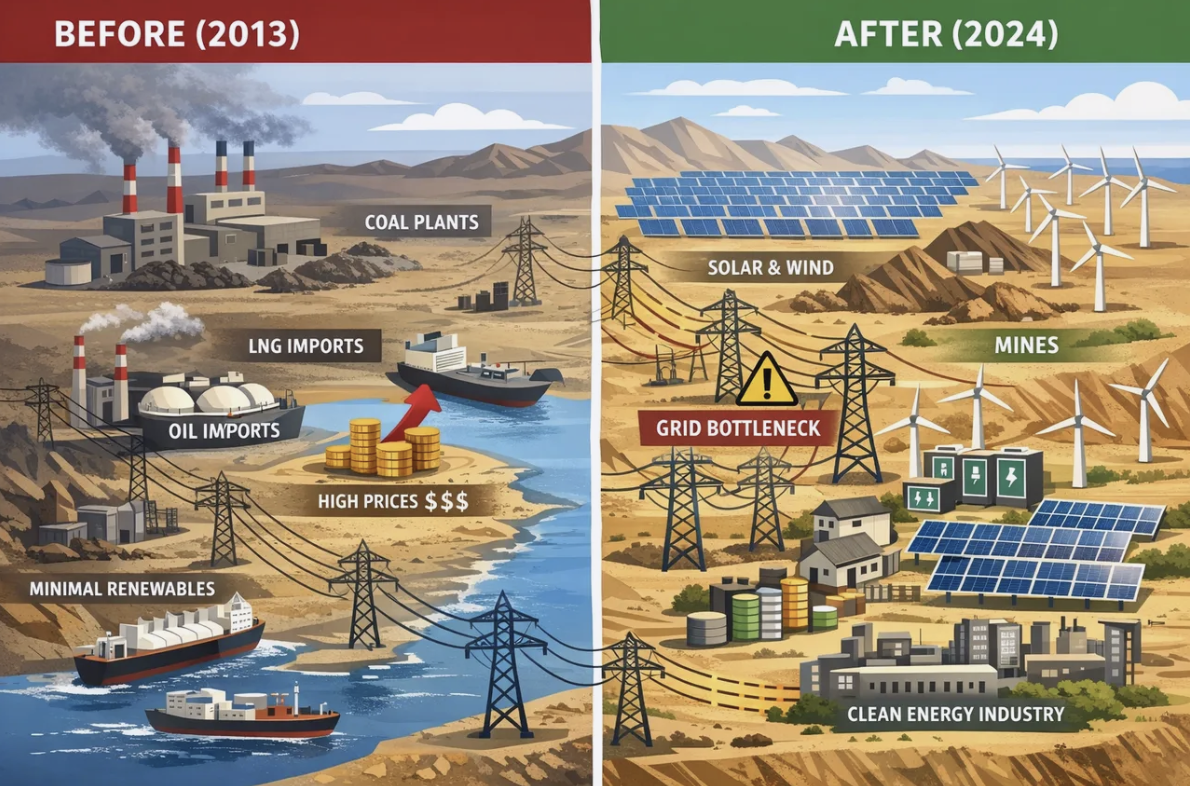
    Chile shows that clean power can be a competitiveness strategy—not just an environmental commitment. In one decade, the country moved from about 63% fossil-fuel generation in 2013 to a system in which renewables provided about 70% of electricity in 2024, with solar and wind accounting for roughly one-third of national generation. 

    The hard part was not “getting renewables built.” The hard part was building systems that scale—grids, flexibility, permitting capacity, and social license—fast enough that cheap renewable power becomes usable power, not curtailed power. Chile’s experience makes this visible: solar and wind curtailment reached about 6 TWh in 2024, a warning sign that infrastructure and governance can lag private investment. 

    Chile’s transition was engineered through market design and state capability. Competitive auctions and long-term contracts drove prices down—bids reached US$13/MWh in the 2021 supply auction, with an average awarded price of US$24/MWh—and mining demand served as an anchor buyer through corporate power purchase agreements (PPAs). Transmission reform and institutional upgrades were aimed at keeping the system reliable as renewables grew. 

    For LAC countries, the prize is clear: lower power costs, stronger export competitiveness, and a credible path to transformation—without triggering backlash from communities or destabilizing the grid. This blog highlights what changed in Chile, why it changed, and why renewables won, and what the state did to turn private capital into scale, and where it still needs to catch up. 

    What changed: assets, money, power flows, and institutions

    Natural capital – the Atacama Desert’s solar resources – was converted into installed solar photovoltaic (PV) capacity. Capacity grew from below 500 MW in 2014 to more than 13 GW in 2024. Wind capacity expanded from 1 GW to over 4 GW in the same period. Socio-economic capital deepened through investment and new industrial energy portfolios. By 2023, there was a pipeline of planned renewable investments that exceeded US$ 15B, mostly foreign direct investment in Atacama solar, transmission, and storage. Mining and energy firms built new, long-term portfolios of utility-scale PV, wind, and storage assets to address risks from imported fuel prices and stabilize energy supply. Chile shifted culturally and institutionally toward “green energy” and away from “energy scarcity.” 

    Energy flows were decarbonized—but also constrained by the grid. Chile reduced fossil-fuel import dependence. Fossil-fuel generation accounted for about 63% in 2013, and renewables reached about 70% by 2024. Yet the success of attracting finance for generation created congestion: renewable curtailment reached around 6 TWh in 2024, because low-cost supply outpaced transmission and grid flexibility. Finance shifted toward competitive pricing and new instruments. Chile attracted low-cost renewable energy finance and shifted from conventional project finance to green bonds and sustainability-linked lending. Auction design and long-term contracting led to dramatic price reductions—solar bids fell from more than US$100/MWh in 2013 to about US$13/MWh in 2021, reinforcing capital reallocation toward renewables. Knowledge flows accelerated through learning-by-doing and improvements in system operations—new capabilities formed in grid management, dispatch, and storage integration. By 2025, 1.7 GW of storage was operational or in testing, with more than 1 GW operational by mid-2025, deployed in part to mitigate curtailment challenges. Public-private partnerships (e.g., through Chile’s Economic Development Agency, CORFO) illustrate that Chile was not only importing technology but also adapting it to national and local operating conditions. 

    Market institutions were reorganized around auctions and corporate PPAs. Chile’s auction system and bilateral contracting (especially for large customers) became central in steering investment. Mining companies became major renewable buyers through corporate PPAs, turning industrial demand into an ‘anchor’ that reduced risk and accelerated scale. Technical institutions such as the Electricity Coordinator (CEN) and the National Energy Commission (CNE) strengthened planning and dispatch to modernize the energy system, but coordination gaps remained. The Energy Transition Law (2024) was intended to expedite the adoption of transmission and grid-forming technologies—an institutional response to system complexity. Social order shifted with new distributional tensions. While renewables improved air quality in coal-heavy regions and supported competitiveness through lower prices, the changes led to conflicts over land use, transmission corridors, consultation, and water governance—especially in the Atacama Desert. 

    Why things changed: experimentation → market selection → rapid scaling

    Chile’s transition began with competing pathways to energy self-sufficiency: coal expansion, liquefied natural gas imports, and renewables. Over the decade, the system tested utility-scale PV, onshore wind, and concentrated solar power with storage, such as Cerro Dominador, as well as small-scale distributed generation projects (500 kW–9 MW) under stabilized pricing regimes. Hybrid projects pairing renewables with 4-hour battery energy storage systems also emerged to address intermittency. Policy innovation produced ‘institutional variation.’ A key reform was the auction redesign (2014 onward), which allowed renewable providers to bid into specific time blocks, enabling solar to compete with 24/7 thermal generation on a more comparable product basis. Spatial variation mattered: Atacama’s resource strength attracted mass deployment but also highlighted the importance of siting, grid access, and social license, leading to uneven project outcomes across different regions. 

    Cost-based selection strongly favored solar and wind. Competitive auctions and corporate procurement revealed solar as the cheapest scalable option; coal and other thermal assets lost viability when solar prices dropped to around US$13/MWh in 2021. Environmental and political selection accelerated coal decline, including through coal phase-out agreements accompanied by just transition strategies for communities. By 2024, 11 plants, or about 1.2 GW of coal capacity, had been retired or converted, reflecting both the direction of climate policy and shifting economics. Industrial selection, especially from mining, is reinforcing the case for renewables. Large mining firms (e.g., Codelco and BHP) selected renewables to lower costs and meet emerging ‘green copper’ demand, making export competitiveness a direct selection pressure. 

    Technology diffusion was rapid: solar and wind spread from Atacama/northern corridors toward central Chile as capabilities and financing templates matured. Storage diffusion followed the pressures that arose from curtailment. Institutional diffusion also occurred: the ‘Chilean model’ of auctions has been studied and adapted by other LAC countries (e.g., Colombia) to de-risk renewable energy pipelines. Diffusion depended on enabling infrastructure. Major transmission projects, e.g., the 1,500 km Kimal–Lo Aguirre line, were considered public goods and designed to connect Atacama solar to central demand. Diffusion thus required both market signals and grid build-out. 

    What the state did: markets, grids, risk, and legitimacy

    Chile used long-horizon planning and policy to provide a ‘North Star’ for investors and agencies. Energy 2050 is a state policy designed to outlast political cycles, in line with the direction set by the Framework Law on Climate Change. The state’s coordination role was essential because the climate transition is cross-sectoral. Energy policy interacted with mining competitiveness, environmental justice, and territorial governance; government convening and planning capacity shaped the pace and credibility of the transition. Where coordination lagged—especially between generation growth and grid expansion—system costs rose through congestion and curtailment, underscoring the state’s responsibility for sequencing reforms and infrastructure. 

    Technology-neutral auctions rewarded the lowest cost and created transparent price signals. Auction reforms and time-block design enabled renewables to compete credibly and delivered price discovery that reoriented investment away from fossil options. Grid access and system rules evolved to support higher variable renewable penetration. Changes included stronger technical agencies (CEN and CNE), modernization of the national energy system, and reforms to allow non-discriminatory grid access and stabilized pricing for smaller developers. Environmental and social standards were both enabling and constraining. Chile worked to streamline permitting and develop standards (e.g., green hydrogen certification and environmental impact assessments). But uneven local impacts—water use, land conflict, and Indigenous consultation—show that standards and enforcement capacity must scale with deployment. 

    Transmission reform was a decisive state intervention. The 2016 transmission law enabled long-distance solar integration, and the state treated major projects (e.g., the US$2B Kimal–Lo Aguirre high-voltage direct current line) as public goods essential for the transition. Public risk absorption catalyzed early investments and first-of-a-kind projects. Blended finance and early risk-sharing, including through state instruments and development finance, e.g., the Cerro Pabellón geothermal project, reduced barriers until private finance scaled. Innovation ecosystems were actively fostered. CORFO supported research and development and concessional finance for first-of-a-kind green hydrogen facilities and public-private initiatives, building Chile’s capacity to deploy and partially adapt technologies rather than only import them. 

    The LAC takeaway: build systems that scale

    Three headlines from Chile’s decade:

    · Market design can unlock scale. Technology-neutral auctions and bankable long-term contracts made renewables investable and drove dramatic price discovery.

    · Competitiveness anchors transitions. Mining demand and corporate PPAs helped convert renewable potential into real investment and industrial advantage. 

    · Success creates new challenges. When grid expansion and flexibility lag, abundance becomes waste: solar and wind curtailment in 2024, demonstrating that the transition’s bottleneck shifts from “building MW” to “integrating MW.”

    For LAC policymakers, some key lessons include that well-designed auctions and contracts can reward low-cost generation and deliverability; investing early in transmission and grid system flexibility as public goods prevents the grid from becoming a constraint; and building permitting and consultation capacity so projects have social license at the pace needed for deployment – legitimacy is as critical as finance. 

    It is not just about building more renewables – but about building systems that value reliable renewables and make them politically durable.

  • The Playbook of Uruguay’s Energy Transition 2010–2024

    The Playbook of Uruguay’s Energy Transition 2010–2024

    In the early 2000s, Uruguay’s electricity system was exposed on two fronts: drought could collapse hydropower output, and the backstop was imported fossil energy, exactly when regional prices were high and regional supply could be uncertain. In severe years, Uruguay could spend as much as 2% of GDP on energy imports, turning weather into a macroeconomic event.

    Between 2010 and 2024, Uruguay rewired that vulnerability into a new asset base. By 2024, Uruguay generated 99% of its electricity from renewables (hydro: 42%, wind: 28%, biomass: 26%, solar: 3%, fossil: 1%). It exported 2,026 GWh of electricity—enough to treat surplus power as an economic opportunity rather than a reliability risk. 

    Uruguay’s story is best understood as two linked transitions. The First Energy Transition decarbonized the grid and strengthened the system’s ability to manage variable renewables; the Second Energy Transition shifts attention to what electricity alone cannot solve—especially transport, a sector Uruguay identifies as the largest source of energy-sector CO₂ emissions and the main frontier for further decarbonization. 

    For LAC policymakers and citizens, the transferable lesson is not “build wind.” It is how Uruguay reduced risk, redirected capital flows into domestic productive assets, and embedded learning capacity in institutions—while also managing the tradeoffs that come with long-term contracts, grid constraints, and the harder economics of decarbonizing fuels beyond the power sector. 

    This blog examines what changed in Uruguay, what drove those changes, and the role of the state in delivering change. 

    Changes in capital, institutions, and resilience

    Uruguay’s energy transition fundamentally restructured the country’s physical and financial capital stock. More than US $8 billion was invested since 2010—largely by private actors—into wind, biomass, solar, and associated grid infrastructure, replacing recurrent fossil-fuel import expenditures with long-lived domestic assets. Uruguay doubled its generation capacity in about 10 years through the renewable buildout. This shift transformed energy from a source of macroeconomic vulnerability into a stabilizing factor, reducing exposure to oil price volatility and enabling Uruguay to become a net electricity exporter in average hydrological years. In 2024, Uruguay exported 2,026 GWh of energy, worth about US $104 million. 

    Institutionally, the transition was enabled by a distinctive public–social order. Uruguay’s 1992 referendum rejected privatizing state enterprises and preserved UTE as a trusted public utility with control over transmission and distribution. The turnout was 82.8%, and the repeal was approved by 72.6%. This allowed the creation of a hybrid market: private firms invested in generation under competitive contracts, while the grid remained a public good, maintaining social legitimacy and energy sovereignty.

    At the level of social cycles, the transition decoupled economic growth from carbon emissions and hydrological risk. GDP expanded while power-sector emissions fell sharply, and drought years no longer triggered billion‑dollar fossil import shocks. Uruguay’s matrix remained at 92% renewables even during the 2023 drought, the lowest hydro year on record. A diversified renewable portfolio—hydro, wind, solar, and biomass—now acts as a systemic buffer, increasing the resilience of the human ecosystem against climate variability.

    Crisis, competition, and learning-by-doing

    Uruguay’s transition was catalyzed by path dependence and crisis. Lock-in to imported oil and unreliable regional gas made the pre‑2008 energy regime increasingly maladaptive. Required energy imports could cost the country up to 2% of GDP. The 2008 energy crisis functioned as a selection pressure, forcing policymakers to abandon incremental fixes and rapidly scale alternative technologies—particularly wind—that could form a new dominant regime. Uruguay used auctions for biomass, wind, and solar across different years as a deliberate regime shift. 

    Rather than betting on a single technology, Uruguay deliberately fostered technological variety. Competitive auctions and long-term contracts allowed evolutionary selection to favor the most cost-effective and system-compatible options. Over time, wind emerged as the cornerstone because of its strong complementarity with existing large-scale hydro, while biomass and solar filled additional niches. In 2021, Uruguay often ranked second globally, after Denmark, in terms of the share of variable renewables (solar and wind). 

    Crucially, the transition accumulated knowledge and hardware. Collaboration between the National Administration of Power Plants and Electric Transmission (UTE) and the Universidad de la República produced sophisticated system models using decades of climate data. This institutional learning allowed Uruguay to manage intermittency through system design and operations rather than premature investment in expensive storage, embedding intangible capital that increased the system’s adaptive capacity. Smart meter installation enhanced the digital grid and learning across the system, while hydro helped as storage. 

    De-risking markets, building grids, and enabling the transition

    The state played a central coordinating role. Uruguay XXI: Energy Policy 2005-2030 was approved in 2008 and ratified in 2010 through a multi‑party agreement. This plan anchored the energy transition as a State Policy rather than a Government Policy, ensuring continuity across administrations. This political durability lowered investors’ perceived risk and enabled planning horizons consistent with those of long-lived infrastructure assets. Importantly, consensus is critical to lock in future direction – but should not freeze adaptive management in the face of external changes; regulatory updates are part of the Uruguay model. 

    Market architecture was deliberately designed to de-risk private investment while retaining public control. Long-term power purchase agreements guaranteed that UTE would buy renewable electricity at fixed prices, creating a bankable environment for international financing. Importantly, benefits were redistributed by reducing residential tariffs by 30% in real terms. At the same time, regulation evolved continuously—adjusting dispatch rules, tariffs, load shifting and electrification incentives, and standards—to accommodate very high shares of variable renewable energy.

    In the Second Energy Transition, the state has again taken an active role through public investment and innovation platforms. Initiatives such as the Renewable Energy Innovation Fund (REIF) and the H2U Program are shaping new markets for electric mobility, green hydrogen, and e‑fuels. Rather than picking winners, the state is creating options: funding pilots, building enabling infrastructure, and developing regulatory frameworks that allow new sectors to emerge under managed risk. There are emerging global market risks associated with hydrogen investments that will need to be managed adaptively going forward. 

    Three transferable lessons—and the tradeoffs to plan for

    Uruguay’s 2010–2024 experience shows that rapid power-sector decarbonization is not a technology challenge—it is an institutional challenge. Uruguay paired auctions and long-term contracting with an institutional architecture capable of planning, operating, and updating rules for a high-renewables system, resulting in a grid that can remain overwhelmingly renewable even when hydrology is unfavorable. 

    But Uruguay’s success also clarifies the next problem for LAC: electricity is only part of the energy system. Even as the power grid becomes ultra-low carbon, the wider energy mix can remain exposed to imported fuels—Uruguay still has a large oil share in total energy supply in recent years, which is why the country frames the Second Transition around transport electrification, efficiency, and new fuels like green hydrogen and e-fuels. 

    Three practical takeaways travel well across the region. First, build political durability: Uruguay’s multi-year direction reduced the risk premium that kills long-horizon investment. Second, use a credible system orchestrator: a capable utility (public or private) must run procurement, grid upgrades, and dispatch rules as one coherent strategy. Third, invest in “soft infrastructure”—data, modeling, standards, and regulatory learning—because these are what make high shares of renewables stable and what enable the Second Transition to scale without chaos in charging, tariffs, and permitting. 

    Finally, plan for tradeoffs rather than hiding them. Long-term contracts can lock in costs; electrification can shift peak loads; and hydrogen can become a fiscal sink if it is subsidized before demand, certification, and infrastructure are ready. Uruguay’s approach to the Second Transition—pilots, blended finance platforms, and interinstitutional coordination—offers a template for creating options in the face of uncertainty rather than betting national budgets on a single outcome. 

  • Costa Rica (1950-2010): a Distinctive Development Trajectory.

    Costa Rica (1950-2010): a Distinctive Development Trajectory.

    In 1948, Costa Rica redirected the money it had been spending on its military into schools and hospitals. Emerging from a brief civil war in 1948, the country abolished its army, redirected public resources to schools, health, and infrastructure, and developed a policy mix that combined social inclusion with environmental protection. 

    Between 1950 and 2010, Costa Rica built one of the most distinctive development trajectories in Latin America. Life expectancy rose from the mid-50s in 1950 to around 79 years by 2010. Adult literacy increased from roughly 80–85% in 1970 to about 95% by 2010, while GDP per capita approximately tripled between 1960 and 2010. This 60-year period matters for today’s green transition because it shows how a small, middle-income country can reshape its institutions, firms, and social norms and rebuild natural capital.

    During these decades, Costa Rica moved from an economy based on coffee, bananas, and cattle to one increasingly driven by services, ecotourism, and higher-value manufacturing, while recovering forest cover and decarbonizing its power system. Forest cover initially declined to around 20–25% by the mid‑1980s and recovered to over 50% by 2010. Public agencies such as the Instituto Costarricense de Electricidad (ICE), the national parks system, and later forest and climate institutions played central roles in steering investment and learning. By 2010, protected areas covered about 28% of land, and renewables accounted for roughly 85% of electricity generation.

    This blog explores that story through three lenses: what changed, what drove those changes, and what the state did to make them possible.

    From frontier expansion to forest recovery

    From 1950 onward, Costa Rica expanded human capital while undertaking a rapid boom‑and‑then‑recovery in natural capital. The country showed significant gains in literacy, life expectancy, and access to public services. At the same time, it experienced rapid deforestation between 1960 and 1980, followed by one of the most effective examples of tropical forest recovery in the world. Costa Rica maintained stable democratic institutions and built strong public service and environmental stewardship norms. Inequality and informality persisted, and fiscal pressures grew, especially around the 1980s debt crisis. By 2010, electricity and water access were both close to universal, and the country had held uninterrupted competitive elections since 1950.

    After abolishing military spending in 1948, Costa Rica redirected resources to education, health, and electricity generation. In 1949, ICE began investing in large-scale hydropower, later expanding into geothermal and wind power, laying the foundation for the country’s renewable power base in 2010. 

    Rapid agricultural expansion and cattle ranching between 1960 and 1980 drove massive deforestation, but this was reversed by the creation of protected areas from the 1980s onwards and the establishment of payments‑for‑environmental‑services schemes in the mid‑1990s. By 2010, more than a quarter of the country was protected, and forest cover had substantially recovered – serving as a base for a booming ecotourism sector and repositioning tropical forests as productive environmental assets.

    The Intel plant established in Costa Rica in the 1990s was the clearest signal that the country’s decades of social investment had paid off in ways the original policymakers hadn’t anticipated. Intel chose Costa Rica over larger, cheaper neighbors not because of low wages but because of workforce quality, political stability, and — critically — the environmental reputation that made the country attractive to a company that needed to be seen operating responsibly. 

    The country underwent structural transformation, shifting from primary commodities to services, tourism, and high-value manufacturing and business services. The share of services in GDP was over 60% by 2010, and FDI inflows reached more than 5% of GDP in the 2000s. Much of this shift was supported by foreign direct investment in electronics and medical devices. Costa Rica has built comparatively high levels of trust in institutions and political stability compared to its regional peers. The 1980s crisis and some later reforms reintroduced new inequality and employment pressures.

    Variation, selection, and diffusion in Costa Rica

    Costa Rica’s transformation was not planned from the beginning. It was the outcome of a series of experiments, some of which worked and many of which didn’t, with the market, political coalitions, and periodic crises doing the selecting. The country established new public agencies, introduced new environmental regulations, and explored new export‑promotion regimes. The private sector initially responded through natural‑resource‑extraction enterprises, which later shifted to eco‑lodges and tech clusters. Domestic political coalitions favored certain strategies, which were reinforced by changes in commodity prices and cycles of foreign direct investment. Social and environmental policies were retained through various coalitions, while a focus on frontier agriculture and import substitution was abandoned. Hydropower electrification, protected areas, payments for environmental services, and export services diffused across territories and sectors through replication, learning, and deliberate Costa Rica branding. The connections among clean energy, ecotourism, and high-tech assembly plants were synergistic, accelerating adoption.

    The 1980s debt crisis hit Costa Rica hard. Real wages fell, imports dried up, and the import-substitution industrial model that had underpinned the previous decade’s growth became fiscally unsustainable almost overnight. The debt crisis drove structural adjustment, leading to the failure of fiscally unsustainable and protectionist approaches. Social and environmental programs remained, and politically supported models of human‑capital investment, ecotourism, and grid-scale renewables were reinforced. Low productivity and extensive cattle expansion became less attractive from both national policy and market perspectives.

    The Costa Rica model did not stay inside Costa Rica. Today, Central America as a region stands out globally for its terrestrial protected area coverage of around 30 percent — a figure that reflects decades of regional learning and policy diffusion, substantially inspired by the Costa Rican example. Costa Rica has also historically led the storyline of a renewable-dominated power system and has linked its green agenda and brand to tourism, foreign direct investment, marketing, and diplomacy. Renewable energy accounted for around 80% of electricity generation by 2010, rising to more than 95% by 2015. This narrative has been crucial in shaping expectations amongst citizens, firms, and investors.

    The state as mission setter, investor, and learner

    The Costa Rican state was neither a passive observer of this transformation nor an omniscient planner. It set broad missions, built institutions capable of pursuing them, and then learned from what worked and what didn’t over the course of six decades. Post-1950 governments defined broad goals for social services, territorial integration, and environmental conservation, and established semi-autonomous public enterprises and ministries to deliver them. Over six decades, the state invested in dams, transmission lines, and roads, expanded social protection, and created regulatory frameworks for water, forests, and electricity that favored a shift toward low-carbon, nature-based development.

    These efforts were pursued despite limited fiscal space, reliance on external finance, and persistent tensions between conservation, agriculture, and urban expansion. The transformation required coordination among sectoral ministries, including energy, environment, agriculture, and planning. 

    Costa Rica’s decision to integrate energy and environment into a single ministry is worth considering. In most countries, these portfolios sit in separate ministries with separate budgets and often conflicting mandates — energy agencies prioritize generation and grid expansion. In contrast, environmental agencies resist the infrastructure required. Putting both under one roof forced those conflicts into the open, where they could be resolved at the policy level rather than being paralyzed by bureaucratic turf wars. The result was an energy strategy that treated hydropower, geothermal, and wind not just as power sources but as components of a national environmental identity. That institutional design choice — deliberately creating productive tension rather than administrative separation — is one of the most transferable lessons in the Costa Rica story.

    The Costa Rican state has been particularly strong in learning and course‑correction in forest policy and environmental regulation. Symbolic early moves—the abolition of the army and the establishment of robust social security, healthcare, and education systems—set a long-term trajectory focused on developing people, not war, while decisions to create national parks and protected forests embedded natural capital into the national mission.

    The state also guided public investment and rulemaking toward a green‑growth model. Agencies such as ICE focused on renewable energy infrastructure, building technical capacity, and attracting investment to ensure high electricity access rates while producing clean energy. Rules in forestry, land use, and environmental‑impact assessment progressively restricted environmentally destructive practices while creating financial incentives for forest conservation and restoration through payments for environmental services that blended national and climate finance with carbon markets. For example, payments for the environmental services scheme were supported by a fuel tax, while an airport arrival fee partly supported the protected areas system.

    The state also experimented and learned, ensuring co-evolution between the state and the market. Different governments have experimented with policies such as payments‑for‑environmental‑services schemes, ecotourism development and promotion, and free‑trade zones to test approaches to mobilizing private capital with public steering. Some experiments were not fully inclusive or financially sustainable, but the state has progressively aligned development with environmental and human‑capital objectives.

    Lessons for Latin America’s green transition

    From 1950 to 2010, Costa Rica did not follow a linear pathway. It went through severe deforestation, debt crises, and distributional challenges. It remains a middle-income country with real development challenges. Yet over 60 years, it combined institutional stability, social investment, and environmental recovery in ways that altered its asset base and contributed to development. Electricity shifted from fossil fuels to renewables; the economy shifted from commodities to knowledge-intensive services, driven by strong human capital and environmental conservation.

    Three lessons stand out. First, green transitions are cumulative and path-dependent: Costa Rica’s renewable power system in 2010 was only possible because ICE started building hydropower dams in 1949, before anyone called it a green transition. Decisions made under one set of conditions create capabilities that enable entirely different decisions a generation later. Countries that want to lead the next technological wave need to start making foundational investments now. Second, state capability matters more than state size. What made ICE effective was not that it was public but that it was technically competent, financially autonomous, and given a clear long-term mandate that survived changes of government. Building that kind of institutional capacity takes decades and cannot be shortcut. Third, natural capital can be rebuilt faster than most models assume: Costa Rica’s forest transition occurred within 30 years of peak deforestation, suggesting that ecosystems are more resilient than standard development economics credits them with — provided the incentive structure changes and the political will holds.

    For policymakers and investors, the Costa Rica model suggests it is possible to anchor growth in human capital, services, and environmental assets through public utilities, protected‑area systems, payment incentives, and green branding to engage global markets and attract foreign direct investment. Costa Rica’s path cannot be copied. It is a small, unusually politically stable country with no oil wealth, and a foundational decision in 1948 that most countries will never take. But its logic can be borrowed: invest in people alongside infrastructure, price environmental destruction honestly, build public institutions that learn, and treat the natural environment as an economic asset rather than a constraint on growth. 

    The countries that will lead Latin America’s green transition are not those that try to replicate a model built on six decades of choices they didn’t make — they are those that find their own version of these commitments, starting with the decisions available to them today.

  • Brazil’s Transformation from 1930 to 1980

    Brazil’s Transformation from 1930 to 1980

    Brazil transformed from a coffee exporter to an industrial economy between 1930 and 1980. This is one of the most deliberate and consequential development experiments of the twentieth century. This was not simply a story of Brazil building “more factories.” It was an economy-wide transformation: what Brazil invested in, how capital moved through the system, which institutions gained influence, how cities expanded, how work and living conditions changed, and how the state learned to plan and coordinate long-horizon development. Within a single lifetime, Brazil built industrial platforms, expanded infrastructure, created development finance institutions, and assembled policy tools to mobilize investment over decades. But that transformation did not occur under a single political regime: after the 1964 military coup, industrialization was pursued under authoritarian rule, which increased technocratic insulation and centralized coordination while constraining labor politics and civic feedback—changing both the pace of growth and the distribution of its gains.

    For policymakers across Latin America and the Caribbean (LAC), Brazil’s experience remains relevant because many countries today face a comparable challenge under new conditions. The green transition, rapid technological change, and geopolitical fragmentation are forcing economies to adapt quickly while maintaining social cohesion. The core question is no longer whether economies will change, but whether that change will be shaped deliberately or left to shocks. Brazil illustrates what becomes possible when structural transformation is treated as a national project—and what can go wrong when investment and production expand faster than the institutions needed to manage inflation, external exposure, and distributional conflict. 

    This blog offers a practical reading of Brazil’s transformation through three lenses. First, it clarifies what changed—from physical capital and capital flows to institutions, social order, and the rhythms of boom and vulnerability. Second, it explains what drove those changes—how crises and policy choices generated new economic “experiments,” how some models were selected and scaled, and how capabilities diffused across the economy. Third, it identifies how the state made the transition possible—through direction and coordination, macro rules, infrastructure and public goods, financing and risk management, and the learning systems needed to adapt over time. The goal is not to romanticize the era or offer a blueprint, but to extract usable lessons: what to emulate, what to avoid, and which institutional capacities matter most when a country attempts to industrialize under uncertainty.

    Scale and composition of Brazil’s structural shift

    Brazil shifted from a primarily agricultural export economy to a major industrial economy between 1930 and 1980. Import substitution played a central role, and early heavy-industry platforms were built in steel, with the National Steel Company (CSN) established in 1941 and operating by 1946. Vale (1942) and Petrobras (1953) emerged as additional platform firms supporting minerals/logistics and energy, respectively. By 1980, manufacturing accounted for roughly 30% of GDP. 

    Import-substitution policies reduced reliance on imported manufactures and redirected capital toward domestic production. Brazil founded its National Bank for Economic Development (BNDE) in 1952 (later renamed BNDES) to finance national development, focusing on infrastructure and industry. Alongside development banking, major private banks such as Bradesco (1943) and Itaú (1945) expanded financial intermediation as the urban-industrial economy scaled. Foreign capital inflows became increasingly important—especially in the 1970s, when imports grew faster than exports—supporting investment in capital-intensive sectors such as energy (Petrobras) and heavy-industry supply chains.

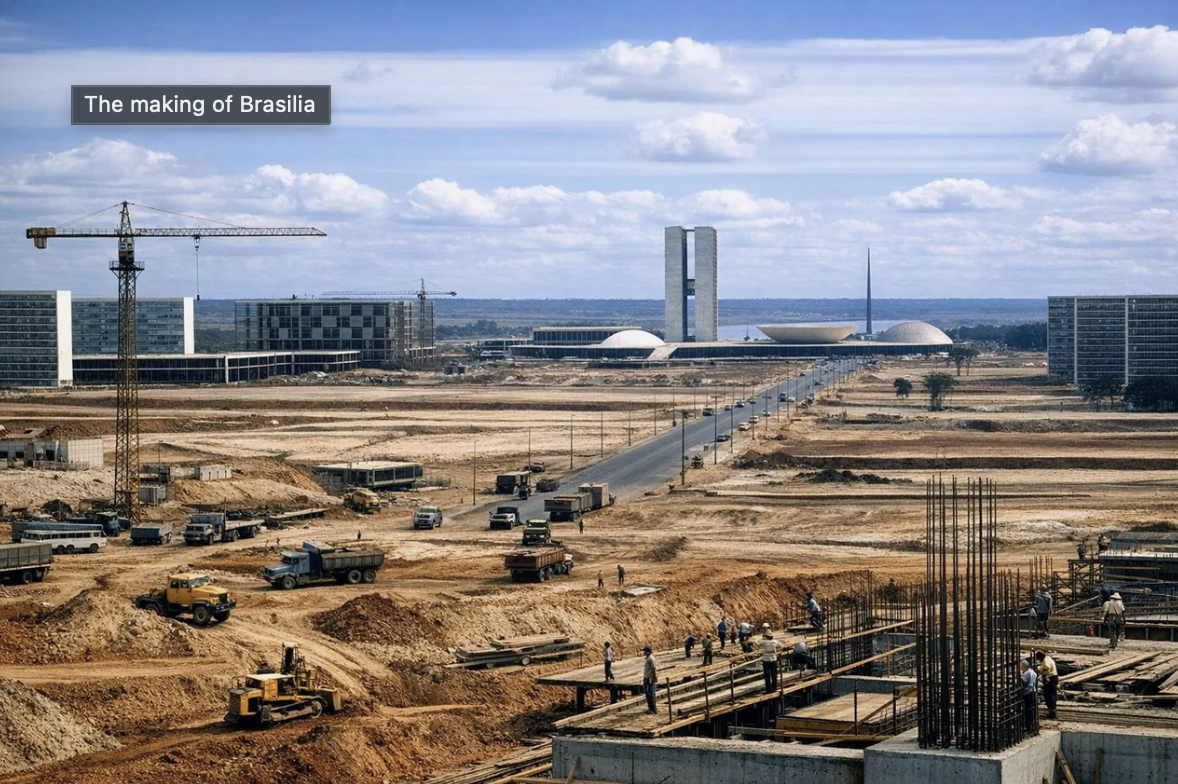
    Economic planning and coordinated industrial policy became the norm. The 1956–1961 Goals Plan (Plano de Metas) reflected this growing planning capacity, prioritizing energy, transport, and industry to reduce bottlenecks and accelerate investment. This period also supported the expansion of national power capabilities through firms such as Eletrobras. BNDES played a long-term role in infrastructure and industrial finance and later expanded its use of capital-market instruments to channel funds toward development priorities. Brasília—constructed as a new federal capital beginning in 1956—became the flagship “planning-as-project” symbol of the era, bundling transport links, housing, utilities, and administrative functions into a single national initiative. The 1964 military coup marked a structural break in how this coordination operated. Planning and macroeconomic management became increasingly centralized and insulated from politics, as the authoritarian regime curtailed labor bargaining and constrained subnational autonomy. After 1964, the Government Economic Action Plan (PAEG) strengthened modern central banking functions and fiscal controls under conditions that enabled wage restraint and tighter political control, helping govern inflation and stabilize investment cycles that affected capital‑intensive champions such as Petrobras and Eletrobras, and later strategic manufacturers such as Embraer, founded in 1969.

    Brazil urbanized rapidly, rising from an estimated 30% urban in 1930 to about 68% by 1980, driven by massive rural-to-urban migration of roughly 20 million people. Large transport megaprojects also reshaped settlement dynamics—most notably the Trans-Amazonian Highway, initiated in 1970 as part of a national integration strategy. Industrial labor markets and labor politics became central features of development. During the military dictatorship, rapid industrial expansion was accompanied by explicit repression of organized labor and limits on collective bargaining. Wage growth was deliberately compressed as part of a broader strategy to stabilize inflation and raise profitability, allowing capital accumulation and industry to advance while postponing distributional adjustment. As a result, the “economic miracle” rested not only on productivity gains and investment surges, but also on authoritarian management of labor relations and income distribution.

    Brazil sustained very high growth for decades, averaging roughly 8% per year from the 1950s through the 1970s. Growth peaked between 1968 and 1974 at roughly 11% annual real GDP growth. This expansion coexisted with chronic inflation: inflation peaked around 100% in 1964, declined to roughly 19% by the late 1960s, and then rose again to around 80% per year in the 1970s. The post‑1964 decline in inflation reflected not only improved macroeconomic instruments but also the regime’s capacity to suppress wage‑price spirals through political control. While this strengthened short‑term investment predictability, it also masked unresolved distributional pressures that re‑emerged later as macroeconomic fragility.

    Shocks, policy choices, and the build-out of capabilities

    External shocks—including the Great Depression and World War II-era disruptions—pushed the state to experiment with new industrial activities, from steel and autos to capital goods. Coffee’s dominance in the export economy heightened this vulnerability: between 1889 and 1933, coffee accounted for roughly 61% of export earnings. When global demand collapsed, coffee prices fell sharply, and the state intervened aggressively, purchasing and destroying roughly 78 million sacks of coffee between 1931 and 1944. In the 1960s and 1970s, policy shifted toward export diversification and large-scale industrial upgrading. 

    The state protected domestic industry through tariffs, trade controls, and market structuring, allowing firms time to learn, invest, and scale. State enterprises focused on strategic sectors underprovided by private capital—especially in heavy industry. Output indicators underline the scale of industrial deepening: steel production rose from about 2.8 million tons in 1964 to about 9.2 million tons in 1976, while passenger car production increased from roughly 184,000 in 1964 to about 986,000 in 1976. BNDE/BNDES financed development priorities and later expanded industrial finance instruments, including a Special Agency for Industrial Financing (FINAME), a key mechanism for financing industrial machinery and equipment. 

    Energy and transport investments lowered system-wide costs and enabled industrial activities to spread beyond initial enclaves, including the São Paulo industrial core that had grown around the earlier coffee economy. Urbanization accelerated the diffusion of labor, skills, and markets, creating larger industrial labor pools and consumer demand. Policy frameworks and investment pipelines—often implemented through large development projects—helped replicate industrial capabilities across sectors, although regional gaps persisted and some areas remained underserved.

    Planning, finance, and public investment as development engines

    The Brazilian state guided development through planning and policy, beginning with import substitution in the 1930s and expanding into broader industrialization from the 1950s through the 1970s. Goal-based planning made priorities explicit and emphasized rapid structural change. After 1964, coordination became highly centralized under authoritarian rule, enabling technocratic agencies to scale investment, deliver major infrastructure projects, and expand export capacity with limited political resistance. This insulation accelerated execution but reduced feedback from labor, regions, and civil society.

    The state also pursued macroeconomic stabilization and institution building during the 1960s, including the PAEG program in 1964 and the creation and strengthening of central banking functions. It established trade and industrial-policy rules—tariffs, incentives, and credit allocation mechanisms—that shaped investment and protected learning-by-doing in manufacturing. These reforms proved more durable under authoritarian conditions that constrained wage demands and political contestation. However, by resolving macroeconomic tensions through repression rather than negotiated adjustment, the model accumulated vulnerabilities that became visible once external conditions tightened and political liberalization began.

    Public investment in infrastructure and public goods provided the base for industrial development. Investment prioritized energy and transport, reducing bottlenecks and enabling scale. In practice, this included major state-led expansion of power generation and distribution from the 1940s onward, especially large-scale hydropower that supported industrial growth. State-owned enterprises built the base for upstream industries such as steel, a critical input for machinery, construction, autos, and infrastructure. Under military rule, large-scale projects also served political and geopolitical objectives—symbolizing regime modernity, reinforcing territorial control, and channeling capital through centralized state institutions. Investment in human capital and social welfare lagged behind physical infrastructure, contributing to uneven progress and compounding the long‑run costs of rapid industrialization. Some 1970s integration projects, including frontier highways, generated environmental and social stresses that were weakly addressed under authoritarian conditions. 

    BNDES played a critical role in mobilizing long-term capital. It financed infrastructure and industrial development and later evolved instruments to support equipment investment and equity participation. Crowding in private and foreign capital was also central to the model, helping fund expansion in capital-intensive sectors. However, reliance on imported inputs, capital goods, and external financing increased exposure to global shocks—vulnerabilities that became more visible after the 1970s.

    Import substitution built foundational capabilities for industrial production and broader industrial ecosystems. However, investment often outpaced adaptive management: the model scaled rapidly but struggled to reconfigure toward sustained export competitiveness. Urbanization and infrastructure clusters helped spread knowledge and capabilities, but the uneven diffusion across regions contributed to distributional tensions that became harder to manage over time.

    Practical lessons on industrial policy, macro-stability, and inclusion

    Brazil’s development arc from 1930 to 1980 shows that structural transformation can be engineered—especially when the state plays a sustained role as strategist, builder, and financier. Over these decades, Brazil expanded industrial capacity and infrastructure, strengthened planning and development finance, and built institutional scaffolding capable of coordinating long-horizon investment. At the same time, the experience of industrialization under military rule highlights that coordination achieved through authoritarian action is limited. Growth acceleration after 1964 relied on suppressing distributional conflict rather than resolving it through durable institutions. As a result, Brazil built industry faster than it built legitimate stabilizers—credible macro rules, social compacts, and adaptive governance mechanisms—leaving the model exposed when external shocks and political liberalization arrived. 

    At the same time, Brazil’s experience shows that growth and industrial scale are not the same as resilience and inclusion. The model’s most important weaknesses were institutional and social, not merely technical—rapid expansion coexisted with persistent inflationary pressure and rising macro fragility. Urbanization outpaced housing and service provision, and the distribution of gains often lagged what was needed to sustain long-term legitimacy. In short, Brazil built factories and infrastructure faster than it built stabilizers—credible rules, risk management, and social compacts—that protect development gains when conditions change. 

    For LAC policymakers today, the most useful lesson is to treat development strategy as a balanced portfolio of state functions rather than a single policy tool. Direction and coordination matter—but so do macro rules that prevent inflation and external exposure from undermining investment. Public investment must build enabling platforms and be matched with financing systems that mobilize private capital while managing risk. Above all, governments need dynamic capabilities: the ability to learn, correct course, and upgrade competitiveness as technologies and markets evolve. Brazil’s story is a reminder that industrialization is not a single leap, but a sequence of choices made over decades. Countries succeed not by avoiding shocks, but by building institutions strong enough to adapt—so that transformation becomes a source of shared prosperity rather than recurring vulnerability. 

  • Booms Without Transformation: Peru’s Guano and Chile’s Nitrates

    Booms Without Transformation: Peru’s Guano and Chile’s Nitrates

    Latin America has long been rich in natural resources, and for much of its history, those resources have been presented as a promise of progress. In the nineteenth century, Peru and Chile occupied a privileged position in the global economy because they controlled something the industrial world desperately needed: nitrogen. First through guano exported from Peruvian islands, and later through nitrates mined in the Atacama Desert, these countries became essential suppliers for global agriculture and warfare. Revenues were enormous, state budgets expanded rapidly, and foreign capital poured in. From the outside, it looked like development was inevitable.

    But prosperity based on extraction alone proved fragile. Despite decades of booming exports, neither Peru nor Chile used these resources to build diversified economies, strong technological capabilities, or inclusive social systems. Instead, wealth flowed outward through foreign firms, while states focused on collecting revenues rather than transforming production. When deposits were exhausted or global technology changed, fiscal crises, unemployment, and social instability followed. What had seemed like national success quickly became national vulnerability.

    This blog revisits the guano and nitrate booms not as distant historical curiosities, but as early warnings. By examining how these industries were organized—who controlled them, how labor was used, where profits went, and what institutions were built—we can better understand why extraordinary resource wealth failed to deliver long-term development. For today’s policymakers and citizens in Latin America and the Caribbean, these cases raise a critical question that remains unresolved: how can the region turn natural wealth into lasting economic and social capacity, rather than repeating cycles of boom and collapse?

    From Islands to Desert: The Rise of Latin America’s Nitrogen Economy

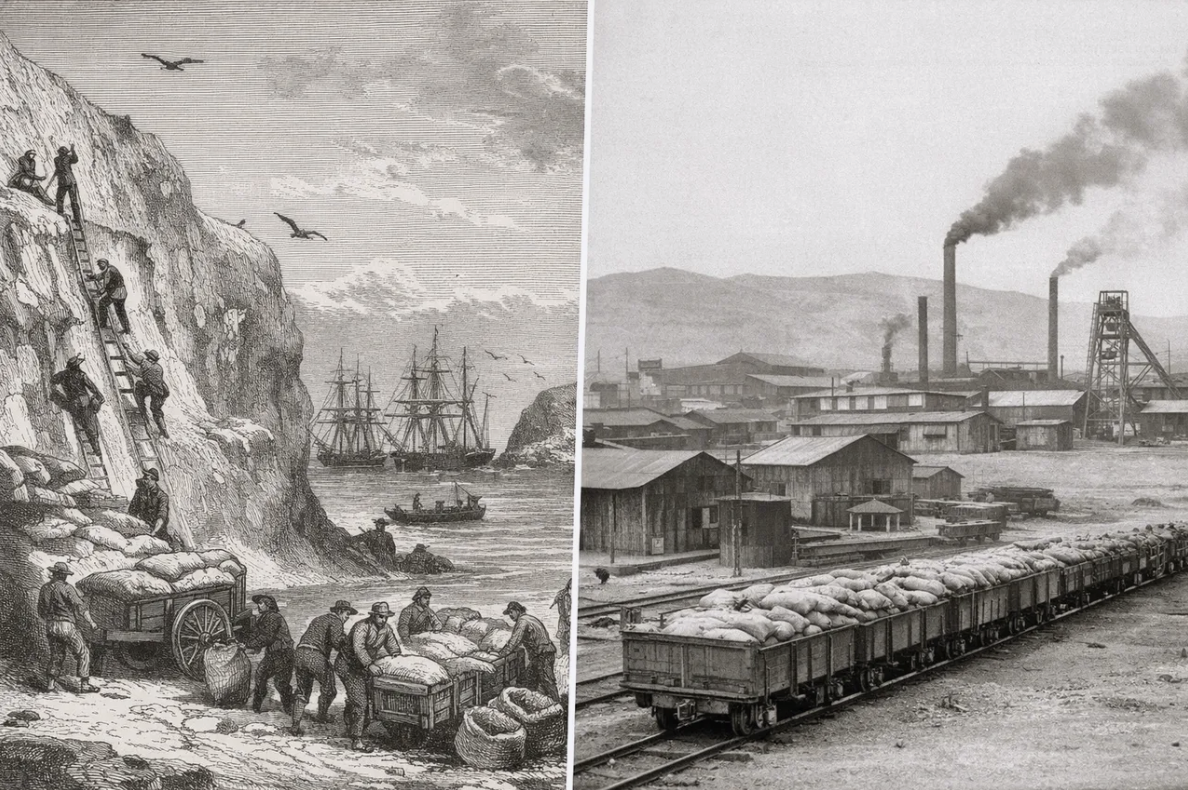
    Between the 1840s and 1860s, guano extracted from Peruvian coastal islands functioned as the dominant global source of industrial nitrogen fertilizer. Approximately 11–12 million tons were exported between 1840 and 1870, financing most Peruvian public expenditures during this period. The production system was based on rapid physical depletion rather than renewable management, leading to a collapse of the resource base beginning in the 1860s. Labor inputs were coercive and low-skilled, relying on convicts, indigenous laborers, and roughly 100,000 Chinese indentured workers operating under hazardous conditions. Exports were directed primarily to Europe and North America to support agricultural intensification during industrialization. British firms controlled shipping, marketing, and chemical validation, while Peru retained ownership through a state monopoly operating via consignment contracts. This structure maximized short-term fiscal revenue but produced minimal domestic spillovers in technology, skills, or institutional learning. 

    From the 1870s onward, sodium nitrate extracted from the Atacama Desert replaced guano as the primary nitrogen input for fertilizers and explosives. The underlying production model remained unchanged: dependence on a single export commodity, reliance on natural resource rents, dominance of foreign capital, and weak economic diversification. The War of the Pacific (1879–1883) reallocated control of nitrate reserves, with Chile annexing Peru’s Tarapacá region and Bolivia’s coastal territory, including Antofagasta. Following annexation, nitrate exports expanded rapidly, reaching approximately 2–3 million metric tons per year by 1910 and generating up to 60% of Chilean central government revenue. Extraction imposed high environmental costs, including land degradation and water depletion. Labor demand drove large-scale migration from Peru and Bolivia, with total employment reaching roughly 70,000 workers by the 1910s. Public and private investment focused on ports (notably Iquique and Pisagua) and railways connecting extraction zones to export terminals. 

    As with Argentina during the same period, British capital dominated ownership, finance, and trade logistics in Chile’s nitrate sector. A substantial share of profits was repatriated rather than reinvested domestically. Chile supplied up to 80% of global nitrate demand for European and U.S. markets. State capacity improved selectively, particularly in customs administration, export taxation, and regulatory oversight of nitrate shipments. However, institutional development remained narrowly focused on extraction. Labor protections were weak, investment in industrial diversification was minimal, and public support for technical or scientific education was limited. Mining towns operated as closed systems under company control, including housing, retail supply, and wage payment through company stores. Employment levels, fiscal revenues, and urban growth were therefore tightly coupled to nitrate price cycles, leaving the economy exposed to external shocks, including the post–World War I collapse following the introduction of synthetic nitrates. 

    The Forces Behind Expansion and Collapse

    Guano extraction exhibited limited technological variation due to its labor-intensive methods. In contrast, British-owned nitrate firms differed in size, processing approaches, logistics, and labor management. Firms adopted varying models for worker housing, compensation (cash wages versus company scrip), and transportation, particularly through railway integration. Most change occurred through expansion in the number of producing entities and consolidation rather than through innovation in extraction or processing technologies. 

    Global market selection mechanisms, institutional structures, and geopolitical pressures increased demand for nitrogen inputs as European agriculture and munitions production prioritized scale and cost efficiency. In the guano system, this favored low prices and high volumes. In Chile, export tax policy favored firms capable of sustaining high throughput. World War I temporarily increased demand for nitrates for munitions production. However, the commercialization of the Haber–Bosch process enabled synthetic nitrogen production at an industrial scale, rapidly eliminating the nitrate industry’s competitive advantage and market base.

    Profitable nitrate practices became institutionalized, but spillovers into domestic manufacturing, chemistry, or engineering education remained limited. Investment patterns reinforced specialization in raw-material extraction rather than in capability development. As a result, Chile became locked into a single‑commodity trajectory, increasing systemic vulnerability to technological substitution and demand shocks. 

    Fiscal Capacity Without Transformation

    The Peruvian state prioritized revenue generation over long-term development by maximizing guano rents without reinvesting in structural transformation. Revenues were centralized through a national monopoly and consignment system. Chile similarly relied on nitrate rents without articulating a diversification strategy or directing flows toward industrial upgrading. Neither state pursued value-added integration, such as linking nitrogen production to domestic agriculture, chemistry education, or human capital development. Fiscal capacity expanded, but political and social legitimacy eroded due to labor repression and visible inequality. 

    In Peru, state monopoly arrangements and exclusive contracts stabilized prices and volumes but constrained innovation. Public investment in railways and urban infrastructure supported extraction but not export diversification. Labor standards and resource stewardship received minimal attention. In Chile, export-oriented policy ensured stable property rights and predictable taxation for predominantly British capital. Significant public-private investment supported ports and railways servicing nitrate zones, but integration with the broader economy remained weak. Despite fiscal surpluses, funding for education, public health, and urban services remained limited. 

    The Peruvian state failed to account for depletion risk or the systemic vulnerability created by reliance on a single asset. Revenues were consumed or leveraged rather than saved or hedged. The resulting collapse triggered a fiscal crisis, sovereign default, and political instability, increasing Peru’s susceptibility to entering the War of the Pacific. Chile similarly underestimated fiscal dependence risks, consuming nitrate revenues without counter-cyclical planning. The collapse of the nitrate industry due to synthetic substitution led to mass unemployment, regional economic failure in Tarapacá and Antofagasta, and large-scale internal migration to Santiago and Valparaíso. The global economic collapse of 1929 amplified these effects. Unlike Peru, Chile used the crisis as a pivot toward state-led industrialization, expanded public ownership, and a strategic shift toward copper exports. 

    What Guano and Nitrates Still Teach Us

    The history of guano in Peru and nitrates in Chile shows that development does not come automatically from abundance. Both countries built highly effective systems to extract, tax, and export natural resources. Roads, ports, railways, and state institutions expanded rapidly. Yet these systems were designed to export raw materials rather than to strengthen domestic capabilities. Education, industrial diversification, and technological learning were treated as secondary concerns—until it was too late.

    When global conditions changed, the weaknesses became visible. Peru’s guano revenues collapsed with depletion, leaving the state financially fragile and politically unstable. Chile’s nitrate economy was destroyed not by exhaustion of the desert, but by a technological breakthrough abroad that made natural nitrates obsolete. Workers were displaced, entire regions declined, and public finances deteriorated. The difference between the two countries lies in their response: Chile eventually used the crisis as a turning point to pursue industrialization and new export sectors, while Peru lacked the institutional capacity to do so on the same scale.

    For Latin America and the Caribbean today, the lesson is not to reject natural resources, but to treat them with caution and strategy. Extractive industries can generate revenue, but without deliberate investment in people, technology, and diversification, they also generate dependency and risk. The guano islands and nitrate deserts remind us that the real challenge is not how much wealth a country extracts, but whether it uses that wealth to prepare for a future in which the boom will inevitably end. 

  • What Coffee Did That Rubber Didn’t: Brazil, 1879–1912

    What Coffee Did That Rubber Didn’t: Brazil, 1879–1912

    Between 1879 and 1912, Brazil experienced two commodity booms that unfolded simultaneously within the same country and under the same global economic forces, yet produced radically different long-term outcomes. Rubber and coffee both connected Brazil to world markets, generated export revenues, and attracted labor and capital. But only one of these commodities helped build durable institutions, accumulate productive capabilities, and lay the groundwork for sustained development. The other collapsed, leaving behind wealth and growth but no transformation.

    This contrast matters well beyond Brazilian history. Across Latin America and the Caribbean, policymakers continue to grapple with a familiar dilemma: how to convert commodity abundance into long-term prosperity. Natural resources remain central to national economies, whether in agriculture, mining, energy, or biodiversity-based products. Yet the region’s experience shows that export success alone is not enough. What matters is how production is organized, how labor is incorporated, how infrastructure is built, and—above all—how the state engages with markets over time.

    The comparison between rubber and coffee offers a powerful lens for examining these issues. Rubber was extracted from the Amazon under conditions of weak governance, fragmented markets, coercive labor systems, and minimal state coordination. Despite Brazil’s near-monopoly position in global rubber markets, the boom proved fragile and collapsed rapidly once external competition emerged. Coffee, by contrast, became embedded in a denser institutional environment in São Paulo and the Southeast. It helped generate transport, finance, regulation, and labor systems that gradually aligned private incentives with public capacity. Over time, this alignment enabled adaptation, learning, diversification, and ultimately industrialization.

    Coffee production was not benign or equitable, nor was rubber doomed by nature or geography alone. Instead, this blog demonstrates how distinct institutional choices and state roles shaped the evolution of two commodity systems under similar external conditions. For contemporary policymakers and citizens alike, the lesson is clear: development is not determined by what a country exports, but by how economic activity is governed, coordinated, and allowed to evolve.

    How rubber and coffee rewired Brazil’s economy

    Between 1879 and 1912, Brazil underwent substantial economic and social transformations centered on rubber and coffee. Rubber was exported primarily as latex, with minimal value-added processing, whereas coffee production required processing, transportation, and the development of financial intermediation capacity. Rubber followed a classic boom‑and‑bust cycle, while coffee evolved through a longer-term, managed cycle.

    Rubber-producing cities such as Manaus and Belém expanded rapidly in the Amazon, while São Paulo grew as the center of the coffee economy. However, whereas population settlement in São Paulo was persistent, migration to the Amazon was more precarious and often reversible, with substantial return migration following the collapse of rubber prices. The Amazonian rubber economy relied on a transient labor system, while coffee production anchored migrants more durably into local demographic structures.

    Infrastructure investments in both the Amazon and Sao Paolo focused on ports, river steam navigation, and railways in areas where sufficient resources and political coordination were available. Despite export growth, most of Brazil remained poorly integrated and underdeveloped.

    Skill formation remained limited, particularly in the rubber economy, where production remained centered on extraction. Nevertheless, there was significant migration from northeastern Brazil to the Amazon and from Europe to São Paulo. Formal education systems advanced little during this period. Rubber extraction required minimal training and relied heavily on local ecological knowledge, whereas coffee production demanded agronomic, financial, and logistical expertise that could be accumulated, transmitted, and diffused regionally.

    Institutional capacity expanded significantly in São Paulo through taxation, rail regulation, and financial development. In contrast, the Amazon retained an informal, personalized governance structure characterized by weak, coercive authority and limited support for public goods. These patterns persisted after the fall of the Empire in 1889, as regional oligarchies consolidated power and continued their respective development paths. Social systems were highly hierarchical, with extreme inequality between owners and indigenous or migrant laborers, often enforced through violence.

    The rubber boom required relatively limited transformation of natural ecosystems, as latex was extracted directly from dispersed wild Hevea trees. Coffee cultivation, by contrast, required extensive land‑use conversion and soil depletion, pushing agricultural frontiers deeper into forested areas. In both systems, natural capital was treated as effectively inexhaustible.

    Coffee elites acquired national prominence and political influence. In contrast, wealth and power in the rubber economy were concentrated among the so-called “rubber barons,” who remained socially and culturally isolated within the Amazon. Rubber production relied heavily on debt peonage and coercion to secure labor, frequently accompanied by extreme violence, while coffee plantations gradually transitioned toward wage labor and contractual arrangements.

    Export rents from rubber were largely consumed or transferred abroad, including investment in luxury projects such as the Manaus opera house, rather than reinvested in productive diversification. 

    Why did the two systems evolve differently?

    In the rubber economy, production was constrained by an extractive system that could not be scaled efficiently because trees were widely dispersed and extraction techniques changed little over time. Coffee, in contrast, could be scaled through plantation agriculture and supported by innovations in transport, finance, and labor organization. Rubber production was structured around patronage-based debt networks between traders and tappers, whereas coffee was organized through firms, banks, transport systems, and export houses. The Amazon posed severe logistical challenges, including limited connectivity, high disease burdens, and weak or nonexistent institutions. The Southeast, by contrast, benefited from ports, railways, skilled migrants, and dense financial networks.

    Rubber succeeded as a raw material primarily in the absence of external competition. The industry collapsed rapidly once Asian plantation rubber entered global markets. Initial rubber profits were high but volatile and fragile. Coffee remained competitive as economies of scale expanded, supporting infrastructure development and improved coordination. Although coffee margins were lower, the system proved more resilient to external shocks, in part because coffee-growing regions developed institutions aligned with market needs. Rubber regions failed to institutionalize learning or adapt their production model.

    As an extractive industry, rubber exhibited little innovation and remained locked into coercive labor arrangements. Coffee production evolved in response to competition, developing increasingly sophisticated financial, logistical, and contractual systems. São Paulo later built on these institutional foundations to transition to industrialization after 1910.  

    The state makes a decisive difference

    In the early stages, the state played a limited role in both coffee and rubber, beyond promoting export expansion and relying heavily on commodity rents. Over time, coffee elites gained influence over federal policy, while rubber elites remained politically isolated and lacked national leverage. As infrastructure and public services expanded in São Paulo, the state assumed a progressively more legitimate and active role. In the Amazon, the absence of state authority enabled coercive labor practices and land appropriation, whereas in São Paulo, property rights, contract enforcement, and financial regulation became increasingly important for coffee production.

    Coffee production in São Paulo and the Southeast became embedded within strong state governments that developed fiscal, administrative, and coordination capacities. These governments actively shaped markets through infrastructure investment, immigration policies, banking development, and price management. By contrast, the rubber boom unfolded largely in the absence of effective state presence, with government involvement confined primarily to export taxation and territorial sovereignty. Coordinated market governance proved essential for stabilizing coffee prices amid external shocks, whereas such mechanisms were absent in the rubber economy. Labor systems in rubber production remained characterized by debt peonage, coercion, and violence, whereas coffee production gradually transitioned toward regulated free labor following abolition, supporting longer-term development. Political alignment between São Paulo, the Southeast, and the federal government was critical in securing national support, whereas the Amazon’s limited political power translated into minimal federal assistance.

    Rubber extraction depended almost entirely on river transport, and attempts to extend rail infrastructure—such as the Madeira–Mamore railway—were extraordinarily costly and often disastrous. Railways, ports, and financial institutions were central to the expansion of coffee. Coffee benefited from coordinated export systems, while the rubber market remained fragmented and predatory. In São Paulo and the Southeast, infrastructure development was part of an integrated, state-led process linking politics and the economy, creating durable institutions and enabling diversification. In the Amazon, rubber production was driven by the boom itself, with limited state involvement in long-term development or institutional durability.

    Export taxes played an important role in both systems, but were not effectively deployed to promote diversification or stabilization. The state proved unable to respond to the displacement of Amazonian rubber by Asian production after 1912. In contrast, the coffee sector adapted through price management and institutional evolution, supporting a gradual transition toward industrialization. 

    Lessons for development policy

    The Brazilian experience between 1879 and 1912 demonstrates that commodity booms are not inherently a curse or a blessing. They are moments of choice. Rubber and coffee generated wealth under similar global conditions, yet only one sustained a trajectory of development. The difference lay not in prices or demand, but in institutions, governance, and the evolving relationship between the state, markets, and society.

    Rubber’s collapse was not caused by a lack of global importance—Brazil supplied the vast majority of the world’s rubber at the height of the boom—nor by a lack of profits. It failed because production remained locked into an extractive model that discouraged learning, relied on coercion rather than contracts, fragmented markets, and operated largely beyond the reach of effective public authority. When competition arrived, the system had no capacity to adapt or shift focus. Coffee, by contrast, faced recurring crises of overproduction and price volatility, yet proved more resilient because it was embedded in institutions that enabled coordination, investment, and gradual transformation.

    For Latin America and the Caribbean today, this historical comparison carries a direct and practical message. Commodity-based growth can support development only when it is accompanied by deliberate efforts to build state capacity, regulate markets, protect labor, and reinvest rents into productive systems. Infrastructure without institutions is fragile. Market power without coordination is fleeting. And growth without learning rarely endures.

    As the region confronts new commodity frontiers—from energy transition minerals to artificial intelligence to biodiversity-based products and climate-related services—the question is not whether these resources can generate exports, but whether they can be embedded in economic systems that promote resilience, inclusion, and adaptation. Brazil’s past shows that outcomes are not predetermined. It is shaped by policy choices, political coalitions, and states’ willingness to move beyond extraction toward governance.

    History does not offer simple templates, but it does offer warnings—and possibilities. The tale of rubber and coffee ultimately reminds us that development is built not on commodities themselves, but on the institutions that grow around them. 

  • Mexico 1876–1911 Order and Growth Without Inclusion: Revolution

    Mexico 1876–1911 Order and Growth Without Inclusion: Revolution

    Mexico grew faster between 1876 and 1911 than at any other moment in the nineteenth century. Railways spread across the country, cities modernized, and exports expanded rapidly with foreign investment, replicating patterns seen in many industrializing economies. Under Porfirio Díaz, Mexico achieved order, economic growth, and integration into international trade.

    However, this growth rested on weak foundations. Export expansion depended on specific regions. Land ownership and economic benefits were concentrated among a small elite, and millions of rural and Indigenous people lost access to land. At the same time, deeper integration into global markets increased exposure to external shocks and volatility. The central lesson is that economic growth without inclusion can lead to instability, rapid reversals, and, in extreme cases, revolution. Prosperity derived through exclusion, repression, and dependence on forces beyond state control is rarely sustainable. In hindsight, the Mexican Revolution was a predictable outcome of modernization that failed to lay the social, political, and cultural foundations needed to manage rapid change. 

    This blog examines the changes that occurred, analyzes the drivers of these changes, and explores the state’s role in shaping their outcomes. 

    Order, growth, and progress, but fragile and without social license

    Between 1876 and 1911, Mexico shifted rapidly from localized land-use and mining systems to intensive export agriculture, large-scale mining, and oil extraction. Mining output tripled, and Mexico became the world’s leading silver producer. Commercial agriculture expanded around agave fiber, sugar, and coffee, driven by large haciendas. Oil production rose from negligible levels in the 1890s to approximately 12 million barrels annually by 1911.

    This transformation eroded Indigenous stewardship, weakened the legitimacy of communal land systems, and intensified ecological pressures. Railways, ports, and cities expanded around export-oriented production, much of it owned by foreign or external interests and unevenly distributed across regions. Railway mileage increased from roughly 650 kilometers in 1876 to more than 19,000 kilometers by 1910. Mexico City, Veracruz, and Monterrey grew rapidly, introducing electric lighting, tram systems, and modern water infrastructure. National culture increasingly emphasized order, progress, technocratic authority, and elite dominance, a pattern reinforced by changes in education and law. As elsewhere in the region, land reforms delegitimized Indigenous communal identities.

    Migration shifted populations from rural to urban areas, with Mexico City doubling in size to approximately 720,000 inhabitants by 1910. Immigration remained limited and elite-focused, particularly when compared with Argentina during the same period. Labor was retained on haciendas through debt peonage, a system reinforced by land laws that converted many rural residents into landless workers. Land use increasingly prioritized mining, oil, and export agriculture for external markets, binding Mexico to global commodity chains. Railways and ports facilitated the movement of raw materials to the United States and Europe. Energy systems shifted from animal and wood power toward coal and oil, often under foreign control.

    Foreign direct investment, foreign credit, imported machinery, and imported managerial expertise dominated economic expansion, while domestic financial intermediation remained weak. By 1911, U.S., British, and French investment in railways, mining, oil, and utilities exceeded an estimated US$3 billion. National research and development capacity remained minimal, with most technical knowledge flowing inward rather than being generated domestically.

    Institutions consolidated around centralized governance, export haciendas, foreign commerce, and local elites. The judiciary, police, and military primarily enforced elite property rights. A very small elite—fewer than one percent of landowners—controlled most titled rural land, while millions of villagers were left landless. Labor protections, land rights, and inclusive education lagged economic change, contributing to strikes that were violently suppressed. Education systems favored elites rather than building broad-based human capital.

    Mexico’s economic and social cycles became synchronized with global commodity and financial cycles, amplifying volatility. Fiscal revenue relied heavily on natural resource rents, leaving public finances vulnerable to external downturns. Following the global financial crisis of 1907, layoffs and unrest intensified. Land concentration and ethnic hierarchies were reinforced through political exclusion, deepening instability beneath the façade of order and progress. Communities that had previously depended on communal land systems bore the direct costs of these changes, while political voice remained concentrated among elites. 

    Change came from outside

    Most economic and technological change during this period originated outside Mexico. Rail, mining, agricultural, and oil technologies were imported after proving effective elsewhere. These technologies functioned as externally introduced systems that rapidly displaced existing production practices where conditions allowed. Foreign-owned firms expanded quickly, crowding out smallholder and communal systems and achieving economies of scale. In contrast, regions not integrated into export corridors often remained under smallholder and Indigenous management, creating sharp spatial divides.

    Market outcomes favored activities backed by foreign capital, export connectivity, and political relationships. These enterprises were not designed to maximize employment quality, resilience, or local social legitimacy. State policy rewarded actors aligned with export growth while providing little support to communal landholding or informal economies. Although this focus generated fiscal revenues and geopolitical ties, it came at the expense of inclusivity, resilience, and long‑term sustainability. Export estates, foreign infrastructure, and commerce thrived, protected from unrest by coercive political arrangements. Agricultural productivity per worker generally remained low, thereby contributing to faster-than-wages food price inflation.

    Imported technologies and organizational practices diffused rapidly, supported by policy and legal frameworks. Railways linked productive haciendas, mines, oil fields, ports, and foreign markets. Infrastructure investment and legal protections prioritized elite production systems. Concession frameworks and land titles ensured fiscal revenues while channeling resource rents to elites. Education systems reinforced the export-led model, while illiteracy rates remained between 70 and 80 percent by 1910. Success reinforced specialization, increasing Mexico’s dependence on a narrow set of export products and heightening vulnerability to global shocks and domestic social backlash. 

    The role of the Porfirian state

    General Porfirio Díaz dominated Mexican politics for more than three decades, ruling from 1877 to 1911. Under his authoritarian government, the state articulated a national mission centered on order, stability, and modernization through export-led growth. This approach provided investors and foreign partners with predictability but relied on centralized, technocratic, and coercive governance rather than inclusive institutions. The long-term objective was to catch up with global industrialization and urbanization, rather than to develop endogenous capabilities. Success was measured through exports and fiscal stability rather than broad welfare gains. Electoral control enabled Díaz’s repeated reelection, ultimately leaving revolution as the primary mechanism for reform.

    The state enacted land‑use, mining, and investment laws that redefined property rights in favor of private and foreign ownership, effectively dismantling communal tenure systems. Surveying companies were authorized to claim large areas for mining, agriculture, and oil. Regulatory frameworks minimized capital transaction costs while raising barriers to entry for local labor, smallholders, and Indigenous communities. Markets prioritized external trade integration over domestic development. Labor repression, including strike bans, reduced production costs while intensifying social tensions. The Cananea copper miners’ strike in 1906 and the Río Blanco textile workers’ strike in 1907 were both met with lethal force.

    Public investment and guarantees focused on railways, ports, telegraphs, and urban services to support export flows and fiscal revenues. Broad-based education and rural development were largely neglected. Public finance depended on concessions and resource rents, with little attention to redistribution or counter-cyclical policy. Spending prioritized debt service and fiscal balance. Support for domestic innovation remained limited, as technology and organizational practices were largely imported. These conditions directly contributed to the Mexican Revolution of 1910 and demands for free elections, limits on reelection, and structural reforms, including land redistribution.

    Conclusion

    The Porfiriato left Mexico with modern railways, expanding cities, productive agriculture, and large-scale mining—but without the social legitimacy required to sustain them. While the economy became deeply integrated into global markets, political voice, land access, education, and economic benefits remained highly concentrated. When global conditions shifted after 1907, the system collapsed, and revolution emerged as a response to exclusion and repression.

    For today’s policymakers, the lessons remain clear. Economic growth that concentrates benefits among elites, relies heavily on external market cycles, and excludes large segments of society is inherently unstable. Infrastructure, investment, and exports are essential for development, but they must be accompanied by institutions that expand opportunity, protect rights, and allow for feedback and gradual adjustment. Development is not only about how fast an economy grows, but about who participates, who benefits, and who has a voice.

  • Reducing Risk, Enabling Scale: Argentina’s Export Boom 1880-1914

    Reducing Risk, Enabling Scale: Argentina’s Export Boom 1880-1914

    Across Latin America, governments face a familiar challenge: how to accelerate growth under intense global competition, technological change, and constrained public resources. Argentina’s export boom between 1880 and 1914 offers a concrete case of how rapid growth can occur when markets, institutions, and the state align in support of export-led, integrated development.

    At the end of the nineteenth century, Argentina transformed from a sparsely populated frontier economy into one of the world’s leading food exporters. This transformation is sometimes attributed to good fortune: fertile land, rising European demand, and mass immigration. These conditions mattered, but they do not fully explain the mechanism. Fertile land does not, by itself, build railways, mobilize foreign capital at scale, or coordinate millions of individual production decisions about capital, infrastructure, markets, and rules into a globally competitive system. Growth at that speed required deliberate choices and sustained coordination.

    Argentina’s experience shows that rapid growth emerged from the interaction of three forces that remain highly relevant today. First, the country undertook a large-scale economic transformation, reshaping land use, logistics, and technology to meet external demand. Second, it allowed competitive selection to operate—favoring production models, regions, and firms that could scale, standardize, and integrate into global markets. Third, the state played an active but focused role, reducing risk, guaranteeing infrastructure, protecting property rights, and maintaining policy continuity rather than attempting to direct production decisions.

    This blog does not present Argentina’s historical model as something to be copied wholesale. Its social costs were real, and its long-term vulnerabilities became more visible after 1914. In the long term, Argentina became dependent on primary exports and foreign investment, thereby limiting its industrial development. Land was concentrated in the hands of a few, indigenous populations were marginalized, and social conditions were precarious for many immigrants. However, for countries across Latin America seeking faster growth today, the export boom remains a useful case for understanding how incentives, infrastructure, and institutions can combine to accelerate growth by enhancing coordination.

    Building an agricultural export system 

    Between 1880 and 1914, the Argentine Pampas were converted from grassland into a global export system for wheat, maize, beef, and wool. This shift coincided with the rapid urbanization and industrialization of developed countries, supported by steel, railways, electricity, and food-processing technologies. By 1913, Argentina accounted for 12% of the world’s wheat trade and was among the world’s leading exporters of chilled beef, with exports comparable to those of Canada and Australia. Exports values expanded sixfold from 1881–85 to 1910–14. Railways expanded from 2,200 km in 1880 to over 35,000 km by 1914. The railways integrated production with ports and global markets.

    Much of the financing came from Britain, which funded railways, ports, utilities, and banks. Foreign investments accounted for about half of Argentina’s capital stock; 60% of this investment came from Britain. British investors controlled about 80% of the railway system. After 1900, foreign investment grew by over 11% annually. Argentina attracted 3 million immigrants—mainly from Italy and Spain—who arrived between 1880 and 1914, doubling the country’s population. As steam shipping and refrigeration technologies became widespread, Argentine agricultural production was linked directly to increasingly urbanized European consumers.

    These changes also reshaped society and politics. A landowning oligarchy consolidated economic and political power, while urban working and middle classes expanded in Buenos Aires and Rosario. Buenos Aires grew into a global port city, reaching nearly 1.5 million inhabitants by 1914, up from about 180,000 in 1869. The region became increasingly Europeanized in language, norms, and institutions through migration and commercial ownership. Europeans owned about 70% of commercial houses in Buenos Aires. Land under cultivation expanded from 100,000 hectares in 1862 to 25 million hectares in 1914. At the same time, Indigenous knowledge and traditional land claims were marginalized through frontier expansion.

    Why the Pampas scaled first

    Argentina imported livestock breeds and grain varieties from Europe and adapted them to the specific conditions of the Pampas. Over time, producers kept the techniques, breeds, crop varieties, and labor arrangements that delivered the highest profits under local constraints and global demand. Provinces that were better connected and had stronger institutions gained easier access to capital, allowing them to expand more rapidly. In 1879, Argentina began exporting more wheat than it imported, and by 1914, it was among the world’s top wheat exporters.

    The Pampas region proved to be the most productive and cost-effective base for export agriculture in Argentina. Fertility mattered, but so did connectivity: railways, ports, and refrigeration reduced transport costs, reduced price dispersion, and increased price transparency. The port of Buenos Aires linked producers to global demand and world market prices. Consequently, global demand and pricing rewarded large-scale, standardized, and focused production over small-scale, diversified agriculture oriented toward local markets. Producers in the Pampas were typically more profitable, gained easier access to global markets, and became more attractive to investors. Foreign trade accounted for nearly half of Argentina’s GDP between 1870 and 1913, with wheat accounting for about 25% of exports.

    Technologies such as railway logistics and cold storage, new institutions including export houses and banks, and large-scale production approaches reduced unit costs and improved reliability. Frozen and chilled meats accounted for approximately 12% of exports between 1900 and 1913. Producers learned through imitation and experimentation, hired targeted foreign expertise, and benefited from the inflow of skilled workers from Europe. Over time, these complementary inputs—raw materials, capital, skills, infrastructure, and institutions—reinforced economies of scale and export specialization.

    The state played a crucial role in driving change

    The oligarchic Argentine state between 1880 and 1914 concentrated political power among landowners, commercial elites, lawyers, bureaucrats, and financiers. This coalition defined a national focus on export-led growth and global integration. Policy priorities included land titling and the expansion of agricultural frontiers, which would yield clearer titles, enforceable claims, and a lower risk of disputes for investors. Trade and immigration policies also favored openness, supporting export competitiveness and labor inflows. As a result, agricultural and meat exports grew at an average rate of 4% between 1875 and 1913.

    The state also established legal frameworks to protect private property, contracts, and foreign investments, thereby lowering perceived risk. Political institutions preserved elite control, thereby creating policy continuity aligned with export interests, even as this entailed exclusion, inequality, and repression. Regulation and public administration focused on expanding the agricultural export economy rather than promoting industrial diversification, thereby shifting expected returns toward specialized export agriculture.

    Finally, the state provided guarantees and concessions to railway companies, reducing investment risk and crowding in foreign capital: public spending prioritized ports, railways, customs, and urban infrastructure over education or industrial policy. The state ensured policy consistency and absorbed coordination risks, thereby enabling the agricultural export-driven development path to persist.

    Conclusion

    Argentina’s export boom shows that rapid growth is rarely the result of a single reform, sector, or single favorable condition. It is the outcome of coordinated change across production systems, institutions, and public policy. The Pampas did not become globally competitive simply because they were fertile. They became competitive because infrastructure connected them to markets, finance supported large-scale investment, technology reduced distance, and the state consistently reinforced this direction over time. Natural resource endowments are necessary conditions, but state leadership and coordination are required to use them productively at scale. 

    For today’s Latin American policymakers, the most important lesson is not about agriculture or exports per se. It is about focus and selection. Argentina’s state did not attempt to develop every sector simultaneously. Instead, it concentrated public resources on a narrow set of priorities—transport, ports, trade openness, and legal certainty—and allowed firms and regions to compete within that framework. Those that could scale and adopt relevant technologies advanced; those that could not fell behind. Thus, global integration and competition did the work of discovery and delivery. Growth was rapid precisely because choices were made and trade-offs were managed.

    At the same time, Argentina’s experience also highlights a structural warning. Once established, development paths become self-reinforcing. Infrastructure, land ownership patterns, political coalitions, and fiscal systems adapt to the dominant model. Infrastructure networks, fiscal reliance on specific revenues, and political coalitions can lock in economies for the future. This makes early success powerful, but it can also make subsequent adjustments difficult. Countries that accelerate growth, therefore, need to consider not only how to grow quickly, but also what kind of economy they are locking in.

    The broader takeaway for Latin America today is clear. Accelerating growth does not require choosing between markets and the state. It requires a state that shapes incentives, absorbs risk where private actors cannot, and commits credibly to a long-term direction, while allowing competition and global integration reveal what can scale and penalize what cannot. Argentina’s early success shows what is possible when this alignment is achieved—and why getting the initial policy direction and investment priorities right matters for the decades that follow.

  • Peru’s Commodity Boom: Gains and Tensions

    Peru’s Commodity Boom: Gains and Tensions

    In 2013, Peru was one of the fastest-growing large economies in Latin America. National income had nearly doubled over the past decade. Poverty had fallen by half. The fiscal accounts were in surplus, and the central bank held reserves that most of the region envied. Yet, in the department of Cajamarca — home to Yanacocha, one of the largest gold mines in the world — the poverty rate was the highest in the country.

    That paradox is not a detail at the margins of Peru’s growth story. It is the center of it. Between 2003 and 2013, GDP per capita rose from roughly US$2,100 to nearly US$6,800, while national poverty fell from around half the population to roughly one quarter. Mining exports grew from under US$5 billion to more than US$25 billion, lifting mining’s share of total exports above 60 percent. Fiscal revenues from mining rose sharply, creating new resources for public spending and decentralization.

    The central policy implication of this period is that growth driven by extractives reshaped Peru’s economy faster than its institutions could adapt. The sections that follow examine how capital stocks, institutions, and social structures changed; how variation, selection, and diffusion shaped outcomes; and how the state steered, adjusted, and sometimes struggled to manage these dynamics. Together, these perspectives clarify why Peru achieved strong macro results but uneven territorial and social outcomes — and why the lessons matter urgently for the next commodity wave in lithium, copper, and other critical minerals now sweeping the region.

    Capital deepening reshaped institutions

    The most visible change was a rapid expansion of physical and financial capital linked to mining. Total mining investment rose from just over US$1 billion in the mid-2000s to more than US$8 billion by 2012, while exploration spending peaked above US$1 billion — ranking Peru first in Latin America and fourth globally. Foreign direct investment stock reached over US$22 billion by 2013, with mining absorbing the dominant share. Export revenues from copper, gold, and zinc increased more than fivefold, supported by both higher prices and rising volumes, particularly in copper. These flows were accompanied by expanded transport, port, and energy infrastructure connecting Andean mining zones to global markets.

    Running alongside the mining boom — and analytically distinct from it — was the Camisea natural gas project, the decade’s defining non-mining extractive investment. Camisea did not simply replicate the mineral dynamic. By substituting imported fuels and lowering domestic energy costs, it solved a structural input constraint: cheaper, more reliable gas reduced costs for industry and power generation across the economy. When Peru began exporting liquefied natural gas from 2010 onward, Camisea added a third major source of extractive income alongside copper and gold. The critical institutional choice, however, was made at inception: the 2003 royalty reductions offered to attract Camisea’s investors also locked in a gas pricing and offtake architecture oriented primarily toward export revenue. Trinidad and Tobago, facing an analogous choice, used its state gas company, NGC, as a monopsony buyer to price gas cheaply for domestic industrial users, seeding a world-scale petrochemicals cluster at Point Lisas. Peru’s architecture made a different bet — and a different developmental outcome followed. Like mining, Camisea also generated distributional and environmental conflict, particularly along pipeline corridors crossing Amazonian indigenous territories, reinforcing the broader governance challenge that ran through the entire boom period.

    Institutional change lagged capital accumulation but remained consequential. The mining legal framework established new obligations, including mine closure requirements and royalties, while decentralization laws redirected a large share of mining income taxes to regional and local governments. The Canon Minero mechanism dramatically increased subnational revenues from 2007 onward, multiplying transfers relative to the previous decade. New consultation rights for indigenous communities were enacted late in the period, reflecting rising conflict pressures. However, administrative capacity at subnational levels remained weak, limiting the effective use of transferred resources.

    Economic expansion altered Peru’s social structure unevenly. Labor gradually shifted from agriculture to services, construction, and mining, supporting the emergence of a larger urban middle class. National poverty declined rapidly, but outcomes diverged sharply across regions. Several mining-intensive regions continued to record high poverty rates despite large fiscal inflows. At the same time, social conflict around mining projects escalated, signaling tensions between national growth gains and local environmental and distributional concerns.

    Shocks and choices drove outcomes

    Variation during this period came primarily from new and expanded extractive projects rather than from broad-based industrial diversification. Large-scale copper and gold mines expanded capacity, and new projects entered production as prices rose. Mining technologies and operational practices diversified across sites, including lower-grade ore extraction made viable by global prices. Camisea introduced a separate variation track — gas-based petrochemical linkages at Pisco — and initiated a domestic gas distribution network, though neither reached the level of industrialization achieved in Trinidad and Tobago. Outside extractives, some non-traditional exports and services grew, but from relatively small bases. Policy experimentation also occurred through new social programs and decentralization mechanisms, introducing institutional diversity.

    Global commodity prices acted as the dominant selection mechanism. Rapid increases in copper, gold, and zinc prices determined which projects advanced and which sectors attracted capital. Peru’s open investment regime and fiscal stability reinforced this selection, channeling resources toward mining and related activities. The 2008–09 global crisis tested this model, briefly reducing growth before recovery confirmed the resilience of macroeconomic policies. Social conflict functioned as an additional selection pressure, delaying or halting projects that lacked local acceptance.

    Successful practices diffused unevenly — and the enclave pattern was structural, not incidental. Mining investment scaled rapidly as early projects demonstrated profitability and regulatory predictability. Fiscal and monetary discipline became entrenched across successive administrations, reinforcing macro stability. Revenue-sharing arrangements and social programs were institutionalized and expanded nationwide. But productivity gains and technological practices remained narrowly confined within extractive sectors. The mining and hydrocarbon complex was an enclave in the most precise sense: high in capital intensity, limited in direct job creation, and weakly linked to the domestic technology or manufacturing economy. This is the same structural outcome that characterized Trinidad and Tobago’s LNG industrialization and Venezuela’s oil boom of the mid-twentieth century: strong export revenues, weak productive spillover. Peru replicated the pattern in a new commodity and a new century.

    The state enabled growth, managed fallout

    The state provided clear direction through a stable macroeconomic and investment framework. Fiscal discipline, inflation targeting, and open trade policies reduced uncertainty and supported capital inflows. Mining-specific laws introduced royalties, closure obligations, and later profit-based taxation, shaping how rents were shared. Consultation requirements and environmental oversight expanded late in the period in response to conflict. The sequencing favored rapid investment and growth before governance mechanisms fully matured — the same sequencing that produced Peru’s central paradox: Cajamarca grew poorer as the mine above it grew richer.

    Public investment rose alongside private capital, financed in part by mining revenues. Infrastructure spending expanded in transport, energy, and urban services, while public–private partnerships mobilized additional resources. Canon Minero transfers provided unprecedented funding to subnational governments, intended to support local development. However, coordination challenges and limited project execution capacity constrained the developmental impact of these funds. Social programs scaled up nationally, cushioning poverty reduction but remaining largely separate from productive transformation strategies.

    The state demonstrated episodic adaptation rather than systematic learning. Mining tax reforms in 2011 adjusted the fiscal regime in response to political and social pressures. Consultation laws and ad hoc commissions responded to high-profile conflicts, signaling recognition of governance gaps. Yet conflicts persisted, and administrative weaknesses remained largely unresolved by 2013. The contrast with Chile is instructive. Chile built a three-layered fiscal buffer architecture — the Copper Stabilization Fund in 1987, a structural fiscal rule in 2001, and the Economic and Social Stabilization Fund in 2006 — before the super-cycle reached its peak. That architecture was constructed during periods of relative price normalcy, which gave it political legitimacy when the cycle turned. Peru managed a boom. Chile managed the cycle.

    Lesson: Growth can outpace institutions

    The strongest evidence shows that Peru’s 2003–2013 growth was rapid, externally driven, and fiscally transformative. Mining and hydrocarbon exports expanded dramatically, supporting macro stability and poverty reduction at the national level. Institutional frameworks enabled investment but adapted slowly to distributional and environmental pressures. Strong national performance developed alongside persistent local tensions and a structural enclave dynamic that transferred wealth upward and outward more readily than it built local productive capacity.

    A desirable future state builds on Peru’s demonstrated capacity for stability while closing the governance gaps the boom exposed. Effective management of resource revenues at subnational levels remains central to translating growth into local development. Stronger consultation, environmental enforcement, and administrative capacity would reduce conflict risks. Pre-positioning fiscal buffers before the next price peak — not during it — is the lesson Chile demonstrates and Peru did not fully implement.

    This evidence supports three immediate policy priorities for LAC policymakers as they face the next wave of commodities, including copper, lithium, and other critical minerals.

    First, build subnational institutional capacity before scaling revenue transfers. The Canon Minero experience is unambiguous: transferring fiscal resources to governments that lack the staff, systems, and accountability mechanisms to deploy them produces conflict, clientelism, and wasted capital — not development. The next wave of lithium and copper revenues will flow to subnational entities in Chile, Argentina, Peru, and Ecuador. The absorptive capacity question must be answered before the transfers arrive.

    Second, sequence investment frameworks with early attention to consultation and environmental governance. The projects that stall are not those with the worst deposits but those with the weakest social licenses. Delayed consultation and reactive environmental rules are not only governance failures — they are investment risks. The regulatory design choices made now for lithium in the Puna, copper in the Andes, and green hydrogen along southern coasts will determine project viability for decades. Third, treat gas, royalty, and local content architectures as industrial policy choices, not passive fiscal settings. Peru’s Camisea gas pricing decision in 2003 determined whether the country would receive export revenues or an industrial cluster. The same logic applies today: whether lithium is exported as raw brine or refined carbonate, whether copper concentrate is smelted domestically or shipped abroad, and whether green hydrogen is produced for export or anchors domestic industry are all structural choices that compound over decades. The window to make them is before investors commit capital, not after projects are running.